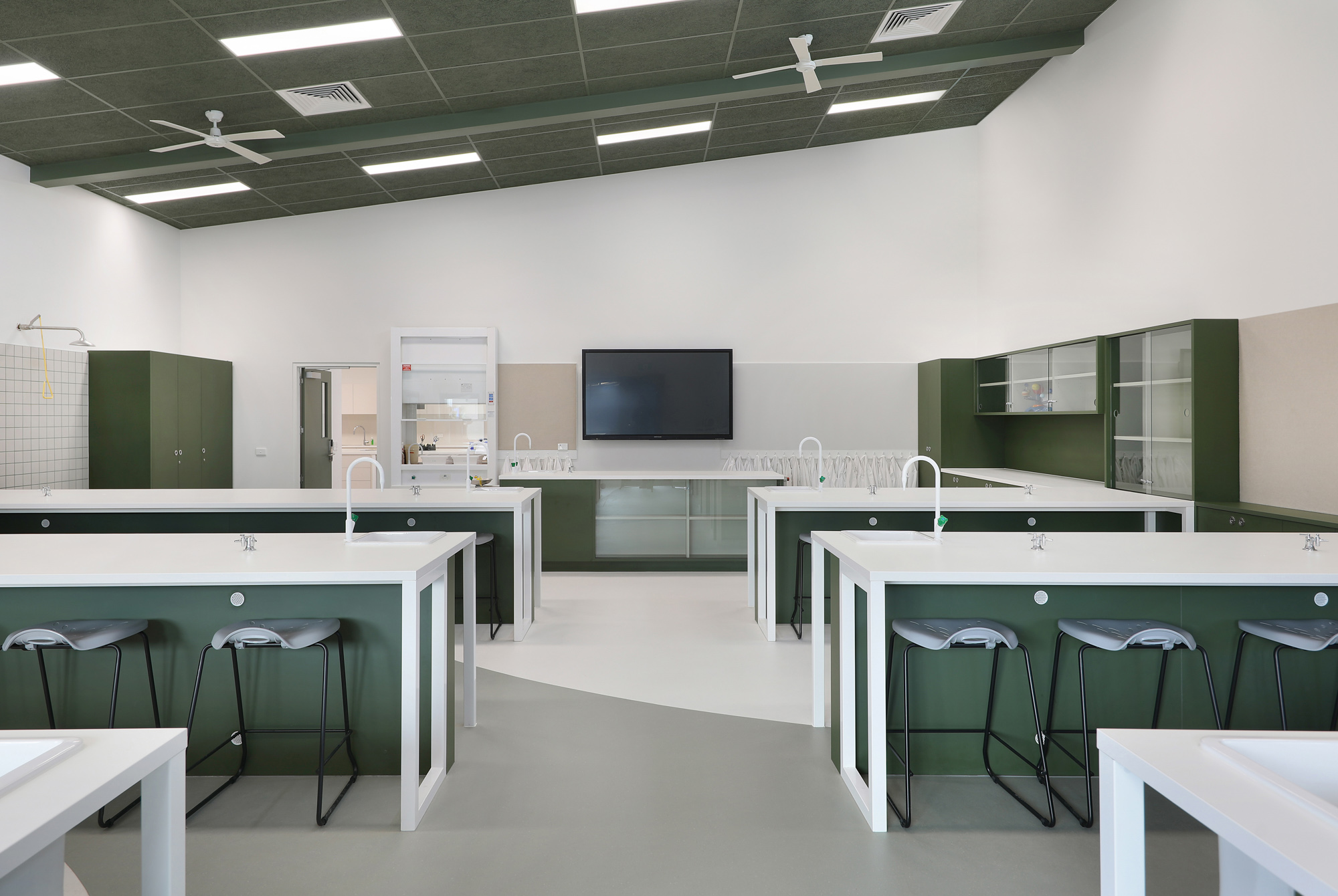
Ranson Building at Emmanuel College
Watson Young Architects is a national practice that views design as a means to enhance the human experience. Founded in 2004, the firm has grown into a multidisciplinary practice with offices in Melbourne, Sydney, Perth and Geelong, working across a range of disciplines.
Rather than adhering to a signature aesthetic, Watson Young’s approach is defined by a deep understanding of its clients, ensuring that every project is shaped by the requirements of its users. With an in-house interior design team, the practice takes a holistic stance, integrating architectural and interior elements to create cohesive, well-considered spaces across the commercial, education, residential and industrial sectors. This ethos is particularly evident in the firm’s work in education, where spaces are designed not just to accommodate learning but to actively inspire it.
One such example is Emmanuel College in Point Cook, Victoria, where Watson Young has transformed the Ranson Building into a dynamic home for the Science and Technology Department. Moving beyond the conventional laboratory model, the practice has crafted a series of rooms that stimulate students through a deliberate use of colour and materiality. The approach is simple but effective – each lab is anchored by a distinct colour scheme: green for biology, blue for chemistry, orange for physics. More than just a visual tool, this careful application of colour serves multiple functions, reinforcing subject identity, aiding wayfinding and subtly shaping the way students engage with their learning environment.
Psychology played a key role in the palette selection. Blue, known for its calming properties, is used to promote concentration and memory retention, while green encourages balance and relaxation. The warm earthy tones of orange, on the other hand, energise and stimulate engagement. This balanced use of bold hues and neutral tones creates dynamic yet focused learning spaces.
Materiality further enhances the spatial experience, adding depth and a tactile quality. “Selecting durable materials suited to a science learning environment was key to our approach,” explains Amy Stuart, a senior interior designer at Watson Young.
Acoustic performance was also a vital consideration in the project, leading to the integration of custom Troldtekt ceiling panels and Autex Vertiface pinboards, which help to control sound while adding warmth and texture.
“We saw this as an opportunity to make functional elements – like textured surfaces and acoustic treatments – both practical and visually engaging for students,” says Jack Hesse, the project lead.
Beyond aesthetics, the Ranson Building reflects a broader shift in architecture for the educational space. The layouts have been optimised for movement and interaction, fostering an immersive and engaged experience. Expansive work zones encourage collaborative experiments, while strategically placed storage units keep the spaces uncluttered and adaptable. The lighting design is considered – combining natural light with soft, evenly distributed artificial lighting – which further assists concentration and clarity within each lab.
As Watson Young Architects continues to expand its presence in the education sector, the Ranson Building proves what is possible when architecture is attuned to the needs of its users. The refurbished Science and Technology Hub reflects a nuanced understanding of how design can shape learning, ensuring that students and teachers alike are supported by spaces that are as inspiring as they are practical.
Architecture and interior design by Watson Young Architects.


