Three Design Strategies to Strengthen the Connection to Nature
Dan Weber, founder and principal of Anacapa Architecture, explores three strategies to enhance the connection between nature and the built environment.
For Weber, designing a home is about creating a deep, lasting connection to the natural world. “We adopt the ethos that the architecture is a guest in the natural world and subservient to the landscape beyond,” he says. That perspective has shaped some of the firm’s most celebrated projects, such as Nicholas Lane, set in the incredible landscape of Montecito, California.
Weber’s first key strategy is to integrate nature within the envelope of the home. To do so, he suggests utilising materials that echo the surrounding natural environment, such as local timber and stone. “We try to create spaces that bring natural materials in from outside and allow landscape to be an immediate part of the experience from the interior spaces,” he says. “So here in Southern California, we’re surrounded by oak trees … and very light, naturally occurring sandstone, so we try to use elements that are either locally sourced or feel like they belong within that environment.”
The second strategy involves framing views and openings with intent. “We always see a glimpse of landscaping at the end of a long corridor,” says Weber. It’s an enticing way to create moments of reveal and impact, especially in homes with dramatic natural surroundings. For instance, in Nicholas Lane, the ocean view was intentionally hidden from the entrance to create a bigger emotional impact. The Anacapa team also always works closely with clients to map out where rooms should be placed based on the kind of experiences they want in different parts of the home, as well as using carefully considered landscaping to either amplify or shield views.


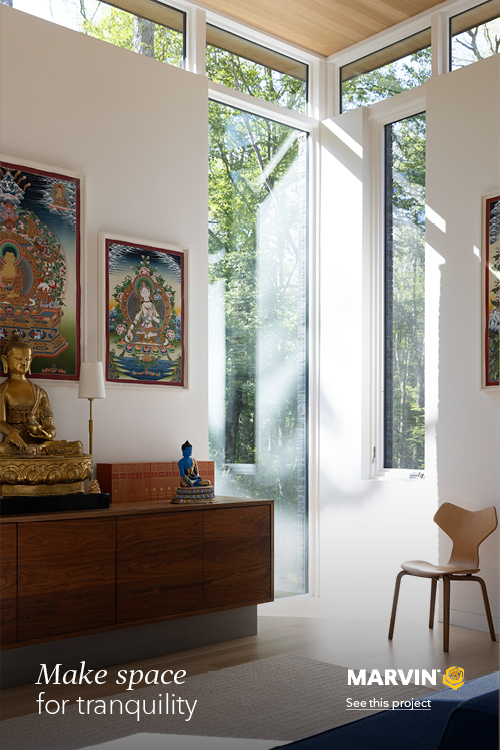
Weber also designs glass elements to disappear as much as possible to achieve an uninterrupted view of the landscape. Floor-to-ceiling, wall-to-wall panes are used to create a sense of continuity between indoors and out, while narrow sight lines and flush transitions make the structure feel secondary to the landscape. With this, climate and sun exposure are also important considerations. “We have to be very careful to come up with strategies that shade that glass and prevent too much heat gain while still allowing us to experience the views and experiencing nature beyond the glass.”
Weber’s third strategy is simple: make the architecture subservient to the landscape. Whether it’s edible gardens on the roof deck or a pool placed close to the living space to become part of daily life, Anacapa’s goal is always to keep the experience of nature front and centre. “We truly believe that taking a very site specific and environmentally sensitive approach creates for a much better home and very special projects,” he says.
This series is brought to you by Fisher & Paykel.
Architecture by Anacapa Architecture.