Nipa Doshi
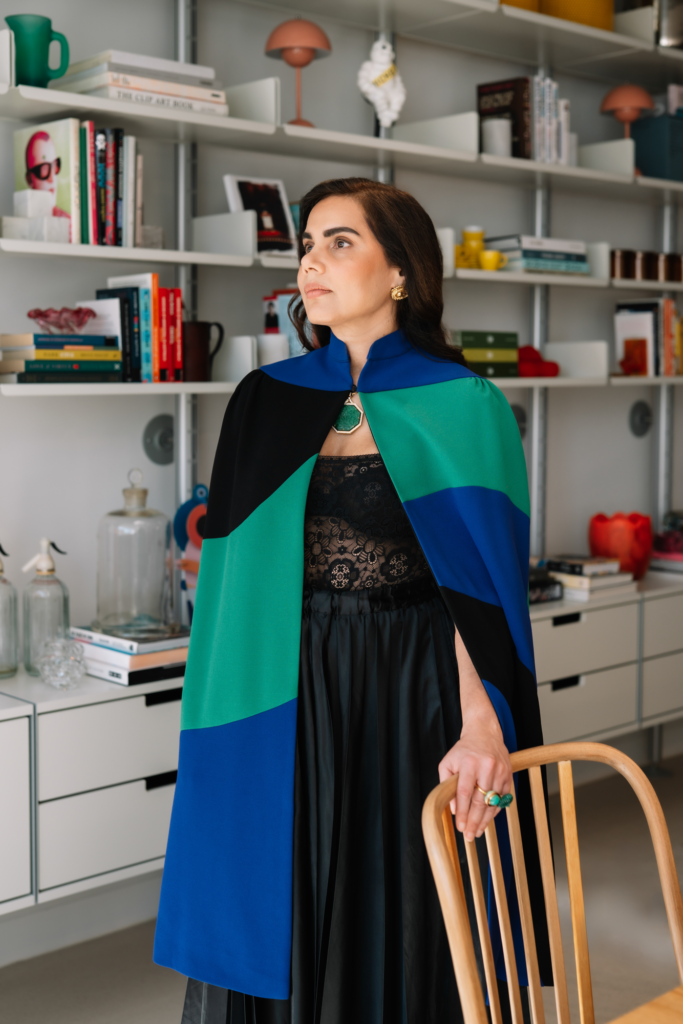
Celebrating 25 years as one half of design firm Doshi Levien, Nipa Doshi’s latest work is a solo endeavour defined by ritual, meaning and joy: A Room of My Own for the 2025 MECCA x NGV Women in Design Commission.
Nipa Doshi’s practice defies easy categorisation. An award-winning designer and co-founder of internationally acclaimed design studio Doshi Levien, she moves fluidly between disciplines, driven by a love of drawing and a commitment to beauty, diversity and plurality. Born in Mumbai and based in London, Doshi bridges cultures and tradition – and it’s this expansive approach that informs A Room of My Own, her most personal work to date. The piece, a multidimensional cabinet, was unveiled at the National Gallery of Victoria (NGV) in September, marking Doshi’s first solo exhibition in Australia.

Now in its fourth year, the MECCA x NGV Women in Design Commission is a unique series that invites globally renowned female designers to create ambitious new work for the NGV’s permanent collection. Jo Horgan, founder and co-CEO of MECCA, notes that the spirit of Doshi’s practice – innovative, strongly connected to culture and open to constant reinvention – made her a notable choice for this year’s commission. “She is one of the global leaders in design for a reason: she challenges established norms and ensures her cultural identity is infused into everything she does,” she says. “More than that, her products, design and detail keep us all focused on the value of women’s voices, experiences and craftsmanship.”
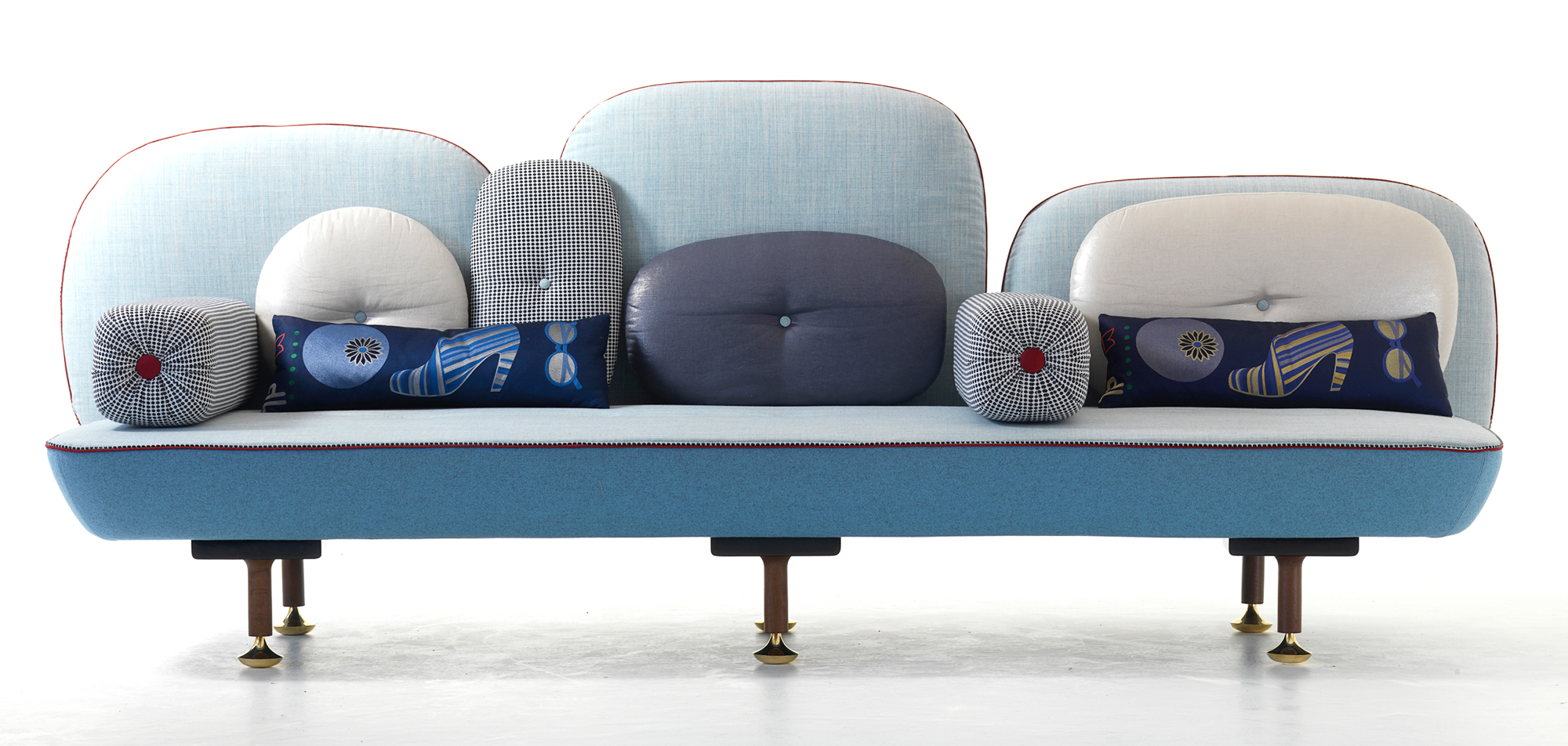
It was Doshi’s early life in Mumbai and Delhi that came to shape her unique understanding of design. “Design has always been a way of doing things – it’s as much about an action or a gesture,” she says. “The beauty of everyday rituals is very important to me, and that’s something I think is very rooted in my upbringing.” After moving to London in the 1990s to study at the Royal College of Art, Doshi met her creative and life partner Jonathan Levien. Together, they founded Doshi Levien, a firm known for its cross-cultural perspective and genre-defying output. The couple’s practice encompasses everything from cookware and textiles to furniture and interiors, created in collaboration with leading brands such as Moroso, B&B Italia, Hay and Kettal. The MECCA x NGV Women in Design Commission coincides with a significant milestone for the studio, as the duo celebrates 25 years.
For Doshi, the invitation to create the work was a rare and valuable opportunity. “What was really important was to express all my values in design,” she says. “I wanted this piece to be an homage to all the influential women in my life.” A Room of My Own is a deeply layered and personal project – a colourful, multifaceted cabinet inspired by the kavad, a portable storytelling shrine from Rajasthan. The piece honours sacred and everyday rituals, functioning as both a dressing table and a shrine. “I wanted to create a space for wellbeing and self-reflection – a place to look after your body and nourish your mind. There’s a reference to Virginia Woolf in the title, with the idea that if women have a space of their own, they can flourish. But at the same time, I did not want A Room of My Own to be only inhabited by me.”
This notion – that a private space can also be communal – draws on Doshi’s earliest memories of gatherings between her mother and her friends. “They would get together in the afternoon, all the ladies in their saris, and there would be a real sense of community … I really liked the idea that A Room of My Own is not a space just for me, it’s a social space.” The cabinet reflects that beautifully, as its octagonal form concertinas to reveal a dressing table on one side and a suite of five original drawings representing women who have shaped Doshi’s life on the other. These pieces aren’t realist portraits but amalgamations of qualities in women she loves and admires. There’s Zeenat, based on the bold, sensual 1970s Bollywood actress Zeenat Aman; Maya, drawn from a beloved aunt and entrepreneur; Nina, a friend who radiates self-expression and empathy; and the Loud Ladies, her mother’s gregarious friends and relatives. In the centre is a self-portrait. “There is a sense of fun and celebration in the drawings,” says Doshi. “I think they’re very joyful.”


Made by Atelier Helbecque, a master cabinet-maker in Saint-Maur-des-Fossés, France, the piece is constructed with exquisite attention to material: timber, lacquer, metal and coloured glass, with touches of gold leaf and bespoke brass fittings. “I think there is a very strong architectural element to the cabinet and the materiality. There’s a real sense of movement when you open it. It’s like you’re entering your own space.”
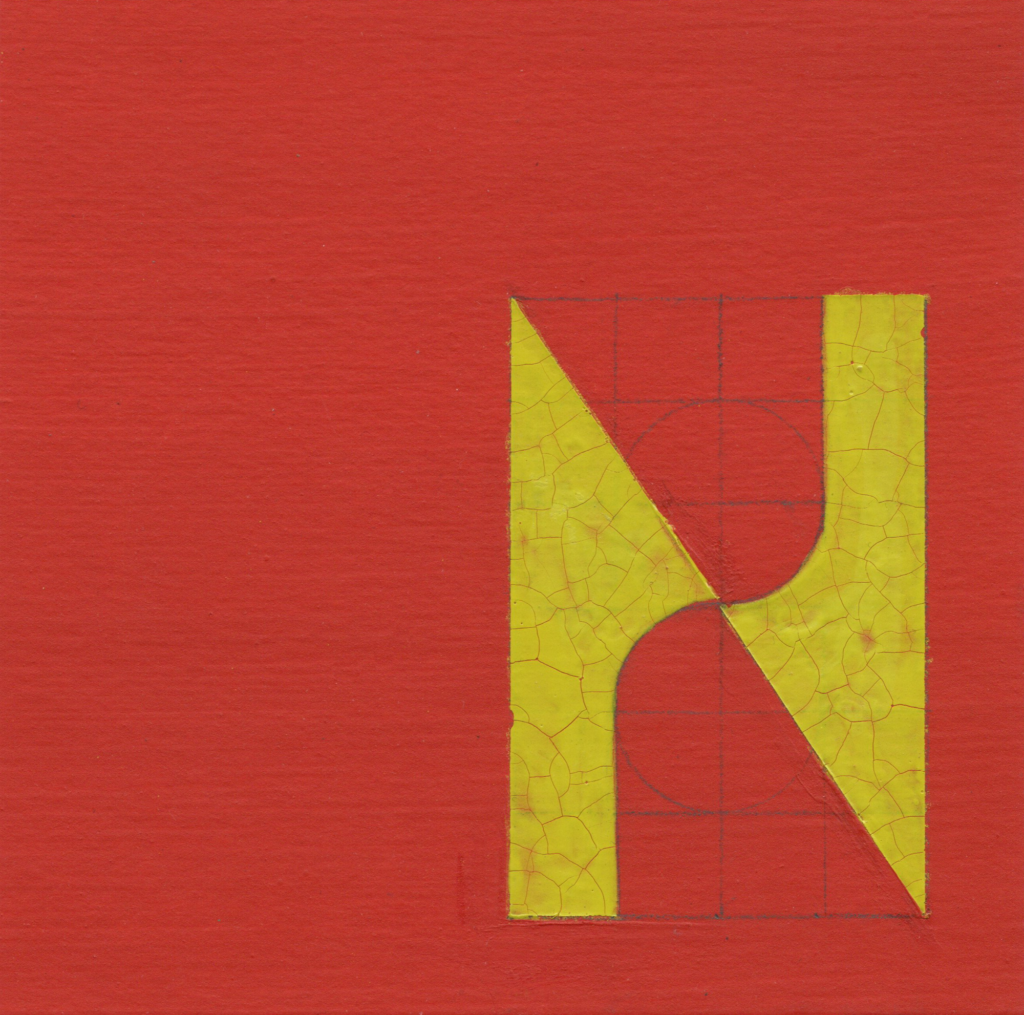
Exhibited alongside the cabinet is a digital font that Doshi designed especially for the work, which will also be acquired by the NGV. Creating a typeface for the first time is another example of her willingness to experiment with new forms. “I’m not a graphic designer,” she says, laughing, “but I think that if you apply the logic of design then it’s about use, about beauty, a sense of discovery in lines, proportion and precision. It has to work as a system.”



The project also includes a pair of large wall panels titled A Memory of Home Real and Imagined, which draws upon Doshi’s memories of India’s rich and vibrant material culture. “When people think of India, they think of a very ancient culture, but it’s also a culture that really embraced modernity,” she says. The installation represents Indian modernist architecture, as well as the barrel-vaulted ceiling of Doshi’s London apartment in the Barbican, tying these different worlds together. “There’s a sense of what the world can be when cultures come together. That plurality and diversity of references, materials and ways of doing things is very important to me.”
While A Room of My Own reflects the women Doshi looks up to, she is also a powerful role model to many. “I hope that every woman who is successful in any field is a role model. The women who I’ve chosen to be in my cabinet are extraordinary ordinary women. And I think that’s really important to remember … that role models are all around us.” Her advice to the next generation of emerging designers is clear and practical: “There is no substitute for skill and talent, so hone your skill and your talent, then develop your voice. Know what you want to say.” She encourages young designers to stay curious and open, adding, “make connections between different disciplines – art, theatre, music. It’s all related.”


For Doshi herself, the commission has provided a welcome sense of creative freedom. “It’s a very generous commission,” she says. “For a public institution to collect work in this way is very rare … I’ve poured my heart into it and it’s given me so much as a designer.”
As Doshi Levien marks a quarter-century in practice and her own work continues to evolve, what remains constant is Doshi’s commitment to beauty, narrative and innovation. “As a studio, Jonathan and I are always looking for new opportunities, and we make sure that we are open to the world around us. This commission has made us think that we have to be fearless and we have to try new things.”