Jared Lockhart
The landscape designer has an abiding love for the built form but wields his considered skills with restraint, allowing the rugged terrain of New Zealand to take the spotlight.
Both geographically and professionally, Jared Lockhart’s vocational journey has been more circuitous than most. Though the success of his eponymous Auckland-based landscape design practice implies a certain career inevitability, he says he found his calling later than many, and largely via a fortuitous twist of fate on the other side of the world.

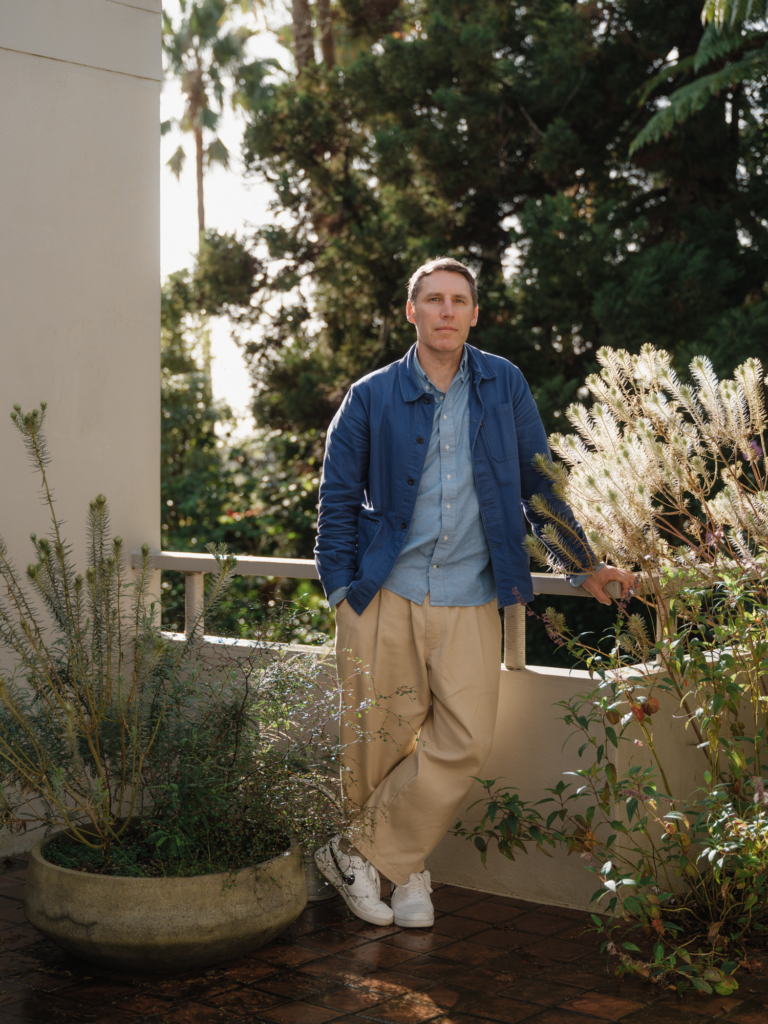

A love of gardening had always bubbled in the background of Lockhart’s life. One of his grandfathers was a farmer and keen vegetable gardener, casually imparting knowledge as a young Lockhart pottered alongside him. “I’ve always had my own garden,” he explains. “Even as a child, I’d have a section of the garden that was mine. It’s just a thing I did and I didn’t really think too much about it.”
But an idle passion for plants never fully blossomed into the idea of a landscaping career and Lockhart reluctantly followed a well-worn path – he comes from a family of engineers – into a mechanical engineering degree.


Shortly after, he embarked on the customary London OE (overseas experience), setting sail with a two-year working visa in hand, like innumerable Kiwis before him. Two years turned into 14 years, marked by a dramatic fork in his career, the result of a serendipitous connection with the renowned British landscape designer Jinny Blom.
London-based Blom has worked on estate gardens across the globe, authoring two books to date, and designing several Chelsea Show gardens, including a 2002 collaboration with the then Prince of Wales. But back then, Blom was just starting out, a solo landscape designer in need of an assistant. Lockhart’s sister Katie – an interior designer who was working on an adjacent project – casually recommended her brother for the job and, from this chance conversation, his landscaping career took root.

“I worked for her for eight years and, for the first six years, it was just the two of us and she taught me everything she knew, like an apprenticeship,” he recalls. “It would never happen now – she’s got an office of 20 people and wouldn’t have the time to teach anyone like that, but back then it was a case of right place, right time.”
Lockhart took to the profession like the proverbial duck and even found his unrelated degree gave him an advantage. “I was able to grasp the fundamental ideas of landscape design – things like ground levels, retaining walls, earthmoving. From a practical sense, I understood what we were trying to do fairly quickly,” he says. “What I didn’t really know was good design and that’s what Jinny taught me.” In addition to their work in the UK, he recalls spending summers with Blom’s family in a French village, soaking up the culture and the subtleties of European design aesthetics.


When he finally heeded the Kiwi homing call and returned to Aotearoa, Lockhart was well equipped with the skills and experience to strike out on his own, launching his landscape design studio in Auckland. But while the fundamentals may be the same, he found the philosophical approach to landscape design quite different in this part of the world, which he attributes to the contrast between England’s landscape – characterised by centuries of cultivation – and New Zealand’s relatively virgin terrain.
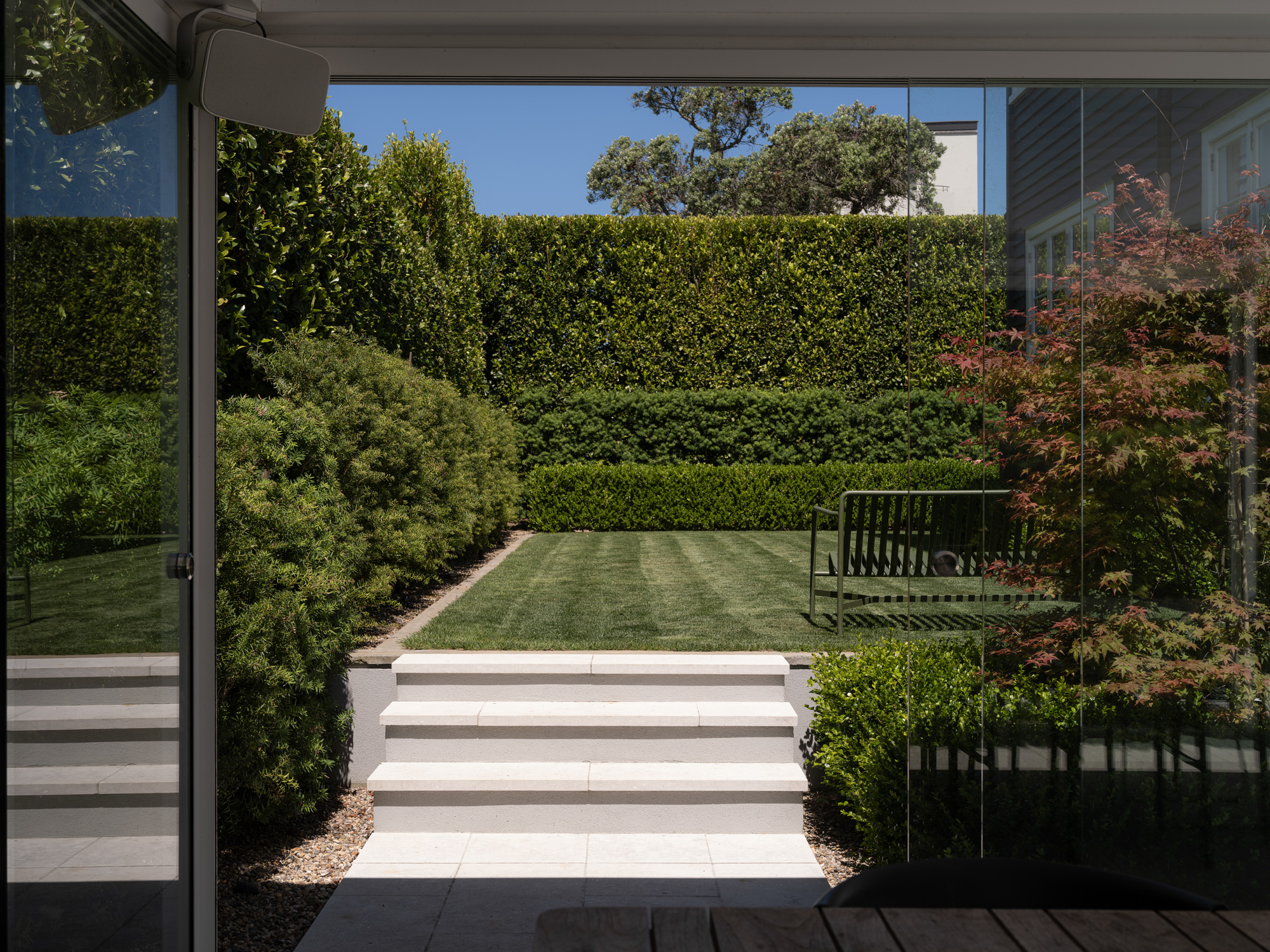
“In the UK, we would reference the historical layers of the building quite a bit, and Creating tranquil spaces is at the heart of Jared Lockhart’s work. “If there is an identifying attribute to our gardens, I would say it’s the calmness,” he says. how the land was previously used. Here, we reference the wider landscape a lot more. We’re trying to merge with the natural landscape, not the built form so much. There are less hard edges overall. We’re trying to blend it in, so there’s no start and stop for what we’re doing – it’s just sort of continuous.”

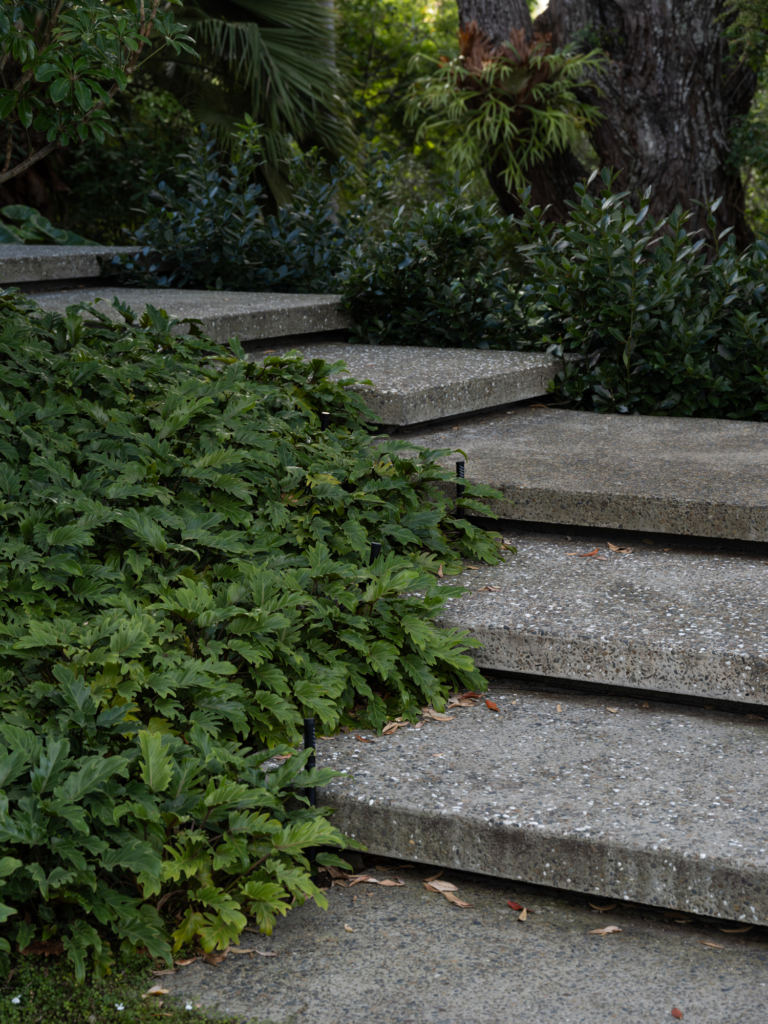
The land is a silent partner in Lockhart’s work. He designs with a light touch – even in his use of the built form, it often feels as if the structures have been dictated by the site itself. For example, describing a garden he created in Parnell, Auckland, where curved stone walls rise out of the sloping site like ancient ruins, he says, “It just felt like the right response, because those walls mimic the contours of the land.”
Other projects are a pure celebration of the raw landscape, such as Crown Range in Central Otago, where the strategically sculpted land has been thickly planted with an ocean of feathery grasses, a strikingly simple arrangement that eliminates the divide between the cultivated garden and its rugged alpine setting.
While the natural landscape muscles its way into his work, Lockhart finds equal inspiration in ingenious human design – particularly in the space where nature and human perspectives mesh. “I enjoy good architecture, looking at what architects build and understanding how they got there, their thought process. The architecture I like is sympathetic to the land – it’s harmonious. And understanding how they achieved that is something I can learn from and apply to the landscaping.”
This passion for quality architecture – being inspired by it and designing landscapes to complement it – has become a recurring feature of Lockhart’s portfolio, and it has led to exciting projects in Aotearoa and, now, abroad. A collaborative relationship with highly acclaimed studio Herbst Architects has led to two new international projects, one in Maui and the other in Florida, where the landscapes were designed to embrace and enhance the Herbst-designed structures. While working in a foreign landscape, with a different climate and plant palette, can pose challenges, Lockhart points out that the fundamental principles of spatial design transcend location – and it’s this area of landscape design at which he excels. “It’s the hardest part, but in some ways, it’s the best bit. I quite like ordering the space – it’s like a big puzzle.”
Whether at home or overseas, Lockhart’s designs expertly temper imagination with restraint. “I think the trick is to not over-design,” he comments. “If there is an identifying attribute to our gardens, I would say it’s the calmness, which comes from designing something that’s suitable for the space. A garden shouldn’t be a staged set – it needs to be quieter and just a pleasant place to be in.”
![Real Majik Handcrafted Rugs By Tappeti X Ysg Collection Feature The Local Project Image 2[1]](https://d31dpzy4bseog7.cloudfront.net/media/2023/02/26082158/Real-Majik-Handcrafted-Rugs-by-Tappeti-x-YSG-Collection-Feature-The-Local-Project-Image-21-1-768x576.jpg)