Legacy and Innovation
With the recent passing of Artedomus founder Angelo Schepis, managing director Phil Brenton reflects on his incredible legacy and the visionary innovation that continues to drive the business.
For over four decades, Artedomus has occupied a singular position within Australia’s design landscape, renowned not only for the remarkable quality of the stone, tiles, bathware and furniture it supplies, but also for its trailblazing approach to design and materiality. At the centre of that legacy is Angelo Schepis, who founded the business – then known as Domus Ceramics – in 1985.

Schepis didn’t simply respond to demand; he created it, pioneering natural stone and Japanese ceramics in Australia.

Brenton reflects on how Schepis’s impact continues to shape both the industry and the company’s direction all these years later. “I think he was probably the most influential person on our market segment that Australia has had,” he says. “If you’re talking about natural stone being used residentially in Australia, I don’t think there’s anyone that would’ve had as much influence on materiality.”
Schepis didn’t simply respond to demand; he created it, pioneering natural stone and Japanese ceramics in Australia. Isernia, for example, was one of Artedomus’s first exclusive stones, sourced in Italy and named by Schepis more than 20 years ago. It was the first limestone to be sandblasted in Australia, setting a precedent for a light, luxurious and distinctly local aesthetic.
That instinct for innovation remains at the heart of the business. “Artedomus doesn’t follow anybody’s direction. We create our own direction,” Brenton asserts. It’s a tenet that has allowed the company to uphold the highest standards across its materials, nurture enduring relationships with suppliers and the design community, and continue staying ahead of the curve.
The business has recently undergone a period of rapid expansion, opening studios in Adelaide and Byron Bay in 2025. While Artedomus has major showrooms in key cities, its newer studios offer a different, more intimate experience. “The studio concept came about from us wanting to be closer to more people,” Brenton says. The model responds to shifting patterns in where and how design work takes place, with architects and designers increasingly operating beyond traditional urban centres.
Importantly, these spaces prioritise close working relationships between Artedomus and its clients. “What clients are actually coming to see is the people that work here because of the knowledge and the skill that they have,” he notes. The feedback so far has been overwhelmingly positive, with clients able to access Artedomus’s comprehensive sample library while also using the space as a creative hub. “They’re proving to be very successful for private clients and also for professionals.” It reinforces the business’s long-held belief that materials are only part of the story; the knowledge behind them is equally critical.
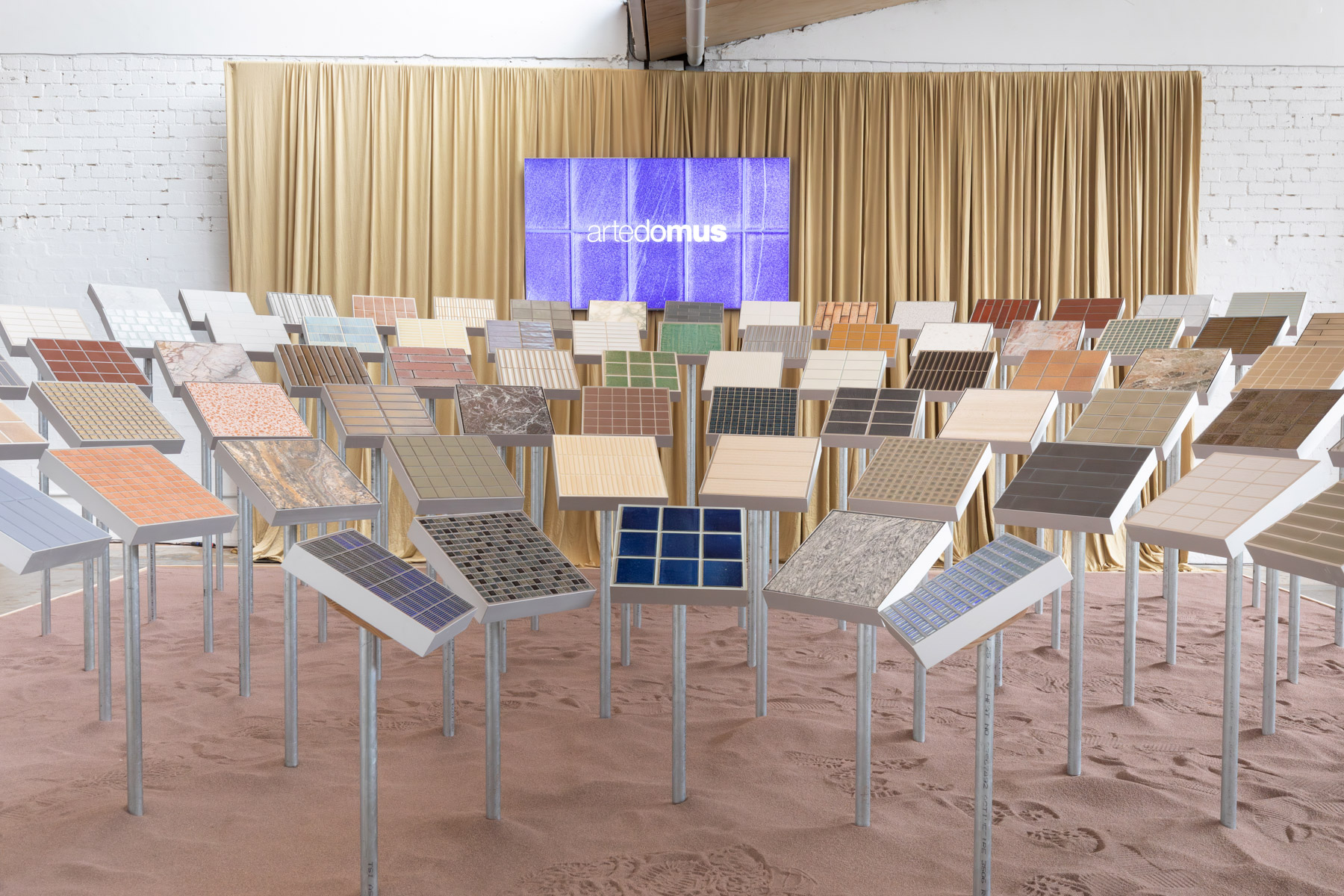
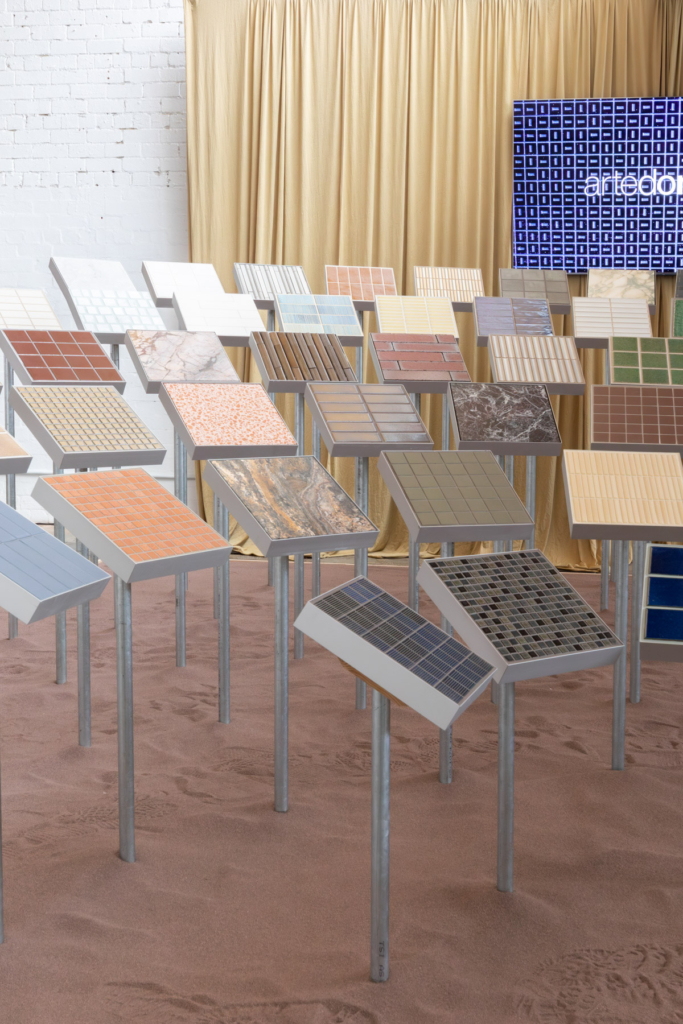
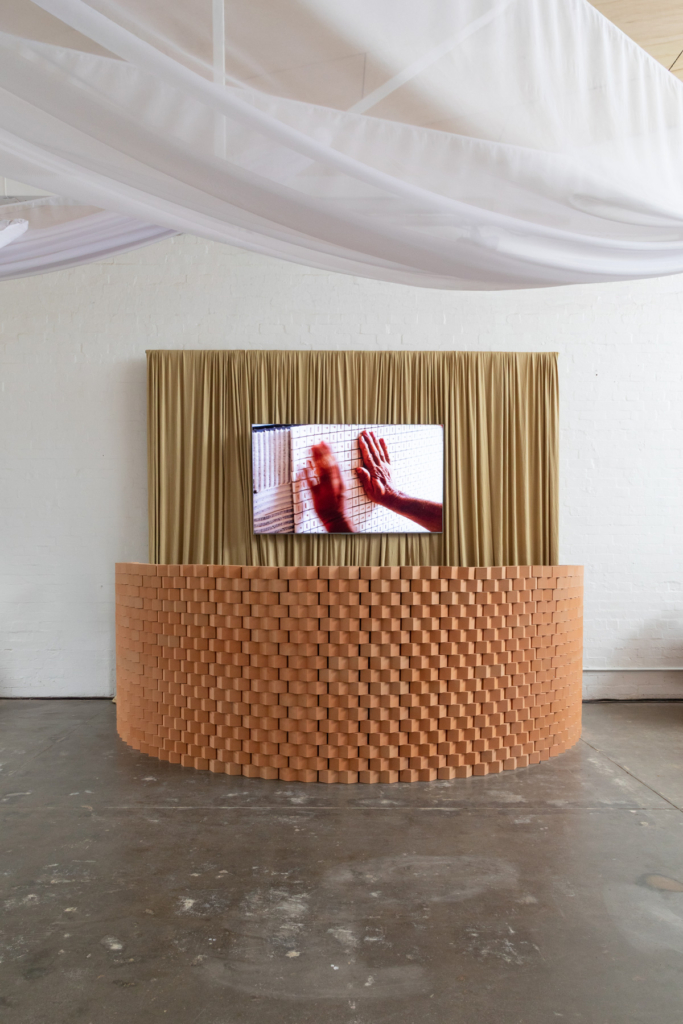
This idea is taken to new heights in the pop-up Artedomus Galleria in Melbourne’s Flemington. Envisioned by creative director Thomas Coward as an experimental, installation-led exhibition, ‘Expo ’26’ presents a selection of artisanal objects, products and surfaces from the Artedomus collection, including pieces by Cotto Manetti, Agape and Decoratori Bassanesi. “It is about bringing together strong product offerings and displaying them in a different way,” Brenton explains, “but also not just having it as a showroom but as an educational facility.” Visitors engage with the materials and videos through guided tours, gaining insight into provenance, process and application.




New products from Mutina Bricks are a highlight, with designs by luminaries such as Patricia Urquiola, Konstantin Grcic and Ronan and Erwan Bouroullec expressed in natural terracotta and gorgeous glazes. “This is really a new segment because it’s been used in different ways: perforated screening, incidental furniture, seating. There’s lots of ways to let your imagination use what’s in front of you.”
Also on display is a preview of the latest product from Artedomus’s sister brand New Volumes: the Bound table by Locki Humphrey, winner of The (Emerging) Designer Award for Product Design. Launched in 2018, New Volumes explores the intersection of material and furniture design, inviting designers to push the boundaries of a single natural material. Its two collections, Elba and Terracotta, continue to grow.
The brand’s focus on cultivating relationships, developing unique products and shaping markets over decades is what sets it apart. From pioneering porcelain benchtops to championing terracotta, its trajectory has always been defined by a willingness to invest in ideas. It’s a direct inheritance from Schepis, whose “ability to see things and realise that people would have use for them was one of his defining characteristics”. Today, that legacy is carried forward through new formats, strong collaborations and creative ways of engaging with the design community.


