Autex Acoustics
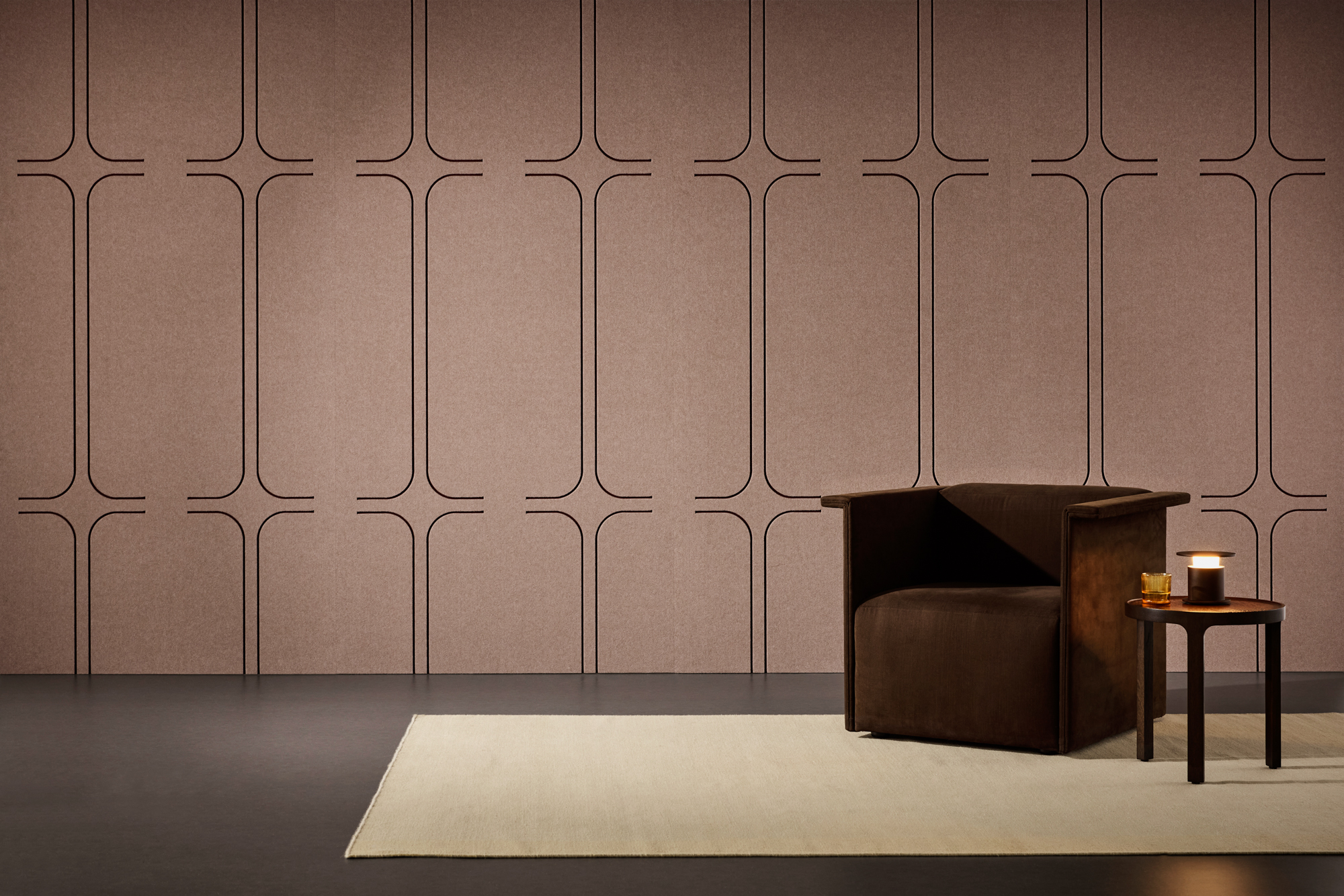
Autex Acoustics’ Groove Duet represents the future of acoustic solutions, a sound-absorbing wall system that reads as architectural detail.
The wall is one of the most underspecified surfaces in contemporary interiors. Architects and designers devote considerable attention to floor materials, ceiling treatments and furniture, yet the vertical plane, which constitutes the majority of a room’s visible surface area, is often resolved with paint and left at that.
In open, hard-surfaced spaces, reverberation accumulates on walls, speech loses clarity and ambient noise compounds into something that quietly erodes the quality of a room. Autex Acoustics, which has been creating acoustic solutions in Australia for 35 years, builds products that solve this problem.
One such solution is Groove Duet, an acoustic, sound-absorbing wall system with a dual-layer construction: a router-cut overlay reveals the base colour beneath, producing a carved, two-tone surface that reads as architectural detail rather than applied treatment. Light and shadow move across it differently throughout the day.
The design palette is extensive without being unwieldy. Twelve standard configurations – from organic curves and bamboo-grove motifs to diamond mesh and brickwork patterns – provide a starting point. Twenty-two base colours and 34 overlay options generate a breadth of combinations suited to commercial, hospitality and civic environments alike.
Panels are available in two sizes – 2,400 x 1,200 millimetre and 2,700 x 1,200 millimetre – with 15-millimetre and 27-millimetre thickness options that also determine the upper range of acoustic performance. The surface finish can be specified in smooth or velour, the latter offering pinnable and Velcro-receptive qualities useful in classrooms, studio settings and collaborative workspaces. Pattern customisation is available for projects requiring something more particular. The result is a product that sits comfortably within a designer’s specification process rather than being something that needs to be accommodated.
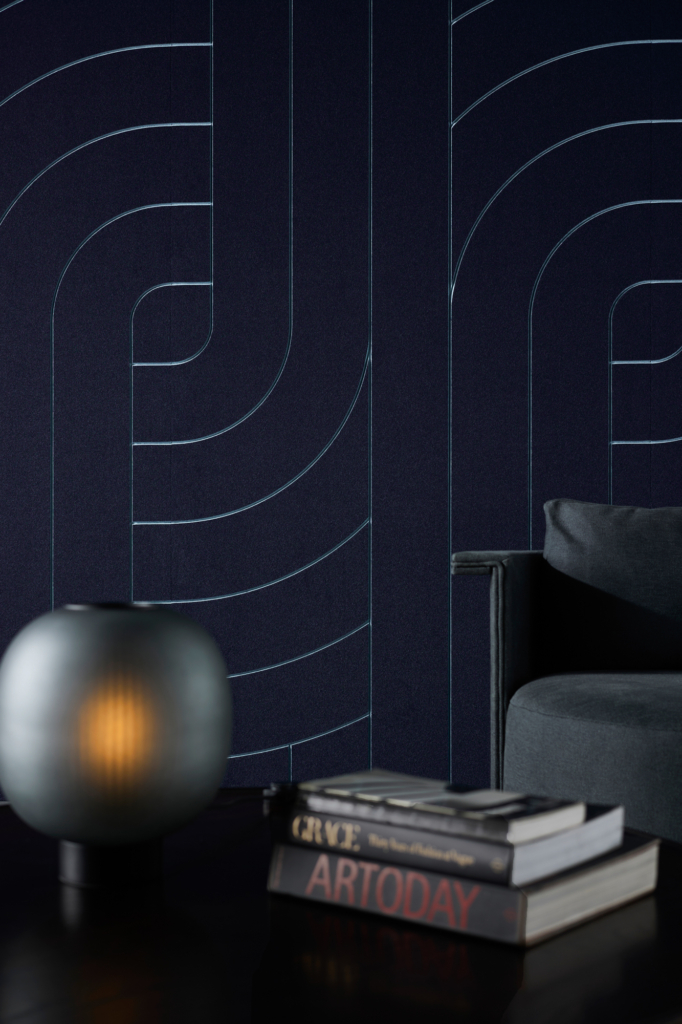
In workplaces, hospitality settings and public buildings and facilities, acoustic quality directly shapes how a space is experienced.
What Groove Duet resolves, beyond the visual, is the acoustic brief. Its Noise Reduction Coefficient ranges from 0.45 to 0.80, depending on thickness, a span that covers the demands of most interior settings. In practical terms, this translates to reduced reverberation, improved speech intelligibility and the kind of ambient calm that allows people to concentrate, converse and remain comfortable over the course of a working day.
These are not secondary considerations. In workplaces, hospitality settings and public buildings and facilities, acoustic quality directly shapes how a space is experienced and how long people choose to remain in it.

Groove Duet offers something specific: a wall finish that earns its place on aesthetic terms and delivers on technical ones.
Sustainability credentials are built in rather than bolted on. Groove Duet is manufactured in Australia from a minimum of 80 per cent recycled PET, is 100 per cent carbon neutral, formaldehyde-free and low-VOC, with Global Green Tag certification and suitability for Green Star and WELL-rated projects. It is installed via direct fix, SpinFix or peel-and-stick, with no significant preparation required.
For designers working in contexts where acoustic performance is increasingly expected rather than optional, Groove Duet offers something specific: a wall finish that earns its place on aesthetic terms and delivers on technical ones.


