ABI Interiors Sydney Showroom
Sukai, Luli and Ramu Farrell, the sibling founders of Gold Coast-based architectural fixtures and surfaces company ABI Interiors, wanted the brand’s first Sydney showroom to serve a purpose beyond displaying its expansive range of tapware, basins, tiles, showers, hardware and accessories to the market.
“It was important that it also functioned as a living design studio – a place where the A&D community could come together and experiment with their choices,” says Luli, the brand’s creative director. “We really wanted the space to feel like a home – calm, grounding and connected – and alive with creativity.”

The Farrells considered a number of Sydney interior designers, but ultimately it was the work of Esoteriko’s Anna Trefely that felt most aligned with the siblings’ vision. For Trefely, the challenge was transforming a near-derelict, red-brick industrial building in Sydenham in Sydney’s Inner West into a space that ticked myriad boxes and reflected ABI’s luxury-meets-minimalist aesthetic. “As well as having that feeling of home, it needed to cater to a wide range of demographics – from developers and designers to first-time renovators – and showcase the product in a clear, concise way,” she says.
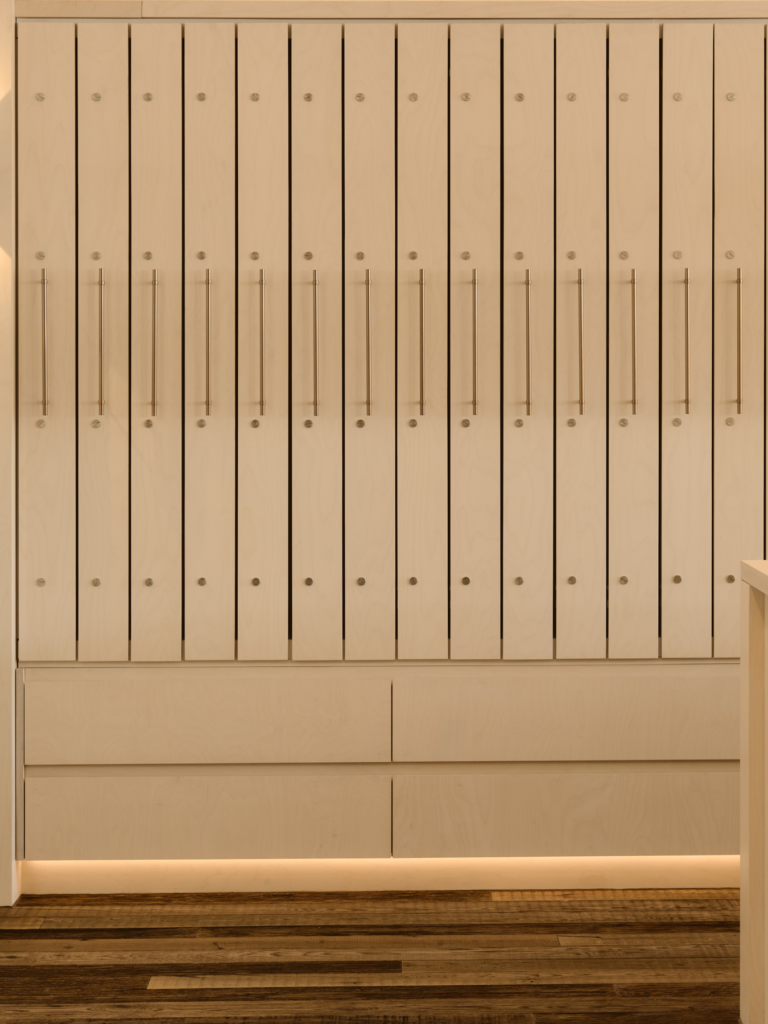
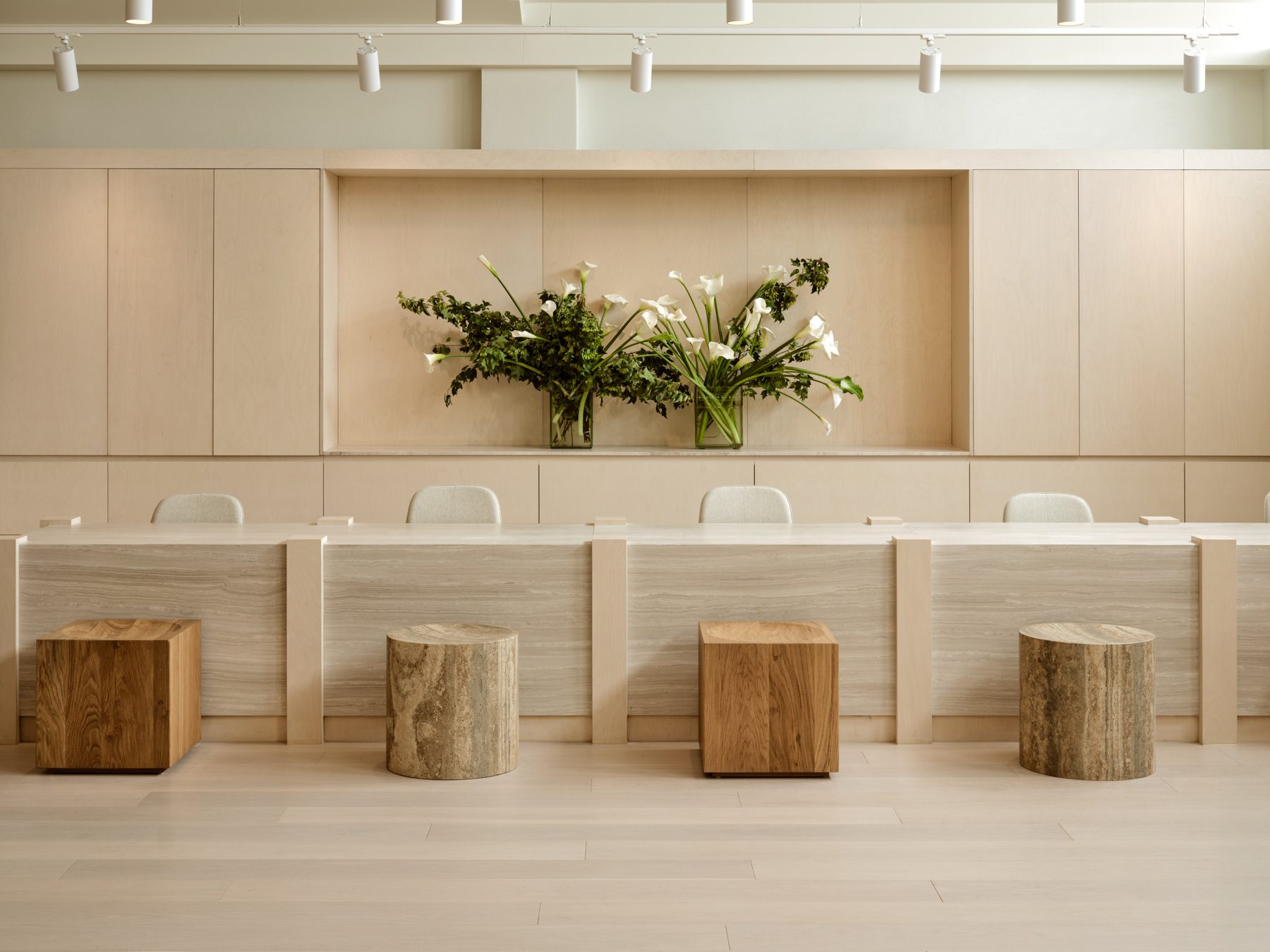
Esoteriko’s approach is grounded in a quiet, neutral palette and a subtle materiality that includes clay-pressed brick, whitewashed and walnut-stained timbers and light-textured render. This mix serves as a whisper-soft canvas for ABI’s kitchen, bathroom and laundry collections, which veer from classic white ceramics and brushed-copper tapware to basins in speckled concrete and tiles that embrace the colour spectrum.
The building’s industrial roots are integral to the transformation, including original floorboards and timber beams, a vaulted ceiling and a seven-metre-high exposed-brick feature wall in the entry area. “We were blessed with some wonderful grittiness in the existing space,” says Trefely. “In some instances, we were able to retain these remnants and celebrate them both as a contrast to the light, clean crispness of the new finishes and a link to the urban context of the building.”
Wayfinding is assisted by distinct shifts in flooring. The reception space extends out to the footpath using a tumbled granite cobblestone that blurs internal and external boundaries. The design consultation area upstairs, meanwhile, is defined by recycled rustic hardwood flooring from the original factory, which creates “something of a punctuation mark on the adaptive reuse of the building and is a stark contrast to the minimal-grain oak flooring in the showroom area”.
The showroom zone is defined by a raft of clever insertions and design forms, including Shoji screen dividers – a nod to the Farrells’ Japanese heritage – light boxes, careful carpentry junctions and pavilion-like structures. There’s a distinct sense of conviviality here, too, engendered through comfort-inducing furniture including a sinuous green banquette in the consult area and a kitchen that wouldn’t look out of place in any contemporary home.
For Luli Farrell and her brothers, the showroom – the company’s fourth nationally – captures the essence of the brand they’ve so successfully built over the past decade; ABI employs close to 300 people across three countries. “Our design philosophy is really about finding elegance in simplicity and the Sydney space reflects this ethos – it’s a calm, refined environment that celebrates materiality and the quiet beauty of thoughtful design.”