Carl Pickering’s
With offices in Rome and Milan, Pickering has offered his selection of architectural feats to discover in the Eternal City.
After relocating from Sydney to Italy in 1980, Carl Pickering studied architecture at the Università Iuav di Venezia (IUAV) and was part of an acclaimed cohort including Gino Valle, Massimo Scolari and Peter Eisenman. Later, with his partner in work and life, Claudio Lazzarini, he established Lazzarini Pickering Architetti – an internationally acclaimed multidisciplinary practice. Their clients have included the likes of Hermès, Valentino and Fendi, and stand-out projects include Compasso d’Oro and Sydney’s iconic Icebergs Dining Room and Bar.

The Pantheon
The Pantheon is an obvious choice, but this is my favourite building in the world, not just in Rome. Its geometric perfection, revolutionary engineering and iconic oculus that brings the universe in makes it one of the most poetic and metaphysical buildings I know. It also looks like a UFO when seen from above, an amazing spaceship that has landed smack-bang in the historical centre of Rome. The repurposed bronze of its portico – and perhaps even roof – was plundered by Pope Urban VIII Barberini and was apparently used by Gian Lorenzo Bernini for the ciborium in St Peter’s Basilica.
Favourite Roman restaurants
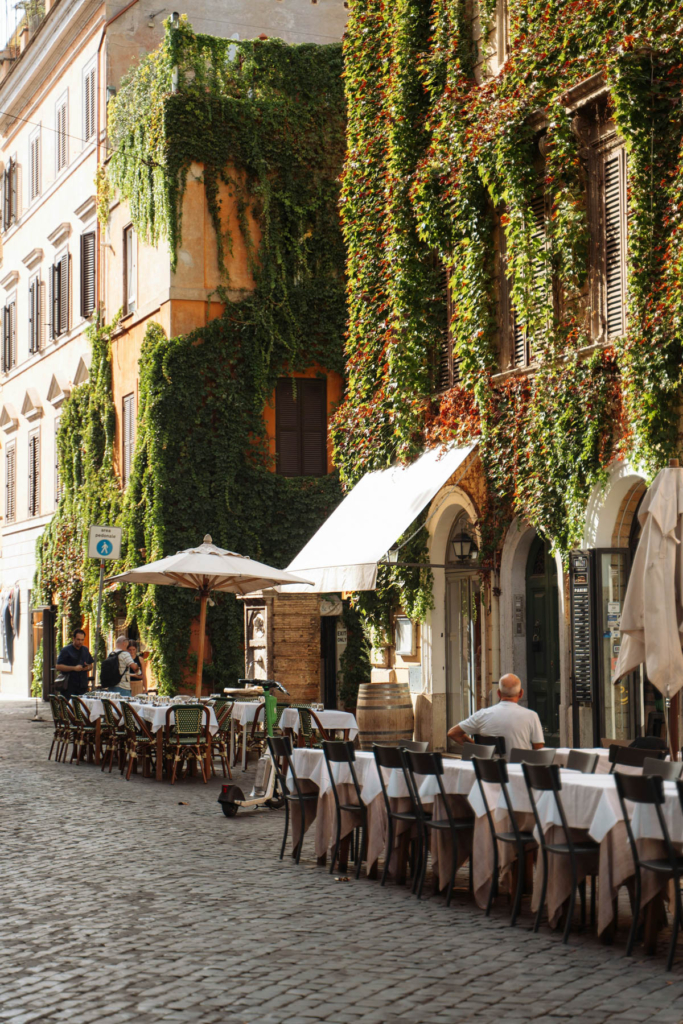
Ar Galletto is our favourite restaurant in Rome, which sits in front of Palazzo Farnese. Family-run, friendly and with seasonal food, an excellent wine list and a wonderful setting, it has the perfect balance of all that is needed for a perfect meal. Da Gildo is our local, and we often eat here a few nights a week. Triumphs of artichokes in season decorate the dining room and fill the menu, the limited but excellent wine list has very reasonable mark-ups – including the cheapest Cervaro della Sala in Italy – and its Cacio e Pepe is a mystical experience.
San Carlo alle Quattro Fontane
This is my most loved Francesco Borromini building. I read in a biography that he was from Ticino in Switzerland, which shocked me as I had always imagined him as the most iconic Italian baroque master. This is Borromini’s masterpiece; the facade, church and cloister are extraordinary in their dynamism, and my memory of the crypt below was of an incredibly abstract space, Gaudì ante litteram. With a great knowledge of building and engineering, Borromini initially helped Bernini to resolve a few technical issues in his buildings.


Teatro di Marcello
Inaugurated in 13 or 11 BC, over time it has been a theatre, castle, shopping centre and noble palace. This is a perfect example of Rome as a palimpsest, as is the San Clemente church. In the mid-15th century, it was restructured by Baldassarre Peruzzi as a palace. When the first two floors were demolished by the fascists in the glorification of the new Rome and the basement was excavated, new structural buttresses were seamlessly added to prop the building up. To complete the typically Roman stratification, Ludovico Quaroni restructured part of it in 1960, and the beautiful stair is still visible.
Mid-century Rome
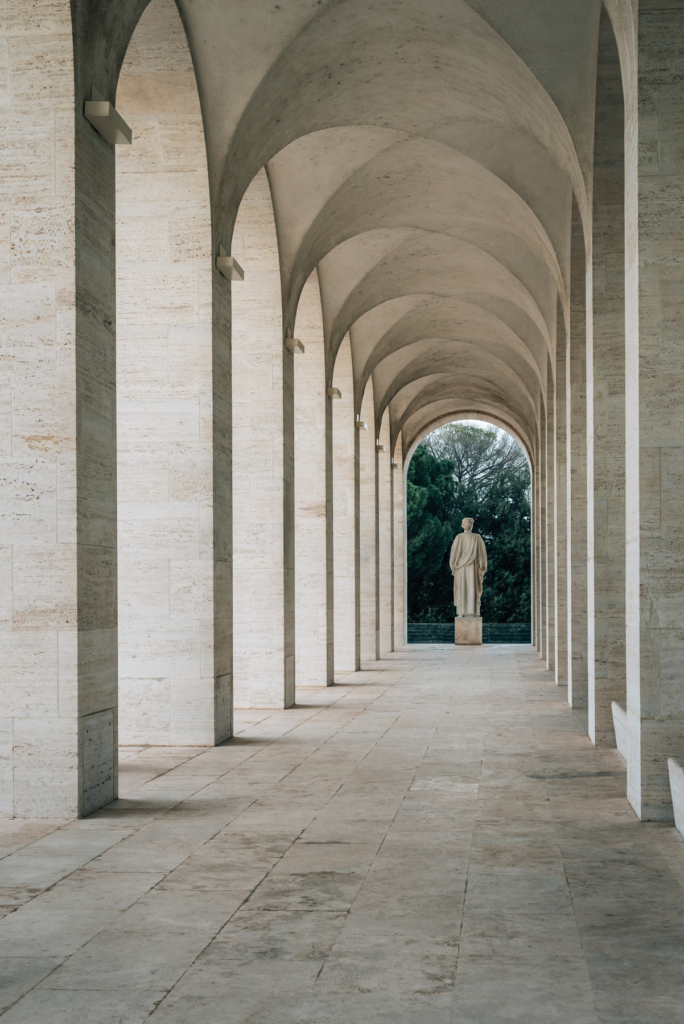
I think one undiscovered aspect of Rome is the mid-century work. Post-war Italian architecture and design was the reason I moved to Italy to study architecture. In Rome, I would suggest doing a tour of Luigi Moretti’s work. An omnivorous man culturally, he had a contemporary art gallery, made a film on Michelangelo and, in his later career, created extraordinary buildings, reinterpreting Roman baroque. Along with Moretti’s work, there are the incredible typological experimentations of Venturino Ventura’s apartment buildings, the refined condominiums and interiors of the Luccichenti brothers and Vincenzo Monaco, as well as the sensitive, contextual buildings of Julio Lafuente.