Casabella
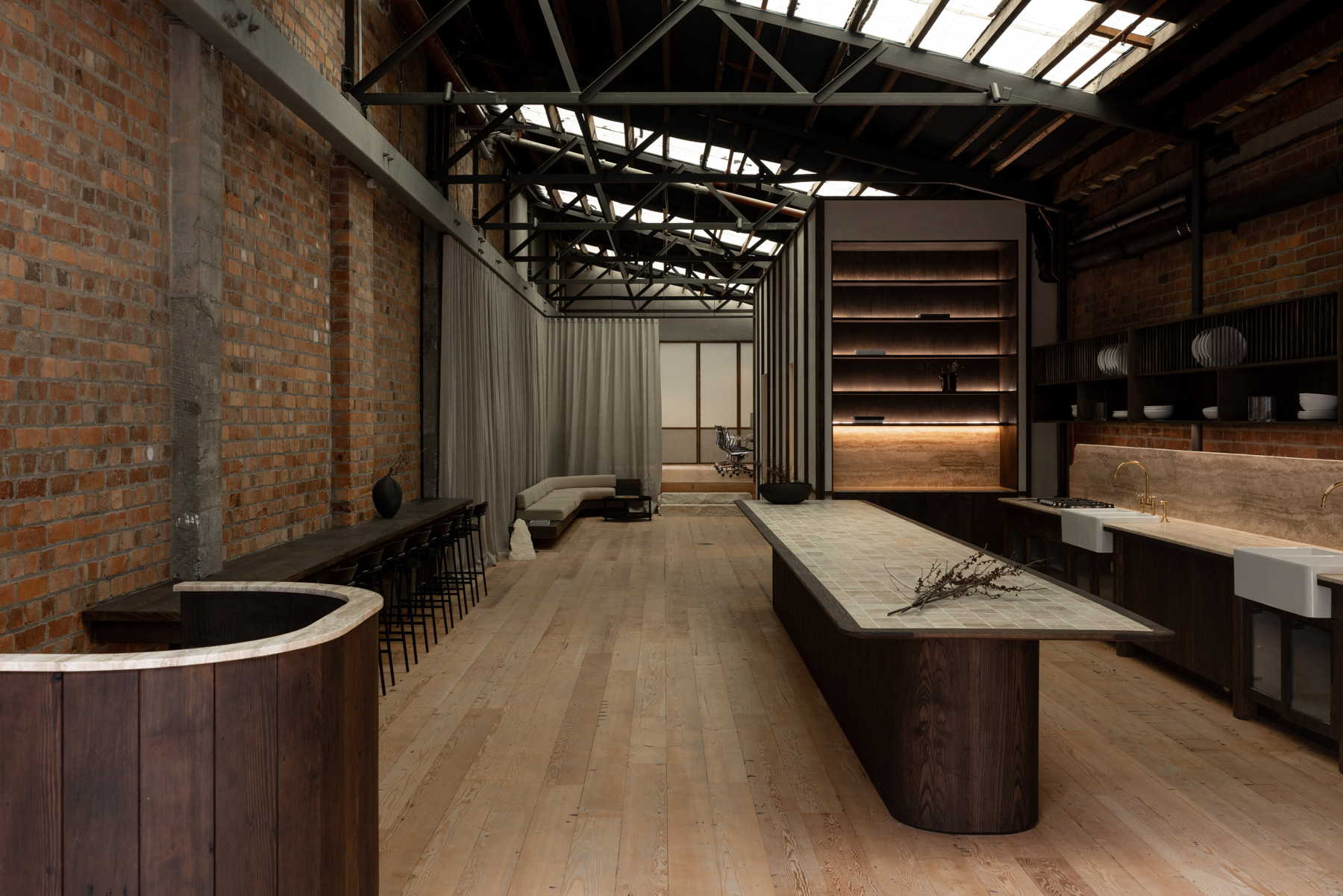
Moody, rich and atmospheric, Casabella by Wonder is the new office space for construction company CASA, one of the interior design studio’s long-time collaborators.
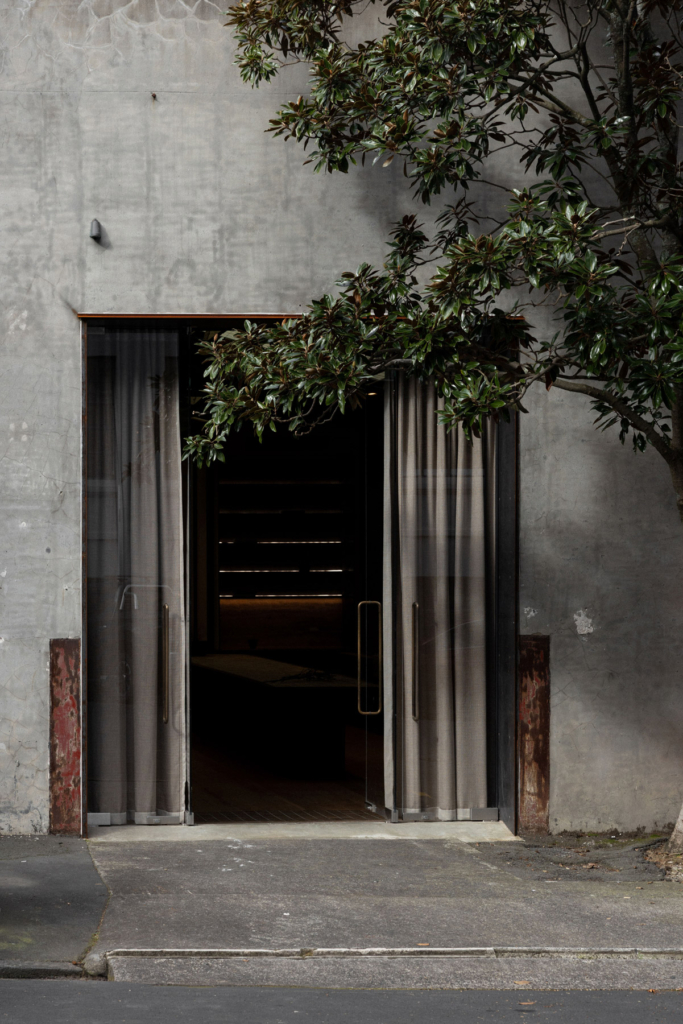
Located in the charming suburb of Parnell in Auckland, this historic warehouse has been transformed into CASA’s headquarters, showroom and social venue all rolled into one.

“The brief was to make the most of a beautiful old warehouse – formerly a textiles millroom – rich with age and layered with history,” says Caldwell.
Described by Wonder director Buster Caldwell as a “coming-of-age moment” for CASA, the office space needed to embody the precision, care and ambition the business brings to all of its projects. “The brief was to make the most of a beautiful old warehouse – formerly a textiles millroom – rich with age and layered with history,” says Caldwell. “Our approach was to tread lightly, let the scars of the building remain and very carefully weave new interventions through.”
The resulting 74-square-metre fit-out, built by CASA, splits the space into two distinct zones: a social front-of-house area and a quieter, more focused workspace that can be screened off by floor-to-ceiling curtains. “The office is both a showroom for their craft and a headquarters to complete their very best work,” says Caldwell. “There is a private rear zone for a tight crew of project managers, quantity surveyors and doers, and an overly generous front space designed for long lunches, late-night antics and social gatherings that keeps the pulse alive.”
This mix of work and play is central to the success of the space. “Construction is a demanding, high-stakes game,” he says. “It shows the skill of a team, but the high demand also asks for moments of pause, reward and connection.” Clad in rust-streaked travertine with a central cobbled stone table, the kitchen is elegant, open and convivial – a place to host their team, collaborators and wider network. “It puts food on stage. A tidy veil of slim timber dowels keeps plates and serveware in order overhead, while generous butler’s sinks keep bottles chilled and tuck mess away.”
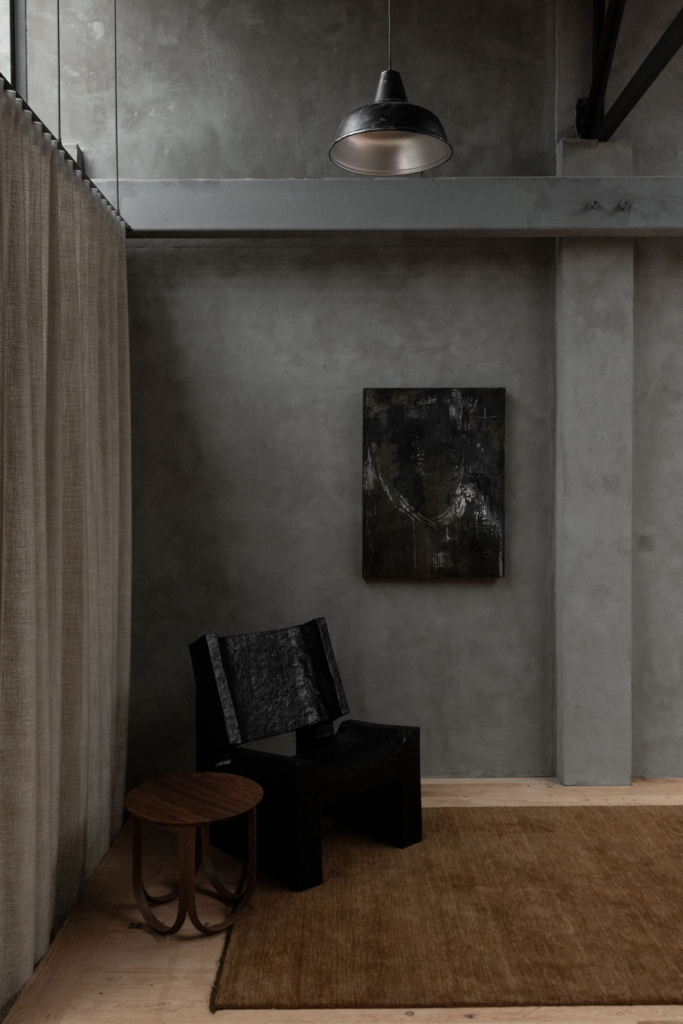
Materiality was also key to the project, with each element chosen to foreground craftsmanship and soul. “Every choice commits to craft, inspiring the firm’s clients to think a little bigger and go a little deeper,” says Caldwell. Retained brickwork and second-life timber flooring, pitted with nail divots and patinaed from its previous life, give the space a sense of warmth and authenticity. Rice paper screens set within oiled oak grids reference Japanese shoji, while concrete and deep umber timbers provide textural contrast.
The design, however, came with its fair share of technical challenges. “Old buildings have their ghosts,” he notes. “Gutters failed mid-build, freshly laid flooring was lifted and relaid, walls were off-square, brickwork slumped with age. Electrical and plumbing infrastructure had to be rebuilt nearly from scratch.” But these constraints were ultimately embraced as part of the process. “There’s something deeply satisfying about the process of restoration… about choosing not to erase but to gently coax a building into its next era.”
Casabella is also reflective of its local context. “The space is rooted in New Zealand materiality and craft, although perhaps very quietly,” says Caldwell. “Steps are hand-formed from Oamaru stone, left raw to celebrate its natural character. The floors are native timber. The acoustic treatments are New Zealand wool.” At the same time, the design isn’t shy about its global references, with Japanese order, Nordic restraint and European coastal understatement woven with the country’s own colonial and contemporary architecture.