Goodwin House
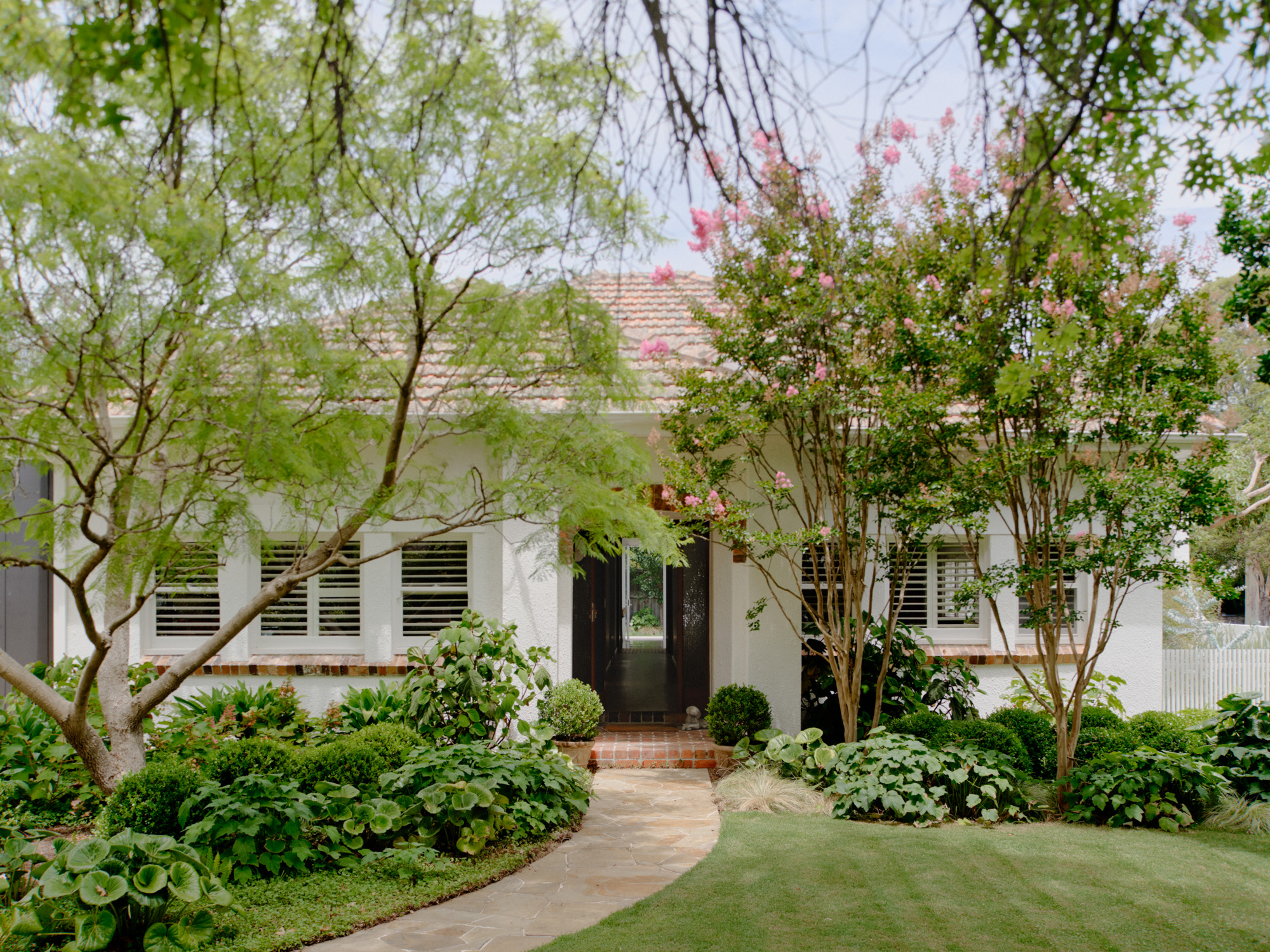
In leafy, laid-back Glen Iris in Melbourne, this restored Art Deco residence balances heritage preservation with contemporary family living.
From one aspect, Goodwin House appears almost hidden, nestled among mature trees and softened by the rhythm of suburban planting; there’s little indication of the transformation that has taken place within. But wander around the corner and a sweeping brick wall comes into view. Curved and finely detailed, it signals something contemporary – a deliberate gesture that bridges public and private, heritage and modernity. This new frontage invites curiosity and establishes a quiet dialogue between the home and the street.



Before Goodwin House became a considered architectural contribution, there was careful negotiation among heritage consultants, structural engineers and landscape designers to ensure the project’s viability. Strict heritage regulations, a challenging site position and poor rear garden orientation posed serious challenges. But for Emlyn Olaver, lead architect and director at Olaver Architecture, the many complexities were actually an unexpected gift. “We really found the heritage considerations to be an asset on this project,” he says. “The language and siting drove the design and, ultimately, the house is better, thanks to the interplay between these two parts.”
The design sought to reinstate the original character of the residence while adapting it for modern family life. The distinction between old and new is apparent, yet Goodwin House ensures these elements exist in a contemporary relationship that enhances both functionality and liveability.


Olaver Architecture approached the transition between the existing home and the new addition without pretension. “We created quite a direct expression of the transition between the two structures,” says Olaver. “Our approach allowed the new sections of the house to nod to the existing Art Deco nuances and brick structure.”
The internal floor plan was significantly altered to accommodate the rhythms of daily life. The new symmetrical and functional layout compartmentalises key living zones while maintaining a sense of openness and supporting diverse family activities with multiple entry points. To achieve this, an unsympathetic earlier addition was removed and, in the process, the team restored the damaged heritage fabric and reinstated missing windows and a chimney.
The removal also facilitated a new north-facing side courtyard. This outdoor space connects to the rear living area, opening Goodwin House to its immediate context and inviting natural light into the interior. The connection between indoor and outdoor spaces encourages entertaining and fosters interaction with the surrounding landscape, reinforcing a sense of calm and belonging.
Preserving historical authenticity was essential to the project’s success and was achieved largely thanks to the firm’s reinterpretation of the residence’s historical narrative. Colour and material selections also played key roles in reinforcing the story of old and new. “For the exterior, we used white paint to tie different materials and textures together, unifying the original structure and the extension,” says Olaver. “This allowed a lot of variation in texture and also creates depth and interest.”


Such strategic design decisions balance cost efficiency with high-quality outcomes, ensuring long-term durability with minimal maintenance. Recycled bricks nod to the past and, in combination with rough-cast render, steel and aluminium-framed glazing, further contribute to the cohesiveness of the past and present.
Sustainability at Goodwin House was considered in both passive and active design strategies. North-facing clerestory windows above the living areas, for instance, allow for passive ventilation. “With the good northern light comes the harsh summer sun. We fitted all of the clerestory windows with external blinds to mitigate the heat.”
Other sustainability strategies and measures implemented at Goodwin House were more conventional and maximised the opportunities for clever configuration. For example, the courtyard enhances airflow and ventilation, reducing the need for mechanical cooling. Overall, the use of recycled materials, energy-efficient glazing and retention of the existing building fabric all contribute to a reduced environmental footprint.

Olaver Architecture’s design enhances the way the occupants interact with their home. “The family loves the way the brick fence mediates and facilitates interaction with neighbours and captures views of the surrounding streetscape,” says Olaver.
The home is ideally suited to modern living and, by balancing historical considerations with contemporary comfort, has exceeded the client’s expectations. The project demonstrates how heritage conservation and forwardthinking design can work in harmony. Goodwin House is not just a restoration but an exemplary case study for the thoughtful adaptation of historically significant residences.
Architecture by Olaver Architecture. Build by Glyde Construction. Landscape design by Peachy Green.


