Studio KO
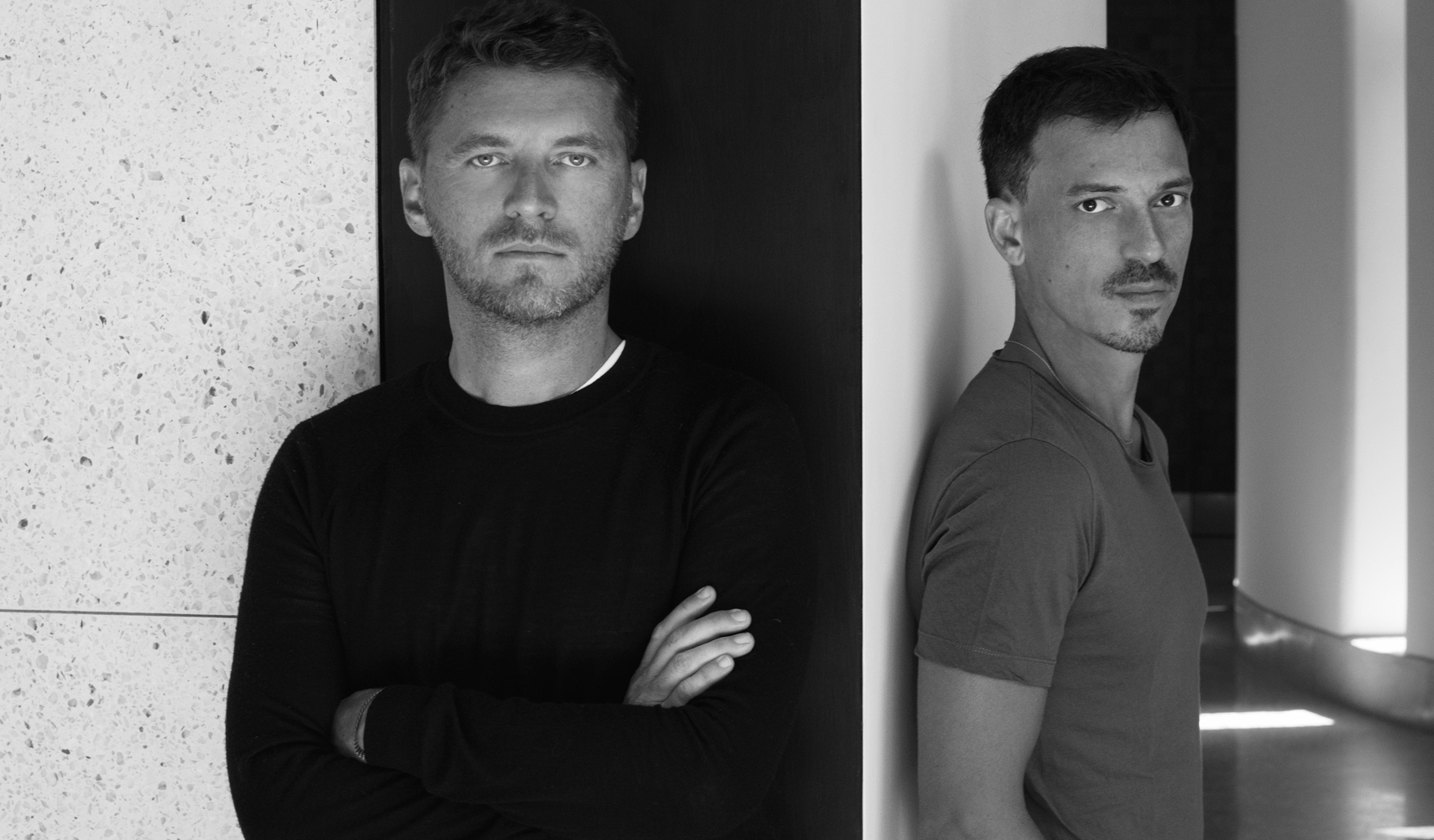
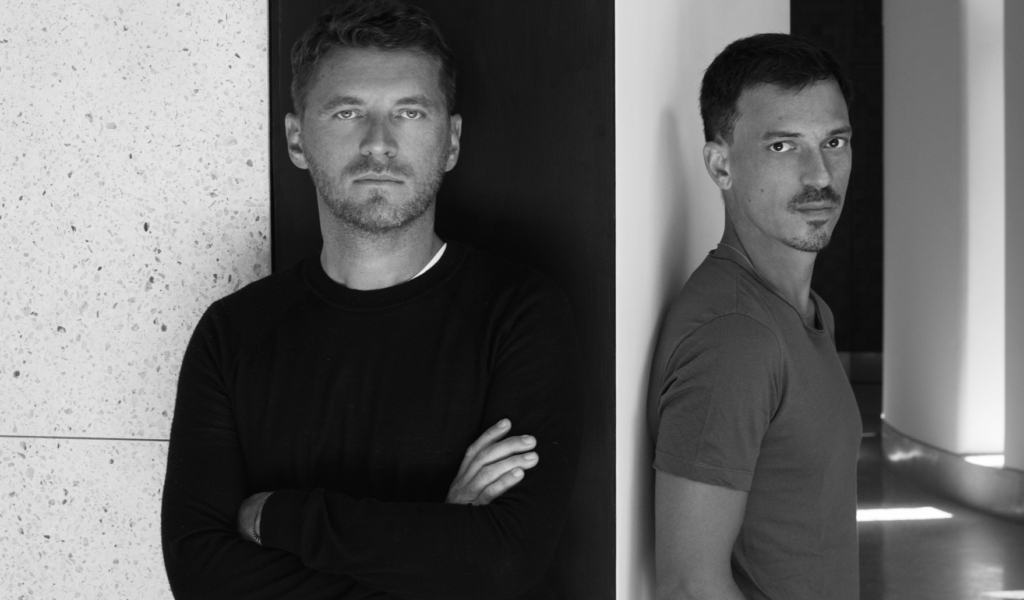
Renowned for striking forms that feature crafted spaces imbued with human touch, architects Karl Fournier and Olivier Marty of Studio KO have built a practice that seamlessly merges cultural value with an ephemeral atmosphere in the experience of space.
Founded by French architects Karl Fournier and Olivier Marty in 2000, Studio KO is best known for its monumental villas in jaw-dropping landscapes. The firm has also designed a string of acclaimed cultural and commercial projects – restaurants, boutiques and hotels across New York City, Paris and London – and in Morocco, the impressive Musée Yves Saint Laurent Marrakech. The couple’s work has been described as rustic minimalism with a handcrafted quality, and while it’s supremely refined, as Fournier once remarked: “It’s not about erasing the human touch but highlighting it.” Marking 25 years in practice, Fournier here shares his insights about attitude over style, the YSL museum commission, the value of relationships and architecture for the elite.

TLP You’ve celebrated 25 years of Studio KO – which project started it all?
KF In Morocco, we started with two projects for a member of the Hermès family, near Tangier in the north. That’s how our presence in that country began, as well as our love for a place we had previously only known as tourists. In Paris, our first projects were less ambitious; the competition here is tougher and it’s harder to gain trust as young architects. We began with interior architecture – apartments, boutiques and restaurants.
TLP How did your office in Marrakech come about, and how does working there shape your aesthetic?
KF We were attached to the place, having spent a lot of time there. That’s how our first project came along, then a second and so on. So opening an office there seemed a logical step for us. We were the first French architects at that time to do so. I wouldn’t say working in Marrakech directly influences our aesthetics, but it certainly helps shape our eye for details and the way we work.

TLP How do you typically work on projects together?
KF We work closely, but in very different yet complementary ways. Olivier is generally more involved in the creative and hands-on direction of projects, while I play a more behind-the-scenes role as artistic director. Sometimes these roles shift – that keeps it interesting.
TLP What have you learned in practice?
KF We’ve learned patience and we’ve learned to say no to projects that are in too stark a contradiction with our beliefs. This is both an incredible luxury and, at times, a risk.
TLP You’ve said you have an attitude, not a style. How would you describe that attitude?
KF For us, each project is a different adventure that requires a fresh, new proposal every time. No duplicated style, conditioned or copy-paste approach.
TLP How do you achieve a feeling of craft in your work?
KF We try to highlight local craftsmanship. The unique imprint left by hand stands in stark contrast to contemporary construction methods that tend to homogenise and result in buildings that feel soulless, disembodied and interchangeable. But this approach requires staying at a reasonable scale, which prevents us competing for massive projects. We push back against inflated building sizes and we advocate for architecture that is thoughtful and measured. That doesn’t mean boring!
TLP Do you have favourite materials?
KF We don’t rule anything out! Even concrete – which often gets a bad rap – is a material we enjoy working with. More often than not, we’re drawn to simple, minimally processed materials like wood, stone and earth in all its forms. That said, for one project, we also placed a glass box on a rooftop in Paris – a technical feat that, in our view, resulted in something very beautiful. We felt it was the most appropriate response to the brief.
TLP Between 2004 and about 2020, you produced a series of villas in Morocco and France, each with an earthy materiality and an otherworldly presence. What were you exploring with these villas?
KF We often imagine our projects as if they had descended from the sky and needed somewhere to land. You look for the best approach or angle to deliver a ‘soft landing’ in each particular setting. That doesn’t mean blending in – that’s not the goal. They each create a unique tension within the landscape, echoing and enhancing it. In return, the landscape acts on the architecture to reveal it, as we have discovered.

TLP Tell us about some of your most interesting cultural projects and collaborations.
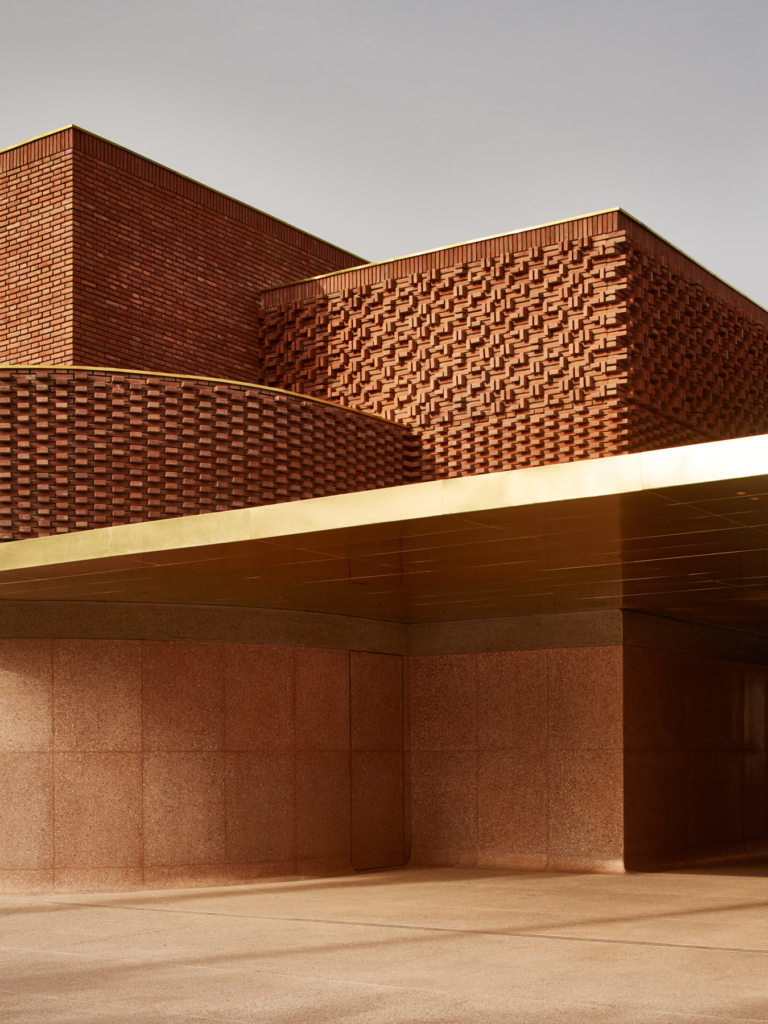
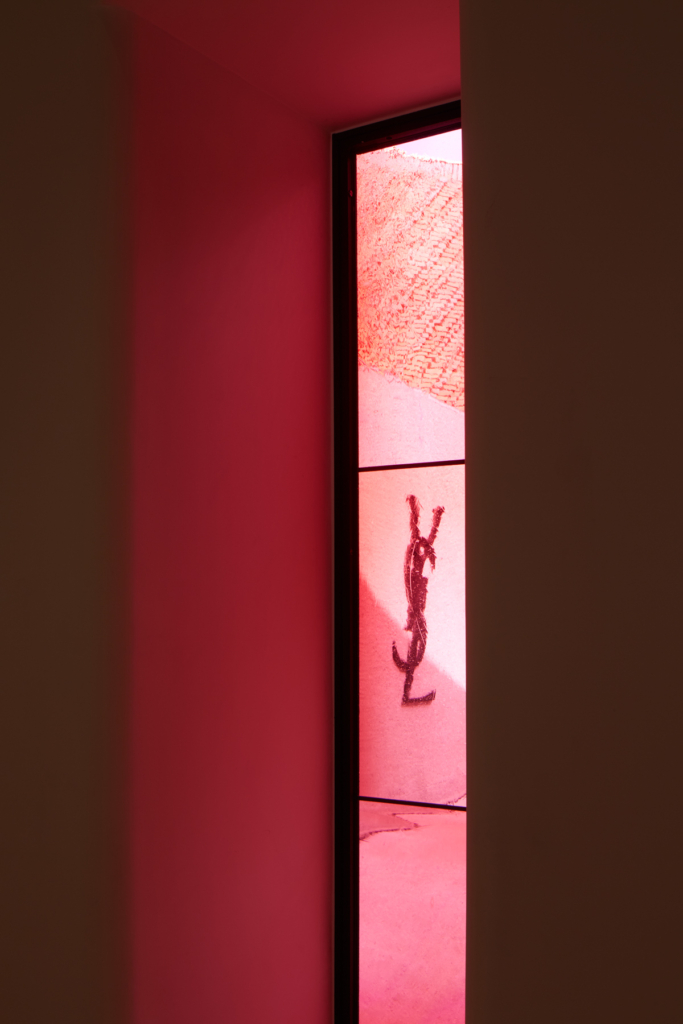
KF What can I say? They all stem from the museum in Marrakech that Pierre Bergé once had the idea and desire to commission from us to house part of the extraordinary collections of the Fondation Pierre Bergé – Yves Saint Laurent. We owe this commission to his friendship and loyalty. He had previously tested us on smaller personal projects, which went remarkably well. There always needs to be a test and it has to be successful for others to follow. In Tashkent [in Uzbekistan], we had the opportunity to transform an industrial building into the Centre for Contemporary Arts, giving us an unexpected gateway into Central Asia – one far more interesting than we could have experienced as tourists. We recently completed the Musée de la Mode et du Costume in Arles in the south of France, set in an historic 18th-century townhouse. We embraced this challenge with joy and respect for both the history of the collection and the history of the building, which we restored to give meaning and elegance.
TLP How did the Flamingo Estate project – with Australian entrepreneur Richard Christiansen – come to you? Do you have any projects in Australia?
KF No, we haven’t explored Australia yet. Richard came to us through the Chiltern Firehouse – the London hotel that we designed – of which he was a great fan and a frequent guest. Flamingo Estate was a harmonious human adventure from start to finish and a kind of reference point for us – a dream of collaboration, good humour and mutual understanding.
TLP Architecture symbiotically relies on photography and you’ve singularly tapped into this. Why did you choose Dan Glasser as your photographer?
KF Before Instagram and social media, we understood the growing importance of imagery and the dangers of its confining, normative power. So we decided to have all our projects captured by the same photographer. That created a climate of mutual trust and allowed us to grow together. We met Dan in Morocco one morning at breakfast on the terrace of Jean-Noël Schoeffer’s place [Dar Rbaa Laroub], which at the time was one of the country’s first guesthouses. A friendship was born, and his talent, combined with our loyalty, did the rest.
TLP In this age of consumerism, inequality and climate and human crises, what do you think is important or relevant about architecture, especially architecture for the elite?
KF Thank you for raising the delicate point about architecture for the elite. Here is how we seek to transcend this. First, we believe more in the power of example in public space than in rhetoric. What we create is meant to last. We aim for durability and do not engage in the ephemeral, so we are wary of fashions or trends. Perhaps this is where we are ‘sustainable’. But this comes at an obvious cost that, unfortunately, only an elite can bear.
These are difficult times, yet we cannot give up or stop hoping. Resisters are always an ultra-minority, but in the end, they are the ones who change the world; the yeast in the dough. Without them, change doesn’t happen. Our generation can’t solve all the problems accumulated since the Industrial Revolution, but we are the generation of awareness. We can outline paths, engage in debate and expose absurdities to help the following generations find solutions. It’s a bigger issue.
Even in the civic realm, the era of public buildings being built to last is over. After 50 years, their state of disrepair is often such that demolition is the only solution. We regret this deeply, but it is beyond our control. So yes, we build for the elite – though fortunately, this elite has always been committed to investing in the art of architecture and the act of building. This ensures that techniques and crafts survive and continue to thrive for the benefit of all. That is no small thing.


