Stephen Robert Carlier
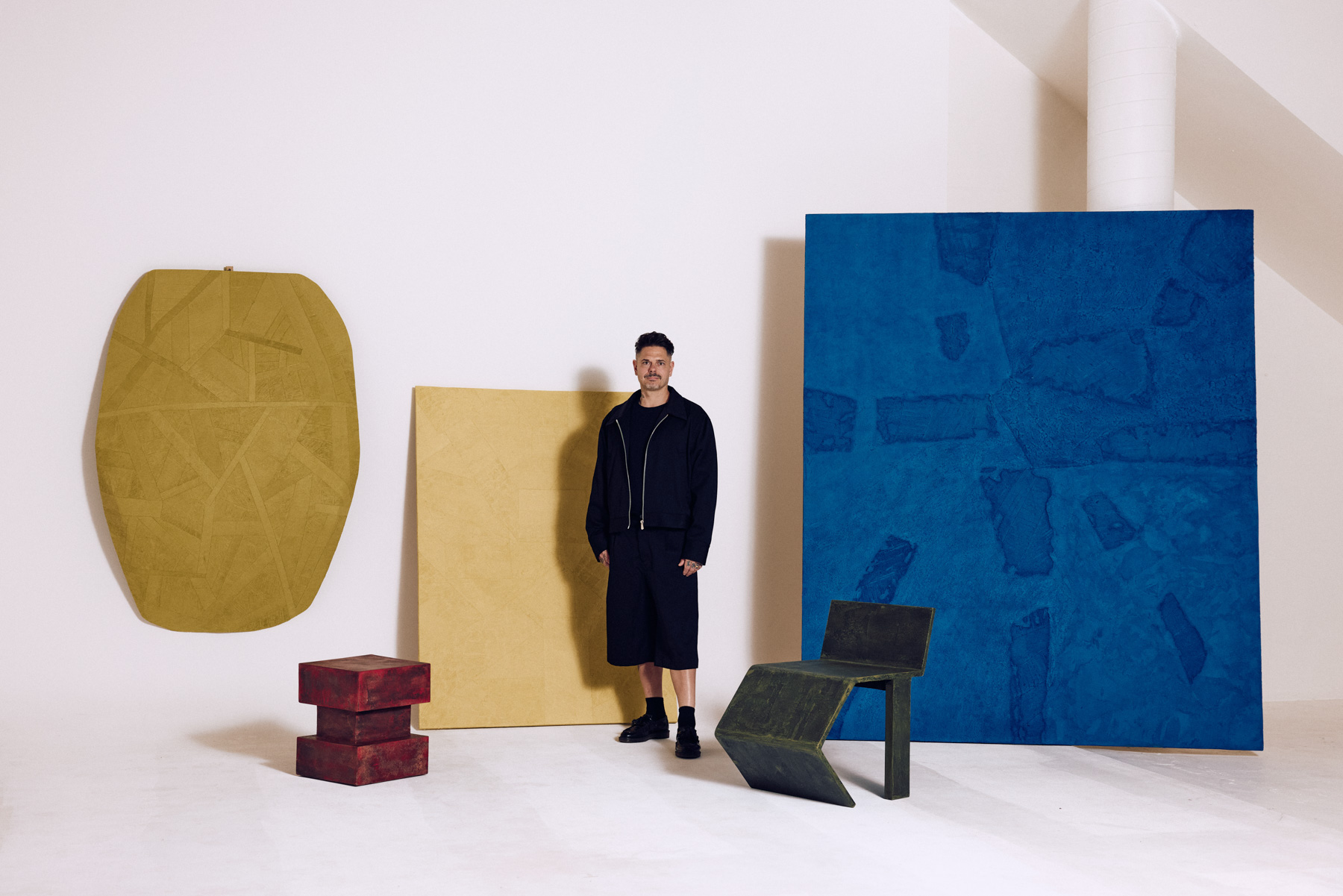
For a new series of works Melbourne artist Stephen Robert Carlier has crafted chairs, wall sculptures and a painting that explore notions of weathering and erosion.
Melbourne-based artist Stephen Robert Carlier has released a new series of works, An Ode to the Erode, inspired equally by his travels and fascination with the power of erosion. “In 2024, while travelling overseas, I became deeply engaged with the visual language of erosion,” says the artist. “Observing how time and the elements transformed surfaces through carving, stripping and softening, I was struck by the quiet narratives embedded in weathered structures.” Carlier has translated those observations into a tightly curated collection comprising two chairs, two wall sculptures and a painting, all crafted from plaster.


The pieces challenge ideas of time, memory and transformation, and the beauty of impermanence, “inviting viewers to look more closely, to notice the subtle and evolving marks left behind by time”. Carlier’s method was slow and deliberate, removing only small amounts of material to mirror nature’s gentle work. “Layering was central to my process. As light shifts throughout the day, new patterns and textures reveal themselves, details that might go unnoticed at first glance.”
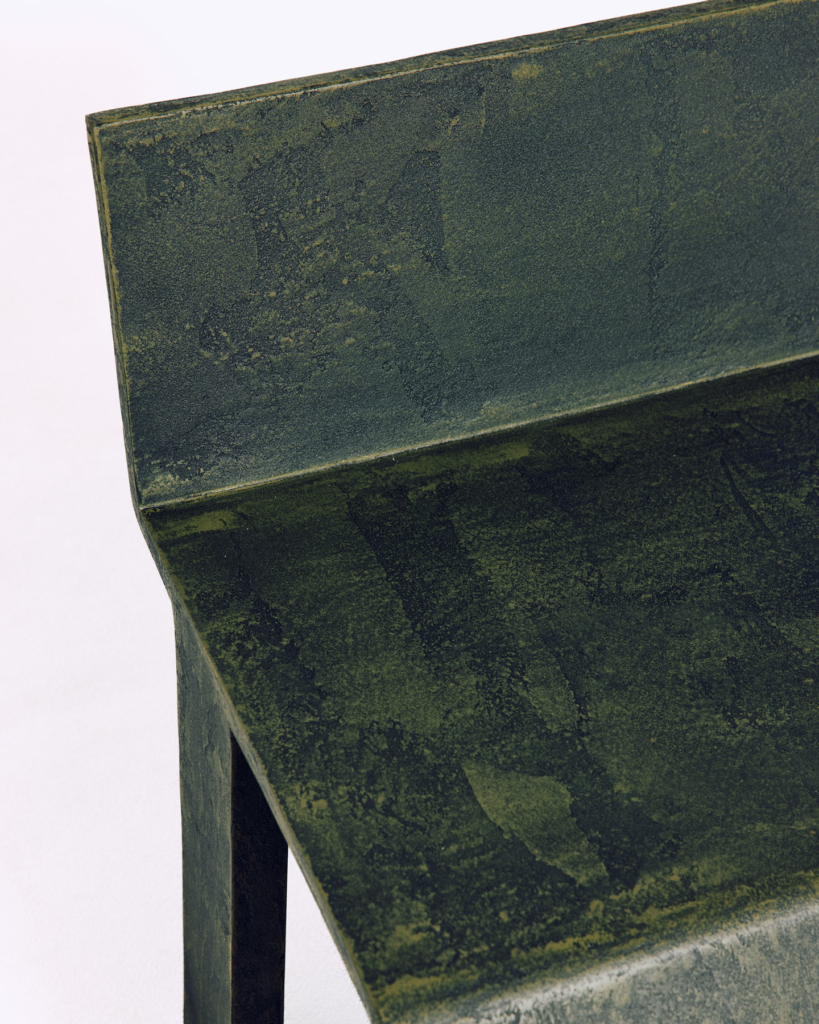
The two chairs, Taraz and K2 GPO, tell the collection’s defining stories. In a deep grey-green, Taraz draws from the artist’s fascination with brutalist and industrial architecture, in particular a weathered bus stop in Taraz, Kazakhstan, photographed by Christopher Herwig for his book Soviet Bus Stops. “Each angle and texture of the chair reflects the imagined erosion and endurance of the bus stop, and how the elements leave their mark. I’ve used material contrasts and layered textures to evoke the passage of time and chosen colours that reflect the surrounding terrain. In doing so, I’ve tried to bring warmth and presence to a cold, solitary structure, bringing it in from the edge into a new context where its story can be both seen and felt.”
“This work became a kind of compass for the entire series, tying everything together from above.”
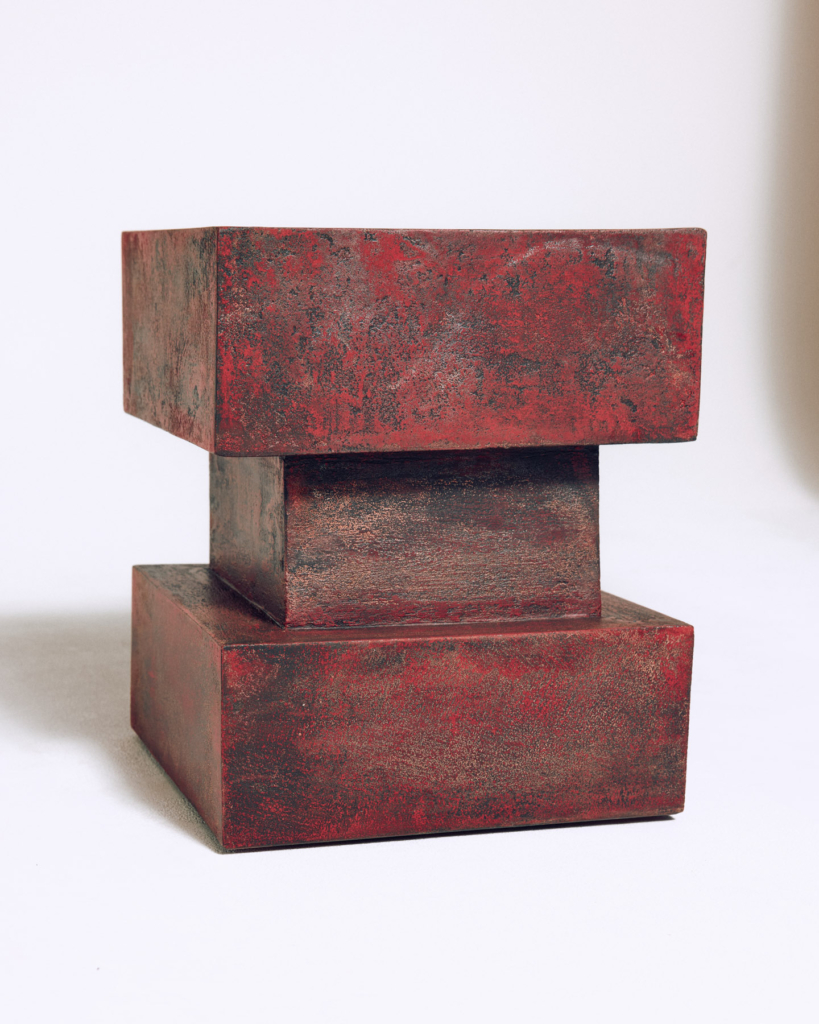
K2 GPO, a bold red chair resembling a stack of large, symmetrical blocks, emerged from Carlier’s personal relationship with the fiery colour. “Red and I have always had a complicated relationship. I’m naturally drawn to it, especially in clothing or shoes, but I rarely wear it. It feels too bold, too loud, somehow not suited to me. This piece became a way to explore that tension and allow red in, even when it felt uneasy.”
Completing the collection are two wall sculptures and Carlier’s largest wall work yet, I Am the Sky, a calming blue timber and plaster artwork that contrasts with K2 GPO’s vibrant red. “It’s a response to the atmosphere above us, the invisible force always watching, shaping and influencing erosion through time. The sun, the wind, the rain – each piece takes its cue from the sky. This work became a kind of compass for the entire series, tying everything together from above.”

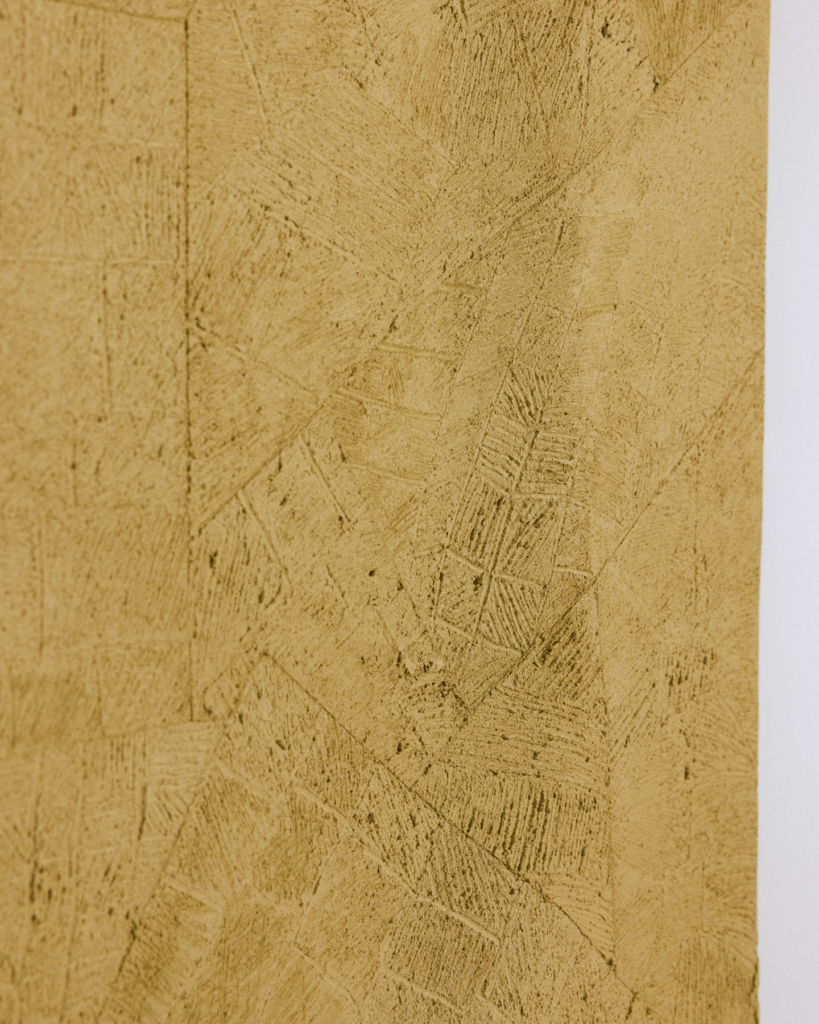
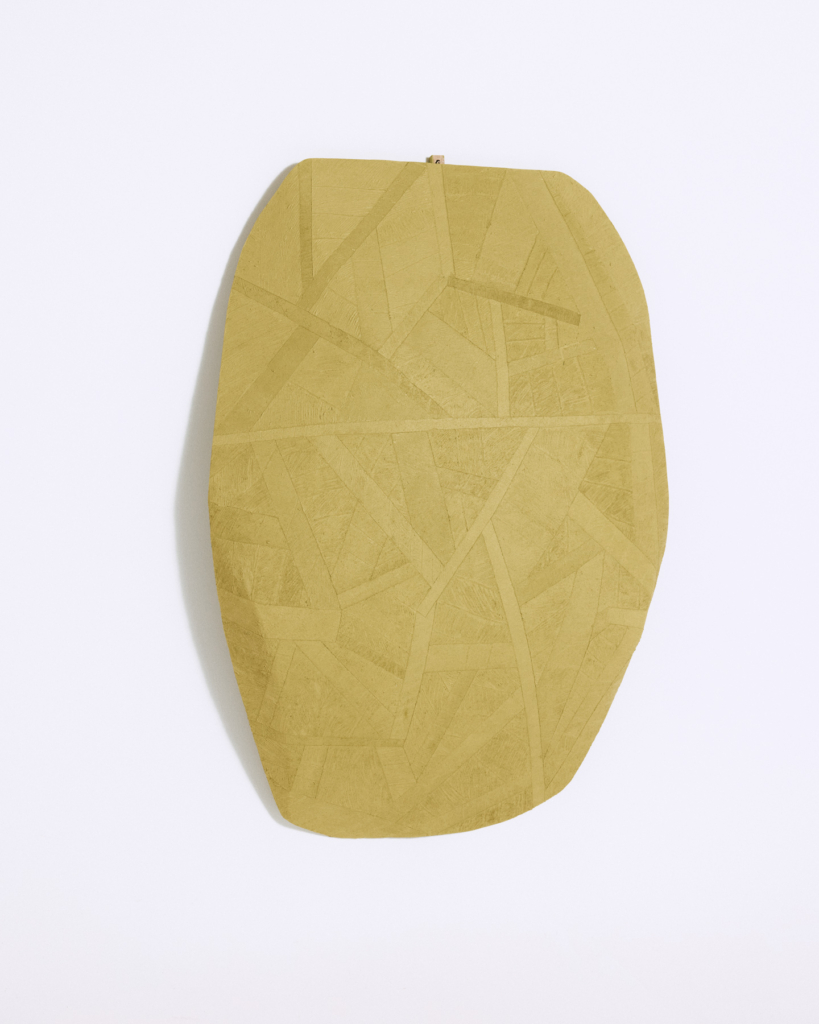
For the wall sculptures, A Broken Sundial is Right Two Times a Day and Maya – in yellow and green respectively – Carlier sectioned off areas, then carefully and deliberately scored the works, removing plaster in the process. The former takes its inspiration from a sunken fountain the artist encountered in a European town, its basin worn down by time.
Maya, in contrast, evokes the sense of a hilly landscape “seen from a bird’s-eye view at first glance, where everything appears cleanly sectioned and precise,” says Carlier. “But when you look more closely, you begin to notice what’s truly creating those divisions: the subtle forces, textures and shifts beneath the surface.”