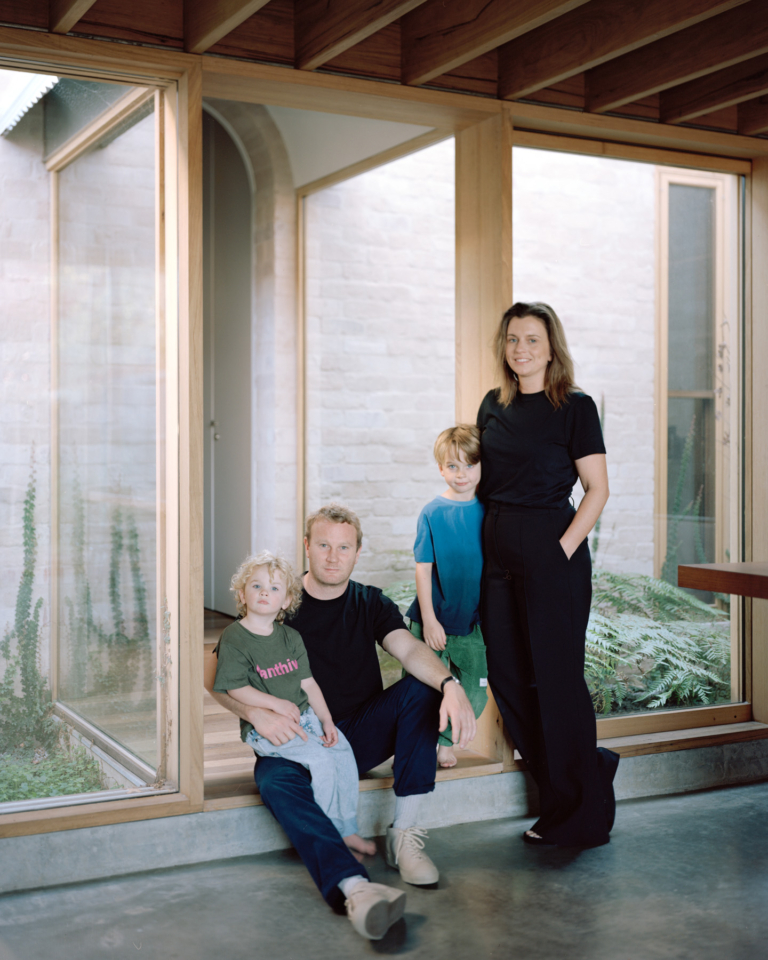
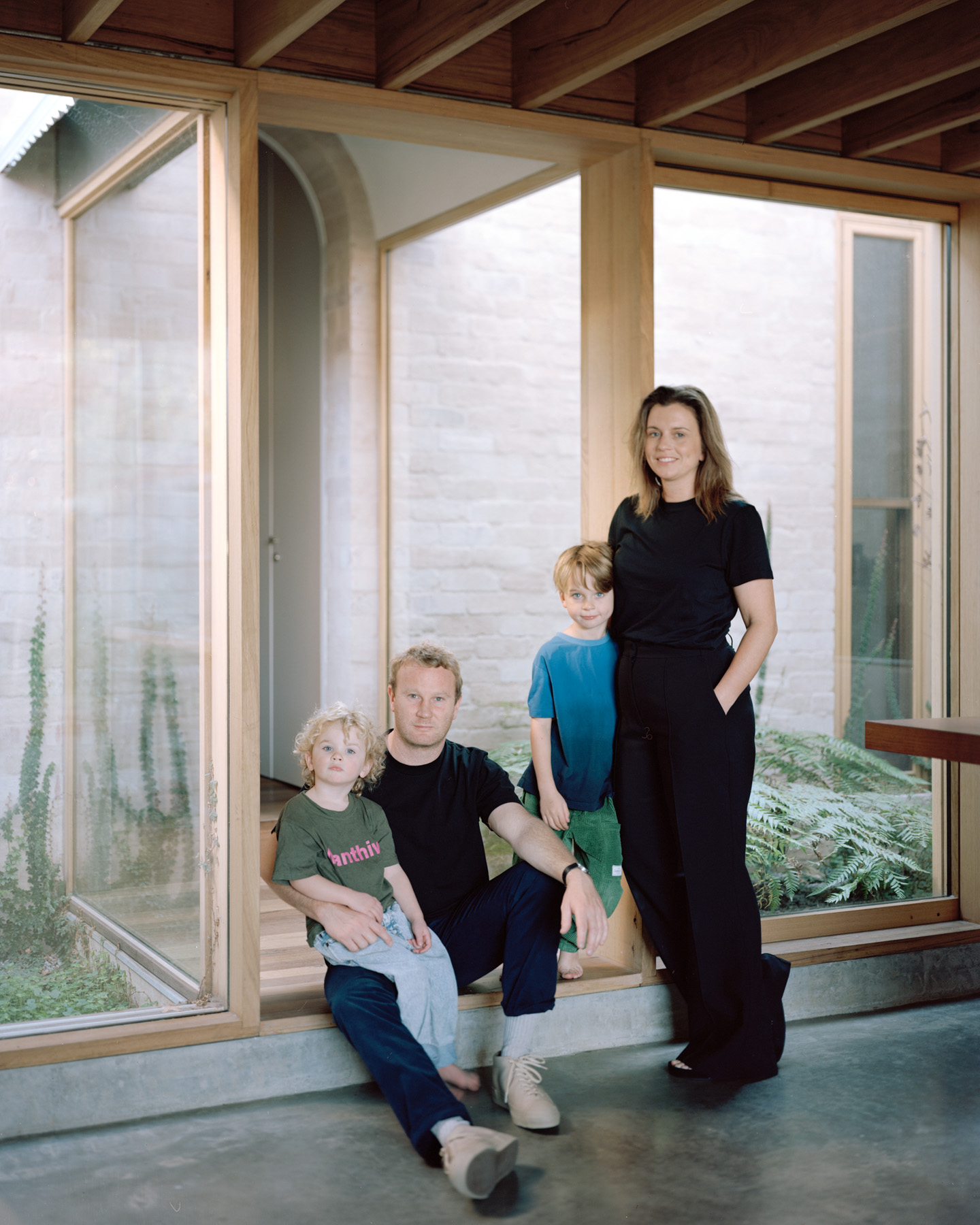
Joseph Lovell and Stephanie Burton
Carlton Cottage by Lovell Burton Architecture resists the quiet pull of aesthetic performance, instead reinterpreting working-class nostalgia within the simple framework of modern living patterns.
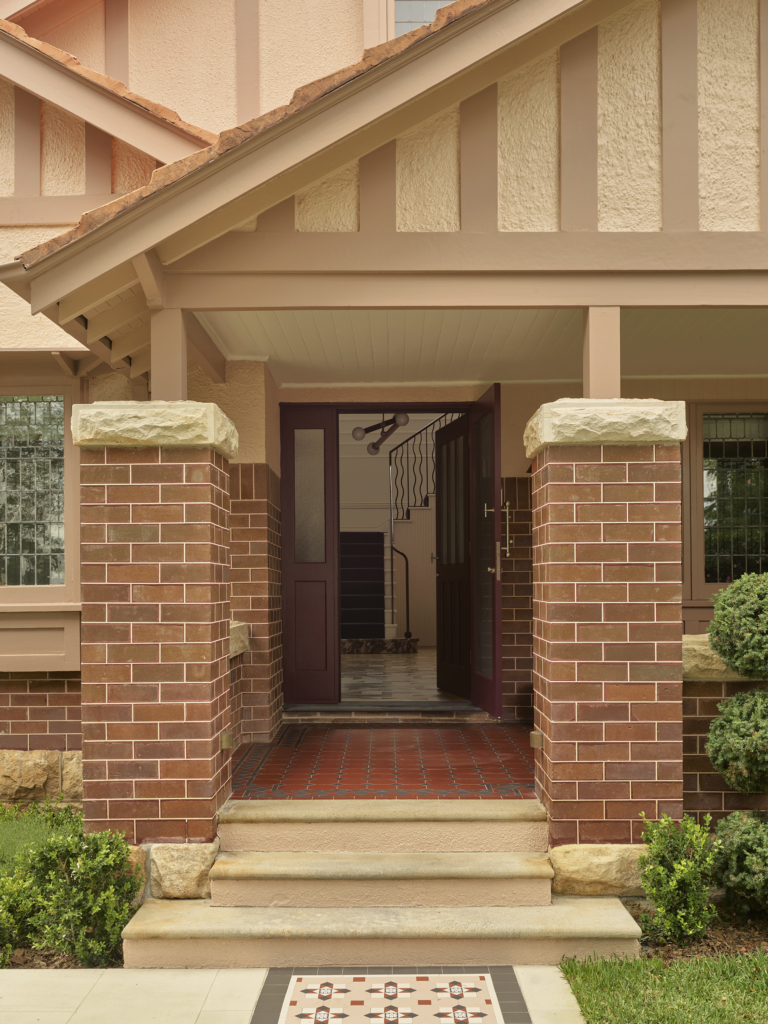
Arriving at the home of Joseph Lovell, Stephanie Burton and their two children, one passes through a reinterpretation of a picket fence, crosses a front porch and encounters a 19th-century Victorian facade. The cottage’s preserved original volume gives way to a new glazed liminal space, its historical character gently dissolving before recomposing into the shape of a contemporary family home that is at once singular and loosely exacting. A soaring volume unfolds from the preceding heritage cottage and a coherent architectural arrangement takes form, resulting in an atmosphere that is reassuringly logical.

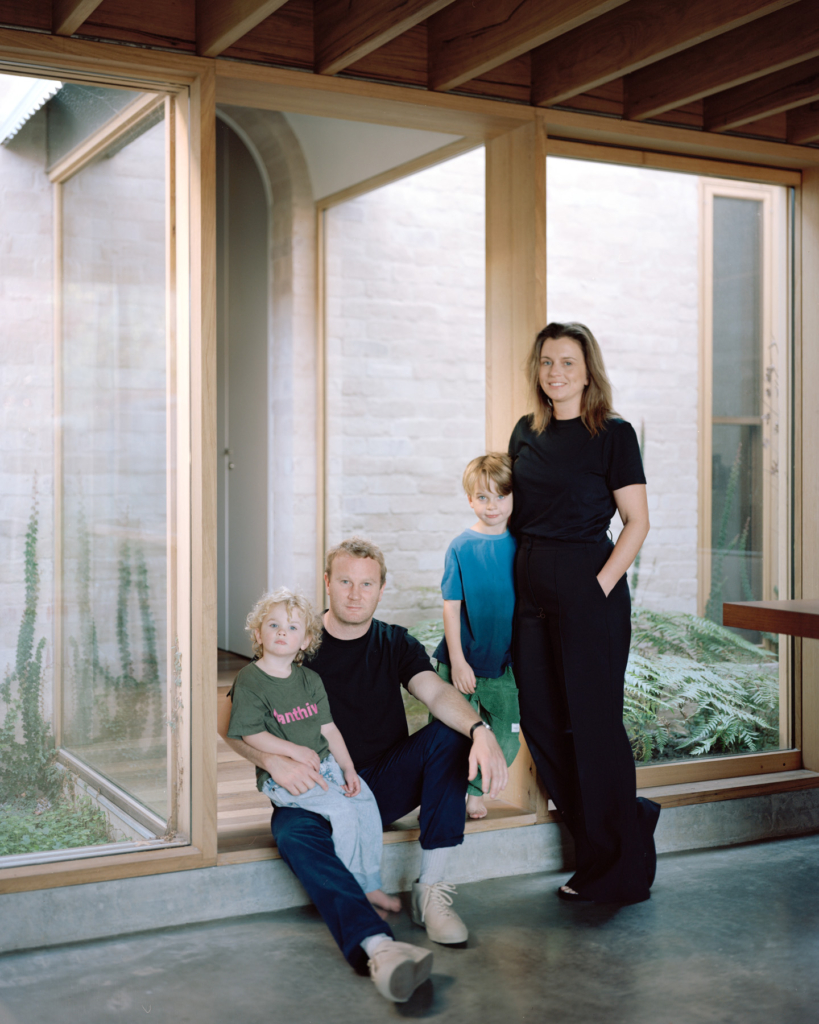

“This is the third house we’ve owned. With each house, we’ve had the intention to renovate, but then we just move in and never do,” explains Burton. “With this one, we knew not to move in first. We bought it in August 2022, completed the plans in six months, then started building.”
The residence follows a typical Victorian cottage typology; set on a 220-square-metre block, it has no windows on either side, as it has been built right up to the perimeter of the site. From the beginning, the architectural intent was to unlock and open up the house, let light in and push the limits of the spatial extremities. Envisioning their young children making the most of a rear laneway, Lovell and Burton installed a large gate in the back fence, allowing play to spill beyond the site.
“We’ve always been attracted to the notion of how we want to live,” she says. “When we bought the house, there was a tall bluestone wall out the front. We pulled it down because we loved the idea that you could engage more with the street. The threshold between the footpath and the house is like its own little piece of real estate. In summer, I would feed the kids on the front porch just as much as inside and they loved it.”


Beyond the facade, the four original rooms have been retained and restored then reconciled with the new volume via a glazed vestibule that bridges old and new, carving out two internal courtyards. The interstitial spaces serve as the lungs of the home, passively cooling it in the summer months and providing the opportunity for plants to enliven the building from within. These planted courtyards also interrupt the dense urban context, cultivating a moment of exhalation just as one navigates past the home’s sleeping zones to emerge into a place of clarity and light.
Sitting on the couch, beside the far perimeter of the new addition that gives way to the garden, there is a sense of being at the centre of the action. All around, the rituals of everyday life unfold beneath a sweeping skillion ceiling – eating, cooking, gathering, with children immersed in play on the floor or dashing from the front door to the rear laneway. Outside, the limbs of a river gum reach across the neighbour’s fence, dancing in a winter squall and casting moving shadows through an oculus skylight.
The garden’s lively energy meets inside’s quietude at the towering glazed doors. In the warmer months, these doors pivot to draw in cross breezes, extending the interior language outward and deepening the notion that this home rests at the intersection of architectural merit and personal style so distilled that it stops being style and starts being identity.

Above, beyond the mezzanine of the new extension, another wall of windows frames a view of the skyline. Melbourne’s inner-urban geography stretches outwards, at times crowned by scudding clouds that gather, conjoin and disperse in an unceasing display, gently asserting a comforting sense of place. From this vantage point, one can watch the flight path of birds, momentarily lost and then glimpsed again, as they travel high above what was once a natural watercourse feeding into the Yarra River.
This topography represented its own site-specific challenge for the architects and makes its mark on the new architecture as a result. “The house rests in the low part of Carlton,” says Lovell. “So lots of water had made its way from the old creek system, leaving the site dank and wet. We lifted the building after the front rooms, removing the existing slab and installing a lightweight framed timber floor where it once stepped down. We then pumped the water from under the floor and inserted subfloor vents in the courtyard spaces to prevent future blockages. The courtyards are as much about repairing the front as giving something to the rear volume.”
Attaining an equilibrium between their vocational knowledge, lived experience and ambitions for a place that is coherent, balanced and just ‘enough’ for their young family, Burton and Lovell have carefully created a home where beauty exists as a by-product of pragmatics, not the other way around. It responds to its ecological and urban fabric, prioritising spatial quality over material excess, employing an arrangement of internal zones that can evolve with the family’s changing needs and seasons. The house is organised into distinct quadrants that exist partly within the halo of everyday habit and partly in the realm of repatriation and practicality.
Repurposed bricks from a demolished lean-to were used for new walls, and a discarded Pilbara stone slab was employed for benchtops, emphasising sustainability. Additionally, the kitchen island was conceived as a bespoke furniture piece. Crafted from solid walnut, it is designed to patina over time, blending functionality with aesthetics as it ages gracefully.
Through the process of being their own clients, the architects have adopted an approach that has seen their emotional ambitions align with their ethos for Lovell Burton Architecture, elevating and enhancing the way the studio works. They have long sought to emphasise the tactile, aesthetic and emotional qualities of architecture, with Carlton Cottage providing an opportunity to delve into inquiry and use their own home as a means to foster a deeper connection between people and place. The outcome is a residence that is much more than the sum of its parts; it is a testament to the power of thoughtful design rooted in context and experience. Every detail, from the recycled bricks to the operable components, speaks to a desire to live intentionally, respecting both history and the environment.
The home exemplifies how architecture can serve as a vessel for daily rituals, community connection and personal growth – supporting a life that is rich in meaning, adaptable in form and sustainable in spirit. Carlton Cottage redefines what is possible within a modest footprint, cultivating an outcome that is resilient yet delicate and grounded yet open, embodying a philosophy that unravels the tight weave of convention to let life fluently unfold.
Architecture and interior design by Lovell Burton. Build by Cale Peters Constructions.
Landscape design by JALA.