
Los Milics Vineyards Tasting Room
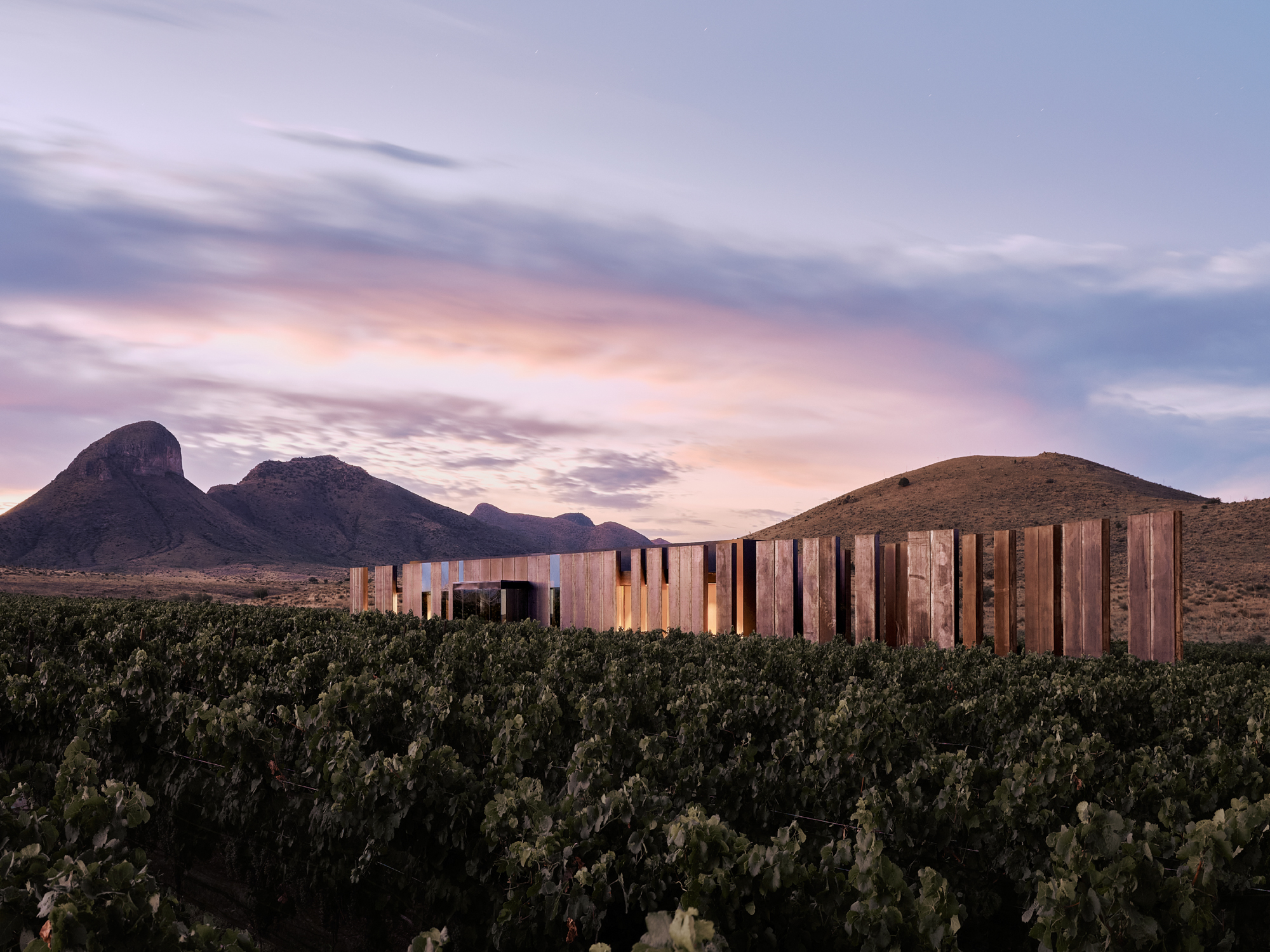
Set amid the sun-drenched foothills of the Mustang Mountains, the Los Milics Vineyards Tasting Room in Elgin, Arizona, is more than just a destination for wine lovers and connoisseurs – it’s a rather intriguing example of the link between the natural and built environments.
Designed on an eight-hectare site by Chen Suchart Studio co-founders Thamarit Suchart and Patricia Chen, the space is both a bold sculptural presence and a subtle frame for the vast desert horizon.



At about 1.5 kilometres above sea level, the land itself presents a challenging set of extremes: prolonged droughts, high winds, light snowfalls and monsoon bursts. But rather than fight these conditions, Chen embraced them. “Our first impression of the site was its striking grandeur – the wide expanse of high desert, the sky and the native grasslands,” says the architect. “The guiding question became clear: ‘How could we create something that complements the land rather than takes away from it?’”
The solution was a composition of weathered steel, glass and concrete that feels naturally rooted in the rugged character of the land. “As the steel oxidises, it develops a patina that feels drawn from the earth itself – rich, organic and free of any imposed colour – so that the material becomes inseparable from the land,” explains Suchart. Even from afar, the building reads as a single, enigmatic structure made of a series of rust-toned steel panels – almost monumental in scale – that reflect the shifting colours of the desert.



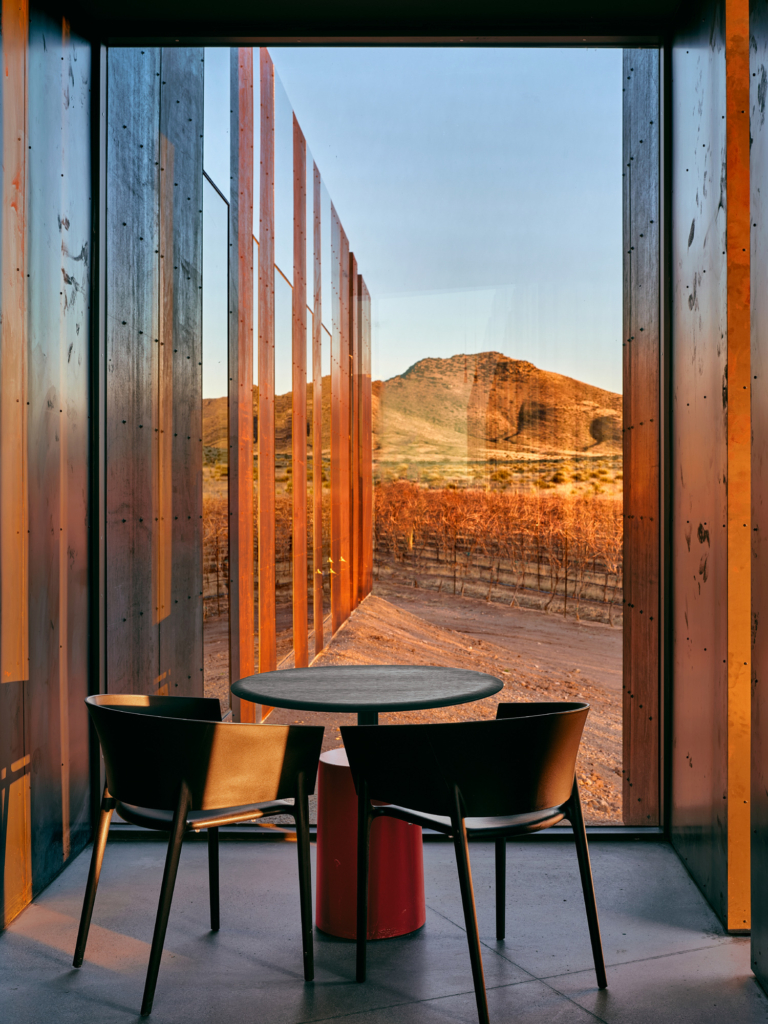
These panels serve both form and function, establishing a boundary between the working vineyard and the hospitality areas while also guiding visitors inside. The steel sheets seem to peel apart to line the entrance, revealing the tasting room: a cubic glass pavilion of 315 square metres with sweeping views of endless sky and mountain ridges. Inside, concrete overhangs and glass visually interact with the steel panels, reframing the landscape and directing attention toward select vistas, as if the mountains themselves were curated works of art.
The design cleverly balances a sense of grandeur with intimate detailing. The main room is airy and adaptable, capable of hosting anything from casual samplings to large gatherings. Meanwhile, a private tasting room and concealed wine cellar offer more secluded experiences. Materials are kept to a minimum, comprising walnut detailing, concrete floors and dark tones to avoid competing with the outdoor setting. What eventuates is a moody, sophisticated design that allows Arizona’s desert light and grasslands to remain the true spectacle.
What makes the Los Milics Vineyards Tasting Room remarkable is its dual identity: part land-art installation, part hospitality venue. It draws just enough attention without overpowering its majestic mountain surrounds, offering visitors an immersive tasting experience, where each sip is paired with a visceral connection to the vineyard and the land it came from. “What we feel most proud of is creating something that truly belongs to the landscape,” says Chen. And just as the wine expresses the vineyard’s terroir, the tasting room becomes a vessel for that same expression, allowing it to embody the spirit of southern Arizona.


