
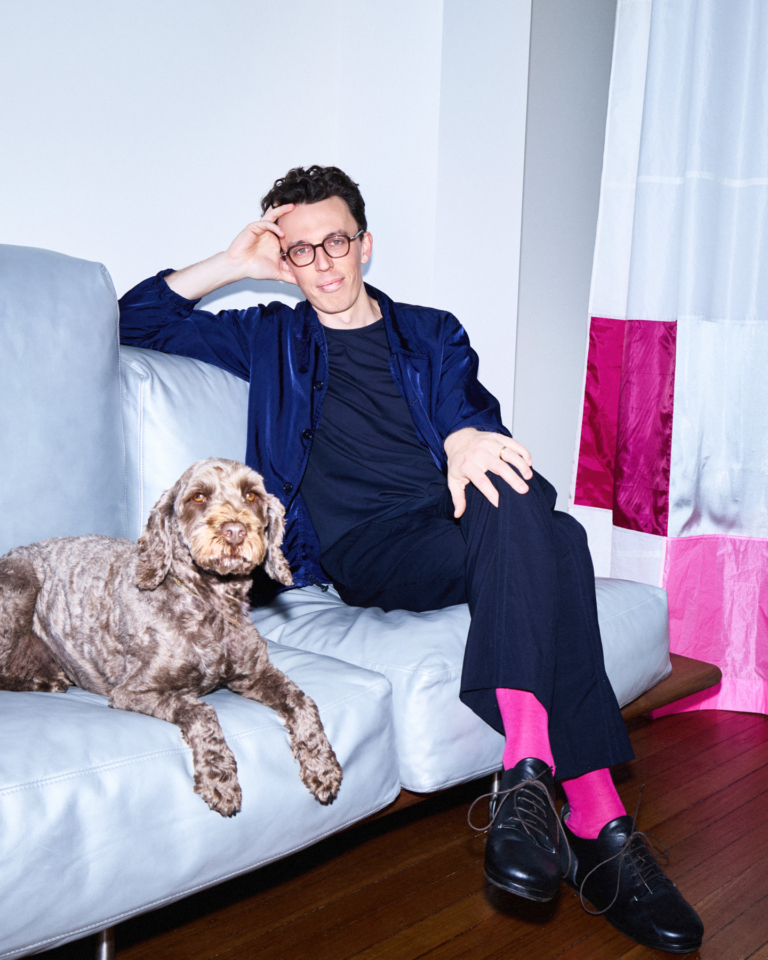
Billy Maynard
Although his practice may seem to be quietly emerging, this prodigiously talented architect is making the right moves with a practice grounded in appreciating heritage without losing sight of a contemporary perspective.
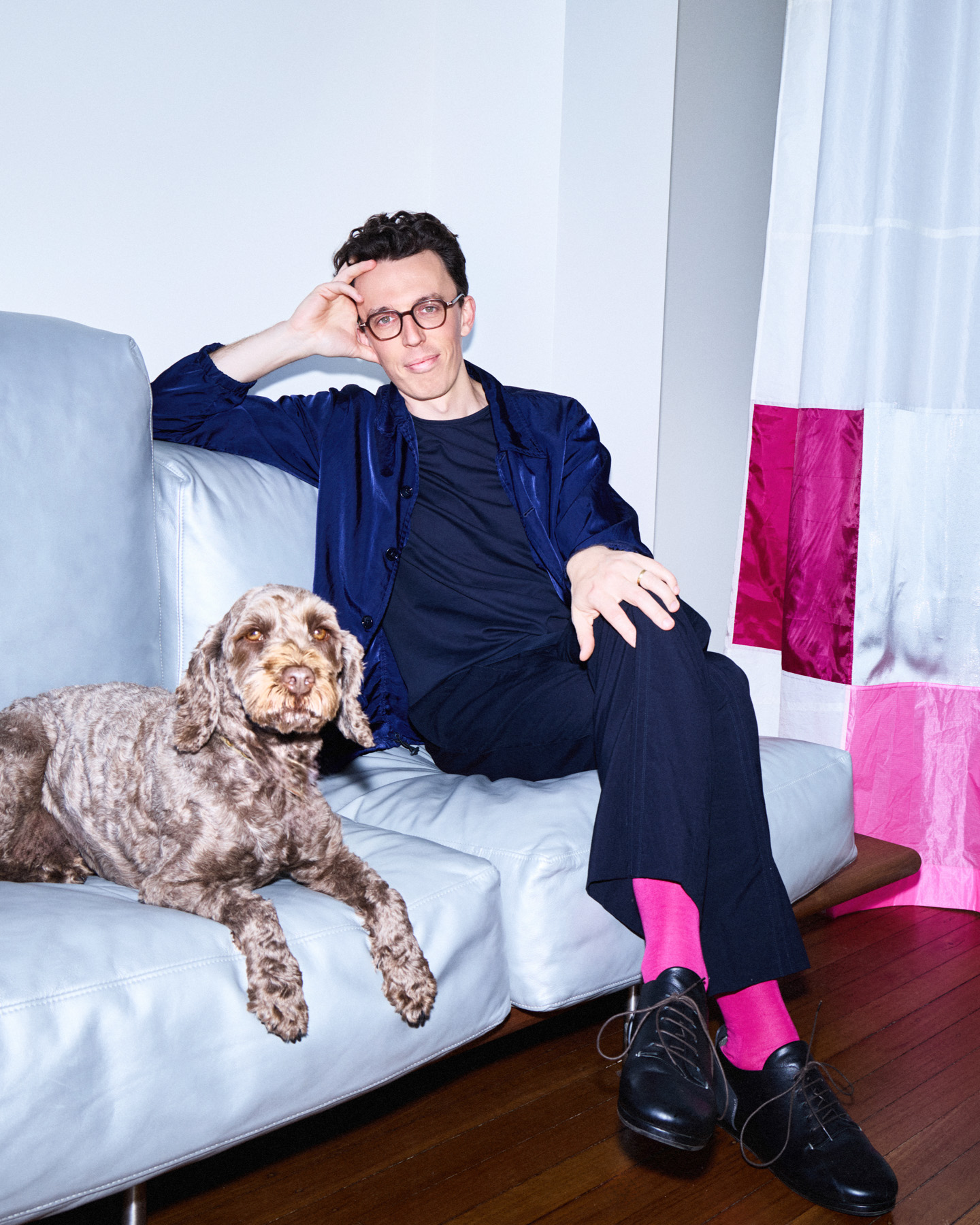
Billy Maynard meets me at a cafe in Surry Hills, his old childhood stomping ground, and where he now runs his small architecture studio. He glides in wearing a cotton-drill Marni jacket in a large blue gingham print, with Tom Ford tortoiseshell glasses and swooshed-back hair.

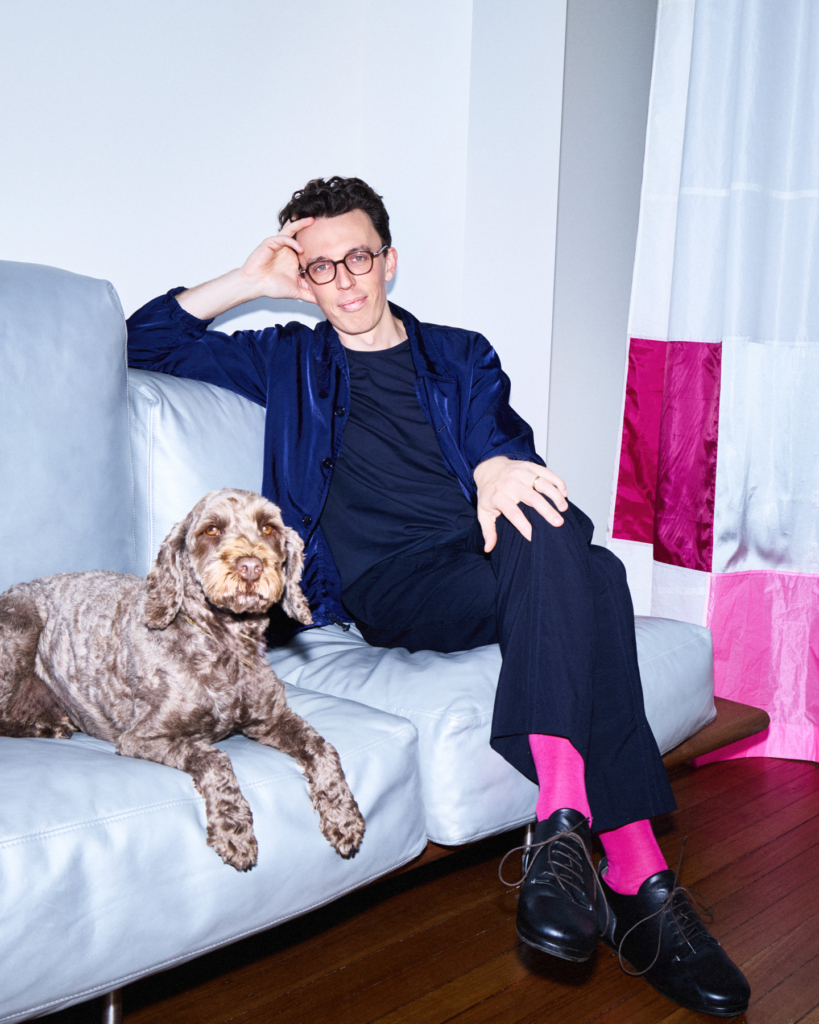
At age 33, he’s a wunderkind of the profession, blessed with the clarity and confidence of a mid-career architect, minus the battle fatigue.

With just a handful of significant projects completed and a website aptly ‘under construction’, it looks like his practice is barely off the blocks. But appearances are deceiving. At age 33, he’s a wunderkind of the profession, blessed with the clarity and confidence of a mid-career architect, minus the battle fatigue.
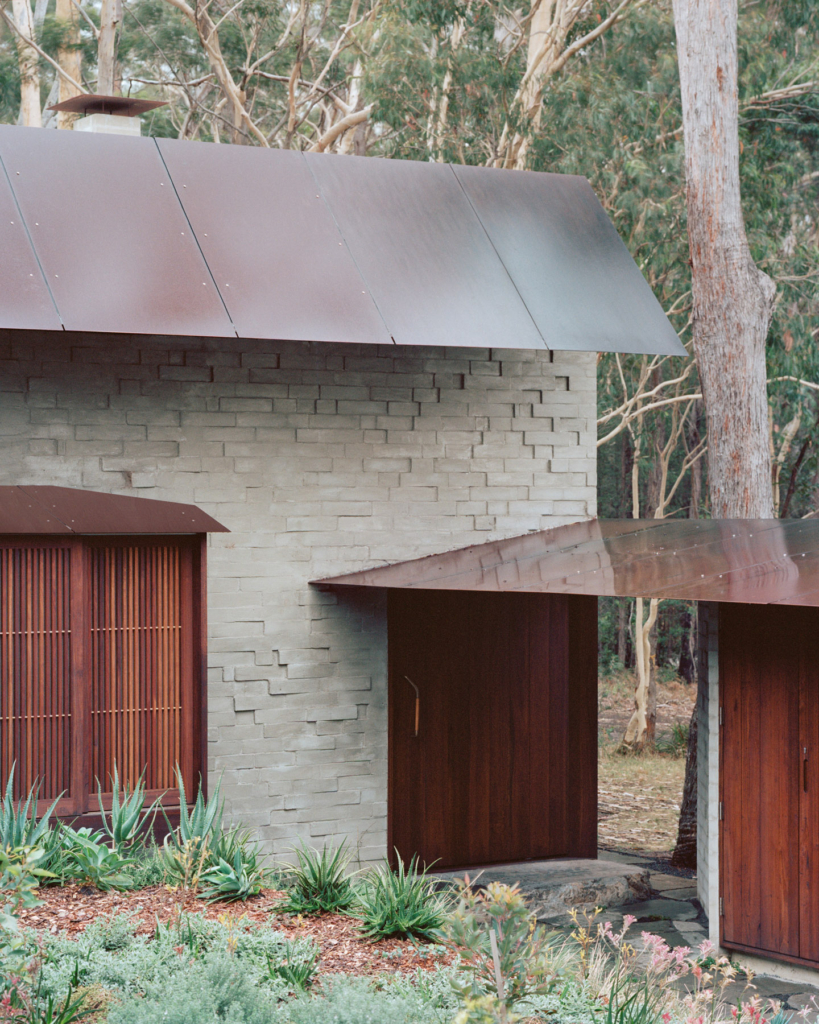
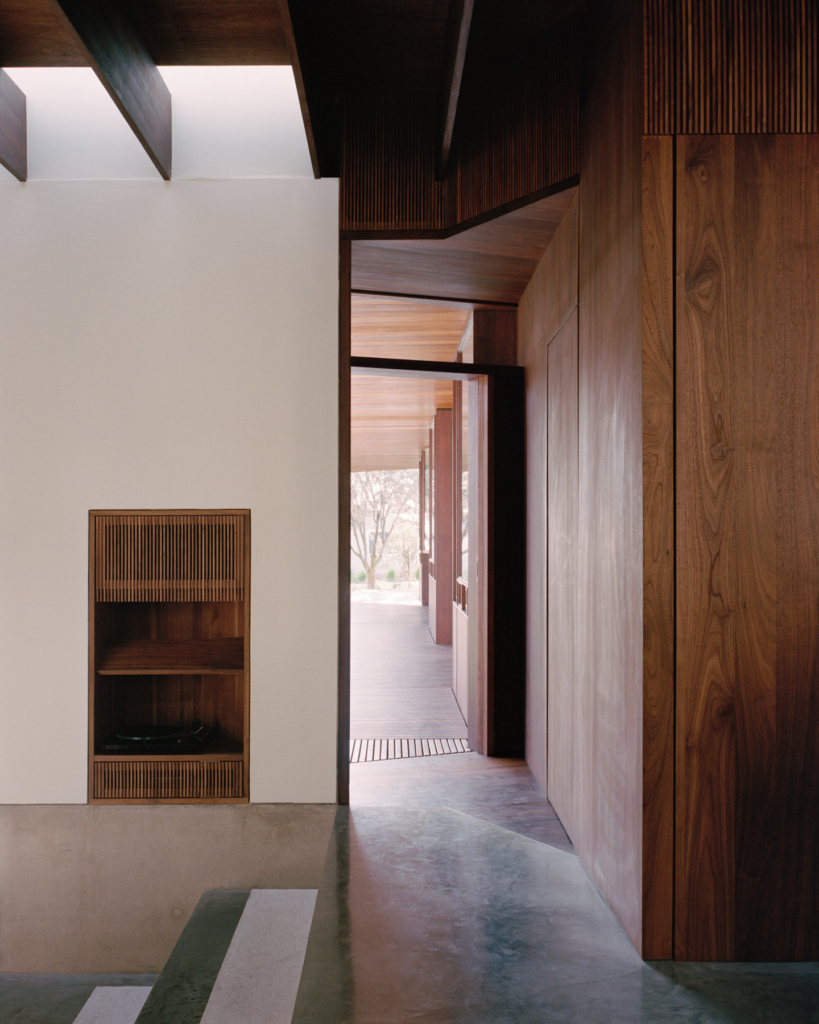
His first project was published to wide acclaim. Completed in 2020, House at Flat Rock is located in Bendalong, a coastal village a few hours south of Sydney. Its long and narrow site occupies a flame zone, pressed against Conjola National Park to the west and neighboured by modest dwellings. For this condition, Maynard designed a courtyard house – all about arrival and journey, privacy and the sequenced spaces.
A densely planted meadowscape spills borderless onto the street, beckoning to the courtyard’s inner sanctum, where a rough-brick facade and eaves of fine weathered steel enclose the garden. The L-shaped plan orients private space into the courtyard, asking occupants to access bedrooms off a covered outdoor walkway from the living space. “The client’s city life is highly urbanised, so we wanted to orchestrate spatial experiences that really help them decompress and be outside when they’re there,” says Maynard.
Materials and detailing are surgically precise and beautifully crafted – the result of collaboration with skilled fabricators Australia-wide. From contemplative corner seats and subtle level shifts to cool concrete floors, hardwood beams and battening, built-in furniture and joinery, even the exterior’s fine steel plate and rustic brickwork, it is designed for quiet repose – more Shinto shrine than bush vernacular.
By contrast, House at Tamarama, in Sydney’s Eastern Suburbs, is a creative revision, a masterclass in doing more by actually doing less. The clients’ modest budget meant minimising the build – a counterintuitive idea in a suburb defined by eye-watering building costs and over-scaled trophy homes: “maximum-envelope, homogeneous, devoid of character”. One neighbouring house is reportedly costing $18 million to build. Maynard spent less than half a million on this renovation, devising resourceful interventions that work with and uplift the existing building. “Better not bigger” was the mantra, with most of the work concentrated on the middle living level.
To the challenge of softening a hard 1990s interior, Maynard says he simply leaned into it: “I just thought, ‘How can we reuse most of this stuff?’” The kitchen’s tallowwood cupboard doors were sanded, refinished and given new timber handles. Windows were reglazed, chrome and glass balustrading was replaced with a fine plate steel, faux-terracotta living room floor tiles were cleaned and repaired to save costs and carbon.
Essential infrastructure was improved – solar panels added to the roof and walls insulated – but no real structural work was done, except for three new windows spliced into the living room to illuminate dark corners or deliver a glimpse of ocean. Having saved on construction, Maynard convinced his clients to budget for bespoke furnishings. “To address the problem of cold, tiled floors, we designed beautiful silk rugs with Tibet Sydney, working with their Fair Trade workshop in Nepal. Their amazing weavers came up with a topography of textures that relate to the terracotta colours in the floor.”
Other furnishing collaborations here include one of the last projects by the late Khai Liew, with whom Maynard designed the sofa and other occasional pieces, and Melbourne architect John Wardle – “a great friend and mentor” – who designed the clients’ dining table. Maynard also tapped into his extensive network of Sydney gallerists to help hand-pick a few special pieces. “It was a fun opportunity to pause on the architecture side and do simple things – like cleaning and reglazing – as design interventions and add layers of beauty in the furnishings… I’m really proud of what we achieved, because there’s a big change, but also not a big change… Only half a skip of rubbish was taken from the site.”
With these first two completed projects, Maynard has signalled rare skill and purpose with his architecture. In his most recent project, Apartment on the Loop, he pivots from the organic and pragmatic to the conceptual, delivering an homage to great apartments globally.
Located on the top floor of a 1938 Art Deco building in Elizabeth Bay, the apartment interior was decrepit but its bones and views were good. “Underneath the original carpet we found beautiful old tallowwood floorboards, like Donald Judd’s Spring Street apartment in New York – 40 millimetre thick, stunning.” Several small rooms were merged into one, a light bathroom remediation done, along with a major restoration of the floorboards. The entry hall was lined with eucalyptus plywood in a nod to the building’s rich, walnut-panelled lobby, while a gloss ceiling and 1950s Kalmar lights from Austria were installed to elevate the arrival experience.
The open space is anchored by the harbour views and a shimmering kitchen clad entirely in brushed stainless steel. Its inspiration was two steel-lined Florentine apartments by late-modern architect Gae Aulenti, one for fashion designer Emilio Pucci and the other for the Agnelli family, who founded the Fiat motor company. “I think the steel there had great warmth. I’m really fascinated by this period of Italian interiors,” says Maynard.
To screen a guest sleeping alcove from the living space, Maynard commissioned a diaphanous curtain from Sydney artist Lauren Brincat, whose work has graced the Sydney Opera House. Brincat’s brief was for a spatial mediator, but she took it a step further, adding a biographical element by incorporating pieces of muslin the client had brought back from Athens, plus recycled sailcloth from the nearby yacht club – silk woven with aluminium foil, “like a Korean patchwork,” enthuses Maynard. “I love it when collaboration finds unexpected solutions.”
Nearly all his projects involve artists and makers, masons and engineers of the highest calibre. In Sydney’s Seaforth, he’s currently working on Australia’s first post-tensioned stone staircase, with builder Bill Clifton of Robert Plumb. It’s part of an ambitious project at the 1964 Vendome House by architect Stan Symonds, known locally as ‘The Spaceship’. Maynard’s brief involves a sensitive restoration of the house and design of a new detached pavilion. “Unbelievably, the house isn’t heritage-listed, so it could have been demolished,” he says. “It’s the commission of a lifetime, with a trusting client who respects the house and wants its legacy preserved.”
The monumental staircase within will rise four storeys – with no mortar, no screws, just two large cleats at the base and stainless-steel cables running up through its solid green stone blocks from the Pilbara, left rough and unfinished with quarry marks intact. They’re one year into the build, and, with no precedent to follow, it is not only a design and engineering challenge but a test of nerve and will.

Maynard grew up in Surry Hills, enjoying an extremely social childhood. Design influences included an architect godfather and a furniture-designer uncle “who made refined pieces of minimalist furniture in his backyard workshop”. While studying at the University of New South Wales (UNSW), Maynard did a scholarship exchange year at Berkeley, California. He later won a travelling scholarship to study adaptive reuse in Portugal and Spain, where the economies had been so broken by the GFC and political tensions that planning authorities actually encouraged young architects to adapt old buildings, improving their social value and bringing them forward in time.
He would then spend several years working with Neeson Murcutt Architects before starting his own practice, where he was soon leading the design of the inaugural exhibition spaces for the Art Gallery of New South Wales’s Naala Badu (Sydney Modern) project by Japan-based architects SANAA. Artist collaborations have since continued to be a hallmark of his practice.
Today, Maynard shares his near-encyclopaedic knowledge of architecture history as a guest lecturer at universities including UNSW and Melbourne’s Monash University and was recently appointed to the Sydney Opera House Design Advisory Panel. An omnivorous reader, he is a self-taught devotee of fashion and popular culture. “Fashion is a great interest of mine, which is probably frowned upon in some circles. But I think there’s an obsession in architecture with timelessness and a kind of hubris at work when you set out to create a ‘timeless’ building. Whereas, I think it’s alright for something to look like it was built today, to reference elements of popular culture and even fashion that people recognise. They’re actually the buildings we love.”


