David Rockwell
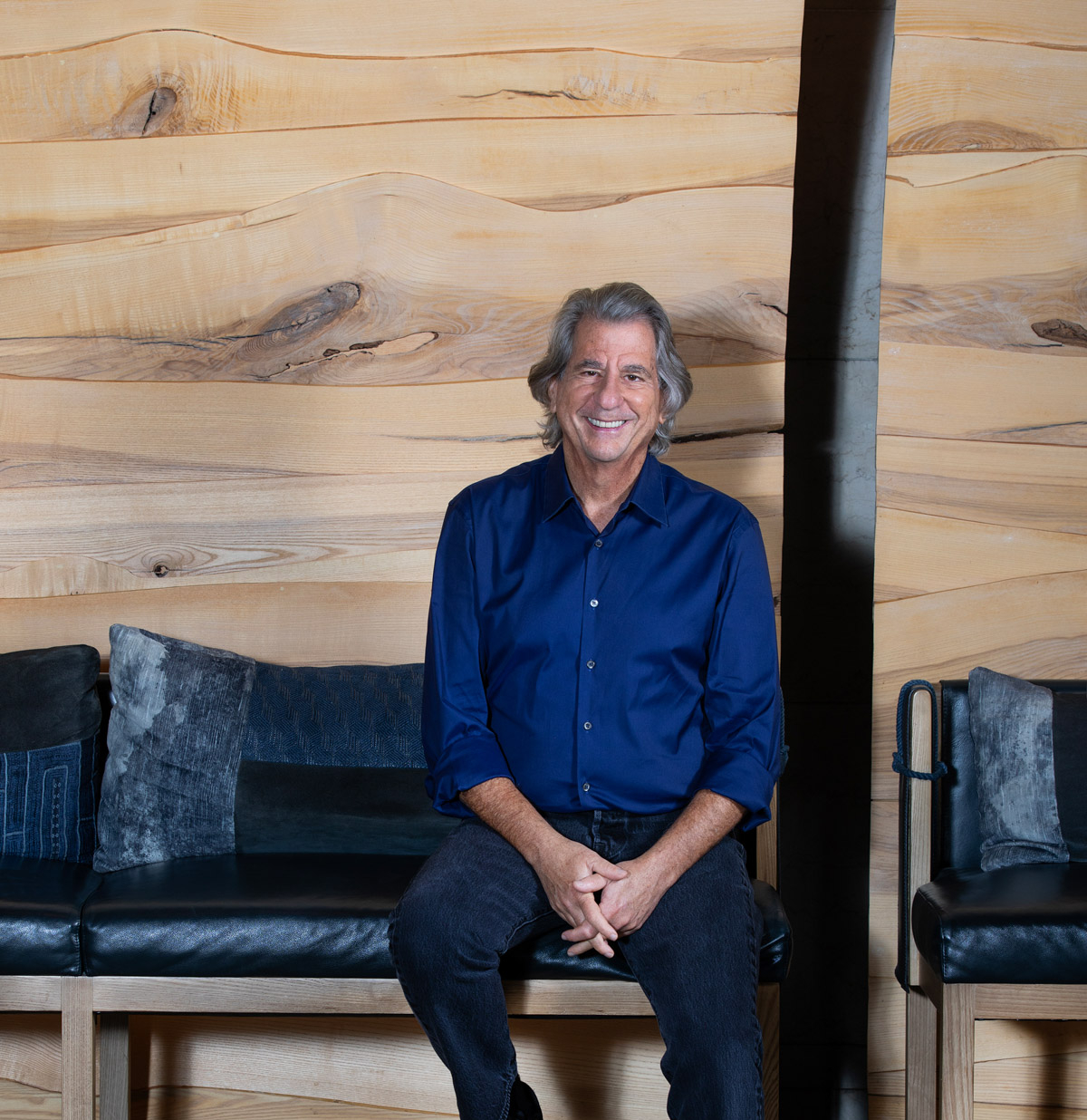
Architect David Rockwell has spent more than 40 years designing resonant spaces in which to drink, dine, stay and play, constantly eschewing the arbitrary and, instead, embracing narrative and intent.
At Rockwell Group’s recently renovated headquarters on Union Square West in Manhattan, narrow walkways snake through a sea of desks across four floors. Wall space is dedicated to showcasing the studio’s current and completed projects, and 3D models and samples cover almost every surface. There’s a materials library staffed with a librarian, a model room, the Lab – where design and technology meet – pieces from the studio’s collaborations with the likes of Gessi and The Rug Company and a room full of miniature theatre sets. It’s haptic and immersive, with an element of drama that is, after all, intrinsic to Rockwell Group’s DNA.

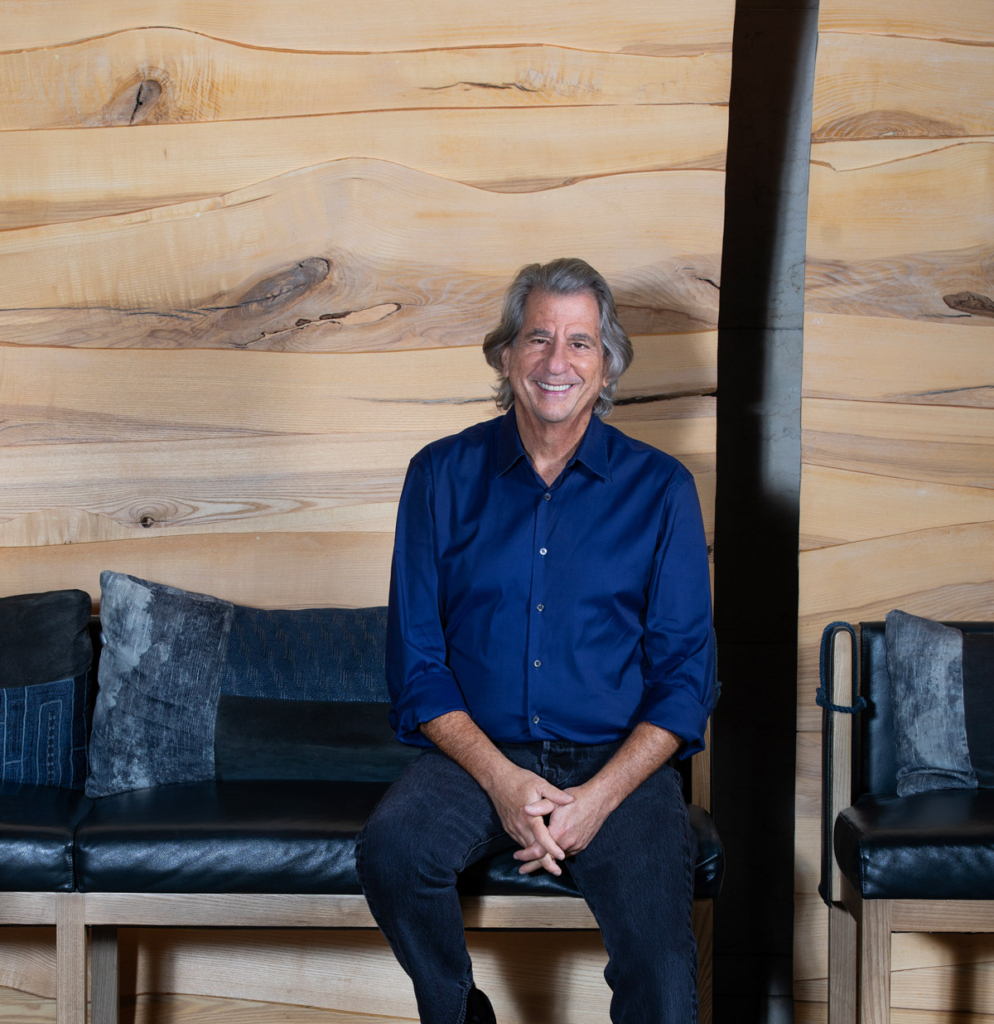

Founded by Rockwell in 1984, the juggernaut multidisciplinary design firm has worked on some of the city’s most iconic establishments, from Nobu’s original Tribeca location in 1994 to the recently completed W New York, also on Union Square, rendering the studio synonymous with New York’s ever-evolving hospitality scene.
It is fitting then that one of Rockwell’s seminal design-centric memories involves an outing to the city with his mother to dine at Schrafft’s – once the go-to spot for a pre-matinee lunch – before seeing Fiddler on the Roof on Broadway. For Rockwell, the combination of dining at the restaurant, walking the streets of Manhattan and attending a show culminated in a formative moment.


“I saw 1,300 people come into the theatre and have a communal experience through music, storytelling and design,” he says. “These indelible memories were created and I think that’s one of the reasons I’m interested in how things move and change in relation to people.”
Born in Chicago, the youngest of five boys, Rockwell spent his childhood in Deal, New Jersey. A creative and curious child, he was drawn to the sense of community at the local theatre where his mother was a choreographer and spent his spare time re-creating this spirit at home. “We had a two-storey garage and the second floor was my workshop where I was always making low-tech Rube Goldberg contraptions and doing magic shows. That was my little space.”
At the age of 12, his family relocated to Guadalajara in Mexico. “It was as if someone took Deal and turned it inside out,” he says, referring to the vivid pillars of everyday life, from street-side taco stands and mariachi bands to open-air markets and modernist architecture, all of which stood in stark contrast to suburban New Jersey. “The combination of minimalism and maximalism, of rigour and detail certainly made a mark – it was a highly influential time.”
New York was, however, lodged in Rockwell’s mind and he moved back to the north-east to attend Syracuse University. His stepfather’s interest in architecture had transferred and he was drawn to “the theatre of cities”. However, Rockwell, who played the piano for his entrance exam, recalls being somewhat unprepared for the demands of architecture school. The first assignment – to draw something observed on campus – did little to assuage his doubts.
“I was drawing a still life and I looked over at this other student who had drawn an M.C. Escher version of the entire campus,” he reflects. “All these kids had been drafting for four or five years, so I went to my professor and told him I thought architecture was a mistake because I didn’t know anything yet and I didn’t have these basic skills. He very smartly told me, ‘You may just have less to unlearn than the others and I want you to stick with it for a while.’”
It was during this time that Rockwell’s inquiry into narrative and storytelling through design emerged. For a basic model-making assignment, he devised a concept for a home shared by two families. “My professors said to me, ‘You don’t need a narrative, it’s just a figure-ground project.’” But he told them it was more interesting for him if there was a backstory that brought purpose and intent to his design decisions.
It is an approach that has underpinned Rockwell’s work, gleaning spaces around the world that are as conceptually powerful as they are rigorously detailed – from restaurants, bars and hotels to theatre sets and activations like Casa Cork at Salone del Mobile last year and DineOut NYC, an adaptable outdoor dining system established during the pandemic.
Enduring collaborations – like the decades-long partnership with Nobu that encompasses more than 45 restaurants and hotels worldwide – speak to the studio’s extraordinary capacity, while hotspots like The Corner Store and COQODAC offer ongoing relevance in a fast-moving sector. The team has also grown to 350 people across New York, Los Angeles and Madrid, and Rockwell heads up the studio alongside four partners.


It was in the mid-90s that Rockwell – a keen theatregoer, who sees about 40 shows a year – started designing theatre sets, after receiving advice from friend and lighting designer Jules Fisher. While it initially felt like “a difficult arc”, over time he realised set and hospitality design are similarly concerned with sequence, space and movement. The studio now has nearly 100 Broadway and off-Broadway productions under its belt and, in 2016, won a Tony Award for its work on the musical She Loves Me.
In collaboration with architecture firm BIG, the studio recently completed the Bloomberg Student Centre at Johns Hopkins University, where a soaring central atrium serves as a “living room” and circulation happens on the outer edges. Other new work includes COTE, a ritzy restaurant in Las Vegas; Museo Casa Kahlo in Mexico; The Hand & The Eye, a magic venue in Chicago; and “a couple of dream projects in formation stage”.
Though varied in scale, typology and context, these projects all convey a similar reverence for how humans experience spaces, realised with Rockwell Group’s signature flair for a dramatic and singular approach to narrative.
Rockwell says the studio’s metric for success previously lay in traversing new ground; that its best projects were “firsts”. Four decades in, he admits that’s a harder pitch to make. However, he still possesses “an innate desire to create, shape, make things better and engage with people”.