
Lindsey Adelman
As she marks her studio’s 20th year, New York-based lighting designer Lindsey Adelman is more assured in her creative self than ever – and poised for the unexpected.
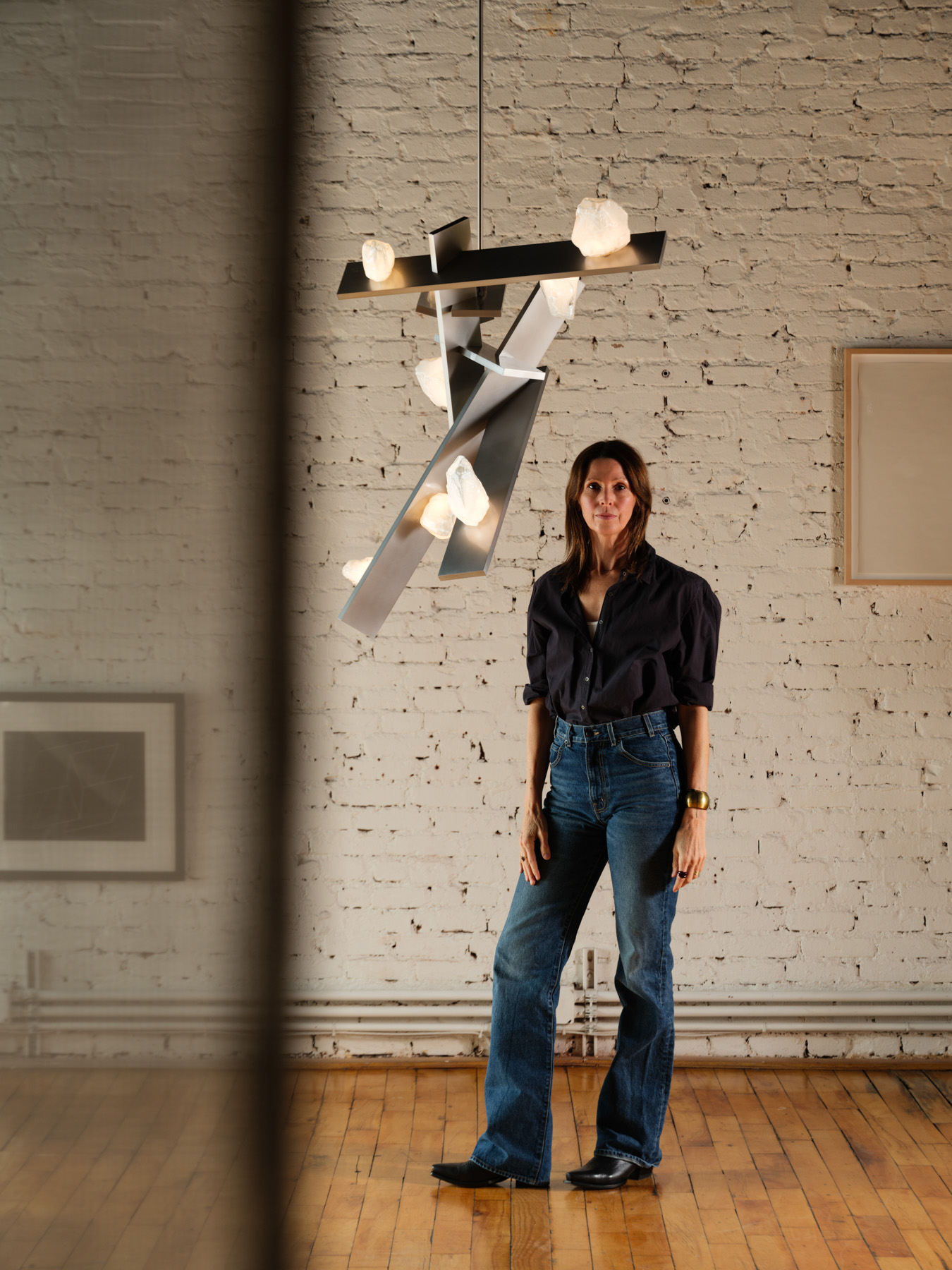
Lindsey Adelman credits a preternatural cultural craving, a pinch of naivety and her studies in industrial design for the creative path she has forged. “I’m so grateful I found my way to RISD [Rhode Island School of Design] because it really changed everything for me,” Adelman says. “Learning about what industrial design is – which I came to find was anything from a mechanical pencil to elements of a skyscraper and all the details in between – was fascinating to me.” She adds that she felt “so lit up” and had a “sense of relief ” for having found her calling as a designer. “When you feel that way, you just don’t question it.”

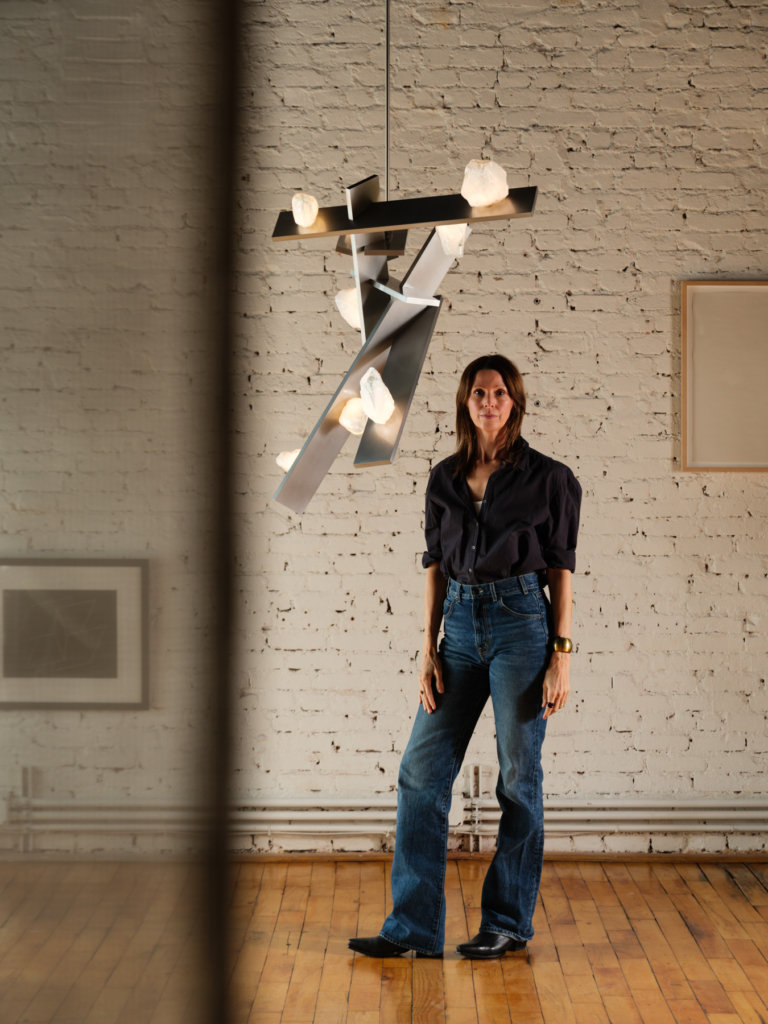
She ultimately gravitated towards lighting for its convergence of the practical and the sculptural and, after graduating, spent a decade working for several lighting companies before founding Butter design studio with fellow RISD alum David Weeks. Adelman eventually struck out on her own, launching Lindsey Adelman Studio in 2006, and the two decades since have been prosperous: she has cultivated a global following for her otherworldly light fixtures, exhibited her work locally and internationally and become a formidable force in the design community in her native New York.
Speaking from her home in Manhattan, Adelman appears to have arrived at a point of personal and professional clarity. Over the years, she’s grasped how to articulate her needs as a designer and no longer shies away from doing so. “You learn so much about yourself in your thirties, forties and fifties,” she says. “I now know what I need to bring out the best of my creativity and I’ve learned to not feel guilty about that, which I think is something women in particular do to themselves. You can really punish yourself for being too needy but that’s evaporated for me, so it’s just a lot simpler.”



Collaboration and community are part of her creative process. She gets these from her clients and the wider architecture and design community, which she finds “really grounding”, as well as her team of 25, based in her Noho studio. “Nowadays, I’m really able to express myself sculpturally, but I still very much need and rely on the anchor of my studio team, my space and all of their skill sets,” Adelman explains.
For her, the design process is iterative and in constant motion. She always has a sketchbook on hand and travel fuels her creativity. “I recognise now that that kind of stimulation and immersion is part of my practice.” For example, a few hours spent at Paris’ Jardin des Plantes on a recent trip to France gleaned pages of sketches. These drawings may find form or begin a broader enquiry into shape, colour or symbolism. As she says, her observations “often lead to something I can see in bronze or glass, or with elements of gold or red enamel. It’s never a literal translation but I can connect the dots.”


This process informed the defining elements of her latest collection of Illuminated Mobiles, which features fine gold chains and white glass orbs inscribed with gold enamel symbols. These motifs came from “a series of drawings that I was doing with a compass and graph paper, and they became quite precise and symmetrical. I don’t usually draw that way, but I was just following it,” she says. “For me, they’re full of hope and feel very serene and resolved, so there’s a lot of lightness in this collection – it’s like the calm before another storm.” The second collection she released this year, Andromeda, brings together batons of stone and metal adorned with crystals. Appearing to collide mid-air, they exude tension and momentum.
The contrast of these twin collections demonstrates Adelman’s incredible breadth and willingness to not only follow her creative impulses as they arise – but to feed them. In the past 12 months alone, she’s launched three new collections and held two shows in Los Angeles and another in Paris – and that doesn’t include upcoming anniversary celebrations. “When I look at it like that, it’s kind of extreme, but all of these things just pop through the surface of the soil,” she offers.



Recognising and embracing this fluidity is another learned thing. She describes spontaneity as a practice – a muscle to be trained – and she has come to trust her instincts, a skill no doubt cultivated by 20 successful years at Lindsey Adelman Studio. “There’s something about just letting things happen and being able to take action without knowing the ending – like jumping into a project because the process is so magnetic,” she says. “That’s what’s really characterising my present tense and will probably lead me to the future. Not knowing how to describe what my practice will look like in 10 years – I think that’s a good sign.”


