Rarify
Design, computer science and modern technology collide at Rarify – a forward-thinking design company redefining what it means to procure, restore and sell collectable vintage furniture and lighting.
As a technology-driven company focused on 20th-century design, Rarify is a concert of contrasts – the past and the future, the scholarly and the practical, the academic and the artistic. Founded by friends Jeremy Bilotti and David Rosenwasser following their collective studies at Cornell University, Harvard University and Massachusetts Institute of Technology in fields ranging from architecture to computer science, Rarify is a veritable culmination of their aptitudes and interests.





Bilotti and Rosenwasser both recall seeking out art and design from a young age. Rosenwasser inherited his parents’ affinity for antiques and flea markets, gleaning a preternatural appreciation for high-quality design – his first significant investment was a set of sterling silver Georg Jensen cutlery at the age of 13. “Growing up in rural Pennsylvania, contemporary design was very foreign to me,” he says. “I saw an Eames chair when I was 12, and that got me hooked on the prolific designers of the 20th century.”
In his late teens, Rosenwasser began sourcing vintage furniture from Craigslist and former Knoll employees who had “parts and pieces ripe for restoration”. Countless trips in his station wagon later, with years spent educating himself on collectable design and restoration, he amassed an impressive collection that he sold to a buyer in the Philippines for more than US$100,000. “That was the seed capital for the first vintage business I launched, which, if you follow the snowball far enough down the hill, led to Rarify.”
Bilotti, on the other hand, was “obsessed with art”. He attended classes every weekend at his art teacher’s home, where he recalls being captivated by her extensive collection of 20th-century design pieces. “She was from Germany, and she’d brought all this furniture from Europe to her home in central New Jersey where I would go on Saturdays and learn how to paint,” he says. “Seeing pieces from the Bauhaus movement was this oasis of design; it ignited something inside me.”
These formative experiences led Bilotti and Rosenwasser to Cornell, where they met while studying architecture. During this time, the pair both worked in Sabin Lab, architect Jenny Sabin’s esteemed research practice, and they found themselves gravitating towards the burgeoning world of technology. Bilotti also went on to work with Sabin and Microsoft Research on Ada, the first architectural pavilion project to incorporate AI. “We were training to become architects at a time when tech, software and coding were becoming more and more accessible to designers,” says Bilotti. “We also became enamoured with manufacturing tech, as it related to architecture and buildings but also to products like furniture.”


This thinking, paired with a suggestion from designer and mentor Stephen Burks to build a tech-forward business around Rosenwasser’s replenished collection of vintage furniture – which he’d amassed throughout his college years – led them to launch Rarify in 2021. A mere four years later, Rarify is an authorised dealer, representing some of the most important manufacturers in the United States with roughly 15,000 pieces of vintage furniture and lighting currently in stock.
In addition, Rosenwasser and Bilotti work with established manufacturers to circulate large quantities of discontinued stock – a move that both helps to reduce waste and strengthens the rapport between Rarify and major industry players. There’s also a contemporary arm to the offering, which allows them to “act as purveyors, seeking out what we feel are the most important new works that are of a very high quality or will one day be collectable,” says Rosenwasser.





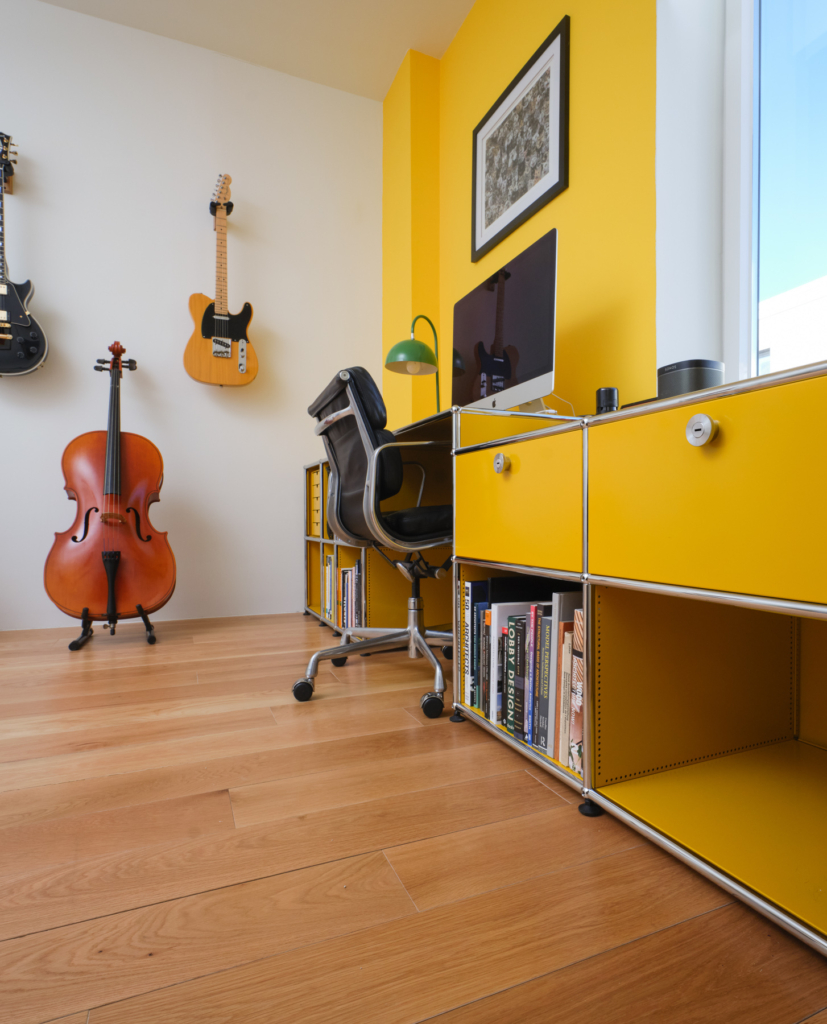
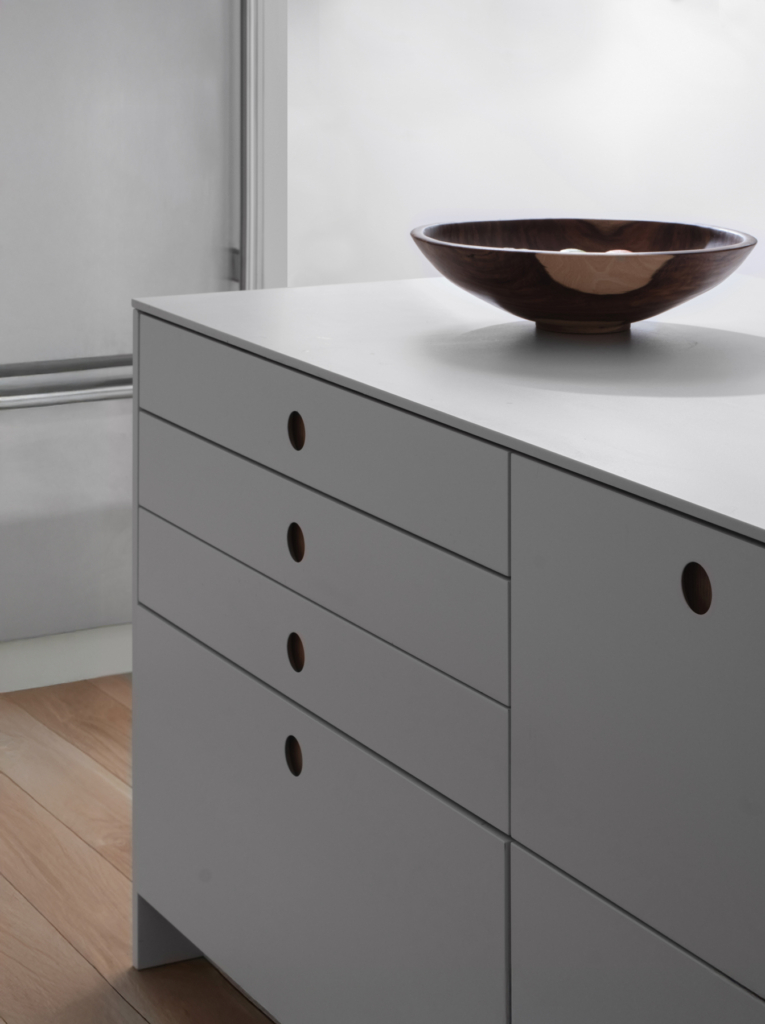
Rarify operates out of two physical spaces: a 7,000-square-metre warehouse in central Pennsylvania, which Bilotti refers to as “design history Disneyland”, as well as at the newly opened showroom in Philadelphia. Embracing the hybrid model du jour of a shop, event space and residence – Rosenwasser lives on the top floor and Bilotti stays when visiting from New York – it represents an important maturation for the young company. “We saw this as a very risky move but one that can open doors to relationships with brands who want to have an urban footprint,” says Bilotti.
A warehouse, physical showroom and website are the makings of a traditional retail business; however, it’s the innovative approach underpinning these elements that makes Rarify a unique prospect. “We’re obsessed with the physical world of design and furniture, but the way we’ve always thought about the company is from a tech perspective,” says Bilotti. “We’re trying to be a disruptor in an industry that is old and antiquated and still functions through emails and spreadsheets.”


As Rosenwasser explains, Bilotti can “see Rarify through a lens of data science. We’re building vast data sets – more than five million data points and counting – of the works we represent and deal in. That rich data can be used to understand market trends for specific designers or materials. It can also be used to inform the direction we go next in our business.” Bilotti is also working on an “industry-leading project tracker” that could help to streamline the specification process for architects, designers and clients on large-scale projects.
Rarify is also capitalising on the power of social media, too, having amassed a large following on Instagram through short explainer videos that tap into Rosenwasser’s extraordinary knowledge of 20th-century design. Identifying the slightest nuance of a maker’s mark or determining a piece’s provenance and authenticity through its level of patina or screw type are skills within the keen connoisseur’s wheelhouse.
These popular videos cover topics from Marcel Breuer’s lesser-known D40 chairs, Joe Colombo’s revered Boby trolley or door handles masterminded by Arne Jacobsen. Unsurprisingly, it’s all informed by analytics. “We’re carefully studying which products and videos perform well … and responding internally by focusing more on that product and perhaps adjusting the user experience of our site to take those results into account,” says Rosenwasser.
This multi-pronged yet highly specific strategy, which brings together Rosenwasser’s reverence for 20th-century design and Bilotti’s natural inclinations for tech innovation, is deeply compelling. The sustained outcome of this work, particularly in an increasingly digital age, promises to be a rare thing, indeed.