
Monica Curiel
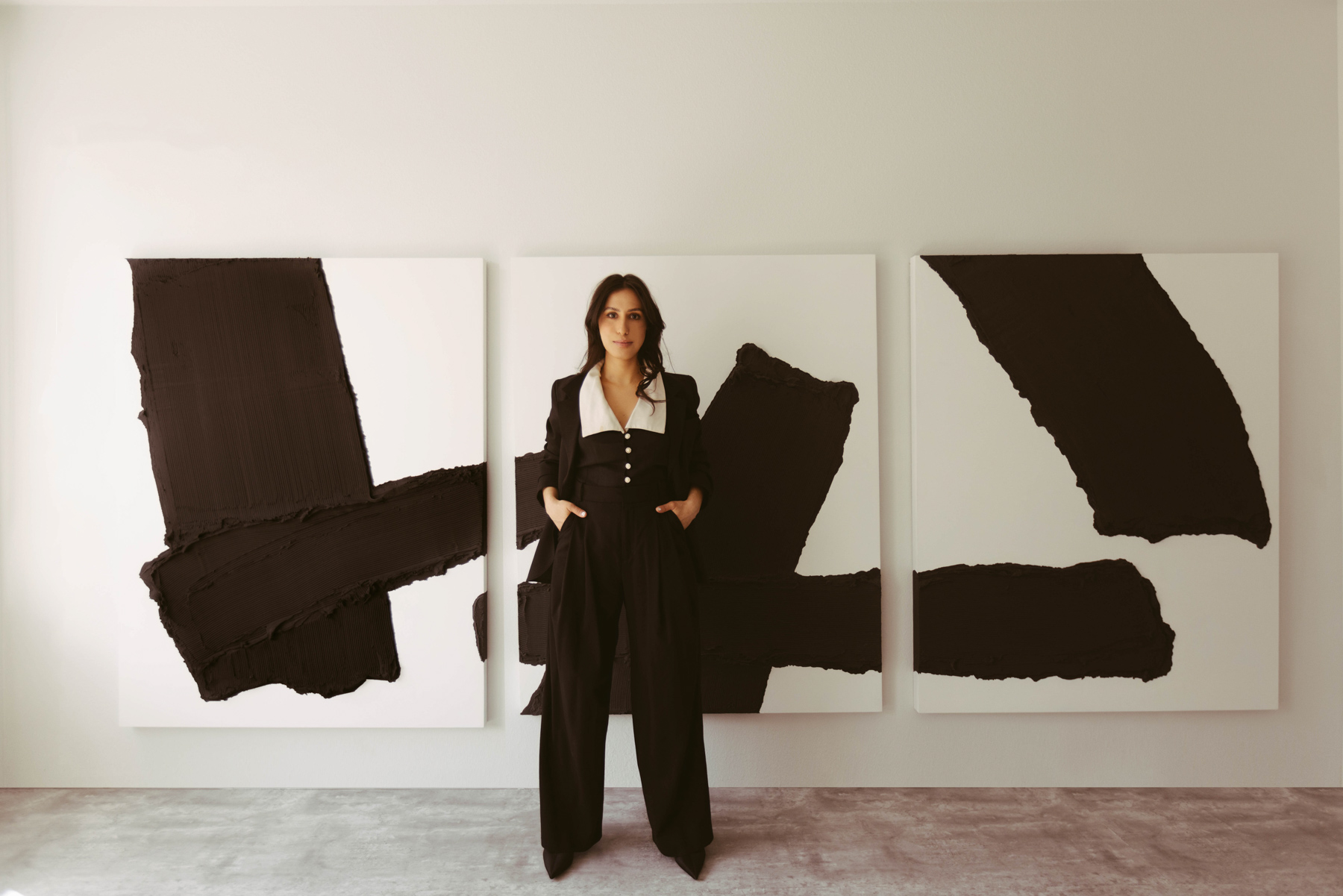
Dallas-born, Denver-based artist Monica Curiel draws on her Mexican-American heritage to transform humble construction materials into textured works that explore care, labour and belonging.
Her practice sits between art and architecture, grounded in the everyday yet reaching for something enduring.

TLP What first drew you to working with architectural materials like plaster?
MC My parents are from Jalisco, Mexico, and I grew up surrounded by construction sites where my father worked. I was constantly around materials like plaster, spackle and paint that were rarely seen as beautiful. While pursuing my Bachelor of Fine Arts, I returned to those same materials instinctively. I realised I could use them as a language to honour the communities that built so much yet remain unseen.
TLP You’ve described your work as existing at the intersection of art, architecture and identity. How do these elements come together in your process?
MC The architectural aspect is embedded in the materials and their functions, such as building, repairing or concealing. My art emerges through the exercise of craft: using those same materials to share the narrative of why the works are made and why they matter.
TLP What was the initial brief you set for yourself when developing your most recent body of work?
MC Using spackling paste and plaster, I merge my mother’s delicate handcraft with the industrial materials of my father’s trade. The work reflects on femininity, labour and cultural inheritance while challenging perception and material expectation.
TLP Walk us through your process in the studio, from preparation to the moment a piece begins to take shape.
MC When creating draped forms, I start with sculpting and layering the material, then refine it through sanding, brushing and reshaping. I work with grouting tools, brushes, sponges, water and my hands, allowing the material to dictate its own movement while guiding it into form. Finally, I paint and seal the piece, ensuring it retains both fragility and strength.
TLP Your surfaces often feel both ancient and contemporary. How do you achieve that balance?
MC I draw inspiration from materials historically used in interiors and architecture, as well as their contemporary adaptations, like Roman clay or limewash. Texture is where I find energy. The contrast between smooth and rough brings depth and a sense of age, while minimal composition keeps it contemporary.
TLP Could you explain how personal memory and cultural history inform your aesthetic decisions?
MC My mother worked in cleaning, my father in construction, and all those gestures of care, repair and repetition are deeply embedded in my process. The forms and compositions often come from memory: walls of family homes in Mexico, textures of worn tile or fabric. The work is a translation of those quiet, everyday rituals into something worthy of celebration.
TLP Sustainability and resourcefulness seem inherent to your material choices. Is that an intentional part of your philosophy or a natural extension of how you create?
MC Both. I grew up seeing resourcefulness as survival; making do with what you have, repurposing, fixing, saving. That mindset is deeply cultural, and it naturally embeds itself into my practice. I often reuse studio materials, offcuts or leftover spackle. It’s less about sustainability as a buzzword and more about respect for the material, the labour and the process.
TLP What challenges have you encountered in translating something experiential into gallery contexts?
MC People often want to see what they can easily understand. If I tell someone my work is Mexican-derived, they might ask, ‘But how?’ Names like Frida Kahlo or Luis Barragán might come to mind, but creating something new and contemporary often means it won’t be immediately understood. That translation from why I make to what I make is an ongoing challenge I’ve grown to love.
TLP Is there a particular piece that felt like a turning point?
MC Very recently, I exhibited a vessel titled Entre Tejido, Pliegues y Yeso during Mexico City Design Week. It felt like a return to my roots. Seeing how people wanted to touch the surfaces and connect with the familiarity of the materials made me feel part of a community I hadn’t always felt fully connected to before.
TLP What questions are you still exploring through material and form?
MC Questions around visibility: whose hands build our environments and how material can hold memory and identity. I’m also interested in the emotional life of materials. How something like plaster, which we associate with labour and repair, can become a vessel for tenderness and beauty.


