Audi Concept C
Audi’s sleek new roadster concept is heralding the next era in design and a return to Bauhaus-inspired simplicity.
In 1998, the Audi TT arrived as a compact coupé that felt as much a manifesto as it did a car. Its taut surfaces, geometric purity and Bauhaus-inspired restraint were revolutionary for the marque, propelling it from a maker of executive sedans to a company capable of producing forward-thinking design icons. As a model that demanded attention without shouting, the TT showed the world how restraint could elicit desire – even when performance wasn’t its biggest bragging point. Over two decades later, the TT has become a modern classic, helping reshape the German performance car maker’s electrified future and proving that great design is eternal.

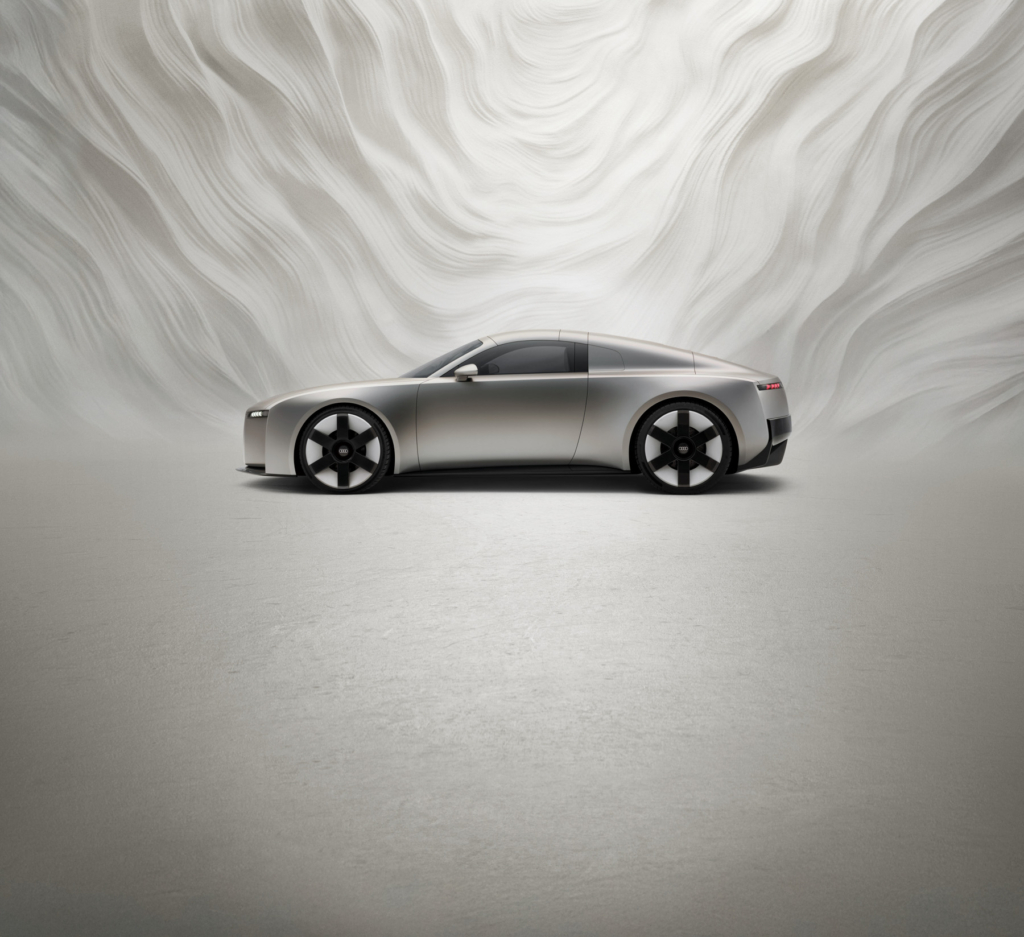

Revealed earlier last year, the Concept C offers us the first glimpse of Audi’s next era, as well as a fresh evolution of the TT’s iconic Bauhaus-inspired principals. Its monolithic surfaces, smooth lines and disciplined geometry echo the TT’s charm but translate it into a contemporary electric design language that bridges innovation with heritage. “In 1998, when the first Audi TT arrived at a dealership in Turin, I took a day off work to just look at the car in peace. I was there for hours, looking at the car from every angle, touching every surface. The staff probably thought I was crazy,” says Massimo Frascella, chief creative officer, who joined Audi from JLR, where he had led design for Jaguar and Land Rover since 2011, and was responsible for the new Range Rover models and the recent Jaguar Type 00 concept.
“For me, the TT was more than just a car. It was a message: you don’t need to shout to be heard. You don’t need excess to make a statement. You just need clarity,” he says. “And, more importantly, the courage to follow it.” Frascella frames design as more than the creation of form, but rather as a culturally connected statement, strategic tool and a driver of brand identity. This can be said about the TT, but more importantly, this is the role the Concept C will play in reshaping Audi’s future.

The Concept C is a major – and much needed – reset from Audi and will guide every new vehicle in some way. At its heart is a philosophy Audi refers to as “radical simplicity”. This is a new and forward-thinking interpretation of a brand where intelligence, emotion, performance and technical precision are inseparable and will propel forward a new focus around reducing things like over-ornamentation and noise while still leaving space for emotion and driving joy. “Radical simplicity is at the heart of our approach,” says Frascella. “We achieve clarity by reducing everything to the essential. We live in a world that is often shrill, fast-paced and overloaded. Almost everything is overdone. The danger of losing your way is greater than ever. Our responsibility is to be better and do what really matters. And the outcome always has to be an emotion.”
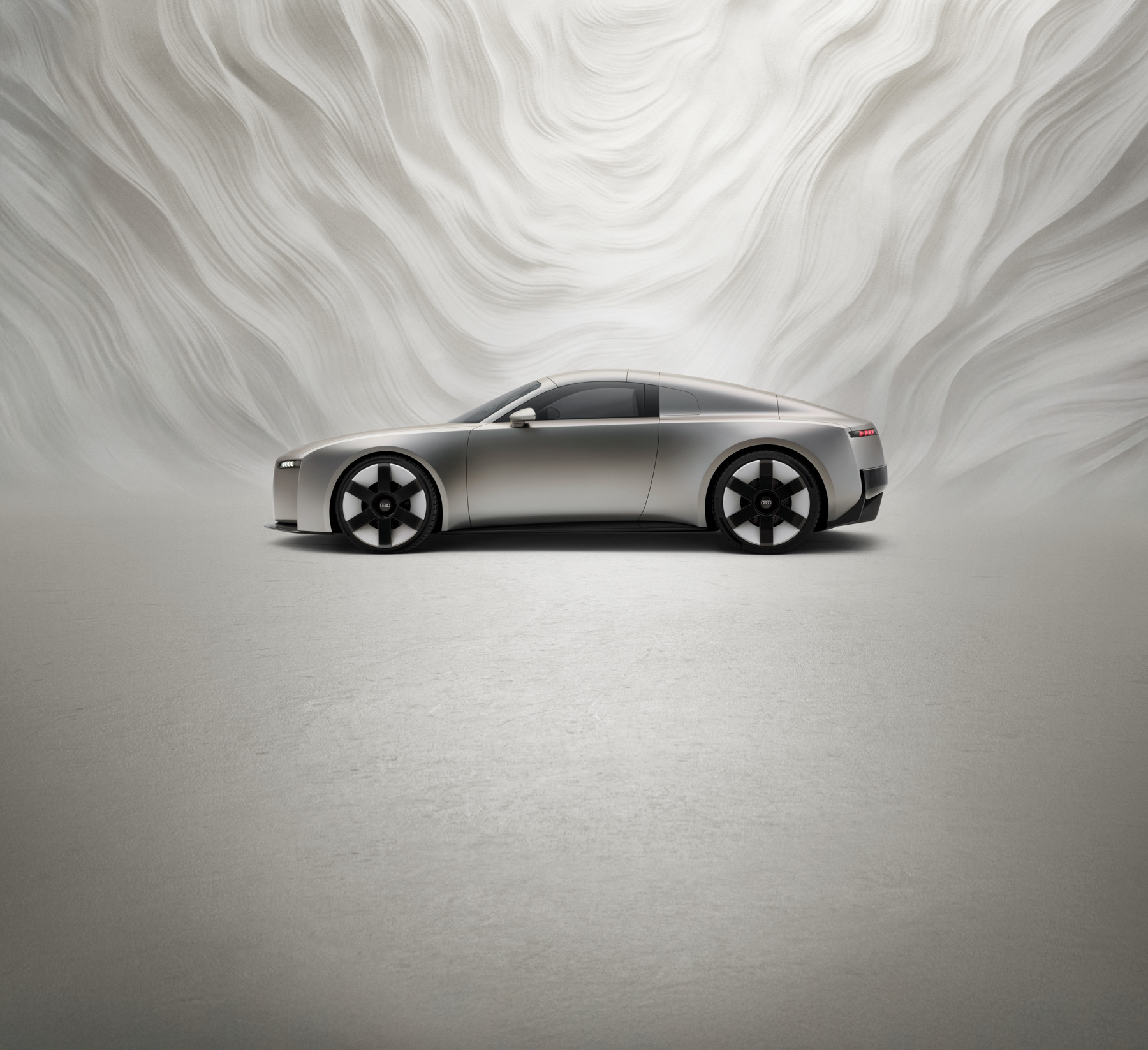
The two-seater roadster is sculptural in the purest sense, drawing inspiration from Audi cars of the past. A contemporary reimagining of the iconic 1936 Auto Union Type C race car grille and the third-generation Audi A6, its vertical frame forms the front of the concept and anchors the design, creating a strong and upright presence. Its proportions are athletic yet elegantly assured – again, a key signature of Audi cars – and the centrally mounted battery, long cabin and pronounced shoulder line aim to evoke a sense of balance and purpose. We don’t yet know much about what is going on underneath in terms of battery size and specs just yet, but where Audi is moving forward with a mix of combustion, plug-in hybrids and EVs, we do know the Concept C will be pure electric only, likely sharing a platform with the yet-to-arrive next-generation Porsche 718 Cayman and Boxster.
The Concept C’s lights follow the reductive logic, with horizontal elements delivering a slim, sharp and futuristic signature – as if straight out of a robot anime. Notably, it’s also missing a rear window, with three vertical slats instead that conceal a camera – a design feature Audi says will make production when the concept becomes a reality in 2027. Every element communicates form as function in true Bauhaus style. “For us, technology is a means to progress, not an end in itself,” says Francella. “We neither want to hide it nor show it off. It should inspire without being dominant. For Audi, technology is a given, unobtrusive and yet functional and present when the customer wants it. It is a seamless part of the experience.”
Since its reveal, it would seem that the most polarising element of the vehicle has been its interior – mostly due to its monochromatic grey and minimalist aesthetic, which has been referred to as bland and a little corporate by critics, and is a strong departure from the dynamic, busy and incredibly sporty cockpits Audi has built a reputation for. However, up close, there is an emphasis on physicality over ornamentation or showy tech. Plastics and glossy piano black surfaces are out, and in their place, more tactile surfaces, haptics and touchpoints made from anodised aluminium. Technology is present but discreet: a moderately small 10.4-inch foldable centre display offers information when needed, folding seamlessly into the dashboard when it’s not. Together with the haptic controls along the steering wheel and centre console, the interior has been intuitively designed for interaction, so every control is exactly where the hand expects it, demonstrating that elegance, technology and functionality can coexist – and unlike other recent concepts that have brought the yoke shape to the fore, it still has a circular steering wheel. We can expect Audi’s next generation of vehicles to follow through with the same emphasis on tactile interactions and pared-back digital interfaces, a move towards interiors that are both user-friendly and emotionally resonant. A move many enthusiasts will no doubt celebrate.
While it may no longer be the category Audi is now widely known for, making its halo concept a sports car was of the highest importance, according to CEO Gernot Döllner. This year will also see the four rings return to Formula 1, which Audi says will directly influence how customers view the marque and no doubt impact its sportier RS models of the future, at least in a cultural and societal context. “Sports cars captivate. They are a celebration of speed, design and emotion,” says Döllner. “As an identity builder, the Audi Concept C will occupy a special place in the Audi portfolio and strengthen the desirability of the brand.” This is also just the beginning of a broader transformation, as radical simplicity is being applied as a guiding principle across the company, shaping everything from product strategy to organisational shifts.
In recent years, Audi has faced much criticism around its range becoming too confusing and complex – too many derivatives, overlapping options and visual flourishes that diluted the impact of the brand’s identity. Granted, it’s not alone in that criticism: BMW and Mercedes-Benz have too been accused of this. However, it is also coming out of one of its most active two years in recent history: by the end of 2025, Audi had introduced more than 20 new models within 24 months, a move that now makes its portfolio the youngest in the premium segment. In 2026, we can expect more new models, including a fully electric entry-level model and fresh performance models from Audi Sport. It will be interesting to watch how the new approach, once it trickles down into the wider stable, might seek to strip away the non-essential, allowing each model to convey a distinct identity. In this way, explains Döllner, radical simplicity is not just an aesthetic guideline but a strategic framework for design, engineering and customer experience – ensuring that every new Audi is recognisable, emotionally engaging and the brand is alive and future-proofed.

Interestingly, the Concept C is part of a wider shift happening within automotive design, particularly at the upper end of luxury performance. We’re now seeing many brands shift towards coherence, intentionality and emotional intelligence – a direct pushback against what’s happening at the lower end, particularly coming from the Chinese market, where a more-is-more approach is colliding with a rising sense of consumer technology overstimulation. Where other car makers have been accused of destroying their heritage, Audi has pushed its legacy forward, resulting in a lovely, sleek and futuristic bridge between past and future. Culturally, the Concept C is a reflection of contemporary desires – discipline over excess, focus over noise and craftsmanship over spectacle. It demonstrates that luxury performance in the 21st century is not in more features or louder gestures but in precision and thoughtful design.
Frascella says that the concept also attempts to communicate a fresh way of expressing what emotion means, albeit in a future-focused context: “The answer to a powerful question: how does Audi feel to the customer? Our answer lies in four principles: clear, technical, intelligent and emotional. They form the foundation for everything we do.” In this way, the Concept C fulfils the promise of its TT ancestry: it proves that a form-follows-function approach can be compelling, reductive design can be seductive and restraint is radical. As Audi looks to the future, this concept car will become a blueprint for how design can shape emotion, articulate identity, stimulate conversation and define what automotive culture – and motion itself – can aspire to in an electric era; and where precision, refinement and emotional calm reclaim a place in high-performance design.