‘Tableau Vivant’
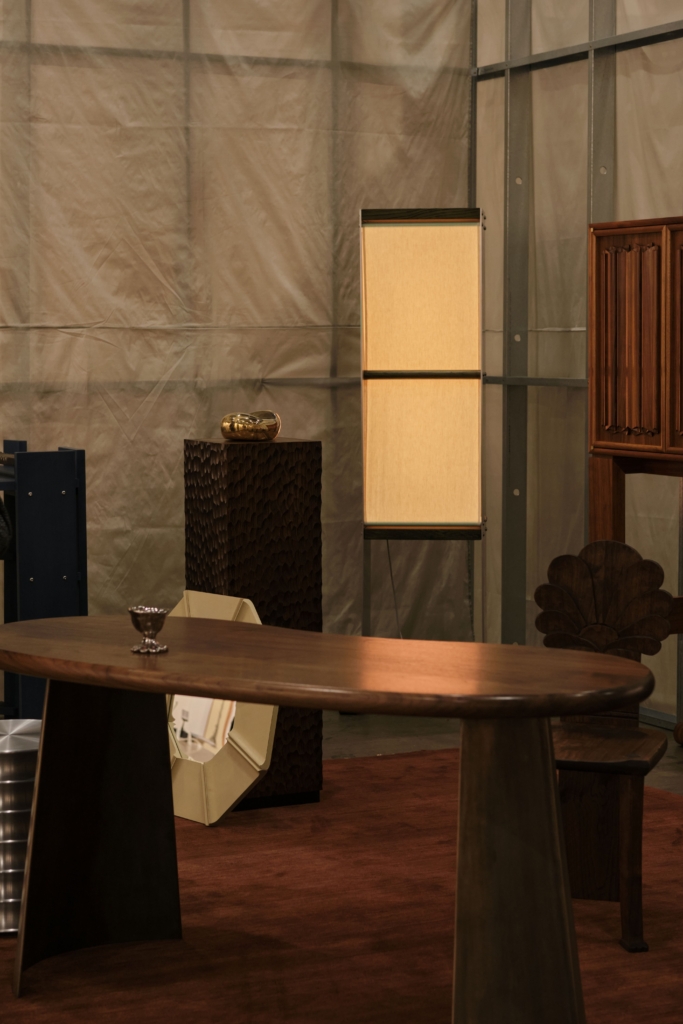
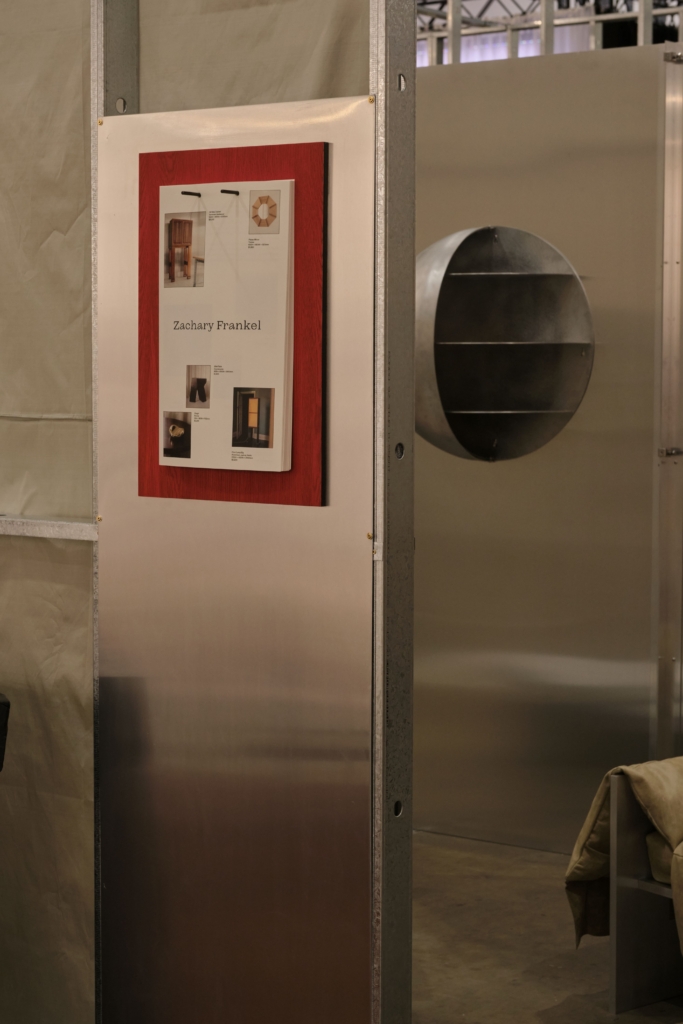
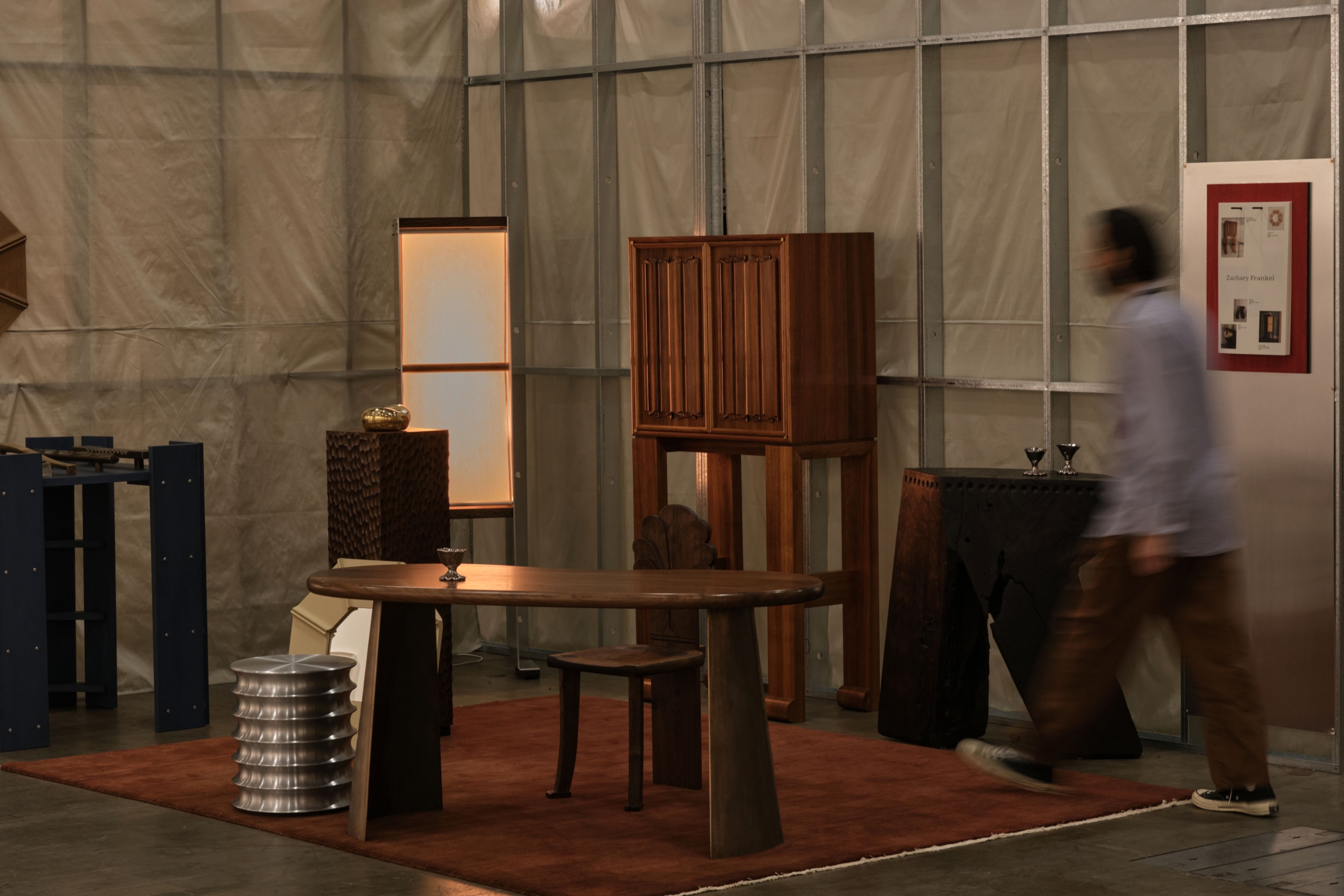
Treating the domestic interior as a site of self-expression and exploration set the scene for ‘Tableau Vivant’, designer Zachary Frankel’s exhibition at the 2026 Melbourne Art Fair, presented as part of FUTUREOBJEKT, the fair’s inaugural contemporary design salon.
‘Tableau Vivant’ drew inspiration from the Dutch Golden Age still lifes of Pieter Claesz and Willem Kalf, along with the interior tableaux of Pierre Bonnard and Édouard Vuillard, to create a concentrated interior environment for displaying Frankel’s collection of furniture, lighting and sculpture, as well as introducing his new hardware brand, Verra. Originally trained as a silversmith, Frankel has continually evolved his practice, which now encompasses furniture, hardware, objects, lighting and sculpture across a wide range of materials. ‘Tableau Vivant’ represented his most expansive exhibition to date, presenting works that together mapped personal history, cultural reference and material enquiry.

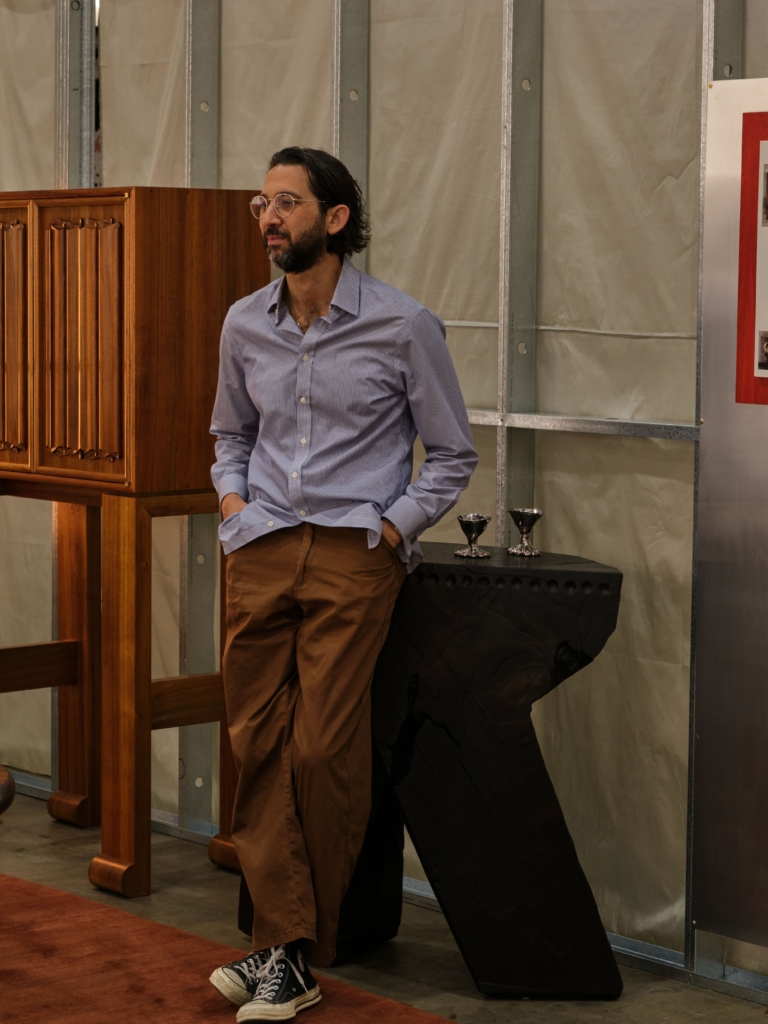
Originally trained as a silversmith, Frankel has continually evolved his practice, which now encompasses furniture, hardware, objects, lighting and sculpture across a wide range of materials.

“I wanted to show the breadth of what I’m interested in, from one-off hand carved pieces through to more industrial design-based work and how far the practice has come,” he explains. “But just as important was the environment itself. I knew the art fair would be full of gallery-style spaces, so I saw it as an opportunity to create something that felt domestic, warm and familiar – somewhere people could actually feel at home.”
Each piece on display asserted its own identity and idiosyncrasies – some immediately evident, others less so. Taken as a whole, however, the collection conveyed a singular sensibility: unified yet multifarious. One of the largest designs on display, the walnut and bronze Bean Desk, for example, appears to gently hug the body of the person seated at it. Similarly, one of the smallest objects, Dough – a sculpture crafted from highly polished bronze – also evokes this tactile curve, though here it takes the form of a different bodily impression: a thumbprint pressed into a piece of biscuit dough.
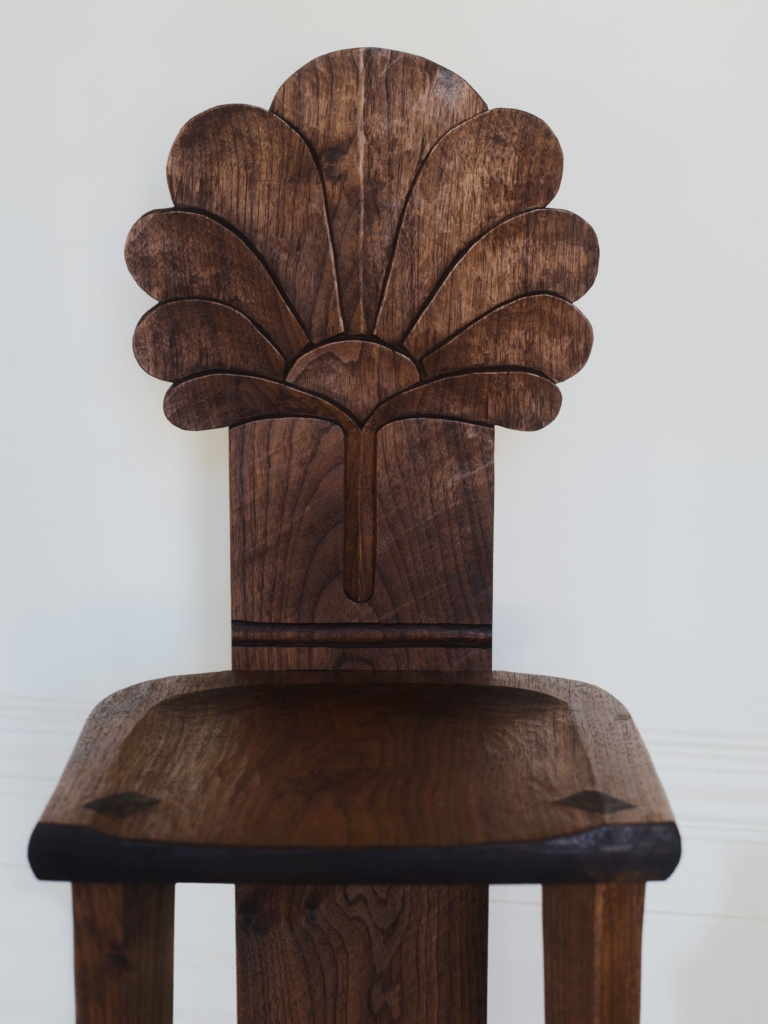
The simplicity and ergonomics of these pieces were balanced by more decorative designs such as the Date Palm Chair. Made to accompany the Bean Desk, the chair’s upright stature contrasts with the desk’s organic curves, while the carved motifs reference the date palm as an ancient symbol of Jewish resistance, drawing on Frankel’s family history as well as synagogue architecture. Further demonstration revealed a surprising feature: the chair is held together by a single ornate pin that, when removed, allows it to break down into its component parts. This unexpectedly delightful act of disassembly is at once whimsical and practical. It suggests either a flippant ‘why not?’ approach to design or, conversely, a pragmatic readiness for transport at a moment’s notice, should the need arise.
The Walk Table, carved from a single piece of cypress pine salvaged from Melbourne’s Royal Botanic Gardens, and the Floor Lamp Big, which combines brushed aluminium with timber and natural fibre, were two other contrasting yet complementary designs on display. The table’s primitivism offered a pleasing counterpoint to the lamp’s refinement, though both had an equally sculptural presence. Meanwhile, the Old New Cabinet echoed the decorativism of the Date Palm Chair: hand-carved from Tasmanian blackwood, it references both the 16th-century linenfold motif and classical Chinese furniture.
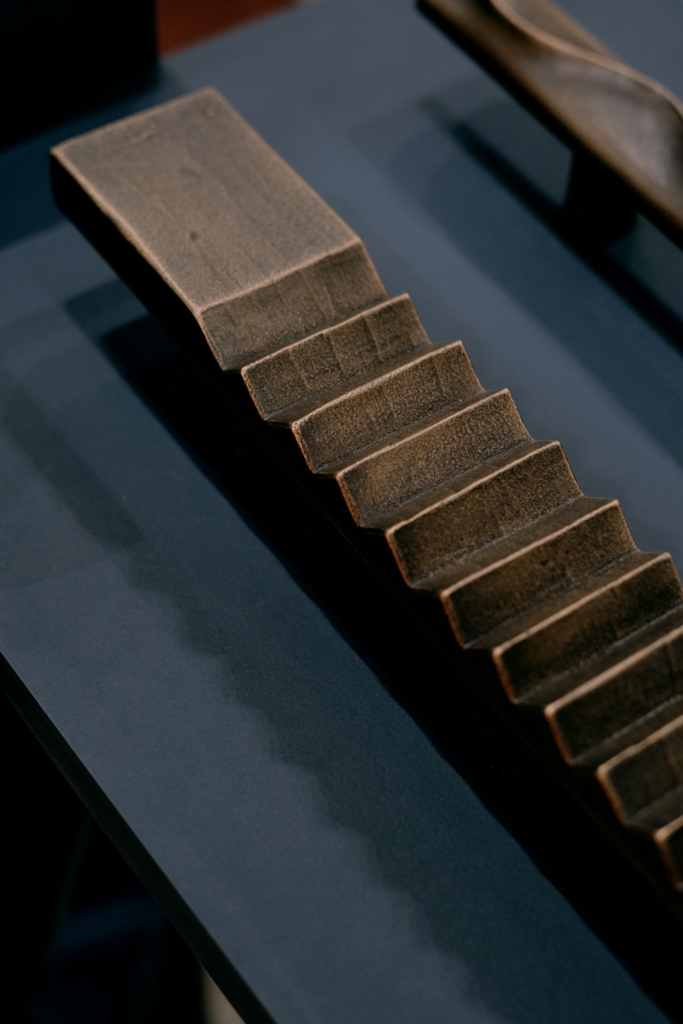
The Verra hardware collection embodied a similar balance of contemporary design thinking and historical resonance. Seeking to infuse the everyday with subtle joy, the pieces evoke forms ranging from brutalist blocks to the much-loved croissant. Dubbed ‘jewellery for your doors’, and inspired by the likes of Achille Castiglioni, Vico Magistretti and Gaetano Pesce, Verra was shaped by Frankel’s desire to create ‘future heirlooms’ – objects intended to elicit delight for years to come.
For Frankel, the exhibition also offered a rare opportunity to connect face-to-face with the art and design community. “Most of my time is spent in the workshop, so being able to talk about the work in person, rather than through a screen, felt really significant.”