The Architecture of Ascent
Viewrail reframes floating stairs and custom railings as foundational architectural elements, uniting structure, materiality and movement within the considered home.
Within the broader composition of a home, the staircase is often approached as infrastructure: a necessary passage between levels, resolved after the kitchen, flooring and cabinetry have established the material language. Yet few elements occupy space so visibly or shape movement so directly. Positioned at the centre of a plan, a stair can frame sightlines, distribute light and bring otherwise separate rooms into conversation. Its railing, meanwhile, traces that movement through the interior, becoming both a safeguard and a continuous architectural gesture.
This is the premise underpinning Viewrail’s approach to floating stairs and custom railings. Rather than treating either as an isolated building component, the company considers the complete system – structure, tread, finish, infill and installation – as part of the home’s design from the outset. The result is a stair that can recede quietly into an interior or operate as its defining sculptural element while remaining responsive to the practical demands of the project.
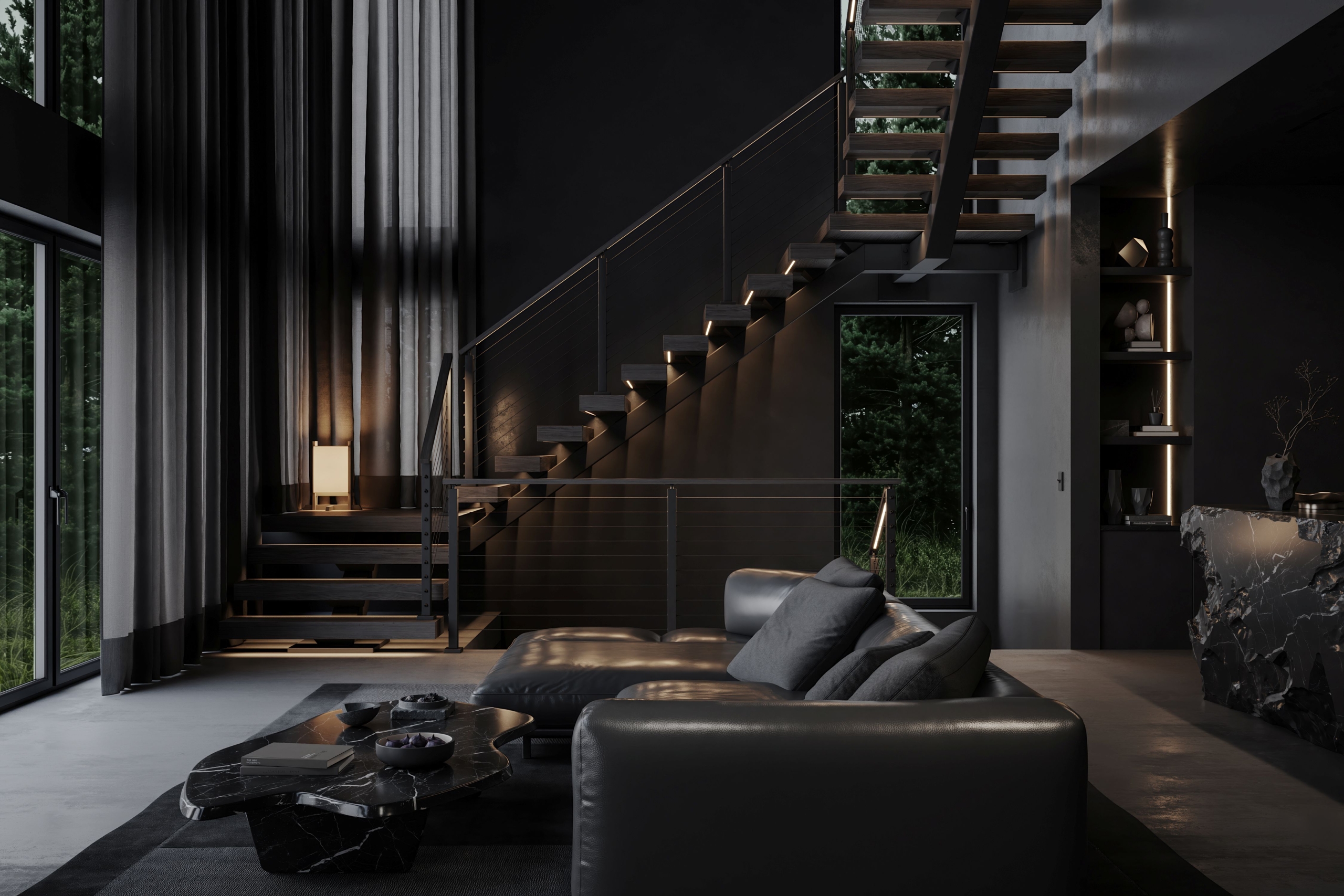
Viewrail’s flagship FLIGHT Mono system demonstrates this balance. A central steel stringer supports open treads, creating a sense of visual lightness while allowing the stair to take on straight, L-shaped, switch-back or U-shaped configurations. Timber species, stain, stringer finish and tread profile can be selected in relation to surrounding floors, furniture and joinery, helping the staircase feel integrated rather than added later. Optional glass risers and integrated LED lighting further allow the system to shift between understated and expressive applications.
The railing carries equal importance. Glass can preserve views and daylight, lending the stair an almost weightless presence, while cable and stainless-steel rod systems introduce a finer linear rhythm. Handrails in timber or metal can reinforce the broader palette, creating continuity between tactile surfaces and structural elements. These decisions may appear secondary during early planning, but their cumulative effect determines whether a stair supports the architecture or interrupts it.
Behind this refinement is a highly coordinated process. Viewrail designs, produces and installs made-to-order stair and railing systems, translating architectural drawings and visual references into a resolved package. Prefabricated components reduce the uncertainty associated with extensive on-site fabrication, while BIM resources support earlier collaboration with architects and builders. FLIGHT Mono is also the first ICC-certified floating stair system, bringing tested performance to an element that must unite aesthetic ambition with structural responsibility.
When considered with the same care afforded to stone, timber flooring or bespoke cabinetry, stairs and railings become more than circulation. They create rhythm, connect materials and influence how a home is experienced in motion. In this sense, the staircase is not simply placed within the architecture; it helps compose it.