The Far-Fetched Near Future
From Leica to luggage, and now his own studio, Vincent Laine designs at the edge of the possible – chasing what he calls the far-fetched near future.
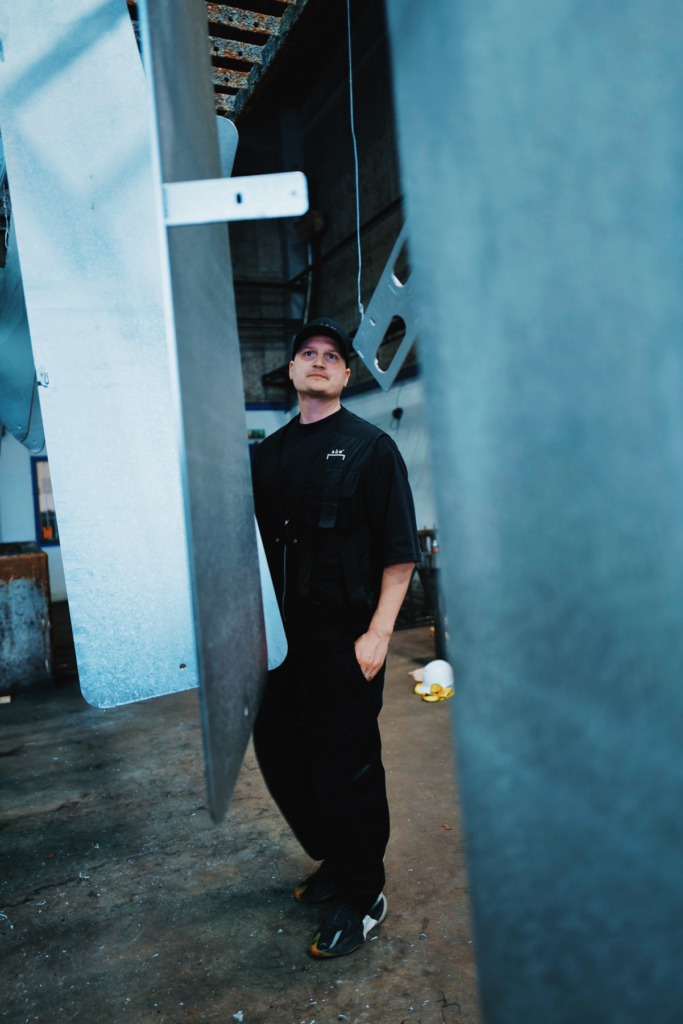
There is a particular kind of designer who does not begin with aesthetics but with a feeling. For Vincent Laine, that feeling is often friction – the moment an object fails to keep pace with the person using it. “It’s something I’ve come to shape as a far-fetched near future,” he says, describing the thread that runs through his work. “Something that feels like it’s graspable around the corner but not yet possible.”

“Everything that is vital to create an image is there at your fingertips – but nothing else.”
Laine, a Finnish-born Swede now based in Oslo, traces the origin of that ethos back to a small win at university: prize money spent on a camera, and a promise to himself to shoot every day. The irony was immediate. The tool meant to unlock creativity became the barrier. “This camera was almost like it was made by engineers for engineers,” he says, a frustration that sharpened during time in New York, when an iPhone was always within reach, but rarely enough.
That tension led to the Leica X3 concept in 2013, a ‘faux’ camera prototype posted online and met with a phone call that could have ended the story early. “Leica said, ‘We should sue you, man,” Laine recalls. Instead, it became a beginning – later recognised in Leica’s 100 Leica Stories book, and eventually a pathway into Laine designing the Leica Q and Q2, cameras defined as much by subtraction as by addition. “Everything was about the essential,” he says. “Everything that is vital to create an image is there at your fingertips – but nothing else.”




From there, the pattern repeats: respect heritage, then nudge it forward. At Hasselblad in Sweden, Laine worked on a compact, modular, medium-format system that married old and new. Later, at Scandinavian brand Db, he redirected his attention to travel, asking what luggage should feel like for the people who depend on it. “I wanted to sort of translate confidence into a format of travel gear,” he says, reframing the suitcase as something closer to equipment. “For creatives, this is not a suitcase, it’s a toolbox.”
Today, after a chapter that included Db’s growth and an LVMH Luxury Ventures Advisors investment, Laine is pursuing his own studio and language – a sandbox for optimism, calibrated between the familiar and the futuristic. “You’ve gotta follow your gut,” he says simply. It is a philosophy that reads clearly in the work: objects that feel inevitable, even when they are still just out of reach.