Simon James showroom
Serving as both the headquarters and showroom for furniture and lighting brand Simon James, Keshaw McArthur’s transformation of a warehouse in Auckland’s Mount Eden gives the business a refined new home.
Previously a mechanic’s garage and later an industrial warehouse, this building has been thoughtfully reimagined by Keshaw McArthur. Rather than erase its industrial past, the architects embraced it, leaning into the original character while introducing elegant contemporary interventions.

“Our vision was always to create an environment which would complement the aesthetic and to provide a home for the brand to reside and build on its enduring reputation,” says Xuân McArthur Nguyen, director at Keshaw McArthur. “We hoped to create an environment which was honest, refined and confident. These are core values and characteristics that we see in the Simon James brand.”
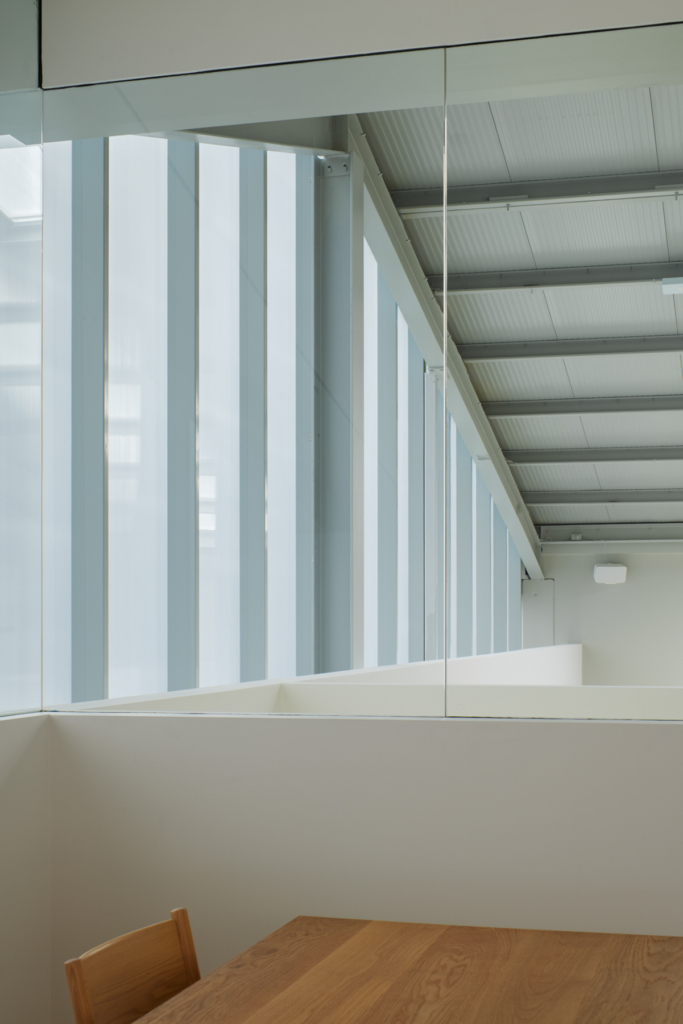
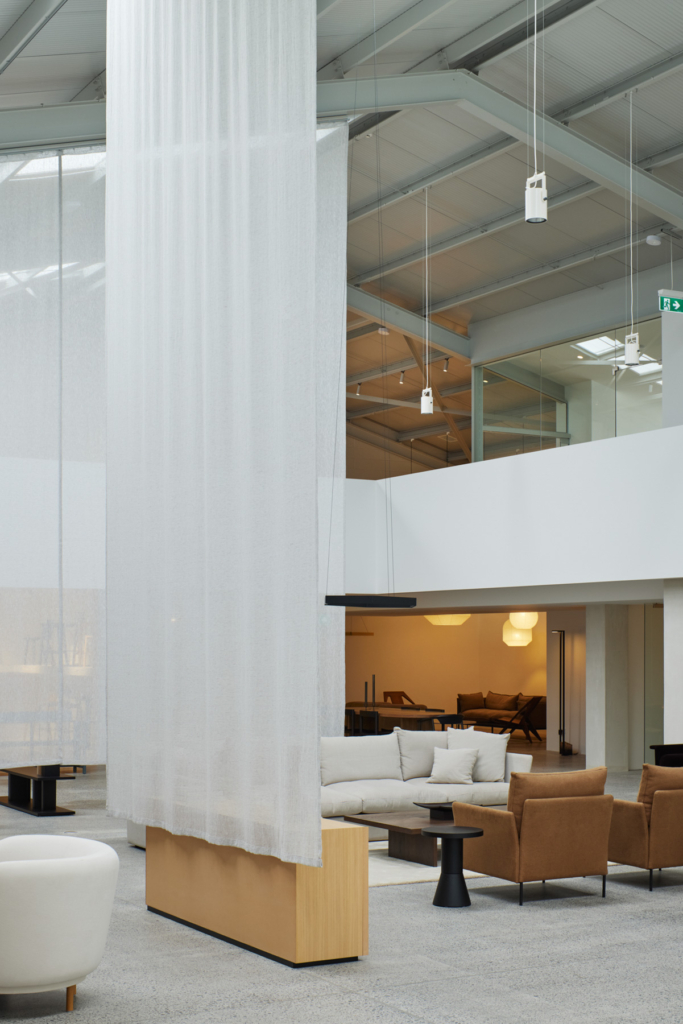
From the street, the familiar warehouse gable remains intact, while reflective polycarbonate cladding introduces a crisp contemporary feel. Full-height glazing opens the facade to the street while allowing in plenty of natural light. Inside, the exposed steel roof and polished concrete floors are retained, yet they are softened by limestone plaster, warm timber flooring from Forté and large flowing fabric curtains that divide the main showroom space. The restrained material palette allows Simon James’s furniture and lighting collections to become the focal point.
At nearly twice the size of the brand’s previous showroom, the expansive floor plan accommodates a much broader furniture collection while remaining highly adaptable. “The main showroom space is very large and double height,” McArthur explains. “It’s designed to feel airy and have an adaptable kind of character to it.” More intimate spaces, such as the ever-evolving chair library, sit beneath the mezzanine, while the double-height volume allows the lighting display to become part of the architectural experience. On the upper floor, visitors arrive at the commercial furniture display, kitchen and staff offices, where “you’re able to gain an overview of the space below”.
While the materiality is simple and refined, it also plays a role in the building’s sustainability. “One particular material that provides an interesting function is the limestone plaster render,” he says. “This naturally reduces humidity within the space, which in turn lessens the reliance on active systems to play this role.”

Ultimately, the project demonstrates the value of adaptive reuse and showcases how honest materiality and clever detailing can create something enduring – which Simon James and the architect both have in common. As McArthur reflects, “Overall, the intention was to create a space that people feel comfortable spending time in and returning to regularly.”