Timbertop House
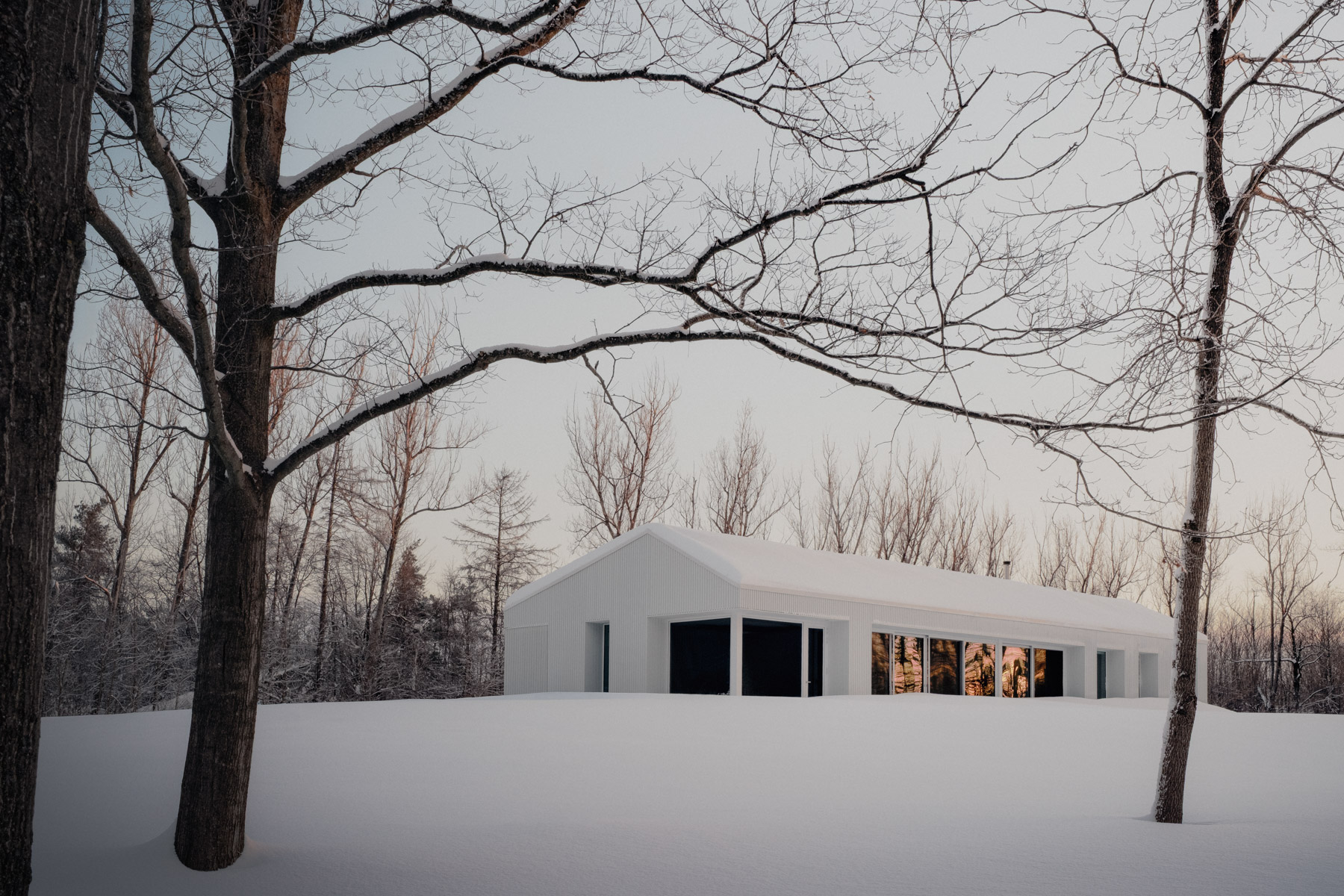
Blanketed in snow during Ontario’s long winters, Timbertop House by Akb Architects nearly disappears, leaving vast, glazed expanses of interior spaces softly glowing against the pristine white snowbanks.
Sitting atop a plateau at the high point of an 80-hectare property, the long, rectangular home with its gabled roof subtly evokes the form and shape of utilitarian farm structures common to the region. For Akb Architects, who designed the restrained yet elegant home, the desire was to balance a strong presence with a light touch. “The exterior of the home carries a sculptural weight,” says architect Kelly Buffey, creative director of Akb, who led the project alongside co-founder Robert Kastelic and project lead Donald Peckover. “However, upon entering, there is an ephemeral feeling of lightness.”


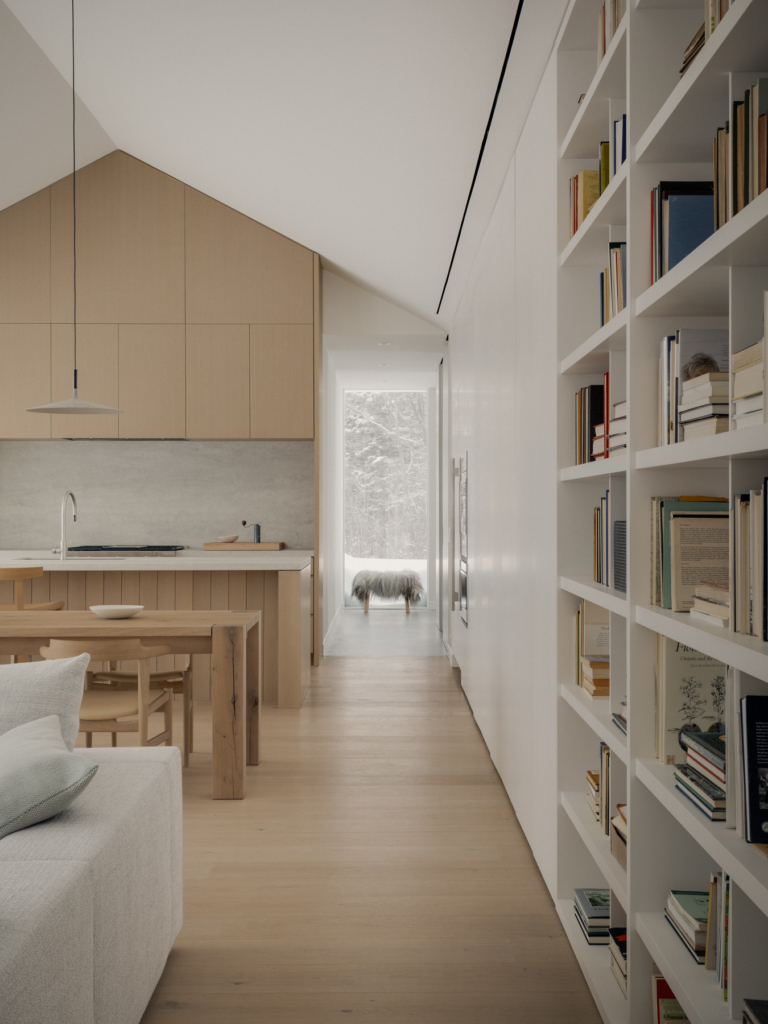


Based in nearby Toronto, the homeowners were seeking an escape from city life. The property had been in their family since 1967, having spent many weekends there growing up. However, the previous home on the land was dark, cramped and lacked a connection to nature. “This formative experience helped shape the desire for a home that feels open, light-filled and deeply rooted in its landscape,” says Buffey. Unsurprisingly, abundant natural light was at the top of the design brief.
Akb answered the call with a design that features abundant sliding glass window walls, dissolving the line between inside and out, especially during warm summer months when the living areas can be completely opened up. This expansive glazing on the south-facing facade helps gather light and warmth during winter months, with deep recesses that shade interior spaces in summer. “The home’s elongated form is aligned so the living spaces open toward the rolling hills below,” says Buffey. “It reinforces a strong visual and experiential connection to the landscape.”

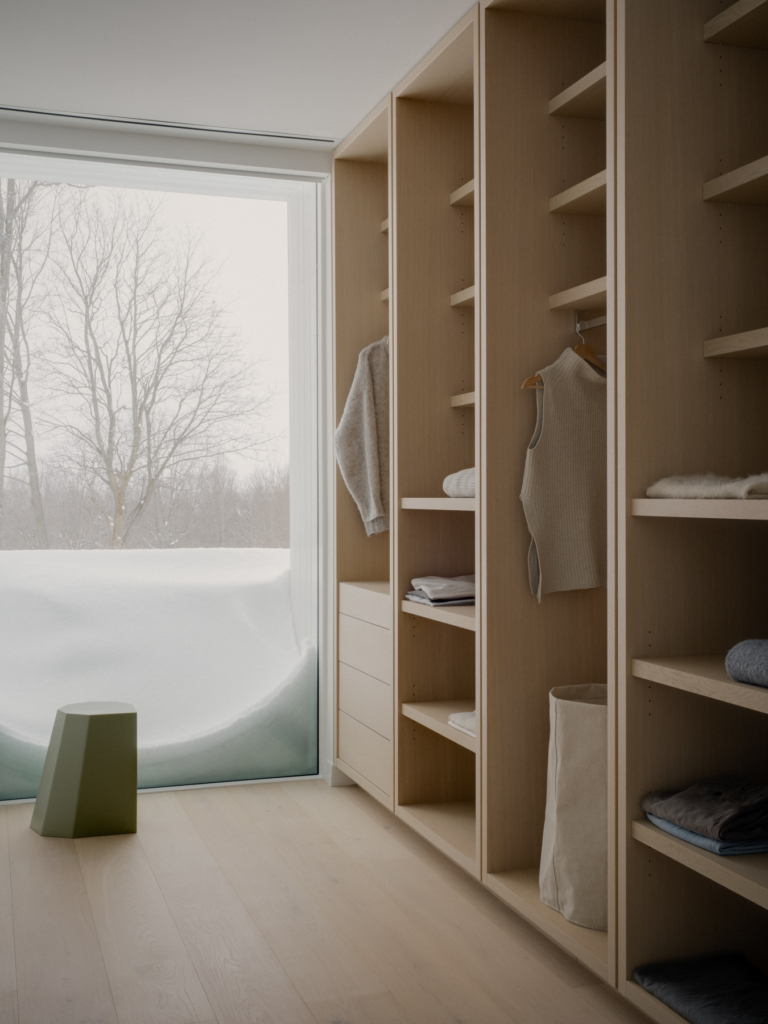
A restrained palette helps the home feel warm and approachable inside. Polished concrete floors and porcelain slab kitchen counters were selected for their durability and ease of maintenance, while wide-plank oak flooring in a light whitewash and rift-cut white oak millwork introduce a layer of softness and warmth in the rest of the home. The result is a home where the landscape takes central focus. “The simplicity and modesty of the communal living space create an arresting stillness,” says Buffey. “It heightens one’s awareness and sense of presence.”
Outside, the architects looked to their context for inspiration. Clad in a prefinished pine board and batten, the home’s exterior nods to traditional Ontario farmhouses, which were historically clad in white-painted clapboard. A standing-seam metal roof helps with snow shedding in the winter, and its edgeless gabled form references vernacular structures but with a contemporary edge. “By engaging with these historic archetypes and translating them through our own design language, the architecture creates a productive tension,” says Buffey. “It is simultaneously familiar and forward-looking.”