Achieving Design Freedom
Fisher & Paykel’s Design Freedom ethos is centred on the concept that kitchens need to embody the individuality of the people who use them.
Rooted in the belief that the kitchen is both the heart of the home and a reflection of personal style, Fisher & Paykel’s Design Freedom philosophy transcends traditional frameworks to create highly functional and beautifully integrated spaces that align with the way we live today. It represents the coalescence of performance, ergonomics and aesthetics, and achieving it demands a similarly nuanced albeit pragmatic and human-centric approach.
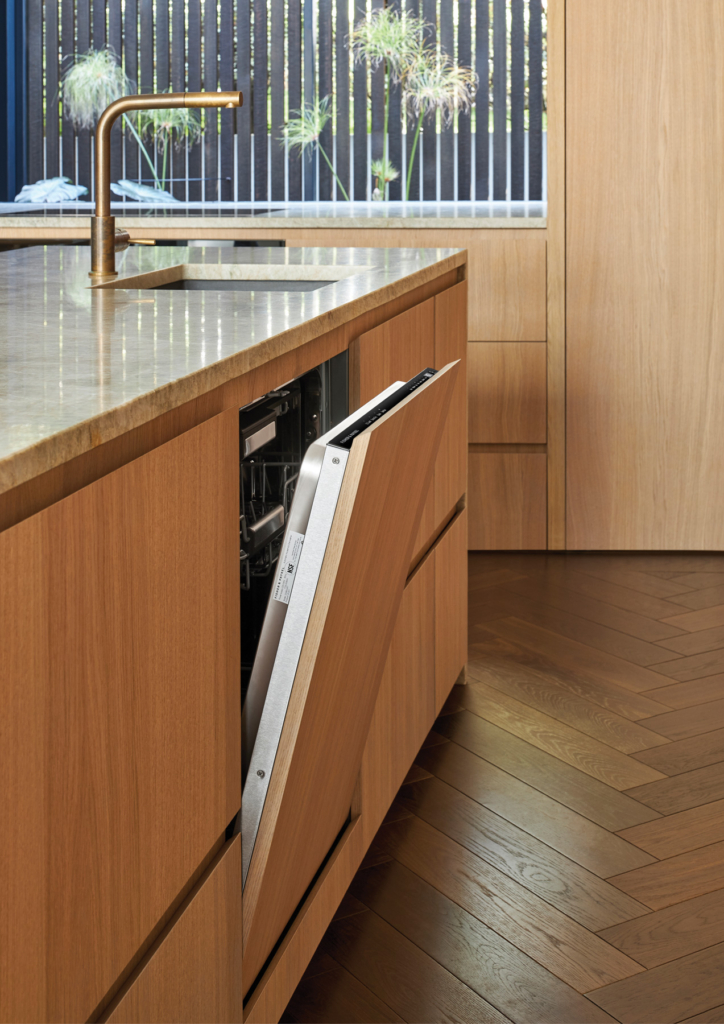
The cornerstone of Design Freedom is the concept of work zones shaped by patterns of use such as how – and what – we cook, how we entertain and the dynamics of our household. Fisher & Paykel has dedicated decades to studying these patterns, and its findings are grounded in the idea that, in the modern kitchen, drawers are an essential component. This notion directly informed the design of two of its most innovative appliances: the DishDrawer and the CoolDrawer.
With flexible formats and the ability to be placed throughout the kitchen, these pieces support a truly customisable layout, redefining spatial possibilities in the modern kitchen by allowing programs to be designed in response to users’ preferences and patterns, unbound by traditional constraints. Both the DishDrawer and CoolDrawer support architectural creativity, including ‘floating’ installations and concealed toe-kicks that give cabinetry a furniture-like elegance.
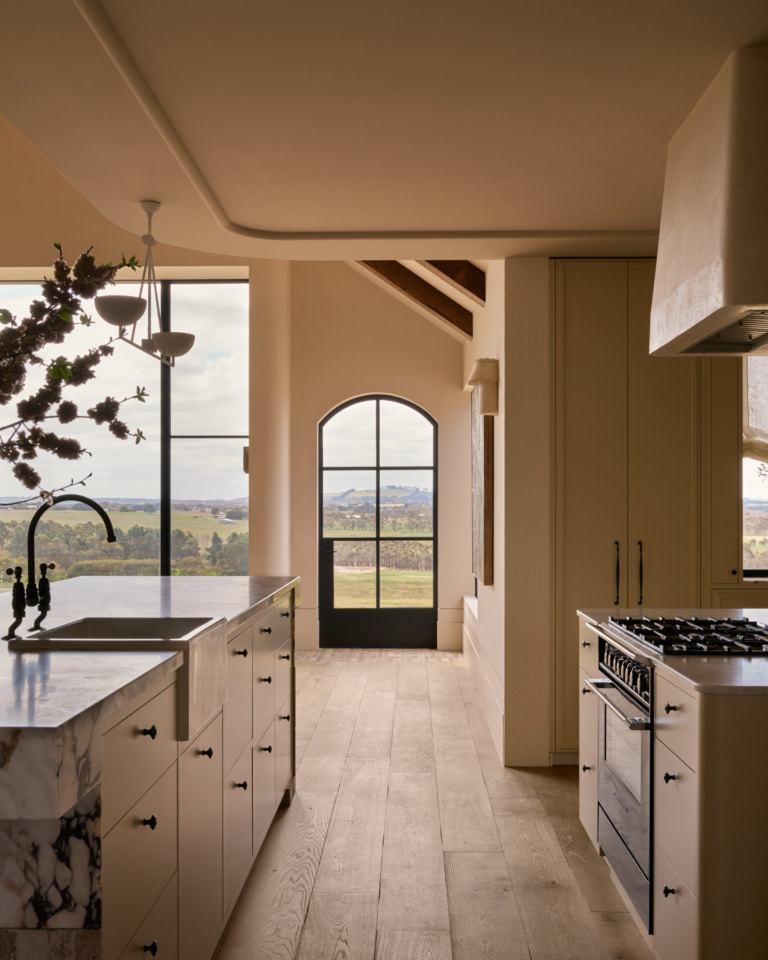
The multiple work zones feature a Fisher & Paykel induction cooktop with integrated ventilation on the back bench and a Combination Steam Oven within the island bench.
The belief that appliances can be treated as modular building blocks is supported by Fisher & Paykel’s wider product offering. For example, flush induction cooktops with downdraft ventilation not only enable island-centric designs, but allow for free space, windows or additional overhead cupboards where a rangehood would otherwise be located. Also, Column refrigerators and freezers offer customisable climate zones distributed across the kitchen, from key cooking areas to sculleries.
This is illustrated beautifully in the kitchen of The Gatehouse by Patterson Associates and Sonja Hawkins Design in Arrowtown on New Zealand’s South Island. With multiple work zones – a Fisher & Paykel induction cooktop with integrated ventilation on the back bench and a Combination Steam Oven within the island bench – and no overhead cupboards, the kitchen is a highly functional space that feels airy and generous.
As the interest in and demand for open-plan living has increased, so, too, has the importance of visual harmony. The concept of Design Freedom and the tenets that define it help to transform kitchens into cohesive architectural statements. Integrating appliances reduces visual clutter and directs the eye towards custom elements such as cabinetry and hardware or architectural features like shadow lines, special finishes or wall-hung units.
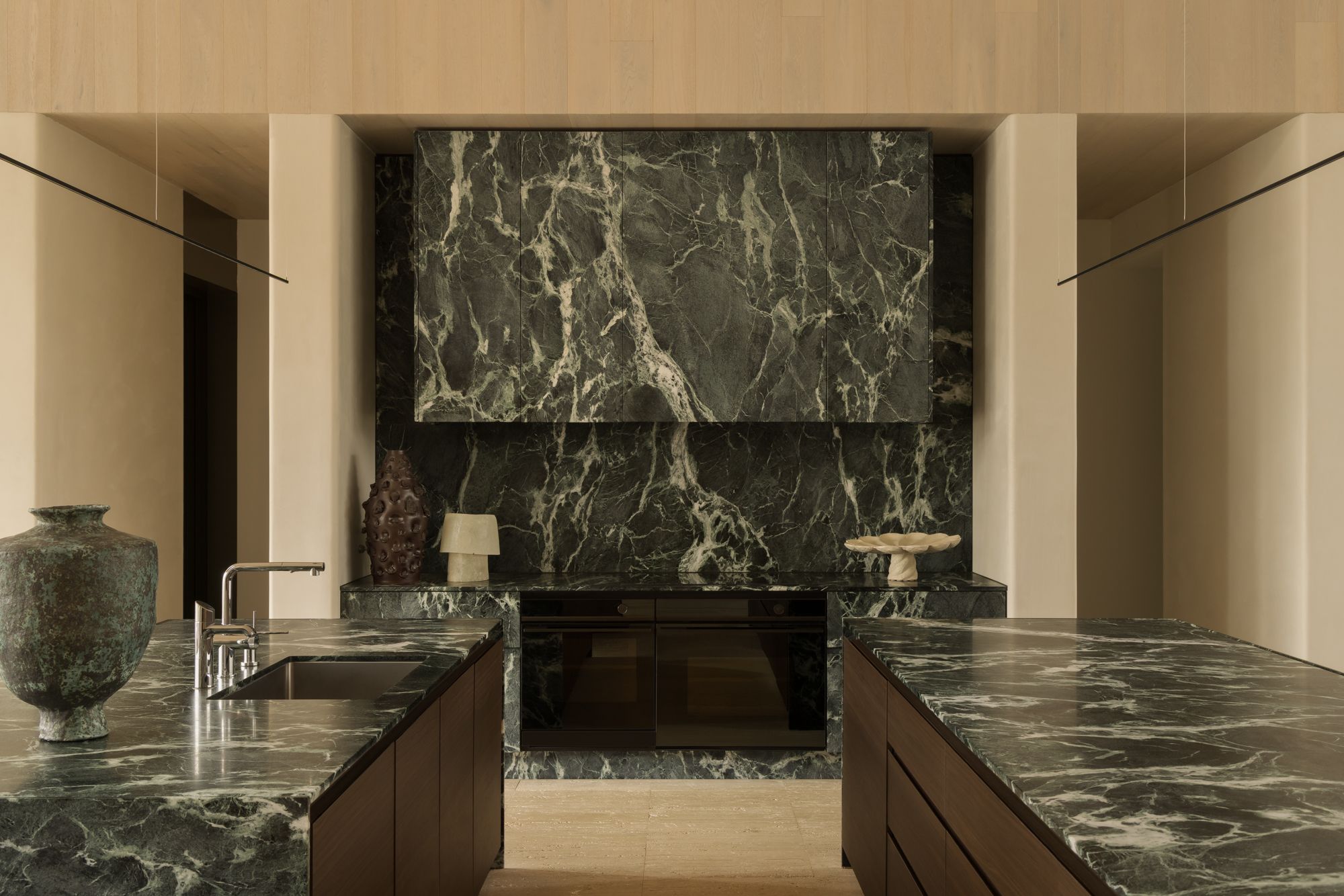
At Temple House in Melbourne by J. Kidman and Golden, the kitchen is at the centre of a large open-plan space. Featuring twin island benches draped in emerald marble, the kitchen is bold, intentional and sculptural. It is also highly functional, thanks in large part to Fisher & Paykel’s below-bench CoolDrawers which follow the composition laid out by the designers. The drawers are supported by a generous scullery housing larger appliances – including Fisher & Paykel’s Column refrigerator and freezer – and secondary services, allowing “the main kitchen to remain sculptural and refined, free from the visual bulk of full-height joinery,” says Golden’s Alicia McKimm.
Similarly, at Elmore Booth’s Herne Bay project in Auckland, introducing a consistent design language was essential to the clients, and integration played an important role in this. Details such as extended panels, negative detail handles and handle-free panels have a minimal effect, allowing the eye to move easily across the space and making it feel larger and more refined.
Fisher & Paykel believes that the kitchen should be conceived with the same level of precision and care as the appliances that fill it. In fact, over time, the kitchen has become a product itself – a complete and often complex package of cabinetry, components and appliances.
Lastly, multi-sensory design is essential, and Fisher & Paykel’s commitment to the moments that exist beyond aesthetics ensures every experience is intuitive and enjoyable. From soft-close drawers to the gentle trill when powering on, the DishDrawer is designed to reduce noise and friction. Even the subtle ‘knock to pause’ feature is a delightful haptic experience that speaks to the familiar gestures and controls of phones and tablets.
Design Freedom is a multi-faceted consideration that ultimately works to redefine what the kitchen can be in a modern home. From understanding the end user’s preferences and patterns of use to championing a kitchen’s architectural detailing and designing appliances that look and feel superior, it’s all-encompassing and highly effective. Achieving it sees the kitchen evolve from a place of routine and practicality to a beautifully orchestrated experience shaped by the lives we lead.
Architecture by Elmore Booth, J. Kidman and Patterson Associates. Appliances by Fisher & Paykel.