Next in Design: 35 under 35
Over the past three decades, the triennial Rigg Design Prize has remained the highest Australian accolade for contemporary design. This year, the prestigious $40,000 prize is turning its spotlight on the next generation of creative practitioners.
Held at the National Gallery of Victoria from September 2025 to February 2026, the Rigg Design Prize’s ‘Next in Design: 35 Under 35’ exhibition showcases 35 of the country’s most exciting creatives, working in disciplines ranging from ceramics and furniture to lighting, textiles and metalwork. We spoke to five of these up-and-comers, all of whom are challenging conventions and reshaping the future of design.

Marlo Lyda
New South Wales, lighting
For Marlo Lyda, design is an act of storytelling. A 2021 graduate of Design Academy Eindhoven in the Netherlands, she works across lighting, furniture and curatorial practice, driven by a belief in the value of overlooked materials and the power of making. “I reframe materials through design, hoping to honour the stories they carry,” she says.
Lyda’s work Kin is a series of hand-sewn lamps that read like sculptural portraits, as each one is named after a woman who has shaped her. “They’re warm, a little wobbly and hopefully familiar – a reminder that comfort often lives in what is unfinished,” she says. Working with inherited and gifted textiles, the lights celebrate memory, improvisation and play. “I treated the lampshades like garments, letting seams and frames guide the design rather than hiding them.” While lighting is often a technical and industrial domain, Lyda’s approach is intuitive, expressive and fuelled by curiosity.
Her practice has recently garnered attention, with a 2023 Powerhouse Residency and industry recognition. Meanwhile, her foray into curation with ‘Matters’ – a three-part exhibition series and design platform for Melbourne Design Week – was met with high acclaim. Being selected for the Rigg Design Prize is a career milestone and a welcome moment of affirmation. “The path of an emerging designer is full of steep learning curves … recognition like this helps refill the tank.”
With a studio that now spans Sydney and Europe, Lyda is developing a new body of work supported by the George Alexander Fellowship and planning a PhD that explores copper’s future in sustainable design. “It feels like a natural evolution,” she says. “More space, more time and deeper questions.”



Andrew Carvolth
South Australia, furniture
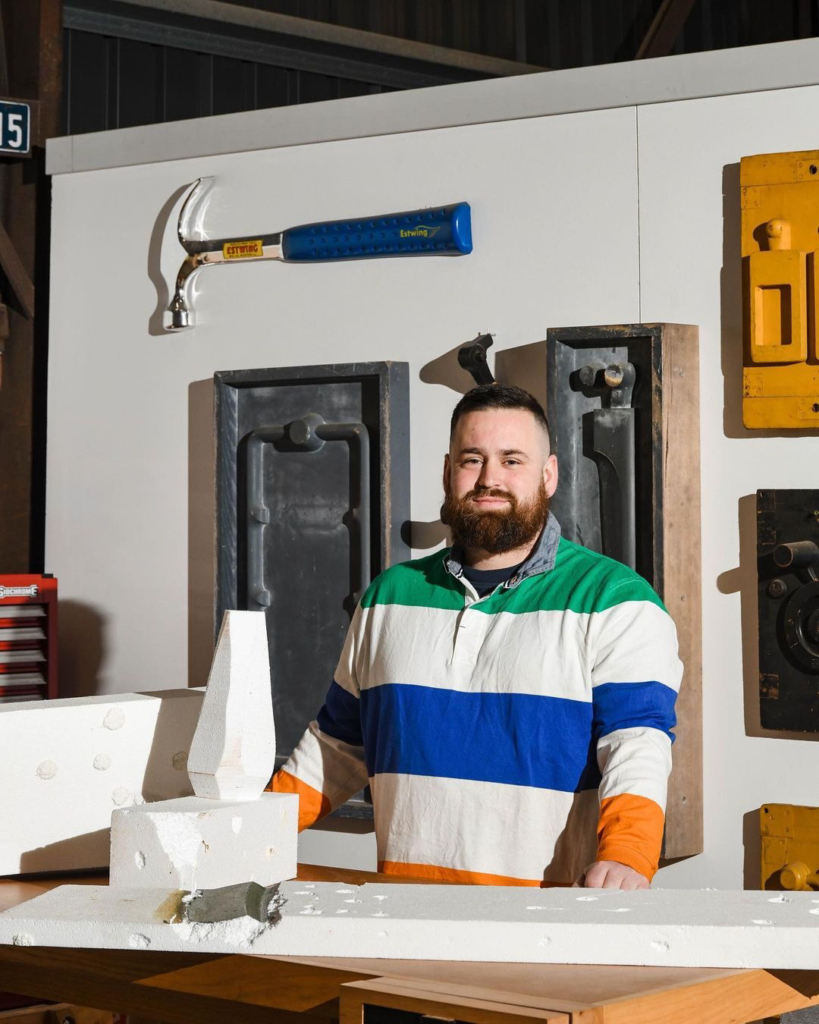
Furniture and object designer Andrew Carvolth produces works in timber and cast metals that connect people to place, history and community. Based in Adelaide, he works across commissions, exhibitions and small-batch production, creating sculptural pieces that celebrate craft and material character. “I’m interested in how traditional processes can be reimagined through a contemporary lens,” he says.
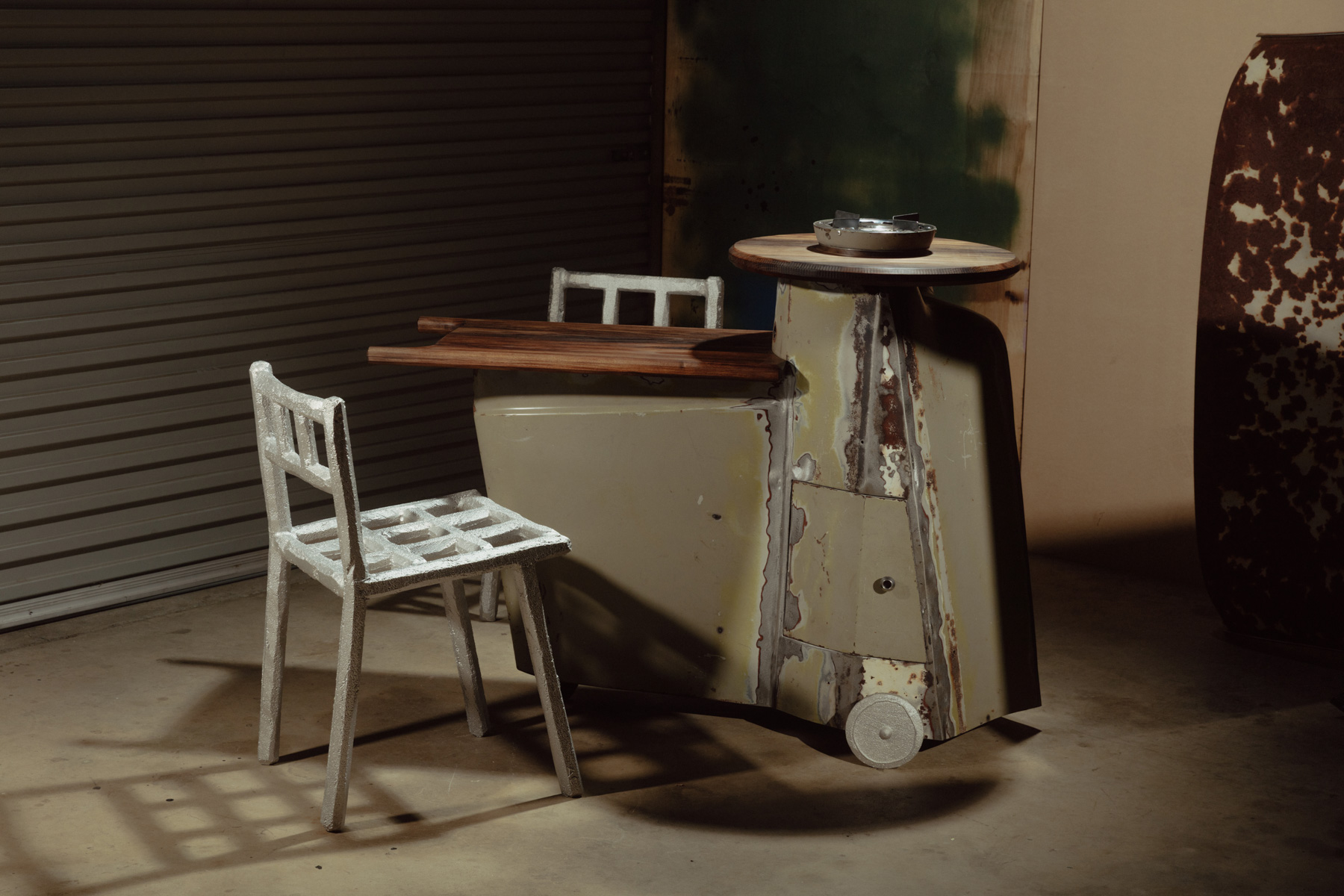
His Canteen and Chairs piece rethinks the Australian dining space. Drawing on shared public food settings – from bush pantries to barbecue shelters – it combines solid timber with cast foundry tailings and salvaged Holden car panels, transforming “post-industrial waste into sculptural utility”. Through playful proportions, contrasting materials and a touch of wit, it speaks to cultural memory as well as the way Carvolth draws inspiration from the “quiet poetry” of ordinary things.


Carvolth’s work has found local and international stages at Salone del Mobile, Abierto Mexicano de Diseño and Melbourne Design Week. Having previously led the JamFactory Furniture Studio and co-founding multidisciplinary Mixed Goods Studios, community and collaboration remain central to his approach. “At its heart, my practice explores how experimental processes and local narratives can inform new ways of working.”
Looking ahead, Carvolth is teaching at the Sturt School for Wood in Mittagong, New South Wales, and developing new seating and objects, both independently and in collaboration. “It’s dreamy stuff really,” he says of the prize. “To be recognised like this, alongside peers I admire – it’s incredibly validating.”
Claudia Lau
Victoria, ceramics
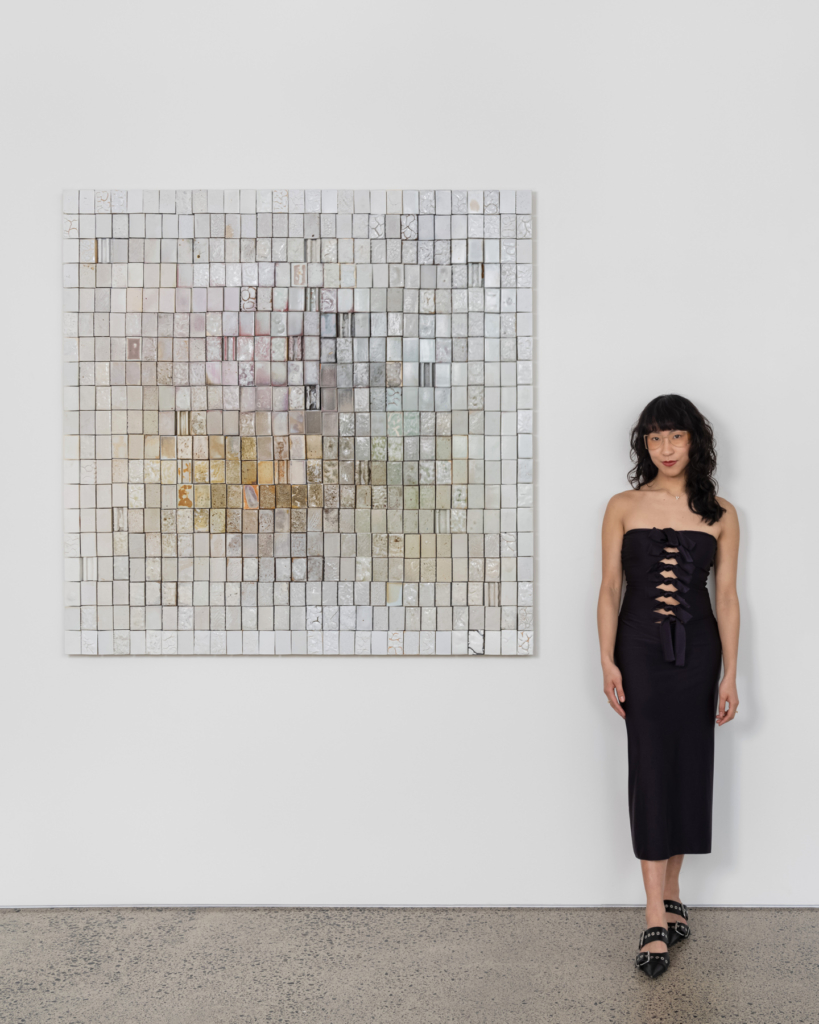
Living and working between Australia and Jingdezhen, China – the historic centre of porcelain – Melbourne-based ceramicist Claudia Lau approaches clay as a site of history, philosophy and possibility. Her work spans functional vessels to conceptual installations, informed by a rigorous studio methodology and deep cultural dialogue.
For the exhibition, Lau presents A Kind of Whiteness, a haunting installation of tiles and a single vessel, examining the cultural, aesthetic and material implications of ‘whiteware’. “I developed more than 50 white glazes, transformed using trace elements and firing atmospheres,” she says. This process results in a subtle yet radical inversion of conventional ceramic technique, where glaze becomes the body and whiteness – both culturally and aesthetically – is interrogated, not assumed.


Lau’s practice challenges perfection in favour of poetic variation. “I prioritise materiality over uniformity,” she says. “Glaze becomes both material and conceptual language … expanding the possibilities of ceramics through unpredictability and quiet transformation.” Her time in Jingdezhen has been formative, working alongside masters who have taught her the beauty in everyday gestures. “Even how to hold a bowl, fingers above and below, representing the sky and earth.”
Lau is preparing for an upcoming solo show at C.Gallery and expanding her studio, House Editions, into architectural applications. A bespoke tile system, lighting and hardware are all in development – each project formed with the same reverence for process. “Being selected for the Rigg is both validating and encouraging,” she says. “It’s a moment to acknowledge how far the work has come – and where it might go next.”
Second Edition
New South Wales, furniture
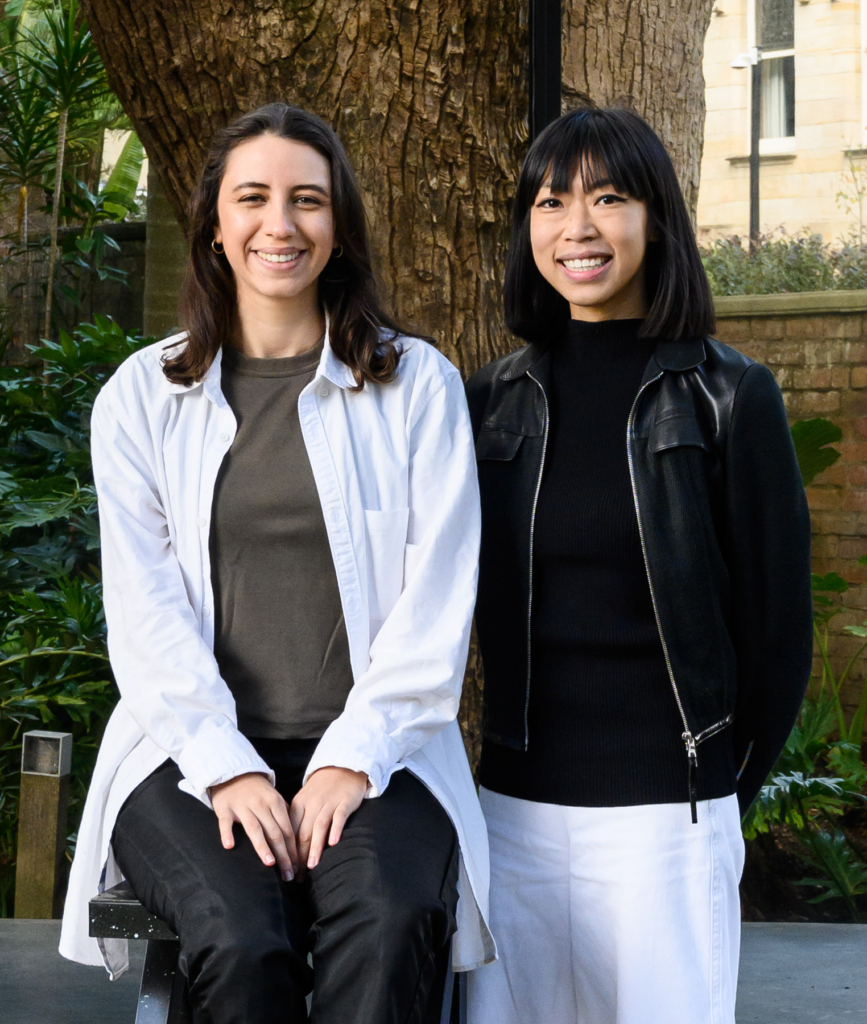
Founded by Amy Seo and Shahar Cohen in 2020, Second Edition began as a direct response to the overwhelming construction and demolition waste the pair witnessed during their Masters of Architecture. The Sydney-based duo established Second Edition to advocate for reuse, circularity and radical new methods of making. “Our work centres on developing methods that retain a material’s value,” says Cohen. From on-site material salvaging to design for disassembly, their practice proves sustainability and aesthetics need not be at odds.
Their work Anyw(c)here is a sculptural bathroom unit that houses a sink, toilet, shower and storage in one vertical tower – completely mobile and able to be installed indoors or out. Built from salvaged aluminium and clad in offcut marble from local suppliers, it redefines what a ‘room’ can be. “By transforming what is usually a fixed space into a nomadic object, we’re not only salvaging materials, but creating an object that can be reused as a whole,” says Cohen. The work questions architecture’s obsession with permanence and, instead, champions adaptability, mobility and salvaged materials.


The pair recently won the Robert Woodward Award for Small Project Architecture at the NSW Architecture Awards, as well as a commendation for Sustainable Architecture. On being selected for the Rigg, Seo says “it’s especially exciting to see reuse have a place within a gallery setting, as this helps elevate the conversation around salvaged materials from purely practical to culturally significant.”
Second Edition is currently expanding its consultancy work, deepening collaborations with demolition teams, architects and builders to make reuse not only possible but standard practice. “We’re designing for a world that already exists,” says Cohen. “It’s not about inventing something new – it’s about working with what’s already there and doing better by it.”
Nicole Lawrence
Victoria, furniture
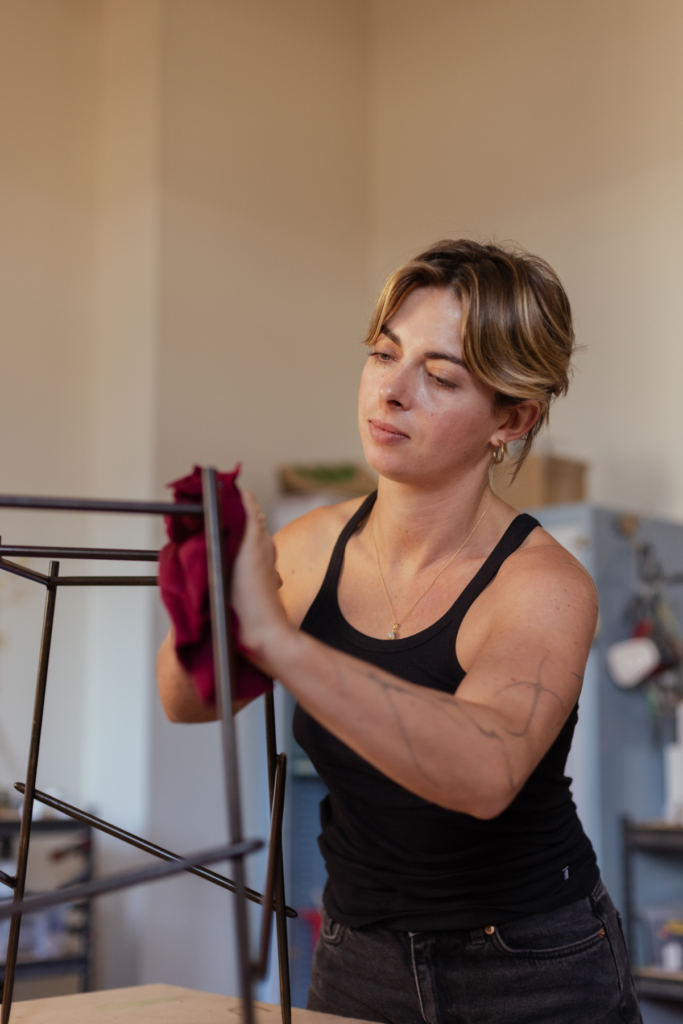
Melbourne-based designer Nicole Lawrence has specialised in metalwork for the 12 years of her practice. With a background in gold and silversmithing and industrial design, she launched her eponymous studio in 2020, focusing on expressive furniture and lighting that showcases material processes. A deeply intentional designer, Lawrence draws inspiration from the everyday: the rigour of creating, the poetry of craft and even the improvisational nature of cooking. “My practice is about understanding materials intimately – how they behave and what they want to become,” she says.
Her work for the exhibition, Twelve Years, is a large-scale room screen comprising 432 pressed-metal forms suspended across 12 panels. Each panel marks a year of her journey, reflecting the physical and emotional pressures of making. “This room screen is a time capsule and a form of storytelling … It’s a meditation on time, labour and the value of patience.” Scaling up techniques from jewellery-making to craft sculptural forms, this ambitious piece blurs the lines between furniture and art.
With sustainability at the core of her practice, Lawrence’s work is created using future-thinking design principles. “I don’t design work that cannot be repaired or refurbished easily,” she says. “Our role as designers has become more important. We must create work that enriches while also considering its impact on the natural world.”
With a big year behind her – including a solo show at C.Gallery and several large commissions – Lawrence is currently working on new lighting products and a 2026 commission for an iconic heritage-listed Sydney building. On being selected for the prize, she says, “the recognition feels profound after 12 years of dedication … There’s something powerful about these collective moments where individual practices come together to tell a larger story about our field’s vitality and vision.”