Frater Street
A combination of clever design and lavish planting in a sloped inner-suburban site forms a singular, tranquil, Japanese-inspired garden.
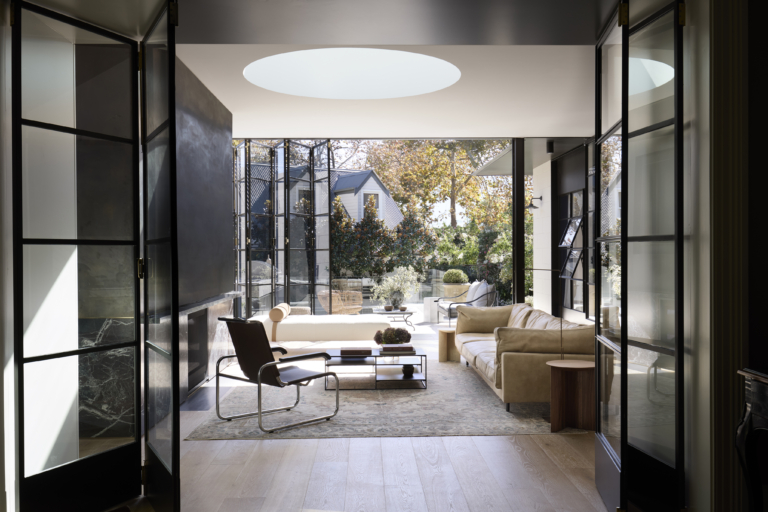
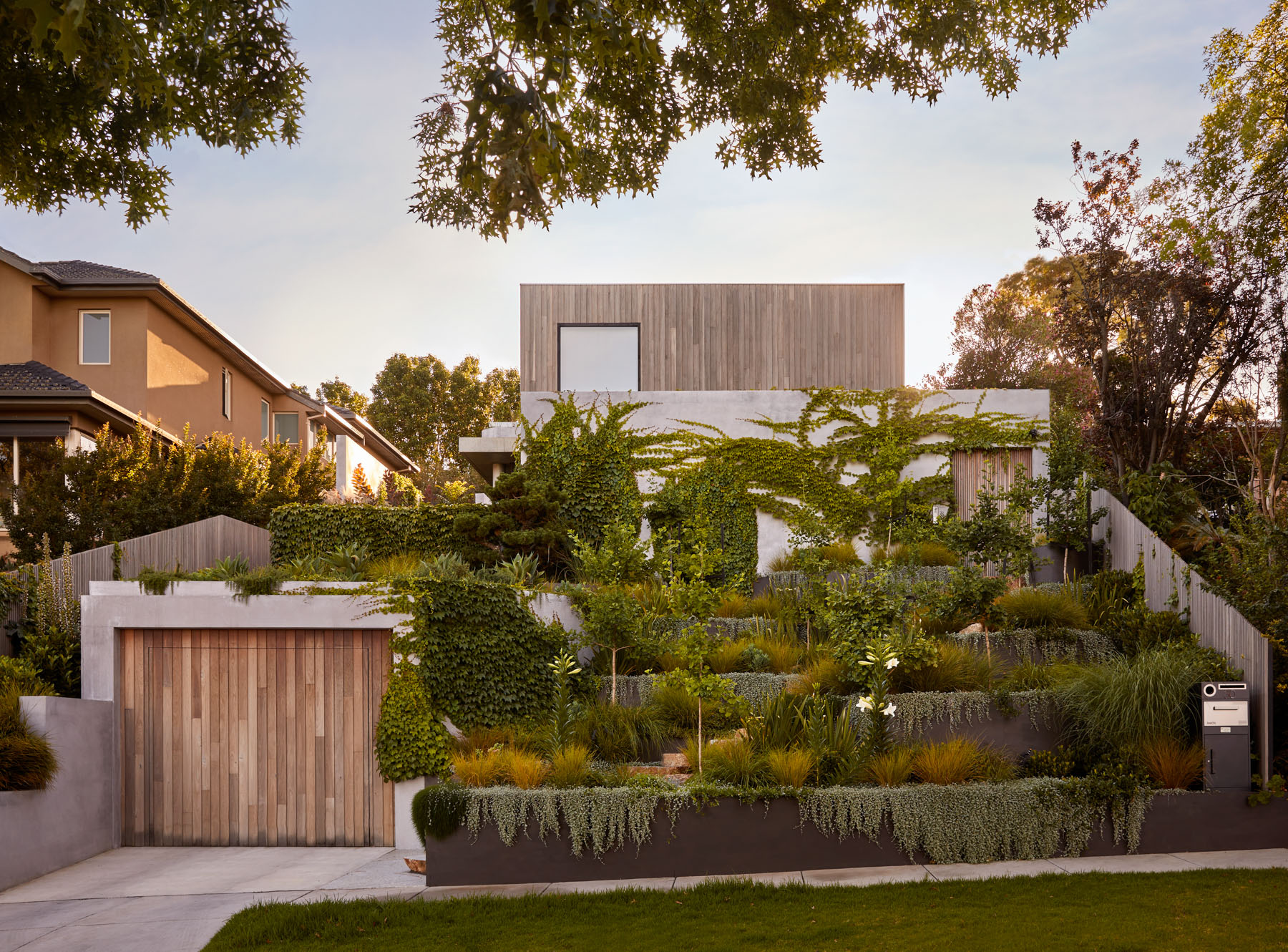
At Frater Street, contoured walls gently cup courtyard spaces, while lush foliage brushes walls as trailing plants tumble from elevated planters to form a fringe over the windows. This new build in the inner-eastern Melbourne suburb of Kew is a harmonious marriage of landscape and architecture, with an animated dialogue between inside and out, and – most unusually – Zen Architects’ fluid design graciously yielding the stage to the abundant landscape. “It was a house that embraced the garden – from the get-go, it was all about the garden,” says Eckersley Garden Architecture principal designer Myles Broad. “There are lovely curves and the building is almost shrouded by a wall, which creates these intimate, almost Japanese-style courtyard spaces.”

Contoured walls gently cup courtyard spaces, while lush foliage brushes walls as trailing plants tumble from elevated planters


This knockdown-rebuild project was designed to deliver the clients an amazing home on the site they already loved – and top of their must-have list was an immersive landscape experience, one that would be in keeping with the leafy nature of the suburbs and witnessed from within as a private, Japanese-inspired oasis.
“Our vision is always, ‘Can we plaster it in green?’” jokes Broad. While the clients shared this lavishly planted vision, the site didn’t easily lend itself to abundant growth and posed significant engineering challenges. But as Broad points out, “it’s the limitations of the site that create the beautiful result.” Rising steeply from the street, the block required creative use of terracing to create usable spaces. Adding to the challenge of the sloping site, the terrain was all shale, with no topsoil to speak of, a slab of bedrock beneath that required a design pivot – working with landscape construction company Normark Landscapes – and realignment of the path to the front door. To combat the barren site, pockets of shale were jackhammered out and filled with topsoil, while tiered steel retaining walls form deep planters through the street side of the block.


The nature-focused experience starts at the street, with the terraced front garden presenting as a wall of greenery, which extends up above the planters as tendrils of Boston ivy creep over the shrouding front wall. Approaching the front door is a pilgrimage through lush terrain, beginning with a meandering path of sawn boulders – these are hand-selected granite boulders from Hillview Quarries in Dromana, sliced at 180 millimetres and layered into steps that climb through a forest of gingko. These delicate trees with their distinctive fan-shaped leaves rise gracefully out of deep steel planters, crowded with New Zealand wind grass and spills of Dichondra ‘Silver Falls’ and Casuarina ‘Cousin It’.
Transitioning from public space to private, one passes through a gateway cut into the rendered wall and then onto a bridge over a lily-freckled water feature. The bridge then joins with a paved side passage, made of the same granite boulders that form the steps but sliced thinner to create bespoke crazy paving here. This thoroughfare is planted with a mix of ivy and wall-mounted staghorn ferns, creeping groundcovers and large-leafed alocasias, inviting one to brush past greenery to reach the front door. “You can do a lot in a narrow space to make it feel really lush and jungle-y,” says Broad.


The pond beneath this entry bridge is an extension of a larger water feature upstream, a defining feature of this quietly restful design. “It’s very Japanese to have a body of water as an element of the garden.” In a refreshing contrast to many gardens, where the water feature is ticked by a swimming pool, the clients wanted their water element to be a pocket of tranquillity. The pond begins at one corner of the home, wrapping around a sunken lounge, giving one an unusual duck’s eye view of the water from inside. Outside, a cantilevered pontoon hangs over the water, offering space for one or two people to indulge in quiet contemplation of this foliage-fringed serene spot.
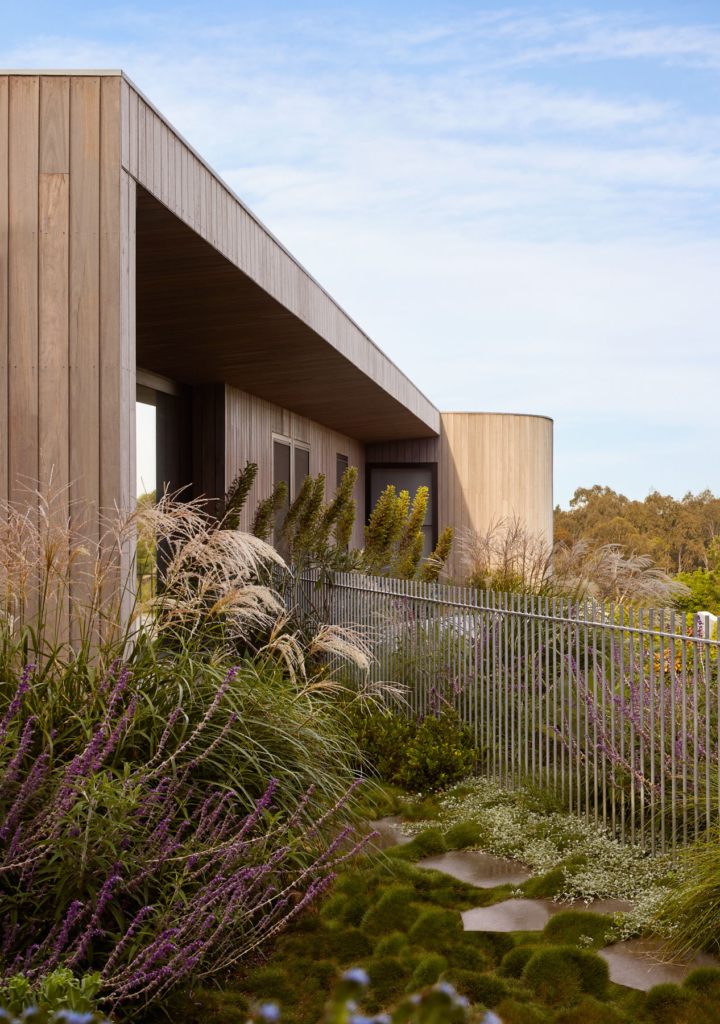
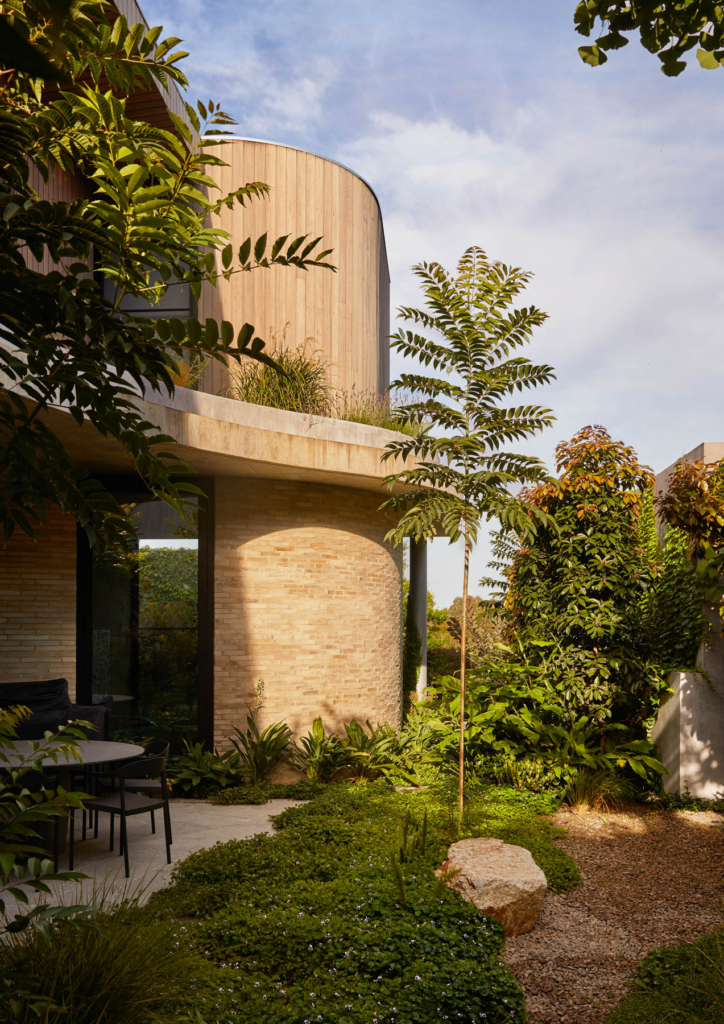
The building itself is characterised by sweeping curves that, at the side of the house, embrace the main courtyard. In keeping with the client’s request for a Japanese-inspired Zen space, the garden trumps all here: greenery pushes right up to the glass boundary with no buffer between house and landscape, while the paved dining area has been kept to a minimum – the clients wanted room to host family without sacrificing green space for excess hardscaping.

The stars of this little space are the Chinese toon trees (Cedrela sinensis), which Broad likens to the fictional truffula trees in Dr Seuss’s The Lorax. “They come out in brilliant pink foliage in spring, then fade to a dark green over the summer,” he says. “They’re tall, narrow and quirky – you can have a jungle of them, like a mini forest, but it doesn’t take up much room.”
As elsewhere on the property, the courtyard conveys a sense that the garden is poised to conquer the built form, with groundcovers quietly creeping over the edge of pavers, smooth-leaved quandongs camouflaging the shroud wall, and greenery hanging down from planters integrated into the home’s contours. “The draping over the edges softens that whole aspect of the building. And when you are downstairs, you can see it – it’s part of the garden view.”


If one explores more, metal mesh steps – in the same rounded shape as the boulder slices – lead from the side courtyard to the rear, as well as from the front to a rooftop garden atop the garage. “The idea is that the garden grows under the mesh – it still gets sun and rain,” says Broad. Though these are minor details of the garden, they neatly represent the defining idea of immersion: that wherever you stand, you’re surrounded by greenery in all directions.