Carriage House
Set behind a pre-war facade on Manhattan’s Upper East Side, Carriage House by Husband Wife contains a layered architectural history spanning more than a century.
Originally designed in 1902 by American architect CPH Gilbert for banker and philanthropist Jules Semon Bache, the five-storey limestone townhouse has been shaped by successive waves of occupation and adaptation. By the 1940s, it sat within an art-collecting milieu that included figures such as John D Rockefeller, while later decades brought professional use and piecemeal renovations that gradually fragmented its interior logic.

“From the outset, [the clients] envisioned a home that felt relaxed and liveable – never overly formal, yet undeniably refined.”

Designers Brittney Hart and Justin Capuco of Husband Wife approached the project as an act of recalibration rather than revival. “From the outset, [the clients] envisioned a home that felt relaxed and liveable – never overly formal, yet undeniably refined,” Hart and Capuco explain. Having previously collaborated with the clients on a commercial project, the designers were already attuned to their sensibility. “As their family grew during the design process, this ambition took on greater clarity: the house needed to support the everyday realities of life with children while remaining thoughtfully composed.”
Rather than reconstructing a Gilded Age past, the studio developed a language that acknowledges the building’s provenance while meeting the demands of contemporary family life. Drawing on the work of Italian architects Piero Portaluppi and Osvaldo Borsani, whose interiors balanced intellectual rigour with material richness, Husband Wife distilled principles of clarity, proportion and restraint across every scale of the project.

Husband Wife distilled principles of clarity, proportion and restraint across every scale of the project.

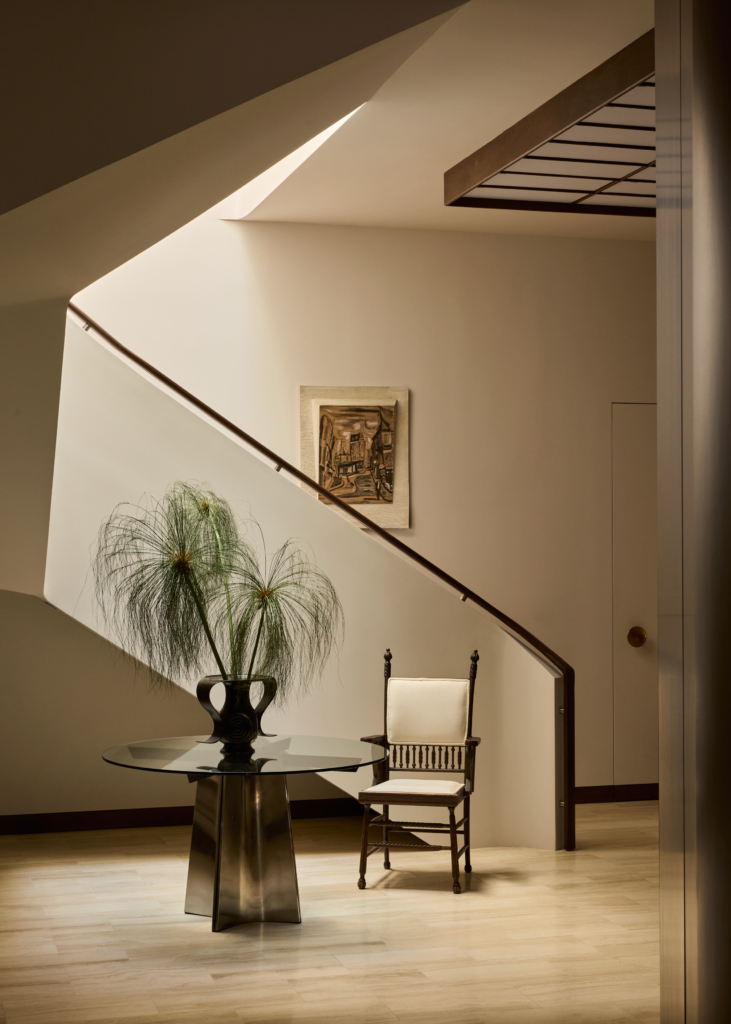
Spanning over 696 square metres across five levels, the dwelling is reorganised around a reconfigured staircase conceived as a vertical spine. “By opening the stairwell to a skylight above, we established a continuous shaft of light that extends through the height of the house. This intervention not only reordered circulation and clarified the plan but also allowed daylight to animate surfaces throughout the interior.” What was once a purely functional element now anchors the home spatially and atmospherically.
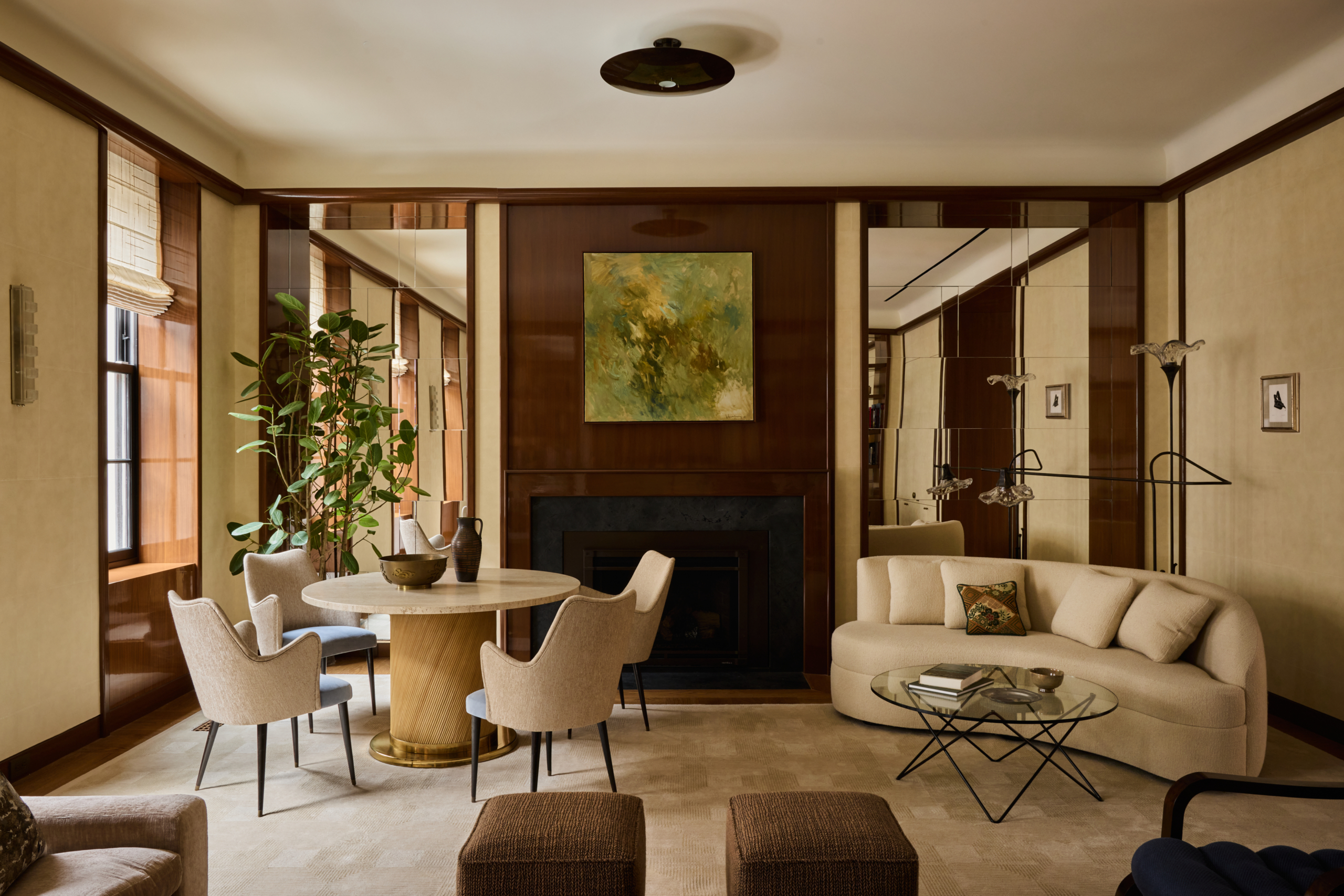
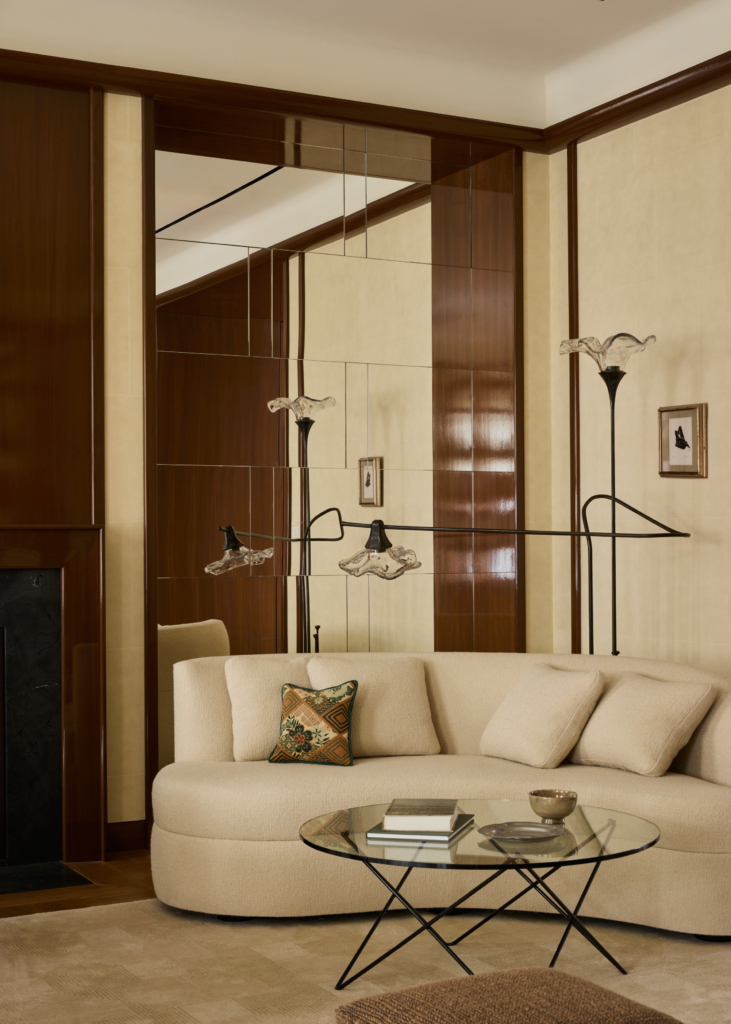
Arrival unfolds beneath the atrium skylight, where a custom overhead light by Husband Wife and selected vintage furnishings establish a measured dialogue between past and present. Living spaces are defined by parchment wall coverings, honed travertine and warm timber panelling, with custom seating integrated alongside vintage modernist pieces. Mid-century lighting by Lothar Klute and handwoven rugs by Rug & Kilim soften the architectural envelope, reinforcing warmth without excess.



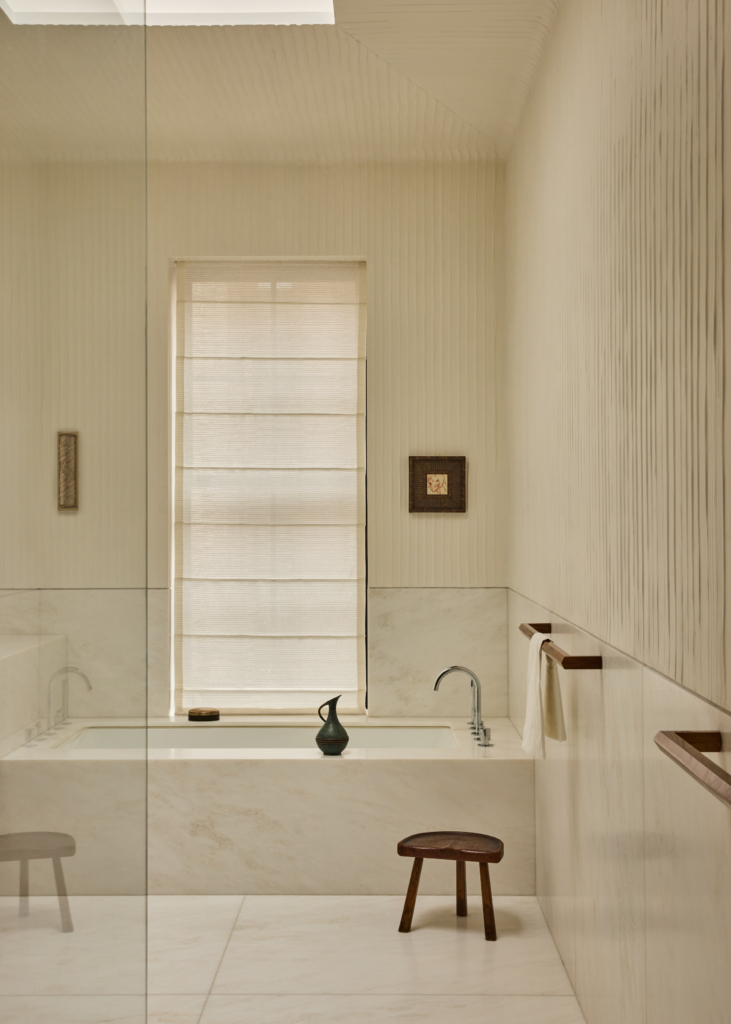
The spatial strategy balances intimacy and openness. In the principal reception rooms, seating is arranged in distinct groupings rather than around a single focal point, allowing daily family life and entertaining to coexist. Dining areas are anchored by custom timber tables by Husband Wife, paired with French Art Deco seating and sculptural Arteluce pendants that lend definition without rigidity. Bedrooms retreat into quieter territory, composed through tailored joinery, Rubelli drapery and silk wallcoverings by Wolf-Gordon. Bathrooms continue the material discipline through pale marble, Fantini fixtures and understated bespoke detailing.
Throughout, elegance is pursued without compromising liveability. Carriage House emerges as a home shaped by history yet disciplined by intent – layered, luminous and well-calibrated for contemporary life.