Berhampore Perimeter House
Returning to Aotearoa New Zealand to put down lasting roots, the owners and designers of Berhampore Perimeter House have created a home deeply connected to place, one that gives back to the public domain through play and curiosity.
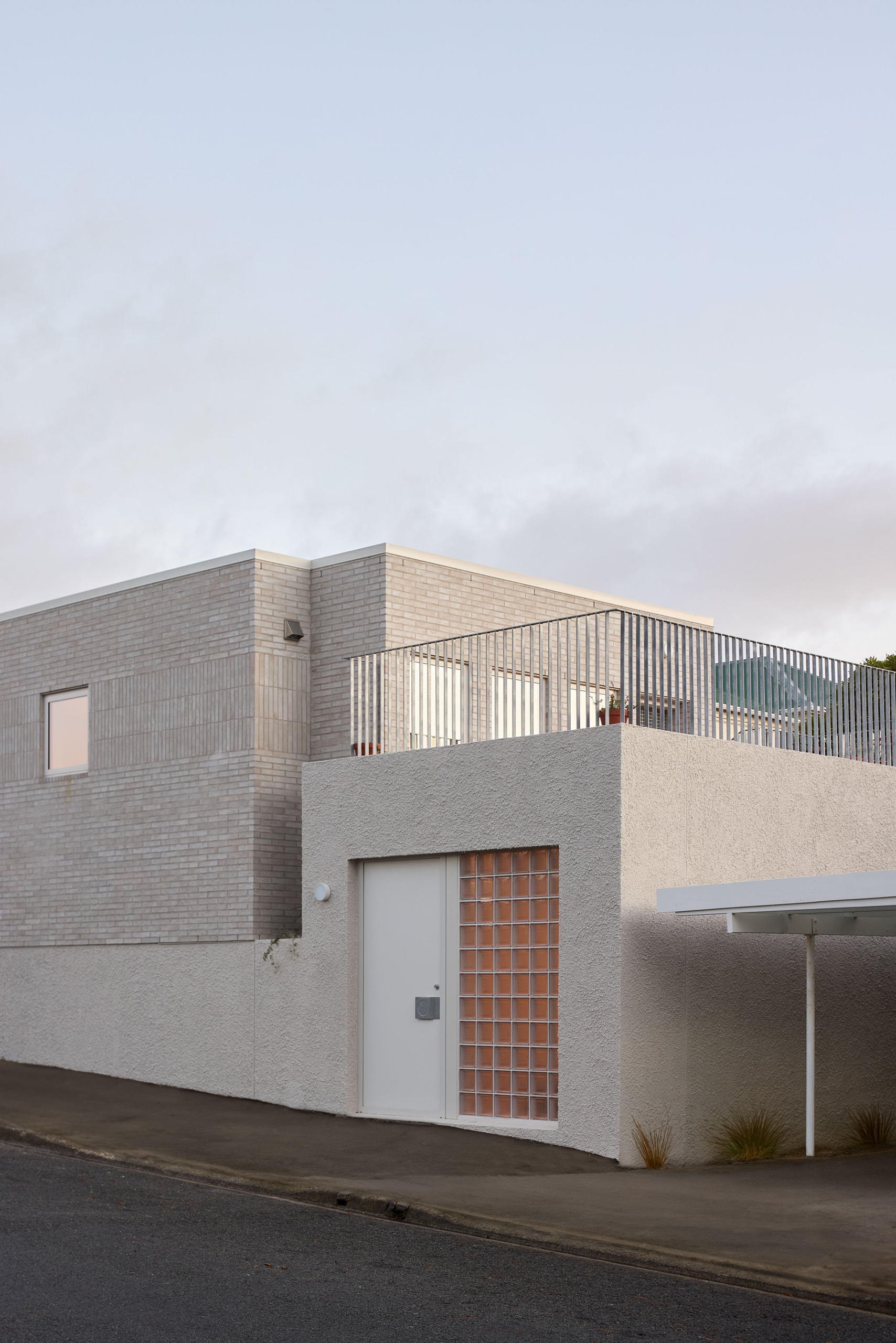
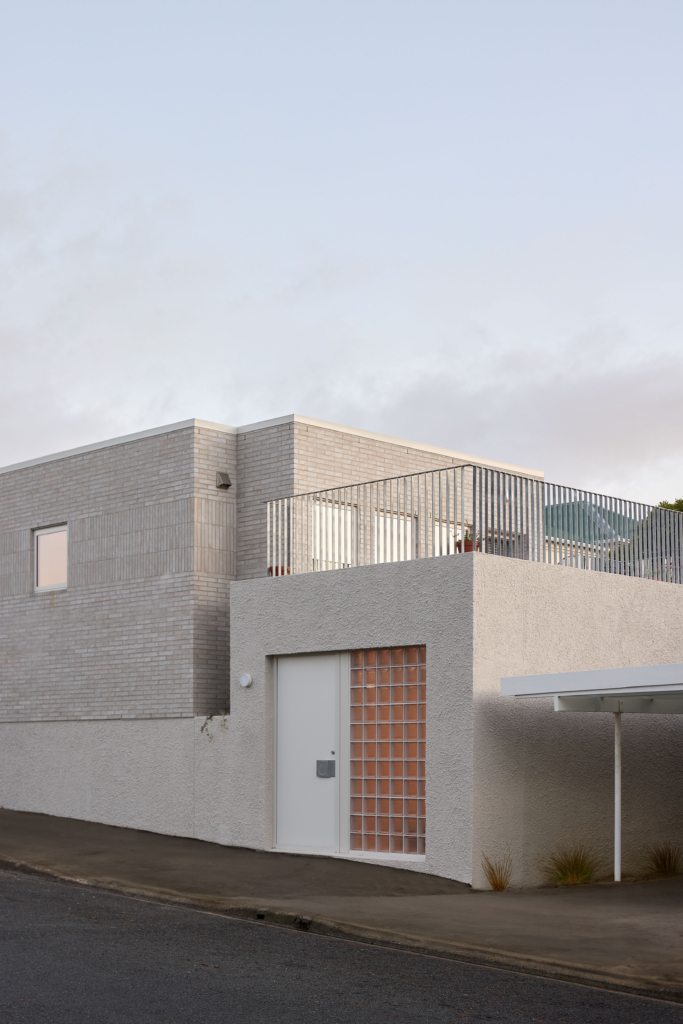
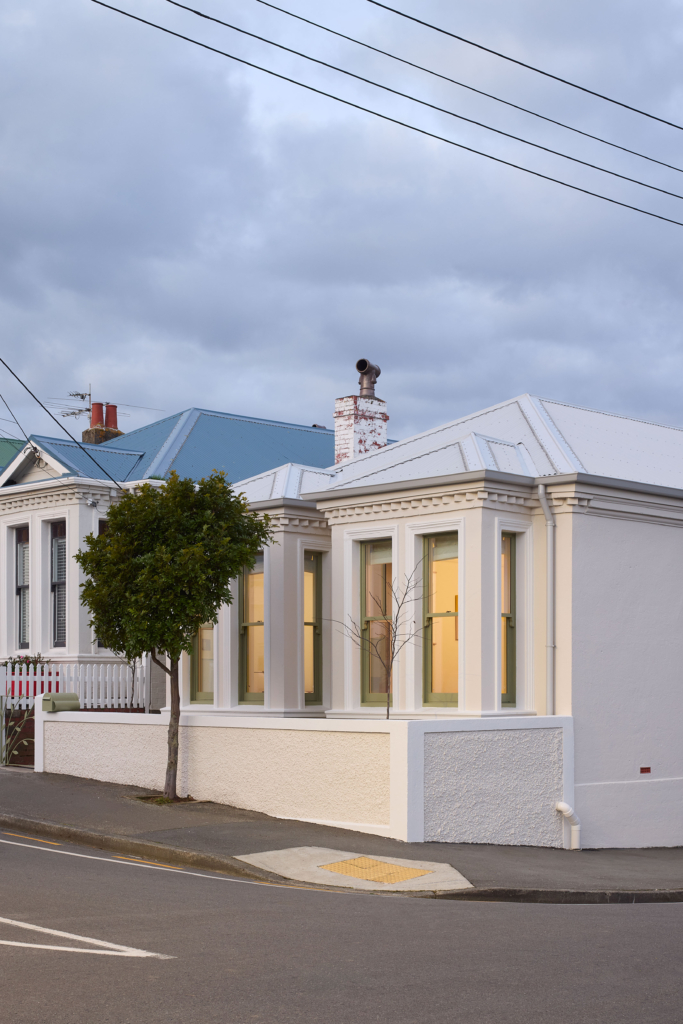
Tracing the edges of an established corner block on the fringe of Te Whanganui-a-Tara, a double-bay villa is reinvented as an extension of the public realm. A balance of ‘give and take’, Berhampore Perimeter House reveals a joyful inner sanctum shaped by its leafy surrounds, all while injecting life and vitality through an array of curious apertures.

“Tight site constraints necessitated lean, but not mean, planning – an almost apartment-like approach.”

Designed by homeowners Mark Leong and Lucy Coote of Studio Myla, the project puts down roots for the young family after returning from abroad – a nurturing yet experimental home in dialogue with the street and its wider urban context. “Tight site constraints necessitated lean, but not mean, planning – an almost apartment-like approach,” Leong describes. Working with the original fabric to preserve the memory of the house, a strategy of borrowed space unfolds, allowing the residence to operate within the constraints of its compact parcel.
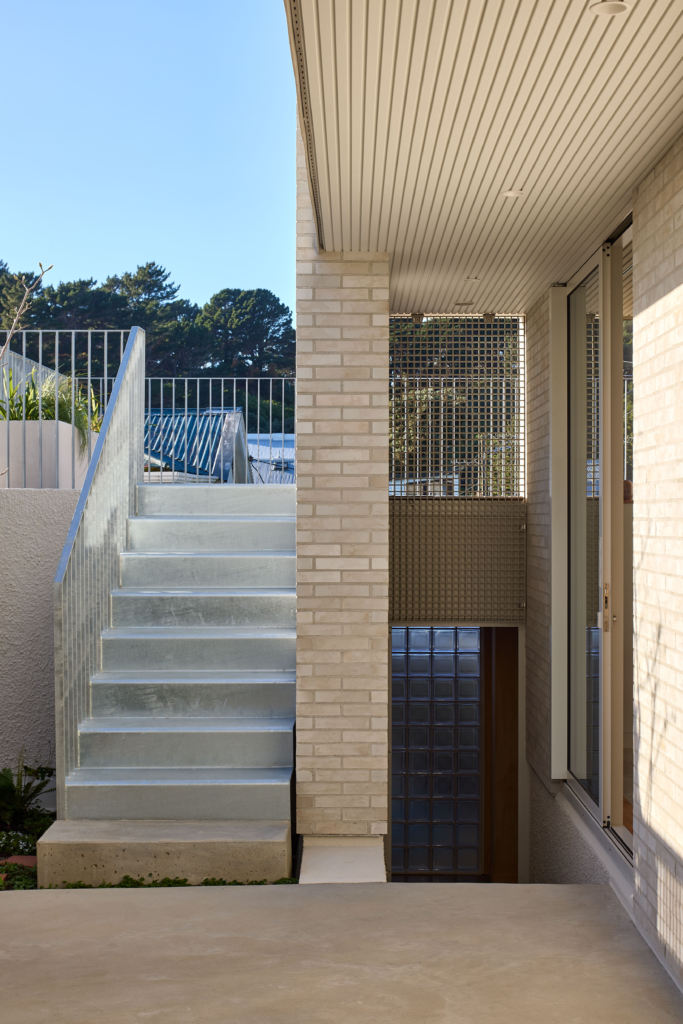
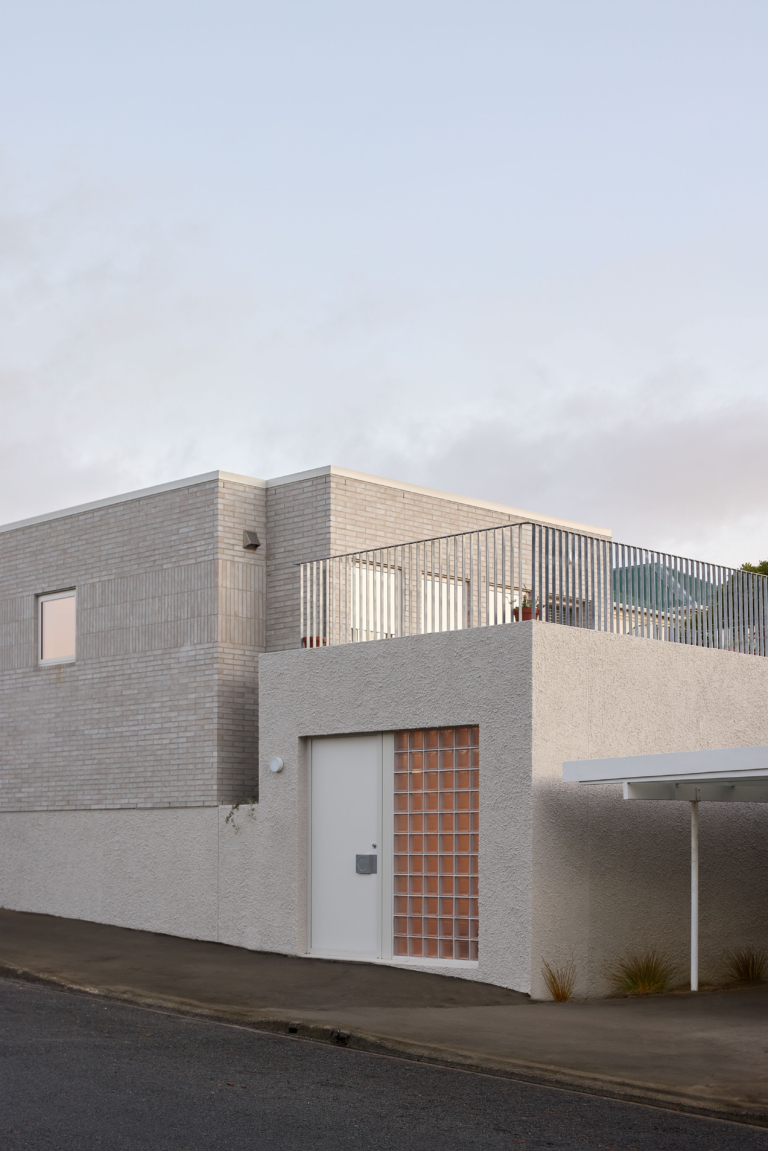
Pushed against the southern boundary, the dwelling embraces its close proximity to the streetscape through selective openings that serve to frame, screen and focus. “One can open a window to chat with a passing neighbour,” Leong muses. “In other moments, a passing grandma stops by to check her hair in the mirrored, full-height slot window placed between old and new.” Comprising a U-shaped perimeter plan with living at its heart, adaptable bedrooms and bathrooms are housed within the original frontage, while a slender extension holds a primary suite and pottery studio. By pushing spaces toward the street edge, a northern yard is neatly inserted, offering protection from the elements amid the sweeping wooded backdrop of the nearby town belt.

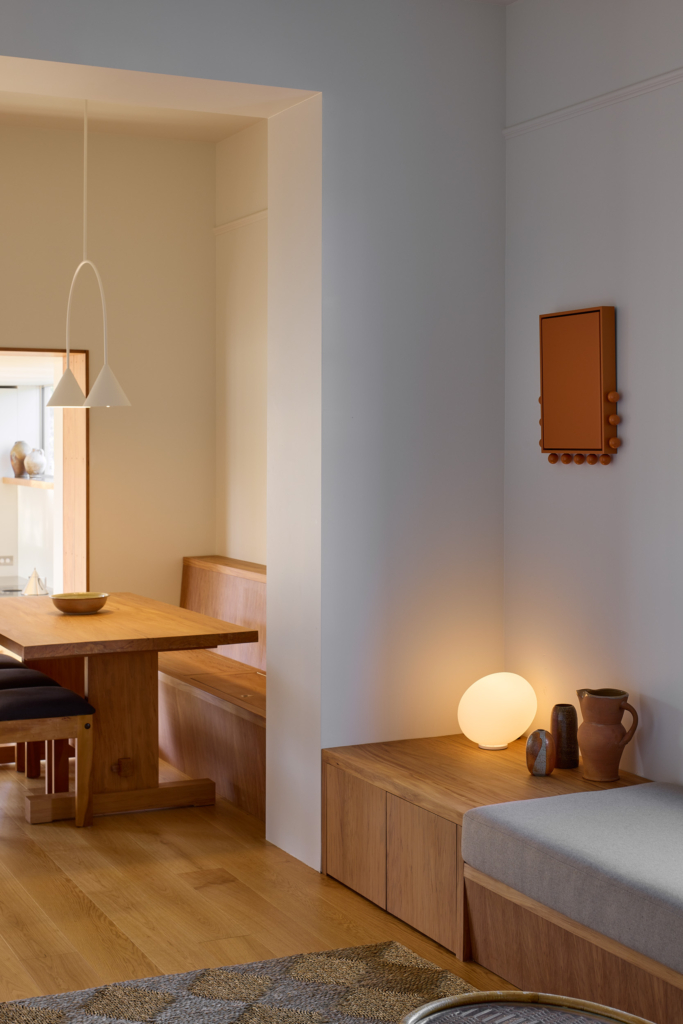
Referencing the Berhampore Brickworks that once abutted the site, the home deploys a robust masonry armature atop a roughcast-rendered base, reinventing the former material palette. “The mortar, slip and clay body interact with each other to create a textural tonal effect – an example of the collaborative efforts between architect and my professional potter wife,” Leong says. Moving inward, a sense of warmth emerges through the earthen layering of recycled rimu timber, burnished concrete floors and meticulous tilework. Laid-back whites merge into soothing greens and buttery yellows, while scorched clay portals invite moments of retreat.
The interplay between building, garden and the wider natural landforms allows the architecture to be experienced at a variety of scales. “At times, the interior and exterior appear as one space – a tricky task in Wellington’s borderline extreme climate that, in many cases, demands a clear delineation of inside and out,” Leong remarks. The intrinsic flow is enhanced by full-height glass, outstretched boarded ceilings and resilient planted pockets that cloak the ground in sprawling greenery. Clusters of deciduous ribbonwood trees cast ever-changing shadows throughout the seasons, while a large magnolia brings colour to the courtyard and roof deck – the perfect spot for Matariki stargazing, marking the start of the Māori New Year.