91.0
91.0, also known as Bridge House, challenges the conventional notions of a home. Untethered to any one period – and, at times, even to the ground – the Gulf Islands residence by Omer Arbel Office is intricately elemental. Designed to adapt to changing conditions, the structure anticipates rising seas and the evolution of its own character.
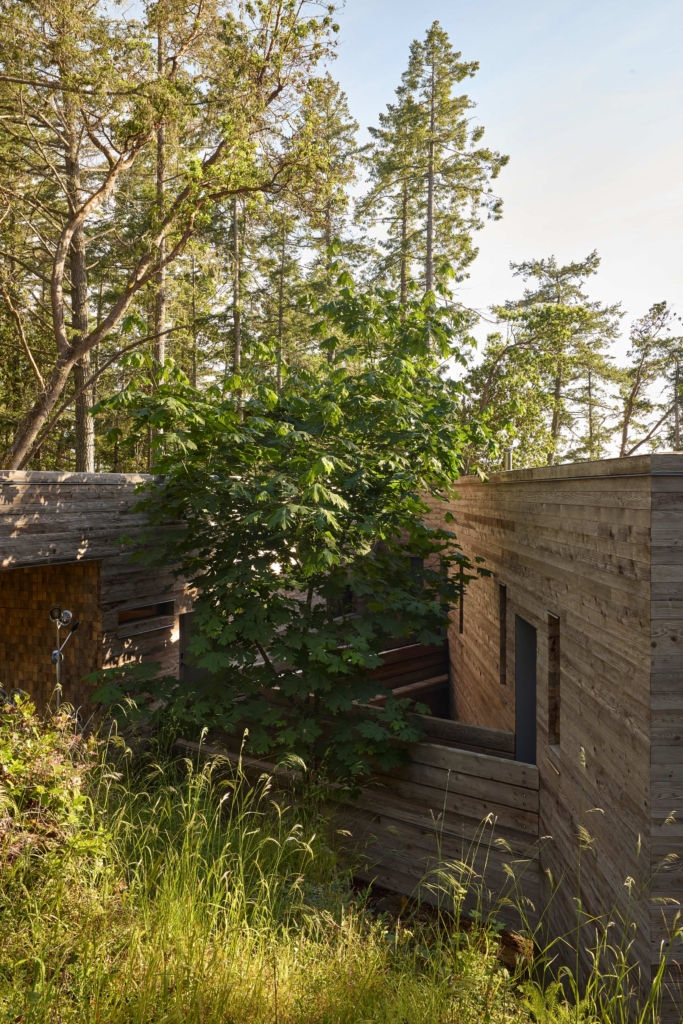
Set on a forested waterfront site in Canada’s Pacific Northwest, the clients sought a home deeply integrated with its archipelago setting – the fern-lined gully forming its conceptual anchor, embracing the space that may one day fill as ocean levels rise. True to Omer Arbel’s philosophy that “material, light and form evolve from intrinsic logic”, the design bridges the gully’s rocky ridges through predictive deflection modelling and pre-cambered steel, creating a suspended trajectory that floats within the landscape while preserving the terrain beneath.



Entry is through a discreet earth-set volume into a long linear corridor, or what Arbel calls “the spine that links forest, sky and sea”. This path guides the dweller from mossy escarpments to canopy through a single level. Framed by layered views and shifting micro-ecologies, the journey culminates in the main living space along the west-facing shoreline, where evening light floods deep into the plan. In contrast, the central triangular courtyard opens upward to the sky – a channel for midday light and roof drainage that transforms rainstorms into a visceral experience.
This flow continues in the home’s adaptable layout, where volumes awaken and expand through cabinetry and doors. The main wing holds the living spaces, kitchen and a suspended primary suite hovering above the gully, while the secondary wing conceals bunks and daybeds – ready to unfold for visitors or gatherings. Each room extends into a corresponding ‘outdoor room’, keeping occupants in dialogue with the site’s shifting landscape. In the primary suite, tucked behind sliding cabinetry, this connection heightens, its corner window and built-in seat framing the forest-to-shoreline transition and offering a suspended, treehouse-like retreat between ground and sky.


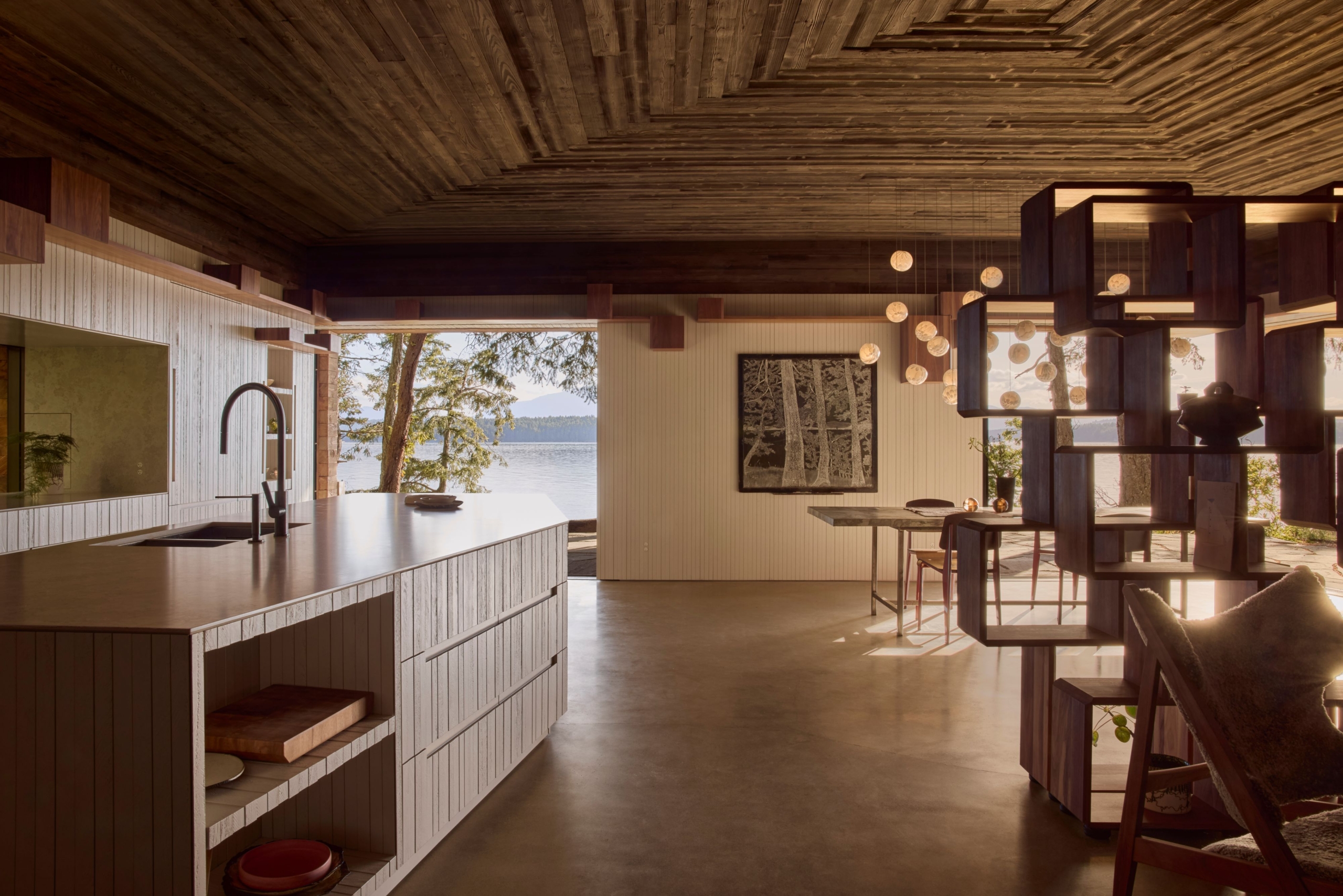
Like the forest beyond, the interior unfolds in layered timber planes. Painted vertical battens – a contemporary reinterpretation of the North American ‘cabin in the woods’ – form the primary layer, seamlessly integrating glazing, appliances, mosquito netting and concealed storage. In front, a horizontally orientated walnut system provides open shelving and supports articulated box volumes that range from small domestic storage to a daybed, bunks, a breakfast nook and laundry. Above, a lighting shelf illuminates the sandblasted cedar ceiling of the main living space, revealing subtle shifts in light across its dense, high-contrast texture. This mirrors the exterior cladding, designed to weather gracefully into silver tones.
Hovering between ridges and timelines, 91.0 is dynamic by nature. The residence occupies a rare space, and Omer Arbel Office has conceived a home that moves with the rhythms of light, forest and tide – a structure both at rest and poised for the future.
Architecture by Omer Arbel Office. Build by Treeline Construction. Lighting by Bocci.