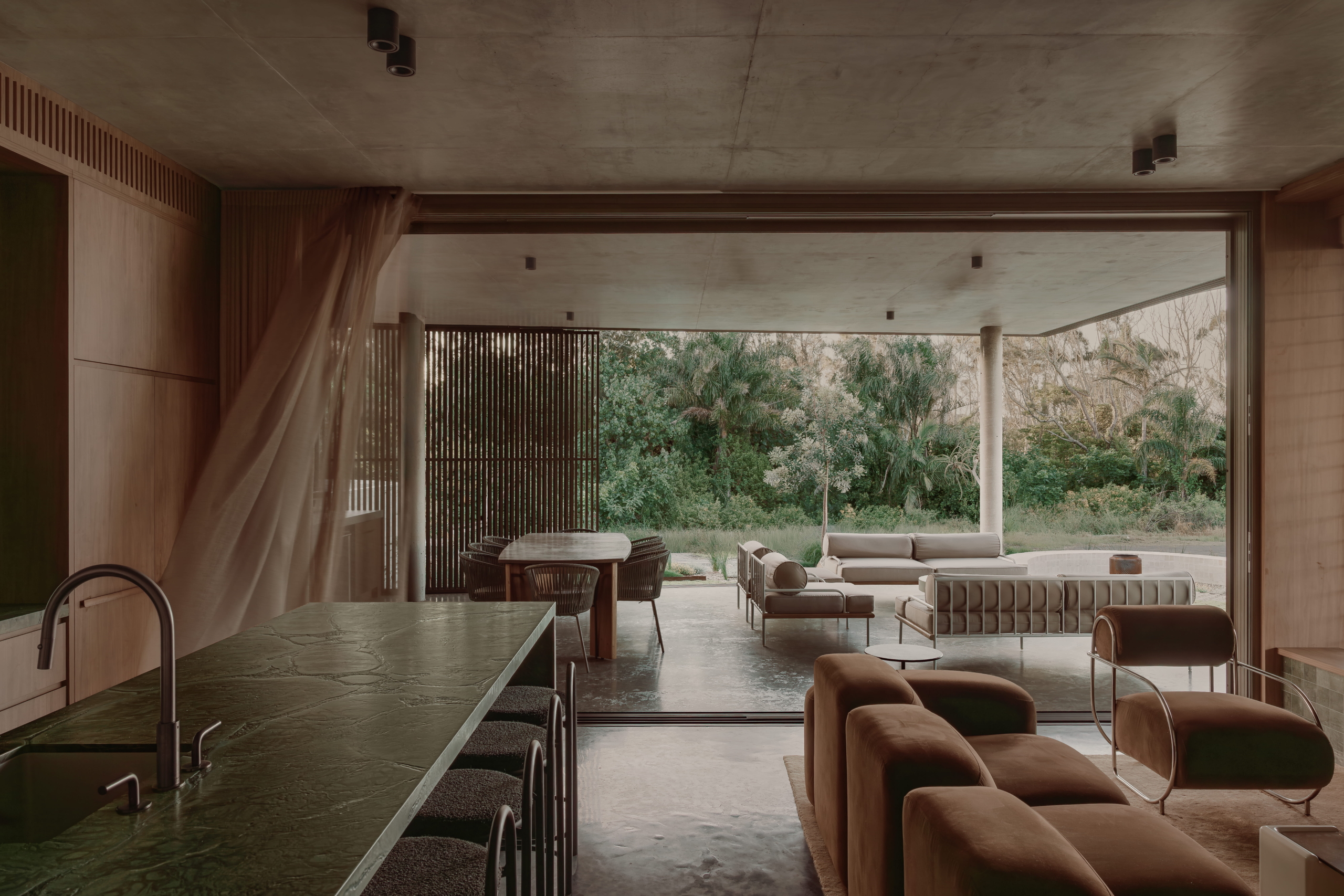
Arrawarra Beach House
Before Arrawarra Beach House was cast in concrete, the site was known through canvas and sand. The owners returned season after season to camp, observe and slowly imagine a more permanent retreat.
Purchased as a place to rest, reset and reconnect, the coastal property was visited by the owners for years through a kind of temporary occupation: camping on the land, observing the changing weather and learning the nuances of the headland. From this slow immersion came a clear ambition: to replace the original shack with a low-maintenance concrete beach house while quietly recalling the modest dwelling that once occupied the site.
The resulting home brings together Reece Keil Design, Ellyett Architecture and Interior Design, as well as JTECH Design & Construct. Conceived as a generational retreat, Arrawarra Beach House is crafted for both the present and an imagined future in which the building is handed down and its stories accumulate over decades.


The overarching idea is one of deliberate withdrawal. Rather than engaging with its neighbours, the house turns its attention outward, positioning itself to the adjacent nature reserve and the ocean beyond. The intention is to evoke the feeling of a private coastal outpost, visually insulated from surrounding development, as if it were the only structure on the headland.
Subtle cues are taken from the stripped-back 1950s coastal shack, when buildings were typically smaller, more pragmatic and often more attuned to landscape than streetscape. Here, those references are translated into a contemporary language, producing a house that feels grounded yet refined, recessive yet composed. Carefully placed openings edit views and choreograph privacy, allowing the interior experience to alternate between prospect and retreat while maintaining a tangible connection to the sea and the reserve.
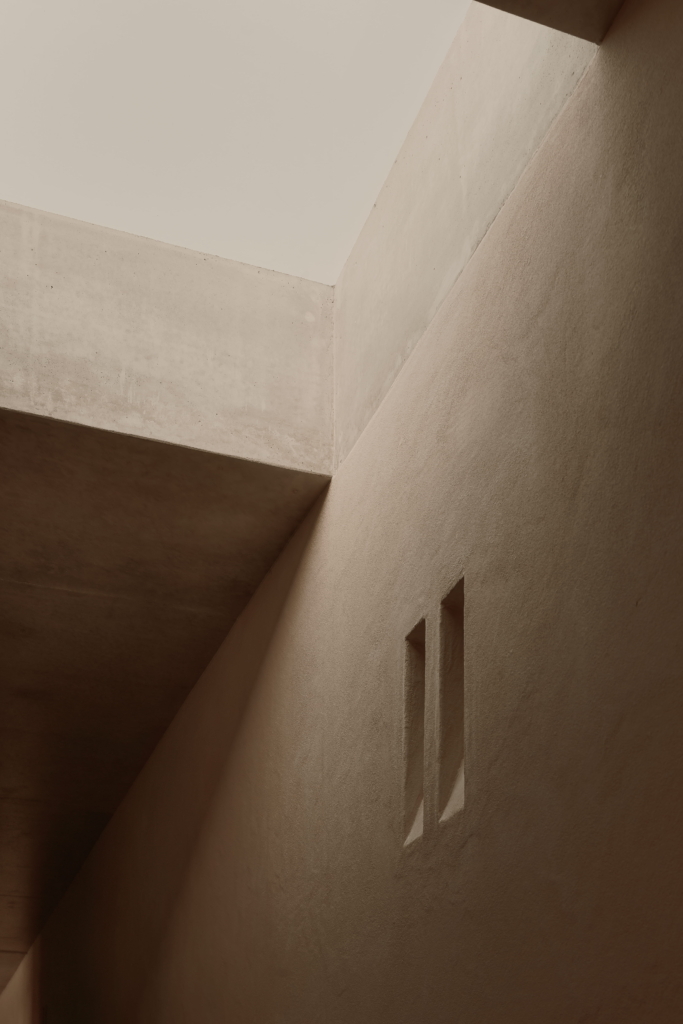

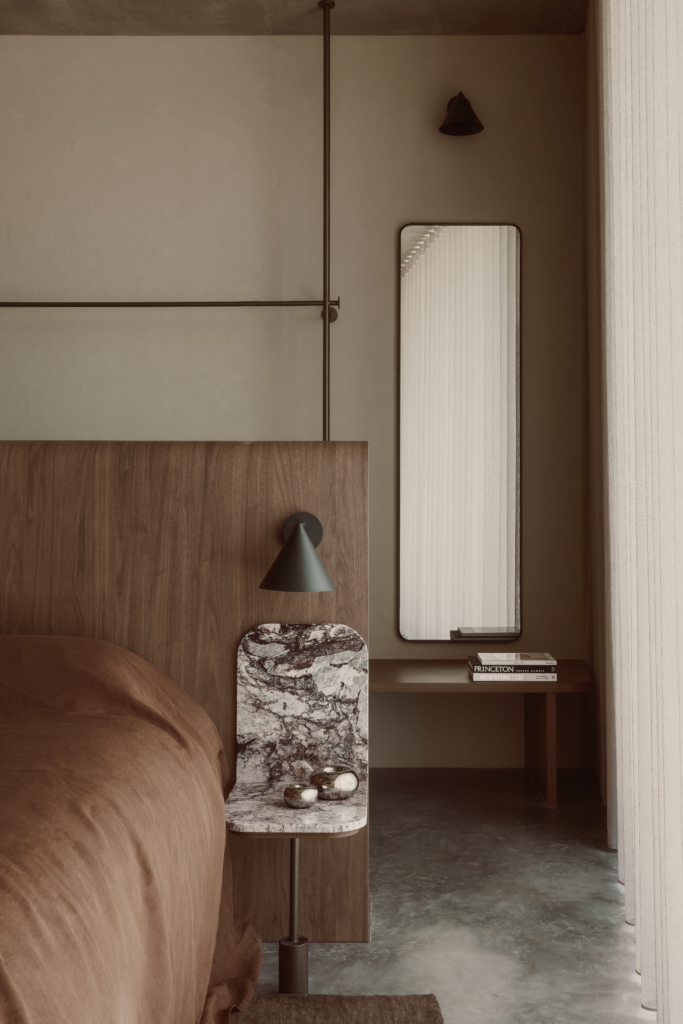
Materiality is central to both the architecture and daily life. Concrete forms the primary envelope and is expressed in its natural state, with selected rendered elements providing moments of subtle relief. The choice is unapologetically pragmatic, acknowledging the harsh coastal environment and the need for a robust, low-maintenance shell. Inside, timber and layered textures introduce warmth, tempering the cool solidity of the concrete and lending the spaces a sense of comfort. Aluminium screening wraps parts of the exterior, enabling the house to open to sea breezes overnight without compromising privacy. The restrained, raw palette embeds the building within its coastal context and gives it a distinctly contemporary identity.
The response to the surroundings is subdued rather than declarative. The house sits low, reading as if it has settled into place over time. Native planting and the adjoining reserve soften the edges of the concrete forms, allowing the architecture to recede into the landscape.
The cohesiveness of the project is further reinforced by a collaborative process that carried the early conversations and ambitions of the brief through to the final outcome. The result is a home that feels internally consistent, where architecture, interior and landscape operate as extensions of one another rather than discrete gestures. According to the JTECH Design & Construct team, Arrawarra Beach House is, at its core, a passion project, born from a genuine love of the area and a desire to create something timeless, robust and connected to place.
What ultimately distinguishes Arrawarra Beach House is not simply its raw concrete presence in a locality that has seen little development of this typology over the past two decades, but the intention that underpins it. This is not a speculative venture or a gesture towards the market. It is a highly personal project shaped around connection: to the landscape first encountered through camping, to the history of the original shack and to the family who will occupy it across generations. In this sense, the house is less an object than a framework for gathering, retreating and creating memories that will layer themselves into the place over time. The concrete will weather and the planting will thicken, but the essence of the house will remain constant: a place to arrive, reset and return.