Beachwood Canyon
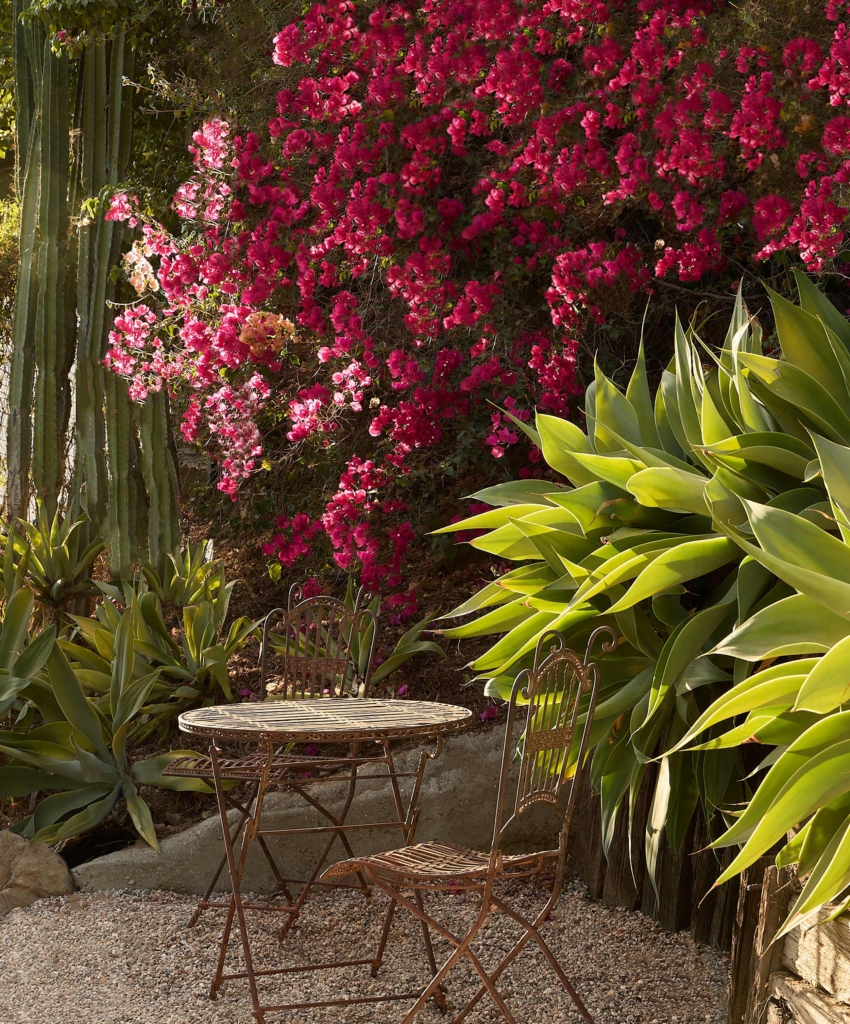
Located in Los Angeles, Beachwood Canyon is Jaya Williams’s thoughtful reimagining of a 1940s property. Through salvaged materials and carefully layered interventions, the designer honours its history while celebrating the enduring value of what is already there.
Tucked into the layered terrain of the Hollywood Hills, Beachwood Canyon was once Jaya Williams’s own home. Inspired by the city’s urban fabric, the renovation engages with Los Angeles’ rich residential history and the abundance of existing materials embedded within it. “I worked on this project for nearly five years,” Williams says. “It was originally a three-bed, one-bathroom home from the 1940s that had been updated in various stylistically incongruous ways over the years, and for the most part, didn’t retain any distinguishing character of the era in which it was built.”

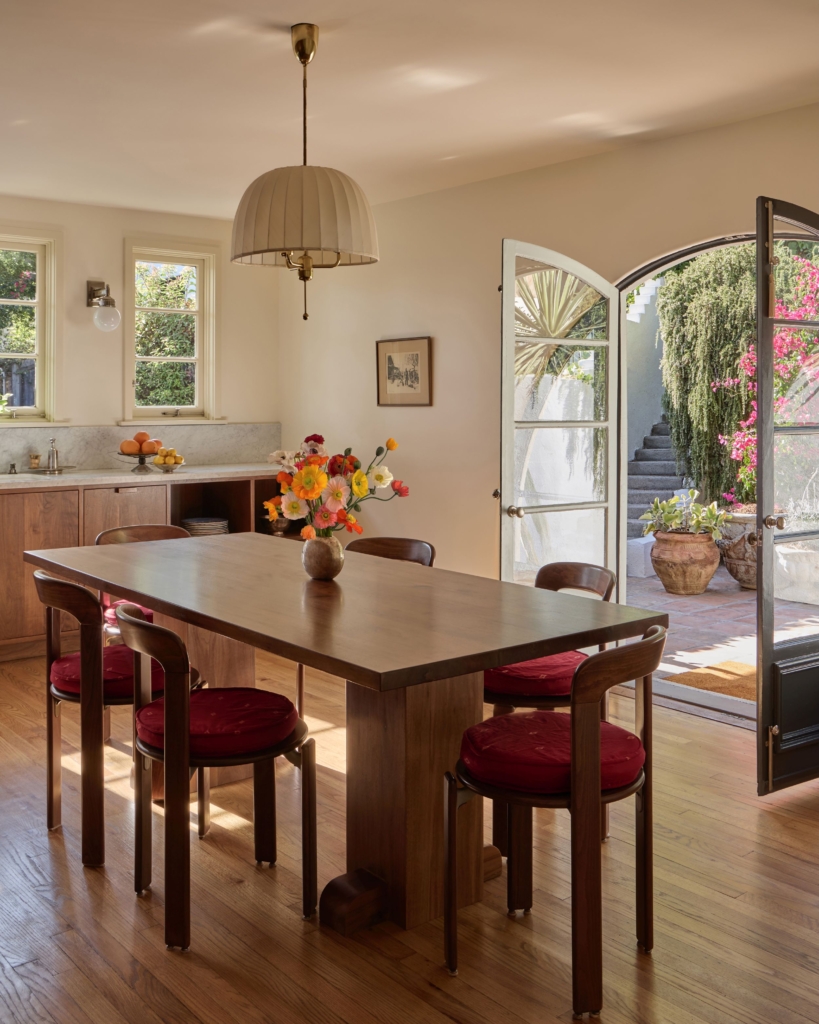

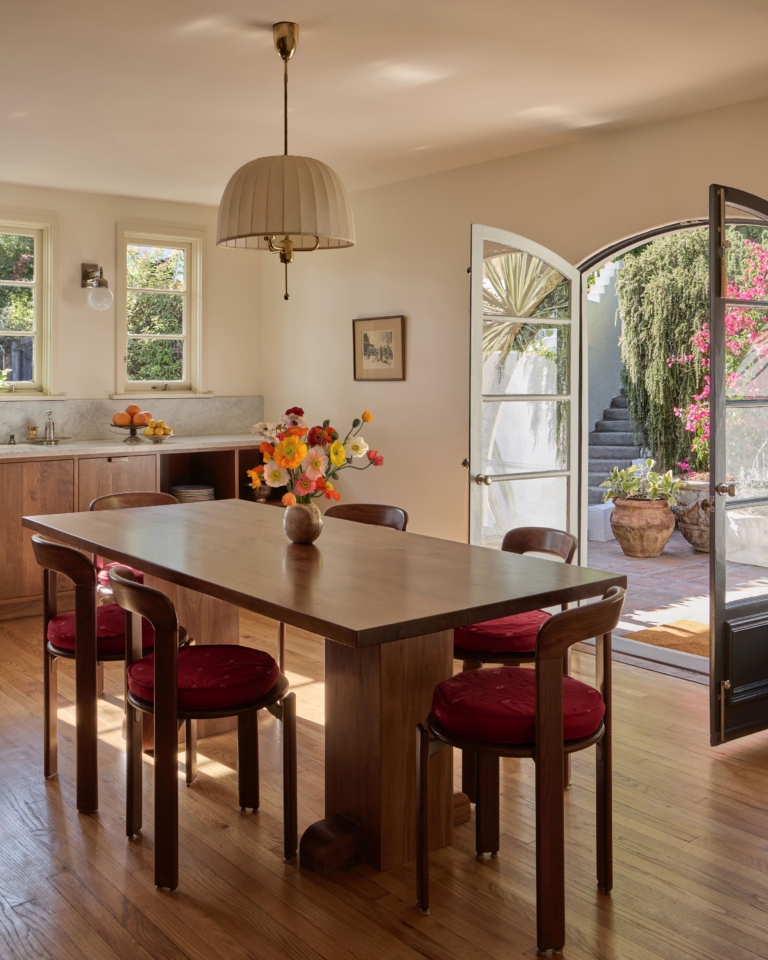
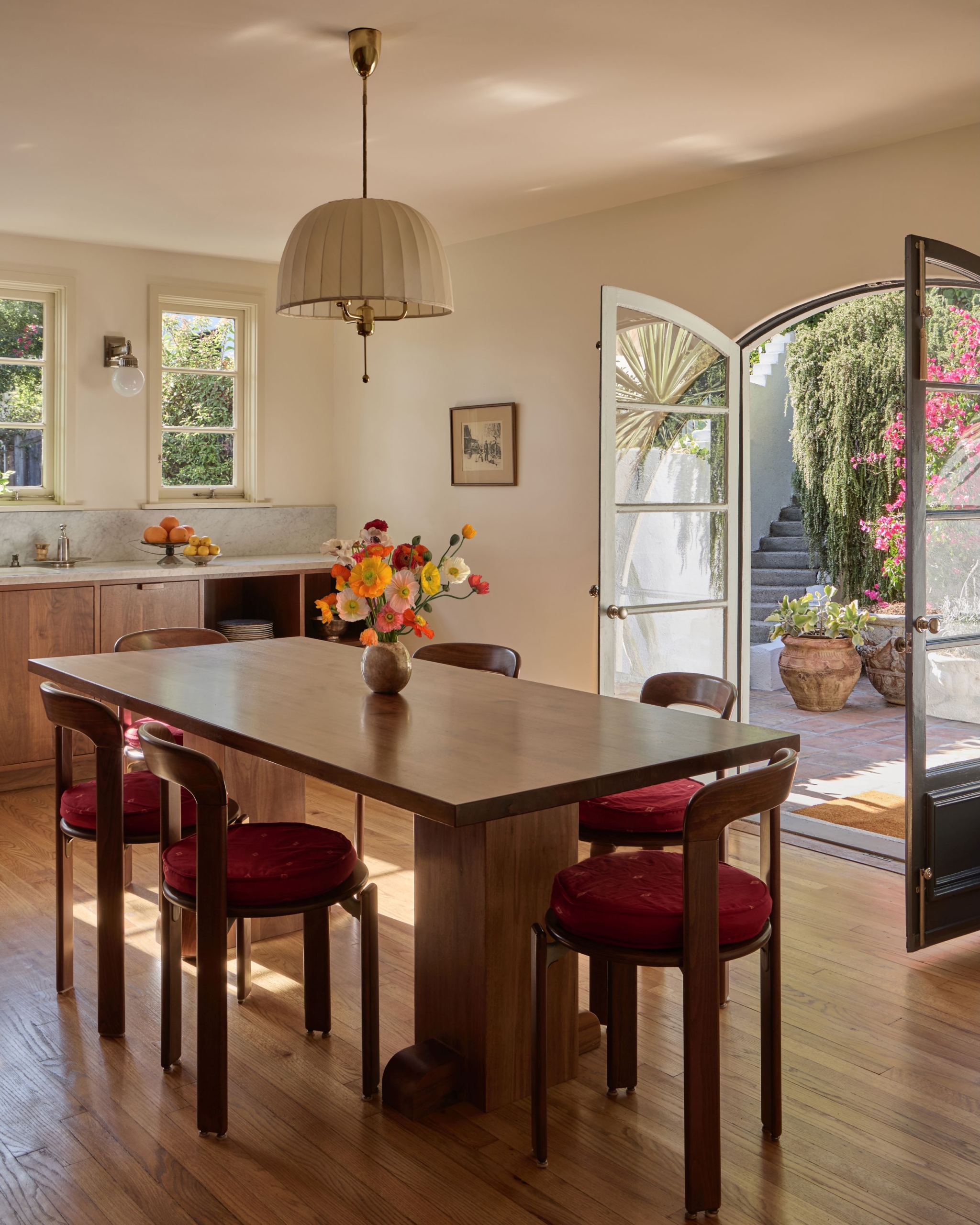
Nearly every interior wall was repositioned within the historic household, which combines minimal traditional and Streamline Moderne influences. The kitchen forms the heart of the dwelling, opening onto the rear patio. “My favourite moment in the house is the six aluminium pull bins by Grete Schütte-Lihotzky, the first female architect in Austria,” Williams says. “When I found the bins at a flea market, I knew I had to design a whole kitchen around them.” From here, the spaces unfold in a deliberate sequence, moving from open communal areas to a more private wing of bedrooms and amenities. A carefully resolved ceiling detail, introduced to accommodate a new entry and relocated staircase, extends through the living room and helps tie the interior together.
Almost every architectural element was sourced from salvage yards across the country and beyond. These include the arched exterior door off the kitchen, rescued from American architect Paul R Williams’ house; a pair of front doors from a grand public library entrance in Minneapolis; stained glass windows from the Hudson Valley; and interior doors and hardware from buildings being demolished in Pasadena. This layered approach extends to the furnishings. The dining table, designed by Williams and built by her father, is paired with 1970s Bruno Rey chairs fitted with cushions made in Jaipur, where her family is from.


A closer look at the project reveals clear affinities with the American Arts and Crafts movement, as well as the work of Frank Lloyd Wright in California, Gustav Stickley and architectural firm Greene and Greene. Many of the design choices evolved from these references. “But when it’s not just a matter of clever forethought, many high-end design choices are simply not achievable without significant capital,” Williams says. “So I had to get honest about what features were non-essential without compromising the overall design quality of the home. It turns out there was a lot I could live without, and even sometimes grateful to be unencumbered by.”
Throughout, every detail is intentionally orchestrated with a sense of artfulness and beauty. “I once read a piece about how Andrée Putman, the great French interior designer and scenographer, was always trying to actively eschew the ‘vulgar cliches of luxury’ in favour of simplicity, logic and rigorous editing, and that is one I will carry with me throughout my career.”