Cascade House
From humble beginnings as a 1950s triple-fronted brick dwelling, this renovation by Sonelo Architects has resulted in layered, dynamic connections between spaces, with a warm, earthy aesthetic tying old and new together.
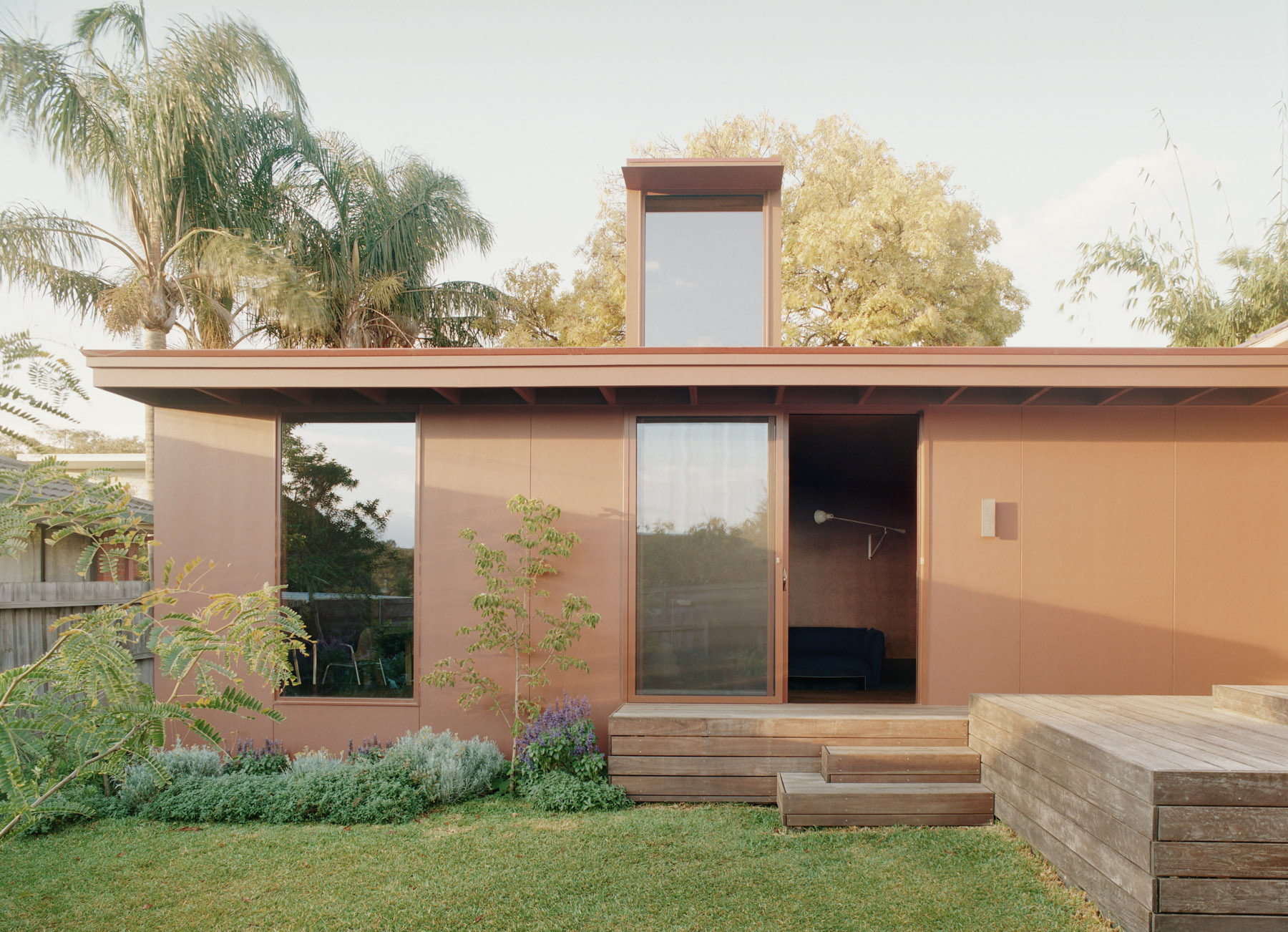
Previously, the home lacked natural light and access to the garden, with only the kitchen and one bedroom enjoying a northerly aspect. To improve flow and open the residence to daylight and the outdoors, the architects created an addition containing a lounge with a lantern-like pop-top skylight and a distinctive sunken floor. These shifting levels create a whimsical sense of arrival, which is in keeping with the space’s role as a place of rest and connection. The floor levels also trace the site’s topography, strengthening the dwelling’s relationship with the land and reducing the need for earthmoving during the build.

Rather than opting for an open-plan layout – which would have been at odds with the original home’s post-war detailing – the architects rezoned rooms within the plan with natural light and connection in mind. The redesigned kitchen and dining areas sit within the existing house, with steps leading down to a new sunken living room furnished with a contemporary, soft-edged blue Phantom sofa by Cameron Foggo and a Flos 265 wall lamp by Paolo Rizzatto. A home office is also contained within the addition, while the more private areas are positioned on the quieter southern aspect.
Inside the addition, walls and ceiling linings feature MDF panels with grooved joints, stained to an aged bronze tint. These warm, ambient tones echo the terracotta-painted cement-panel cladding outside, which was chosen to sit cohesively alongside the original brickwork. Vertical lines in the panels align with the rhythm of the roof beams and glazed openings. By creating continuity between old and new, and between inside and out, the architecture becomes a subtle backdrop for the colours in the garden to shine.


To bring lightness and a modern touch to the original rooms, the Victorian Ash flooring was refinished in a white stain, while the same timber was specified in a darker stain for the addition. The kitchen was also updated: the former peninsula-style layout was replaced with a galley kitchen, opening the space and drawing the eye towards a north-facing window where a Forest Pansy tree takes centrestage, casting dappled light and providing leafy views.
A neutral, calming palette of whitewash veneer, travertine benchtops and Japanese finger tiles creates a harmonious look in the new kitchen. A compact seating area with Ishinomaki Laboratory Kobo high stools from Apato invites opportunities for quick bites and conversation at the bench, while the adjacent dining room offers a more formal setting for family meals around the Makin Workshop dining table. Clean lines paired with a warm palette help unify these modern details with the heritage of the building, resulting in a residence that feels light on its feet, lasting in its materiality and filled with light and life.
Architecture by Sonelo Architects. Build by Cale Peters Constructions. Landscape design by Amanda Oliver Gardens. Engineering by Structify Consulting. Furniture supplied by Apato, District, Makin Workshop and MUJI. Lighting by Euroluce and Isamu Noguchi. Kitchen tile by Artedomus. Timber veneer by Elton Group. Artwork supplied by Cult.