Conrad Residence
In Melbourne, Paul Conrad Architects designs a light-filled, luxurious home for the practice’s principal.
When an architect designs a home for themselves, something more personal comes to the surface. Any semblance of performance falls away, leaving room for what matters most: care and instinct. Paul Conrad, studio director of his eponymous architecture firm, understands this intimately. In designing his new-build Melbourne residence, Conrad was not only thinking as an architect but as a husband and father creating a home for his young family.

“Moving through the house mirrors the rhythm of daily life – privacy and focus giving way to openness and togetherness.”

After a two-year search, the family finally found the site where their home would be built. It offered the qualities Conrad had been looking for from the beginning: a northern orientation and long views across the garden. The leafy inner-eastern suburb was a new setting for the architect, whose studio had more often worked on sprawling estates and coastal homes. But while the context was different, the design approach remained the same.
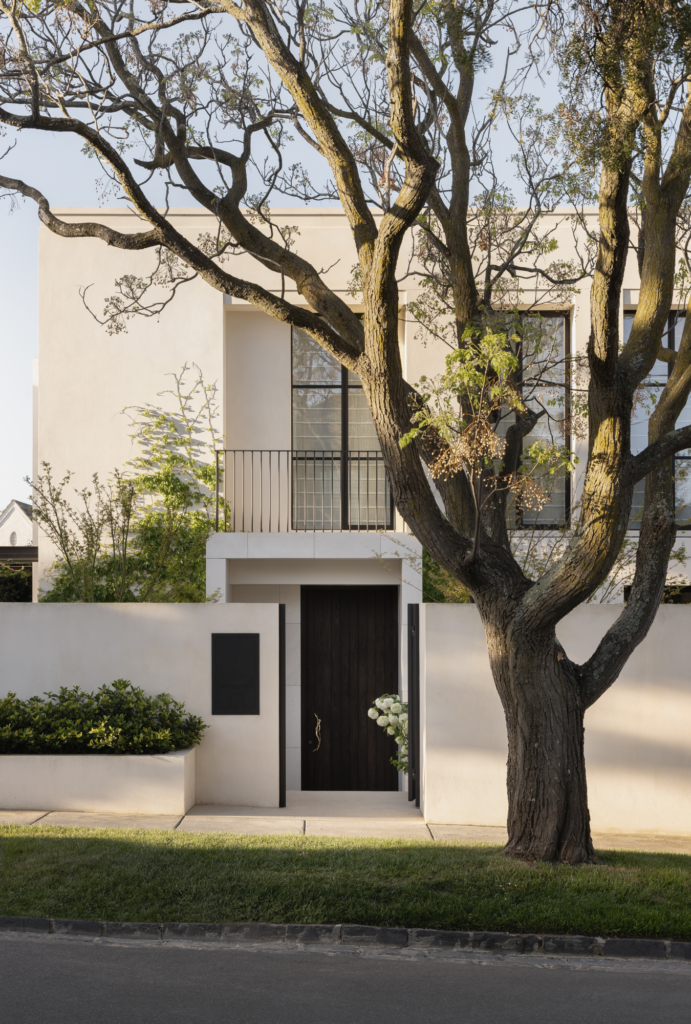
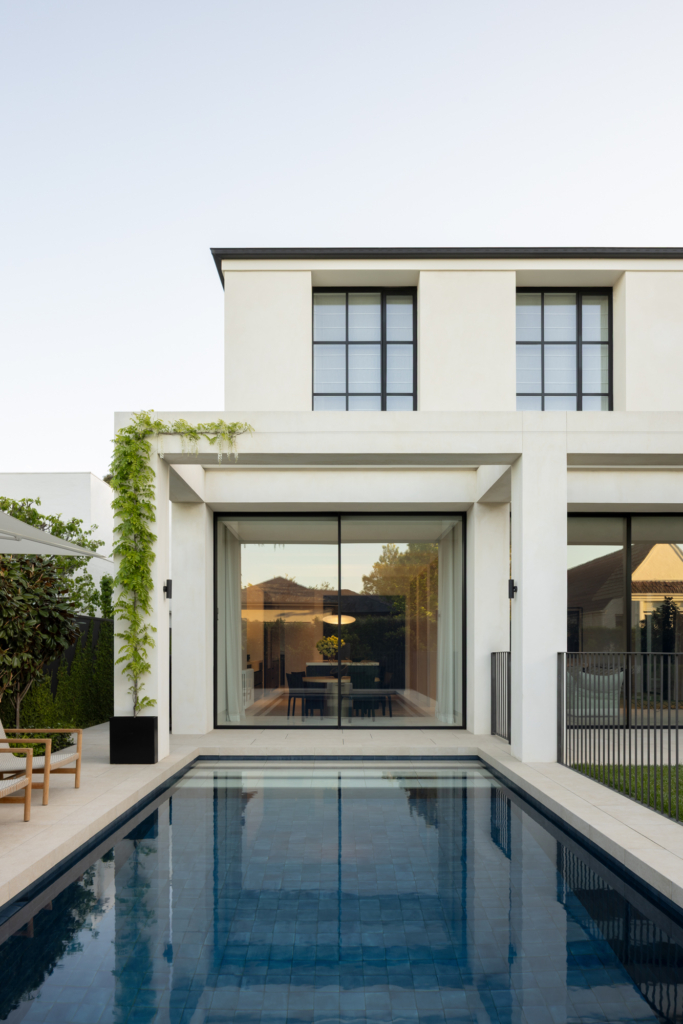
“The family experiences the house as two complementary worlds,” Conrad reflects. “The front rooms are more formal and intimate, supporting reflection and quieter moments. The rear opens into a relaxed, light-filled family environment oriented to the garden and northern light. Moving through the house mirrors the rhythm of daily life – privacy and focus giving way to openness and togetherness.” Elegant and robust, the facade has a quiet sense of permanence. Boston ivy softens the limestone entrance, while the elevation draws on classical proportions and a timeless monochromatic palette.
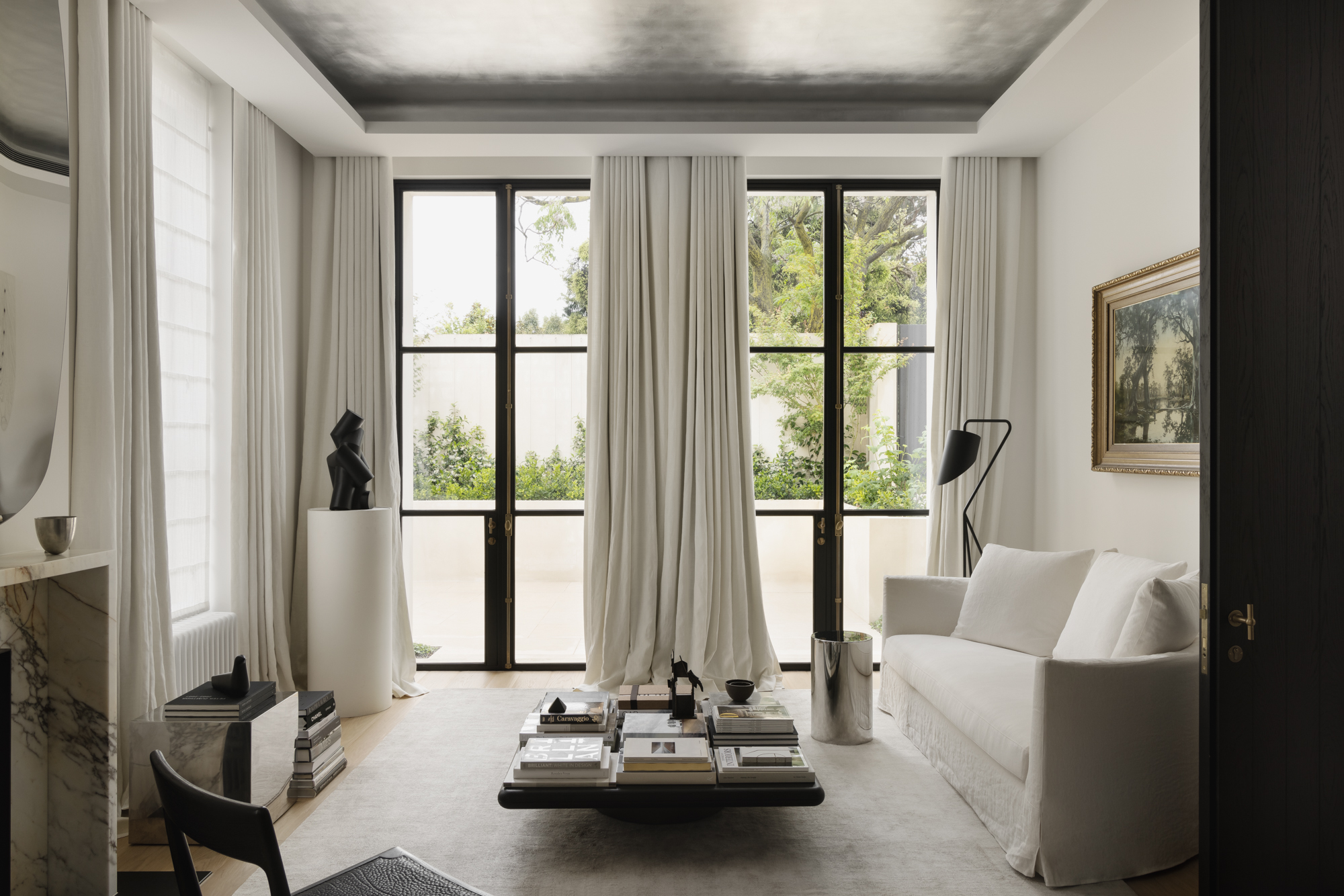
Having designed numerous luxury homes and hotels, Conrad approached his own 445-square-metre, four-bedroom residence with a clear sense of contrast. “I often feel that the aesthetic is one of contradiction: minimal yet rich, restrained yet bold, poised yet relaxed,” he says. The elliptical stairwell funnels soft daylight into the residence and creates a direct sightline to the garden beyond. Along this axis sits Conrad’s study, which recalls a European solarium with its hand-applied silver-leaf coffered ceiling and ensemble of classical furniture.
In the living area, Christophe Delcourt furniture sets a restrained, elegant tone. An aged-brass fireplace envelops a limestone plinth, while Belgian linen sheers beautifully cocoon the room. Beyond, the kitchen is framed by a trio of tall, oak-lined openings and centres a four-metre-long Paonazzo marble island. An intimate meals area brings the space back to the rhythms of everyday family life.
The primary suite has the quiet luxury of a retreat, with a seamless flow between the bedroom, ensuite and robe. Rather than marking each area with strong visual or material transitions, Conrad uses a continuous sweep of timber flooring and a muted palette to bind the spaces.
The result is calm and sanctuary-like, echoing the feeling of the home as a whole. One does not arrive at the Conrad Residence all at once – one moves through it, guided by light, shifting atmospheres and the day’s measured cadence.