Coppin House
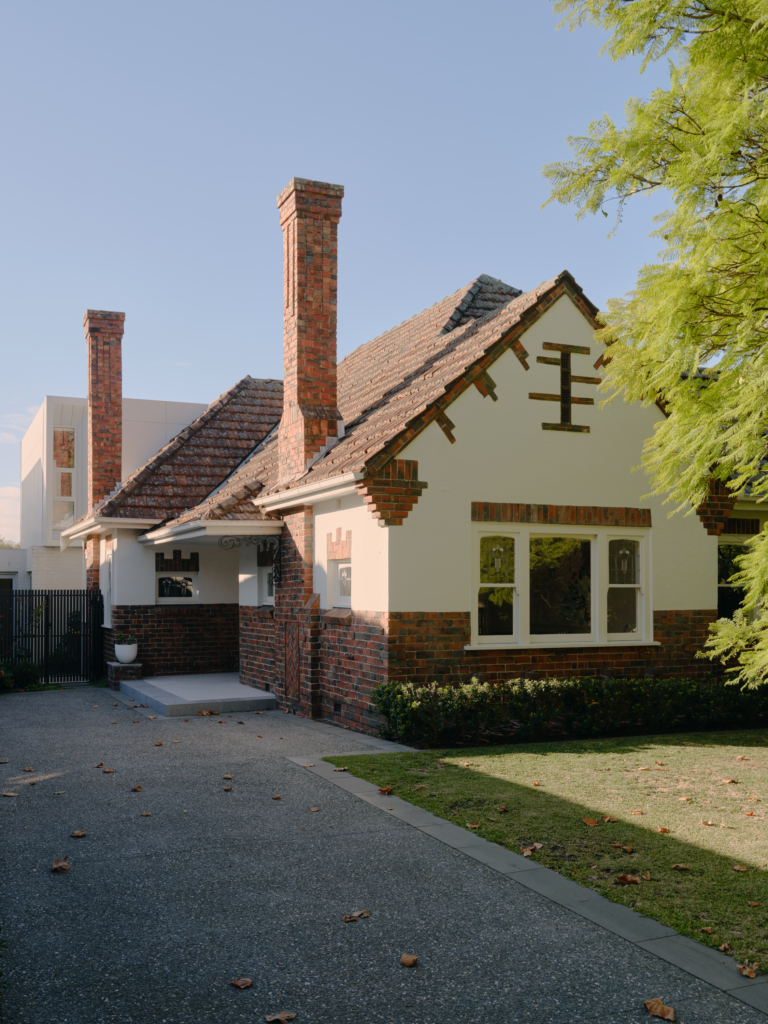
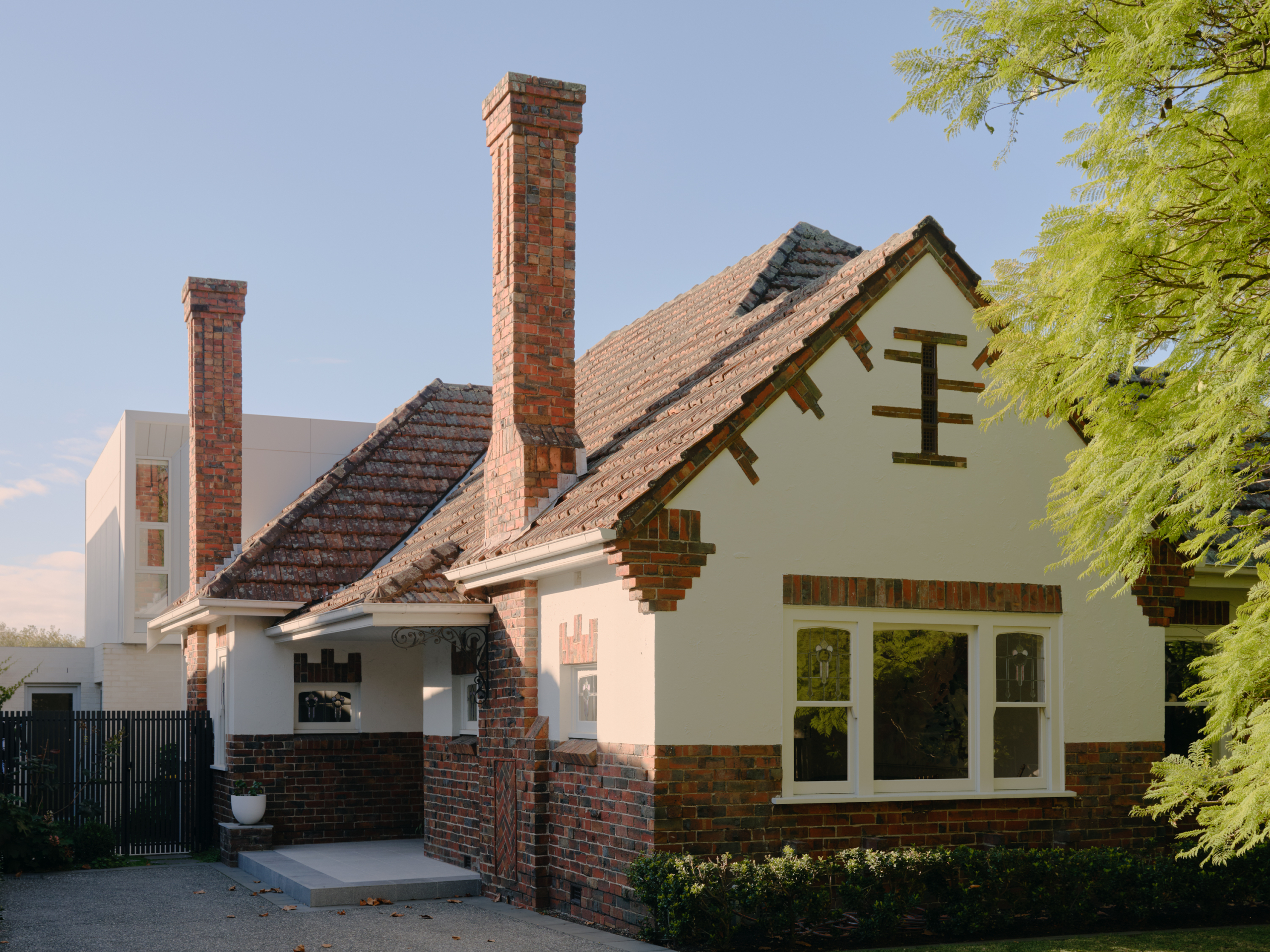
Tom Robertson Architects’s extension of Coppin House, a heritage home in Melbourne’s south-east, thoughtfully walks the line between renovation and preservation.
The clients had requested a home fusing functionality and longevity, and that would serve their family. Key to their brief were spaces suitable for both coming together and for the parents and their teenage children to spend time apart.


First, renovations of decades past were removed, leaving behind historic features that established a coherent character that was built upon with elements suitable for contemporary living. To expand the floor space, a double-height addition was built to the north, capturing light and connecting the original footprint with the garden, terrace and pool via a stretch of operable glazing. This extension allowed for the preservation of the original brick frontage. Bold, contemporary colour was used in spaces in the older wing – including a blue-grey paint coating the home office’s original fireplace, as well as its joinery and walls – to link with the newer vernacular of the extension. Earthy, warm tones were used in bedrooms, bridging the stark palette of the extension and the tones of the heritage wing.
Indoors and outdoors are connected once again through a central courtyard, which invites light and greenery into the depths of the home and acts as a bridge between the old and the new – the living room looks directly onto the brick of the home’s original rear wall.
The rear extension was constructed with light-coloured bricks on the ground floor and soft grey metal cladding above, which seems to float above the outdoor living space and indoor living room and kitchen zone. Passive design principles were front of mind for the new space, with its eaves offering respite from the heat in summer while drawing sunlight indoors during the cooler months.
While the palette of whites used in the new addition is crisp and clean, warmth is inserted via timber flooring and texture comes from a richly veined marble splashback, island bench and countertop in the kitchen. This clean, bright palette is underscored by a dramatic feature wall in the kitchen, with charcoal joinery and recessed open shelving backed by a dynamic green marble.
The bathrooms continue the light, bright palette and approach of the communal living spaces. Pared-back and minimalist, with floating countertops helping to avoid visual noise, they harness blade walls rather than glass for privacy.
Coppin House by Tom Robertson Architects exemplifies how a small home can be reimagined into one that can accommodate a family, empowering them to spend time together while also having the space to find respite in quieter moments. Its fusion of the old and new shines a light on how respectful extensions and modifications can emphasise – rather than erase or detract from – a heritage home’s charm.
Architecture by Tom Robertson Architects. Build by Built by Luxe. Landscape design by Kate Patterson Landscape Design. Furniture by Made by Morgen.