Corbel House
This contemporary, elegant Sydney home by Nick Bell Architects is the outcome of a conscientious response to contextual constraints without compromise to the rich qualities of the coastal landscape.
Along a stretch of densely planted coastline on Sydney’s Northern Beaches, a family home designed by Nick Bell Architects celebrates an historic structural system to respond to the challenges of a narrow site. Corbel House – so named for the contemporary and innovative use of corbels as a critical design element – deftly navigates the limitations of a small strip of land caught between hillside and water’s edge.

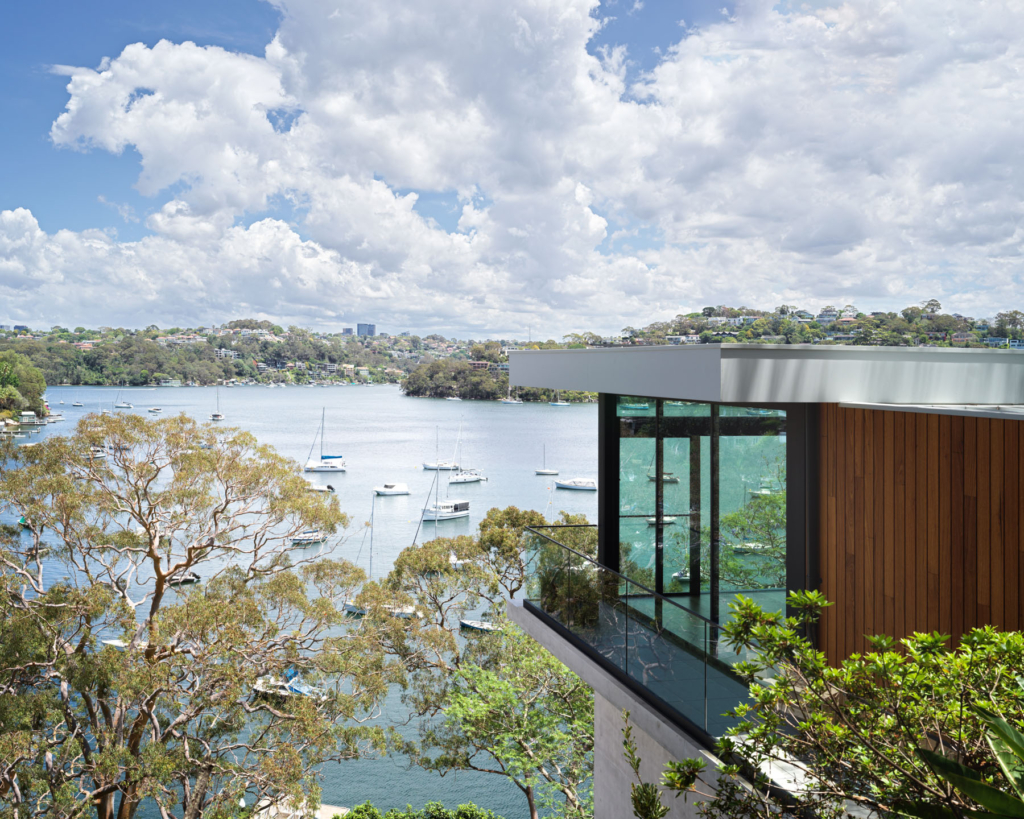



“The design principle of Corbel House was inspired, in part, by the medieval solution to a problem the site presented,” says Nick Bell, director of the eponymous design practice. The definition of a corbel, he explains, is “an architectural member that projects from within a wall and supports a weight, especially one that is stepped upward and outward from a vertical surface”. His description could no better represent the geometry of Corbel House, a stack of staggered floor plates increasing in area and height. With the massing strategy clear, the project continued to be informed by a design narrative concerned with “touching the earth lightly”. The subsequent outcome was a building that avoided excavation on the site and celebrates a silhouette carved from the complex overlay of constraints.
The modest site is defined on one side by the deep waterfront of Peach Tree Bay, offering the active family the opportunity to connect and engage with the water. On the other boundary, a steep and rocky slope populated with established trees and natural vegetation rises from a narrow strip of land on which an existing house was located. “The main design response,” says Bell, “was to contain the new home on this same level plateau and to avoid excavation and extensive groundworks.” The subsequent building footprint – a discreet 72 square metres – reduced the impact of new construction on the coastal bush. In addition to the house proper, a garage space was required for boat and equipment storage, accessible only by passing along the edge of the clearing in front of the home. “This is where we drew on the concept of the corbel,” says Bell.
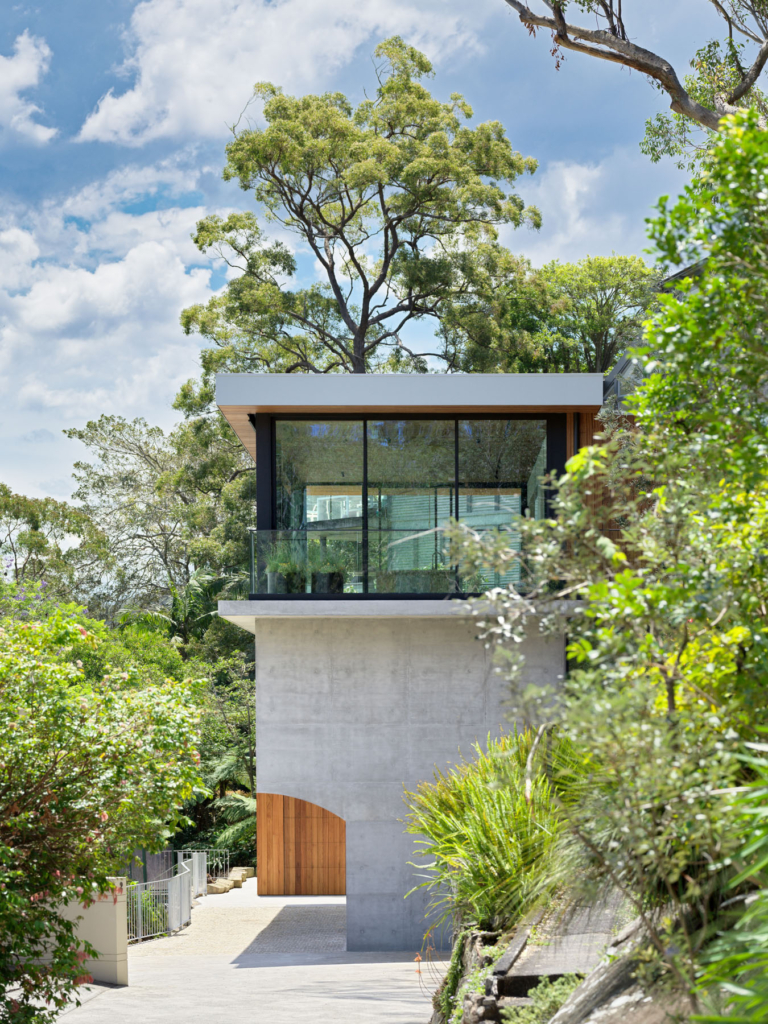


An array of elegantly vaulted corbels supporting the cantilevered upper floors are expressed with a line of clerestory windows between.
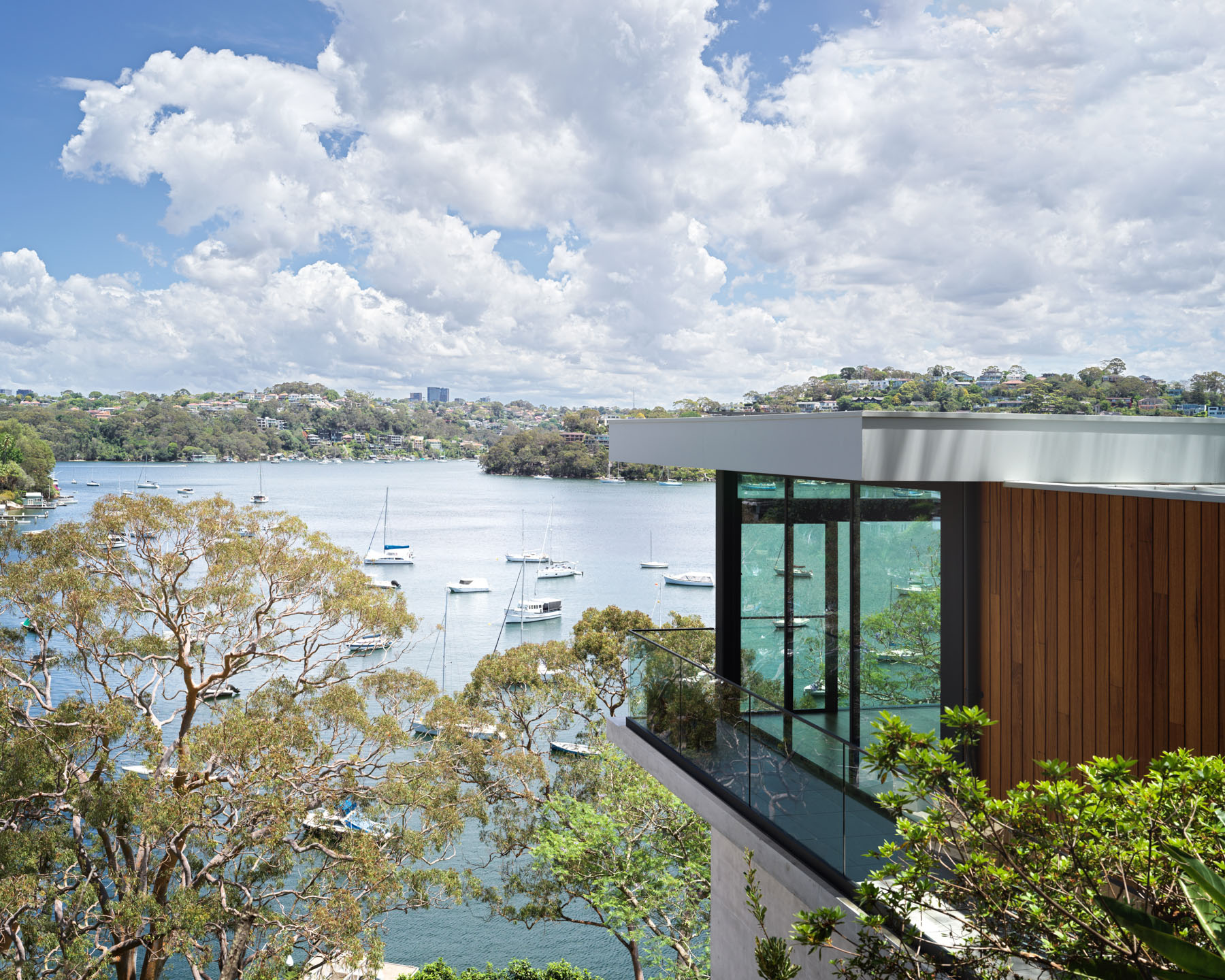
In profile, the house reads as a small tower nestled into the vegetation of the rock face. A generously glazed top floor sits like a lantern atop a two-level, fair-faced concrete podium. The building adheres to a strict geometry to maximise the site and create an efficient arrangement of spaces – a geometry culminating in a rational grid of three equal structural bays within which additional smaller divisions are spaced. These design gestures can be understood in the planning and placement of interior spaces whereas the finer geometry is articulated in the elevation of the building.
An array of elegantly vaulted corbels supporting the cantilevered upper floors are expressed with a line of clerestory windows between, and a composition of timber and concrete planes are coordinated within the larger structural modules. Here, the rhythm and order of the geometry are celebrated across the lower levels and references the coastal landscape; on approach, the vaulted eaves suggest the erosion of the concrete mass over time, as if an extension of the rock face at the mercy of the waterside setting.


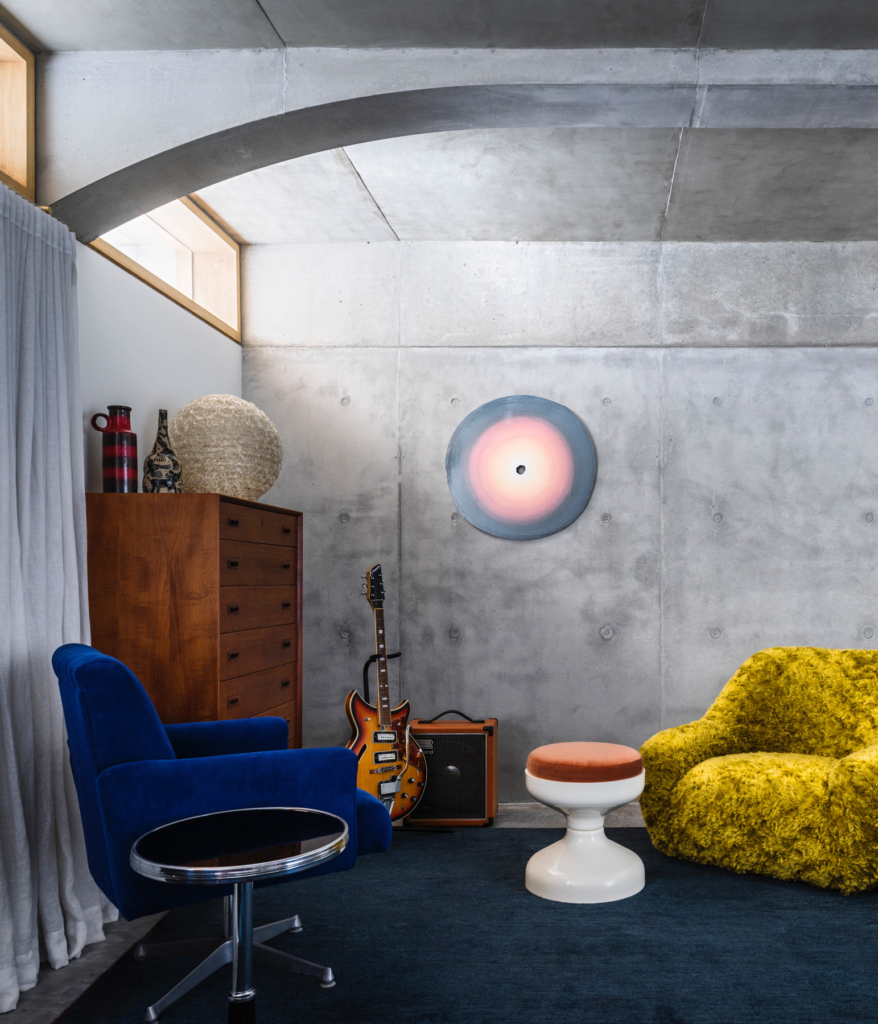
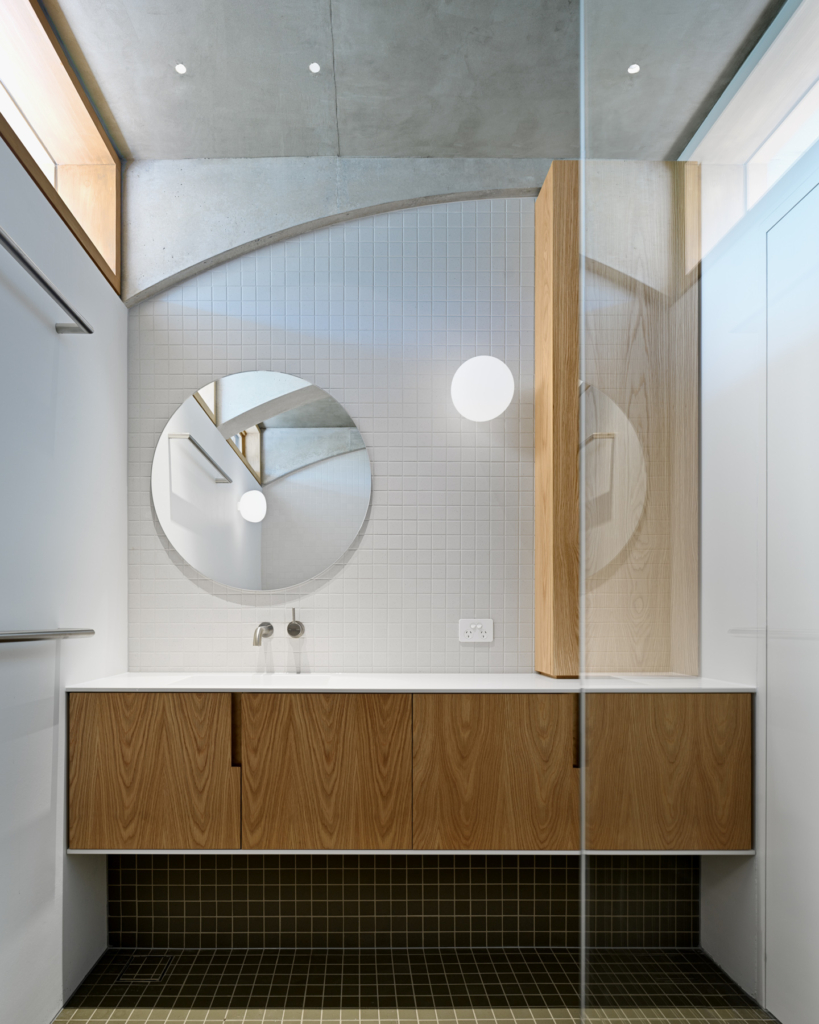
The warmth of timber joinery juxtaposes the austerity of the concrete walls and grounds the building in modesty.


Two entrances offer a varied experience of arrival – “there is no back or front of the house”. From the lowest level of the site, a discrete threshold is set back from a cobblestone driveway, caught between the curves of the corbels. The warmth of timber joinery juxtaposes the austerity of the concrete walls and grounds the building in modesty. Alongside, a small storage space occupies the base of a sandstone turret supporting a cantilevered terrace above.
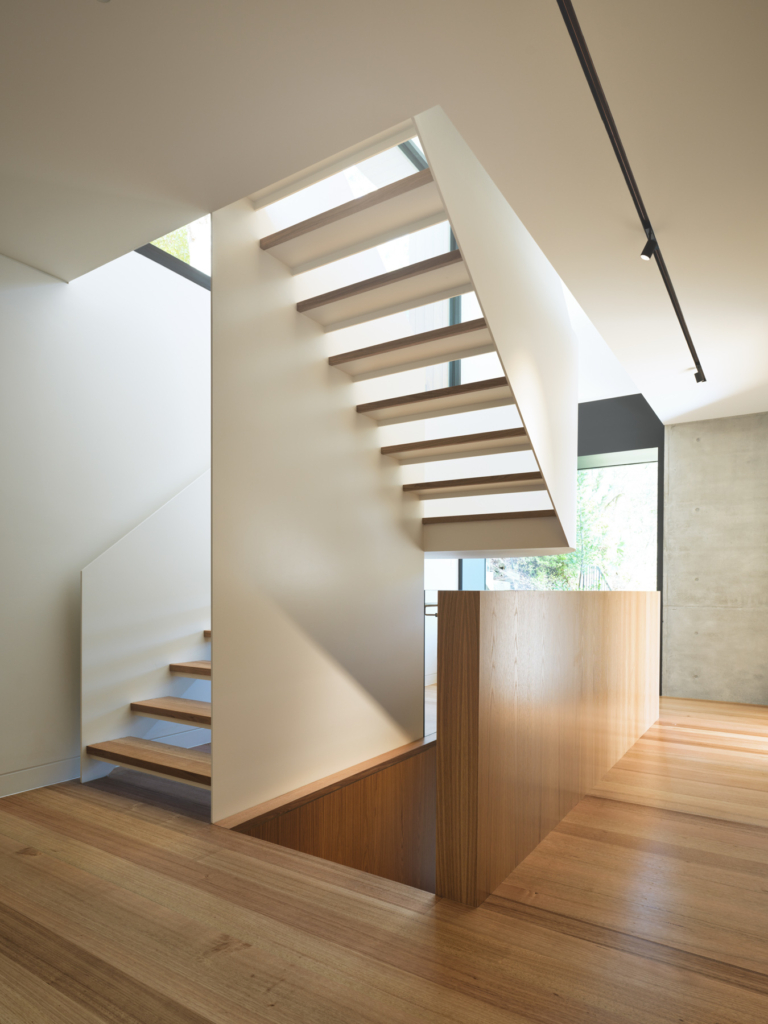
The two-level volume with a narrow window and an expressed concrete lintel over the doorway suggests a nod to the textures of historic medieval streets, a concept complementary to the adjacent corbels. From the lower floor, a light-filled staircase climbs past the mid-floor bedroom spaces and arrives at the top-floor living areas, bathed in abundant natural light. The second threshold experience is found here, entered from the street by way of existing steps down the hillside, a short journey met with the expansive views over the harbour.

Corbel House demonstrates the power of a small set of design components well coordinated to deliver a home connected to a rich, natural context.
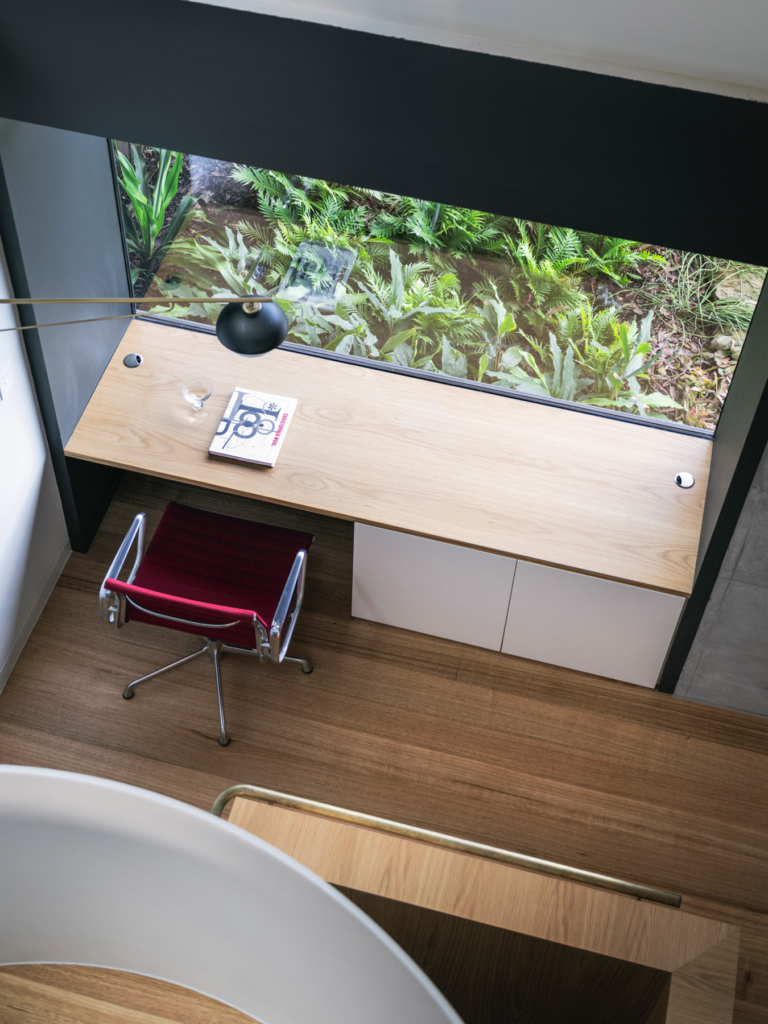
Much of the success of this project can arguably be described as the unexpected weightlessness of an otherwise strong building. On reflection, Bell describes the success, in part, as “the retention of the site in its natural state”. Here, he details the critical considerations inherent in the design strategy for Corbel House: “Engagement with the unique block and surroundings, and water views contrasted with bushland and biodiversity habitat.”
At its core, Corbel House demonstrates the power of a small set of design components well coordinated to deliver a home connected to a rich, natural context. By leveraging necessary structure as a critical part of the narrative, Nick Bell Architects has crafted a home that unapologetically celebrates the sum of its parts for the authentic purpose of their forms. Bell reflects with pride on an outcome that he rightly articulates as being inspired by a single, compelling idea for the home – that which is “clearly legible and integral to the character”.
Architecture and interior design by Nick Bell Architects. Build by PMD Build. Structural engineering by Partridge. Joinery by Interex Custom Joinery.