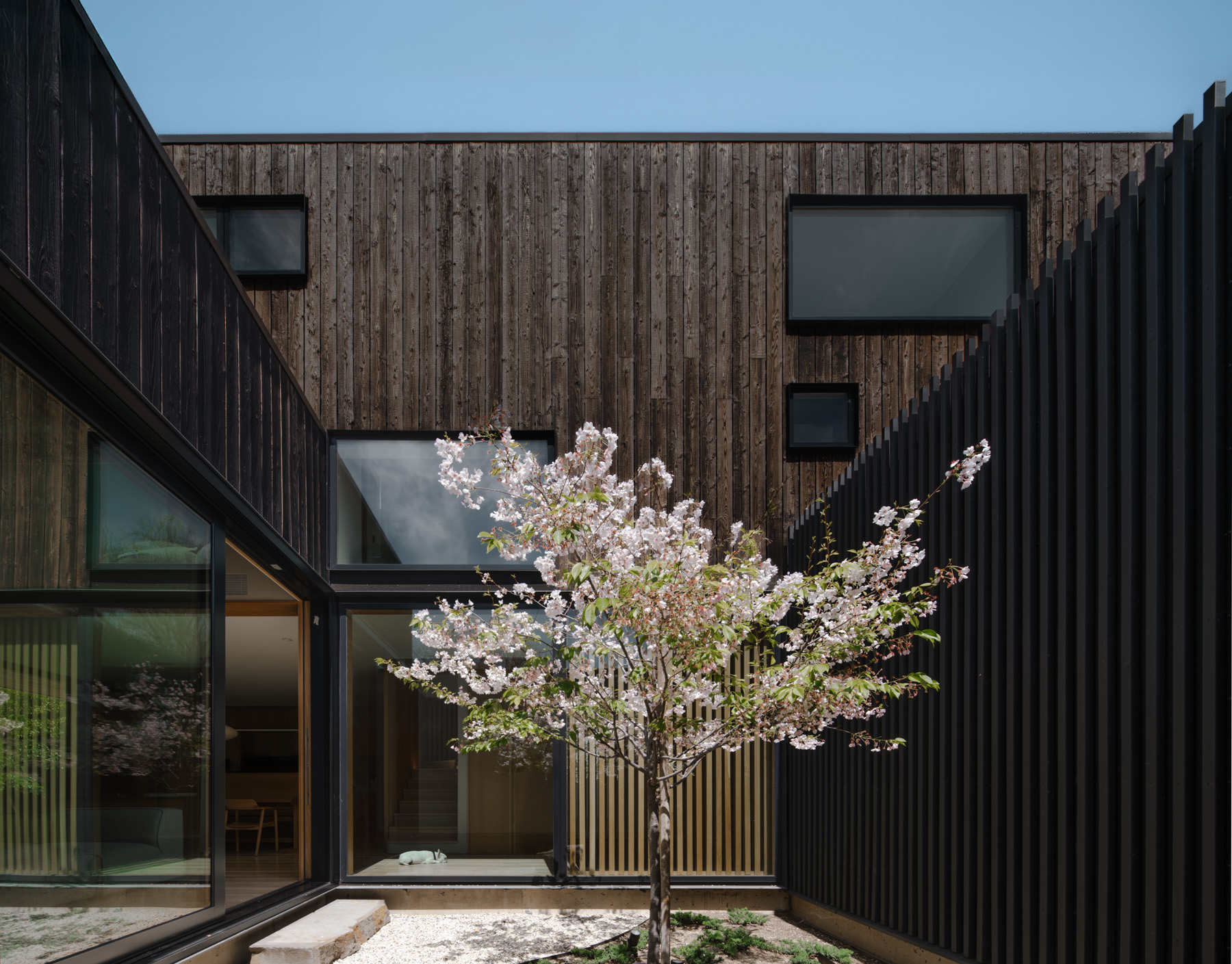
Cupertino Courtyard
Cupertino Courtyard in California sits in quiet dialogue with its surrounds, anchored by a rich material palette that includes moody yakisugi cladding.
Set within a quiet neighbourhood in Cupertino in California’s Silicon Valley, Cupertino Courtyard by SHED Architecture & Design is defined by a careful calibration of material, light and enclosure. At its core, the project explores how architecture can create moments of retreat while remaining deeply connected to its surroundings – a dialogue made tangible through the considered application of yakisugi cladding from Nakamoto Forestry.
“The courtyard became the organising principle for the entire home,” says Thomas Schaer, principal of SHED Architecture & Design. “It allows every space to engage with the landscape in a meaningful way while still maintaining a sense of privacy.” This inward-looking approach draws on a series of subtle Japanese spatial references, from the presence of a genkan threshold to the layered condition of an engawa, positioning the courtyard as both a point of arrival and quiet reflection.
That sensibility extends to the material palette. The use of Gendai Linseed Black, a charred timber product rooted in the traditional Japanese practice of yakisugi, brings both visual depth and material longevity to the exterior. Long used in Japan for its durability and resilience, the process imbues the timber with a richness that continues to evolve over time.
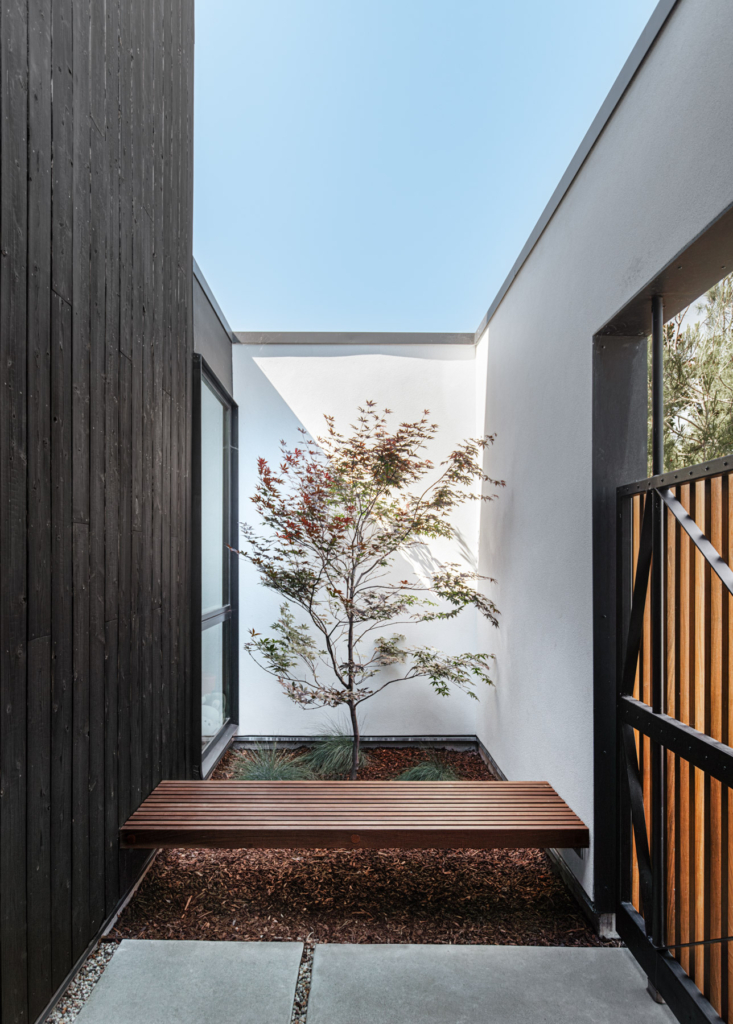
“It’s rare to find a material that delivers on both performance and beauty without compromise.”
Selected for its rich tonal quality and evolving surface, the cladding anchors the project in a palette that is at once restrained and expressive. “We were drawn to the subtle variation in the material – it’s not a flat black, but something that shifts with light and time,” Schaer says. The lightly brushed finish reveals the grain beneath the char, creating a surface that feels tactile and alive.
Beyond its aesthetic appeal, yakisugi is inherently performance-driven. Naturally resistant to fire, rot and insects, it offers a robust alternative to chemically treated materials while maintaining a distinctly architectural expression. For SHED, this duality was critical: “It’s rare to find a material that delivers on both performance and beauty without compromise. This allowed us to maintain a clear design intent without introducing unnecessary complexity.”
Rather than presenting as a stylistic gesture, the use of yakisugi speaks to a broader alignment between material, place and lineage. Nakamoto Forestry’s approach remains grounded in this origin, with an end-to-end process that maintains a direct connection to the forests and craft traditions of Japan, reinforcing both authenticity and consistency in application.
At Cupertino Courtyard, this rigour translates into a material that will continue to evolve long after completion. With a patina that develops over time, the cladding records the passage of seasons and exposure, embodying a quiet acceptance of change. “We like the idea that the building will age gracefully. It’s not about resisting time but allowing it to become part of the architecture.” In this way, Cupertino Courtyard moves beyond a singular moment of completion, instead embracing a longer narrative – one shaped by material integrity, environmental performance and the enduring beauty of natural processes.


