Colour Awards Finalists
Dulux announces the 94 finalists in its 2026 Colour Awards, which recognise innovative, original and ambitious use of colour in the built environment in Australia and New Zealand.
Luxury dining spaces drenched in rich tones, schools and childcare facilities bursting with vivid hues, retail outlets that resemble oases of calm and houses featuring every palette under the sun … just a few of the trends embraced in the 94 finalist projects in the 2026 Dulux Colour Awards, which celebrate their 40th anniversary this year.
The finalists have been selected from a record 540 entries across Australia and New Zealand, reflecting the pre-eminent nature of the awards, which recognise innovative, original and ambitious use of colour in the built environment. “It’s fitting that in this landmark year, we are celebrating such remarkable numbers,” says Lauren Treloar, Dulux’s colour and design manager. “But it is the talent and expertise of the region’s design and architecture professionals that we are truly applauding – they constantly astound us with their accomplished mastery of colour and it is our privilege to recognise their work.”
The awards feature eight categories – Commercial Interior Public and Hospitality, Commercial Interior Workplace and Retail, Commercial and Multi-Residential Exterior, Residential Interior, Single Residential Exterior, Temporary or Installation Design, and Student AU and Student NZ. “Regardless of scale, scope or setting, the proficiency of colour use evident in this year’s finalists is testament to the exceptional calibre of architecture and design professionals practising in our region,” Treloar says.
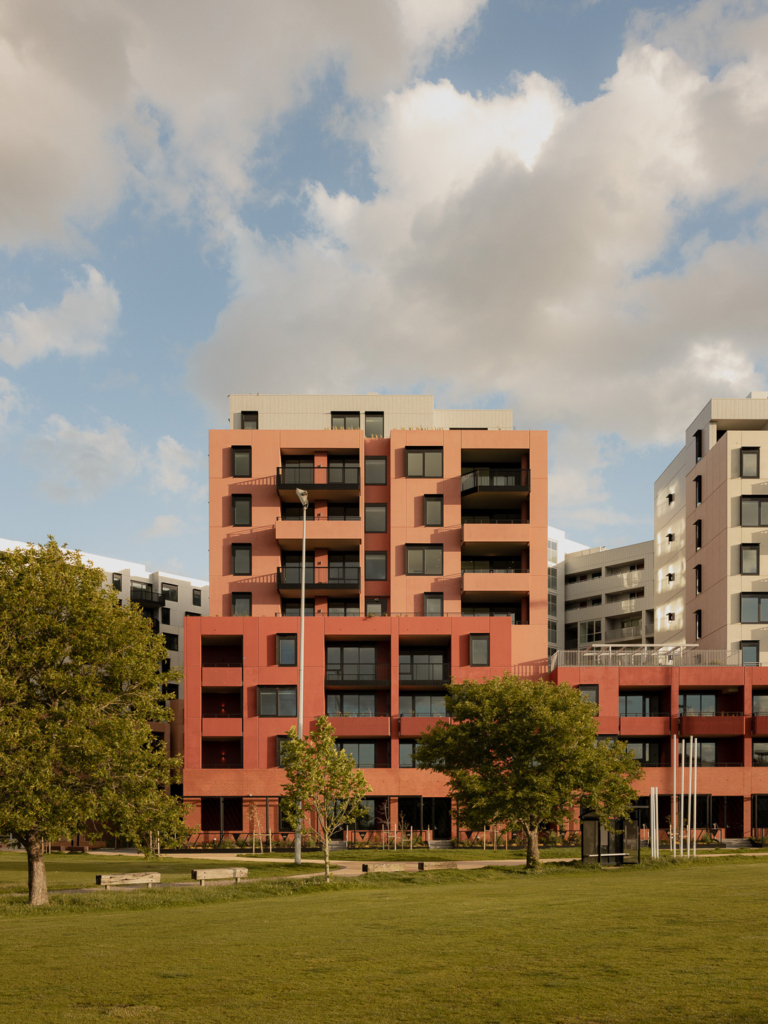
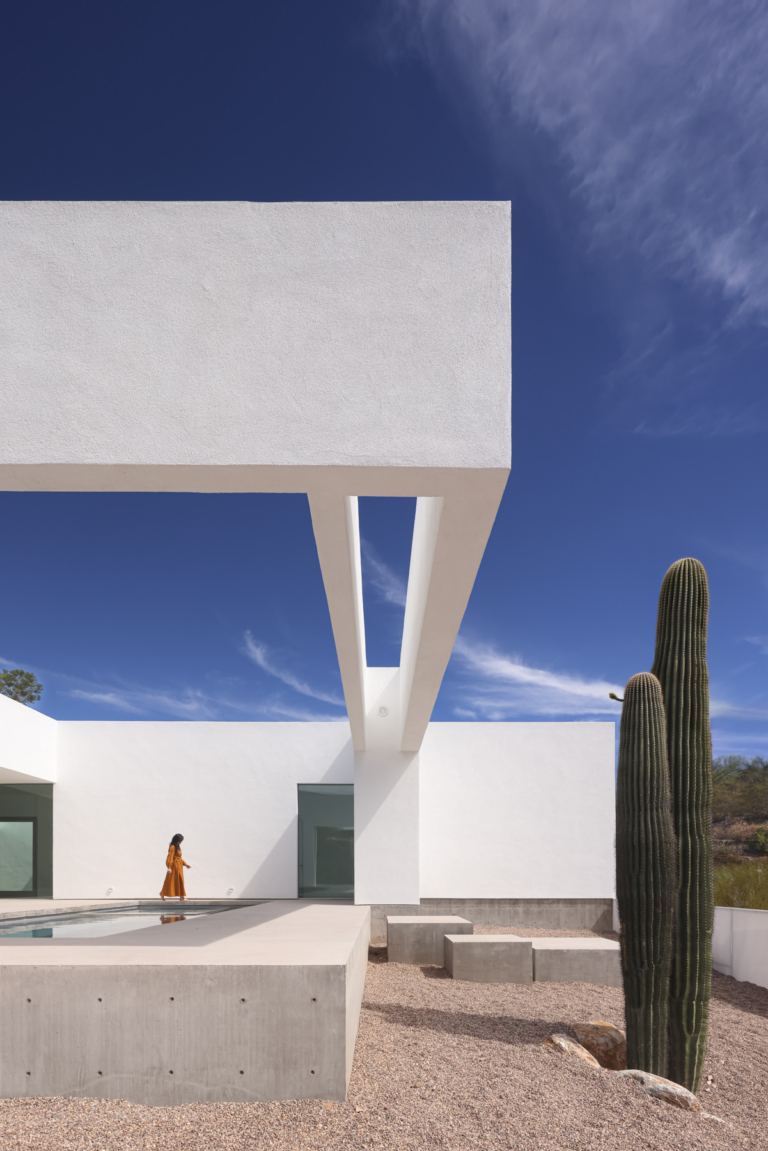
Finalists in both the commercial/multi-residential and residential exterior categories displayed sumptuous use of colour. Greens both subdued and daring feature in New Heritage’s Bell Hill Apartments in Dunedin, Studio Prineas’s restoration of 1890s heritage villa Nithsdale in Stanmore, Sydney, and Lachlan Seegers Architect’s Lane Cove House, also in Sydney. Earthy oranges make dramatic statements in the Harbour Early Learning in Gladesville, Sydney, by Danielle Brustman, Fieldwork’s LIV Albert apartment complex in Brunswick, Melbourne, and as a contrast in the modernist-leaning Sundrift in Somerton Park, Adelaide by Max Pritchard Gunner Architects.
Richards Stanisich opted for a coastal-adjacent blue for its rethink of the striking art deco-style Headland House at Bondi Beach, while Studio Shields employed two Dulux tones for Joy Haus in Mt Eliza, Victoria – a deep, loam-toned burgundy for the lower level and a blue-grey for the upper level. Studio Prineas scored another nod for the dramatic burgundy exteriors of Surry Hills Village.
Hospitality and retail spaces flexed their colour muscles. For its second project for Australian fashion retailer Above the Clouds, Pattern Studio blended soft blue and green with classic cream, while for Kat the Label’s Armadale flagship, Angus Edward, Interior Design Office created a restrained palette of tranquil blue and grey. Bastian Architecture took the sun-drenched palette of Italian beach carts to craft the punchy red- and pink-hued Lunetta Gelateria in Leichhardt, Sydney, while Alexander &CO. incorporated 20-plus Dulux shades for Billy’s, a restaurant in the heritage Ayrburn hospitality precinct in Queenstown, New Zealand.
Subtle clay, chocolate, cream, gold and blue tones appear in myriad hospitality projects: Flaminia restaurant in Sydney by studio gram; the convivial Brisbane eatery Bar Monte by Studio Plenty; Luchetti Krelle’s Cruise Bar & Restaurant in Sydney’s Circular Quay; and Caness by Squillace Architects + Interiors, a Middle Eastern-inspired tapas bar, also in Sydney.
Workplace finalists demonstrated that the A&D community now views the 21st-century office as a space for individuality and self-expression. Atlassian’s Melbourne HQ, by Warren and Mahoney, features communal areas in bold blues and oranges; the foyer of Forbes House, the Melbourne workspace of Forbes Global Properties, eschews blandness to embrace a deep, rich blue; and global education company EF’s Auckland campus – by Studio DB and EF Architecture & Design Studio – is an object lesson in rainbow hues, with blues, greens, pinks, yellows and purples all playing an essential role.
The number of shortlisted projects in the Residential Interior category represents nearly a third of the total number of finalists. “The calibre of the entries made it especially challenging to narrow the field,” says judge Sarah-Jane Pyke, principal of Arent&Pyke. Almost every hue imaginable is represented in this formidable line-up of homes, the work of Australia and New Zealand’s most acclaimed architects and designers.
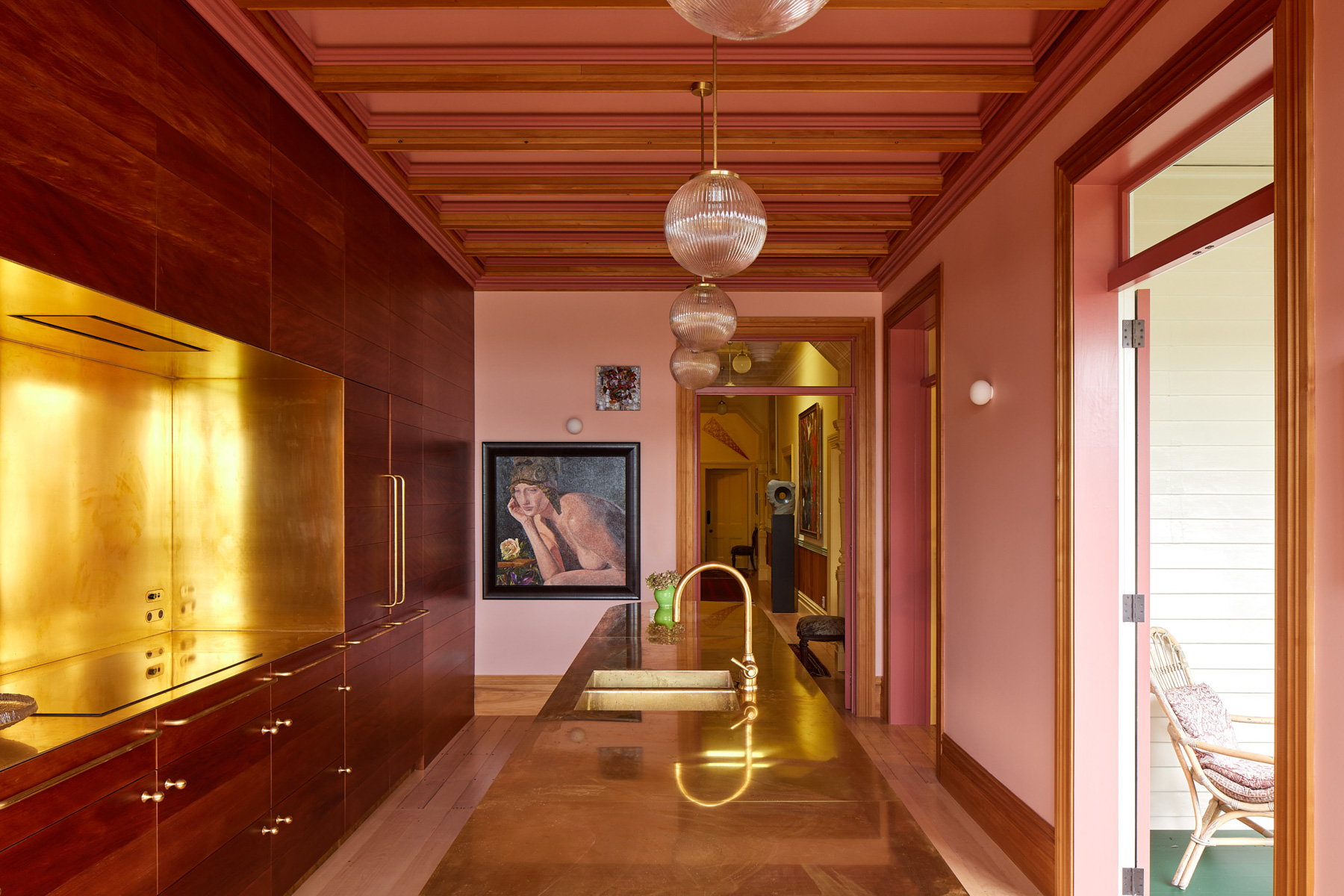
Pinks, burgundies and reds are an omnipresent feature of homes like Auckland’s Waka Huia by Pac Studio, no more so than in the stunning kitchen where furniture-like cabinetry is offset by rose-pink walls and brass accents; in the bold kitchen of Onward House by Pop Architecture; and in Milanese Pied-à-Terre by Studio Tali Roth, a reimagined Victorian residence in Melbourne’s Princes Hill. Blues and greens are the star attractions of Botanical House in South Yarra by Mim Design, particularly in the 1960s-inspired study; Gordon House, a century-old Federation home reinvigorated by Greg Natale; and Sunset House by Decus, where both shades intermix to imbue the house with a deep sense of calm.
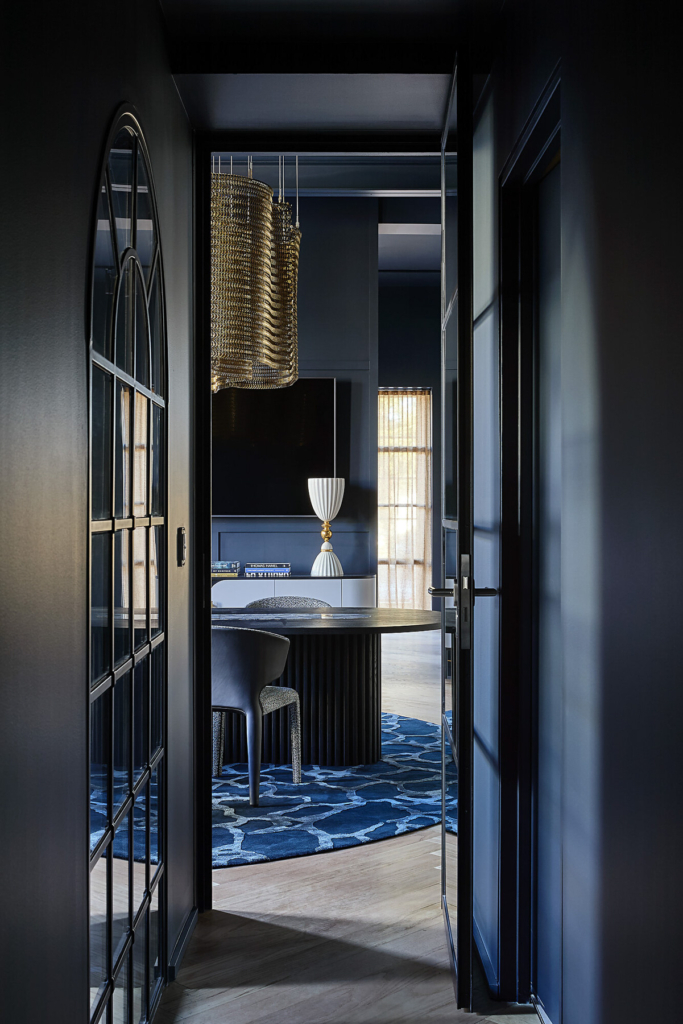
Then there are the residential finalists where colour combinations are employed to extraordinary effect. Like in Bellingen Home by commonplace, where blues, peaches, oats, maroons and pinks mingle seamlessly throughout the spaces, or Kaiko Design Interiors’ Ribbon Stair House which, the designer says, “refuses the middle ground”. In Bradford, the Melbourne home of restaurateurs Zoë Rubino and Emilio Scalzo, Studio Co and Co unites Dulux shades including Bottle Green, Moroccan Leather and Warmed Wine to stunning effect. Ruby Shields of Studio Shields creates the same multi-hued magic in two projects, The View and the aforementioned Joy Haus, perfectly embodying everything the Dulux Colour Awards stand for – boldness, ingenuity and design that is both purposeful and a joy to live with.
The winners of the 2026 Dulux Colour Awards will be announced on 27 May at the Sydney Opera House.