El Grove
At the intersection of agriculture and crafted skill, El Grove presents a village of humble pavilions in harmony with the fertile landscape, grounded in respite and utility.
Residing amid the abundant soils of Mexico’s wine country, a triangular site marks the intersection of agriculture and craft. Tinged with red-hued earth and endless rows of verdant crops, the Valle de Guadalupe region is a celebration of the land that sustains its people. El Grove by Olson Kundig is an expression of custodianship through the integration of deep-rooted traditions – a collection of simple buildings bound by enduring community.





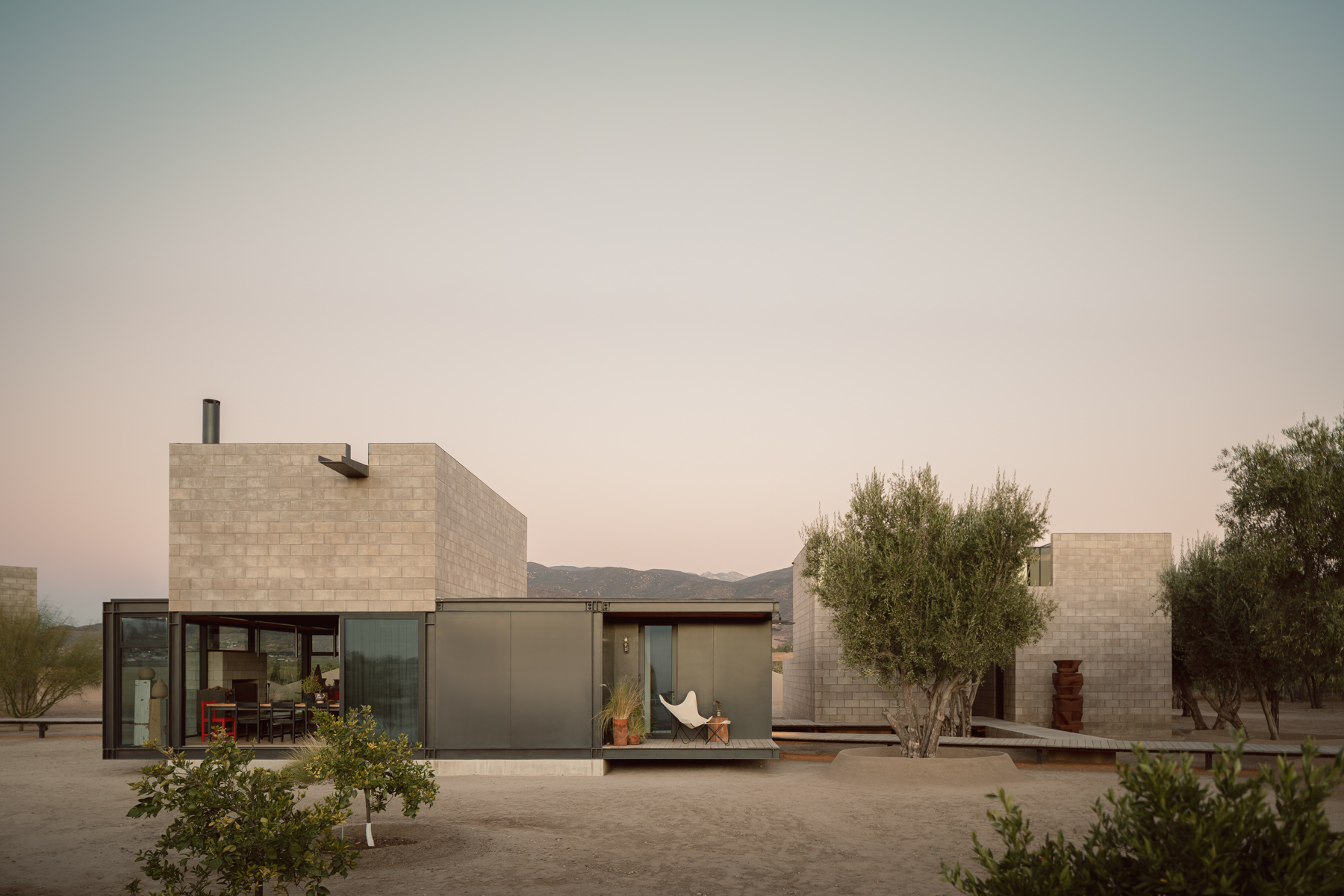
Serving as both a private residence and a gathering place for locals, the project takes cues from the surrounding vernacular to reinvent ideas of containment and circulation. “The client and I met through a friend of a friend,” notes design principal Tom Kundig. “They were drawn to the region’s winemaking and art community and wanted to create a vacation home for their young family.” In response to an atypical brief, pieces of the close-knit household are carefully dissected to instil a granular scale upon the site – separate pavilions united by a raised timber boardwalk that seemingly floats over the land. Simple forms are resolved around opportunities of unity that make for resilient structures in keeping with the seasonal climate. Honest and understated, the architecture finds beauty in reductive necessity.




Taking on a diagrammatic quality when viewed from above, the dwelling imparts the features of a graphic line drawing by exposing each piece to be reassembled in newfound ways. “The family home is conceived as a dispersed village, integrating architecture and landscape within the agrarian context of the valley,” explains Kundig of the primary architectural gesture. A strong feeling of community runs throughout the abode, devised to celebrate and support provincial trades and craftspeople. “During construction, the builder-client engaged Mexican artisans, allowing their skills and local techniques to inform the home to reflect the culture and craftsmanship of the region,” he adds. Masonry block, steel and concrete are assembled to convey a familiar functionalist language, while salvaged components and hand-shaped earthen mounds reference ingrained farming traditions.
Encircled by a blockwork wall that neatly defines the three-sided plot, one is afforded fleeting glimpses of this inner sanctum through a series of vertical slots. A canary-yellow garden gate marks the formal arrival sequence that leads across a tree-lined timber walkway towards the communal heart. “Within the main house, the kitchen and living area are contained in a blackened steel volume with an eight-foot ceiling, a floating hearth and a kinetic flap that connects the office desk to the outside,” describes Kundig. A generous deck further extends these spaces beneath a cantilevered canopy that offers protection from the summer sun. Bedrooms stand as independent huts to either side of this central shelter, a collection of compact outposts tethered to a low-lying spine. “In a sense, I think of it as a single structure that’s been pulled apart into the natural environment, offering an experience that prioritises the larger landscape above anything else.”
A vessel for coming together, the interior provides a canvas for cultural expression where cherished art and sculpture permeate within.



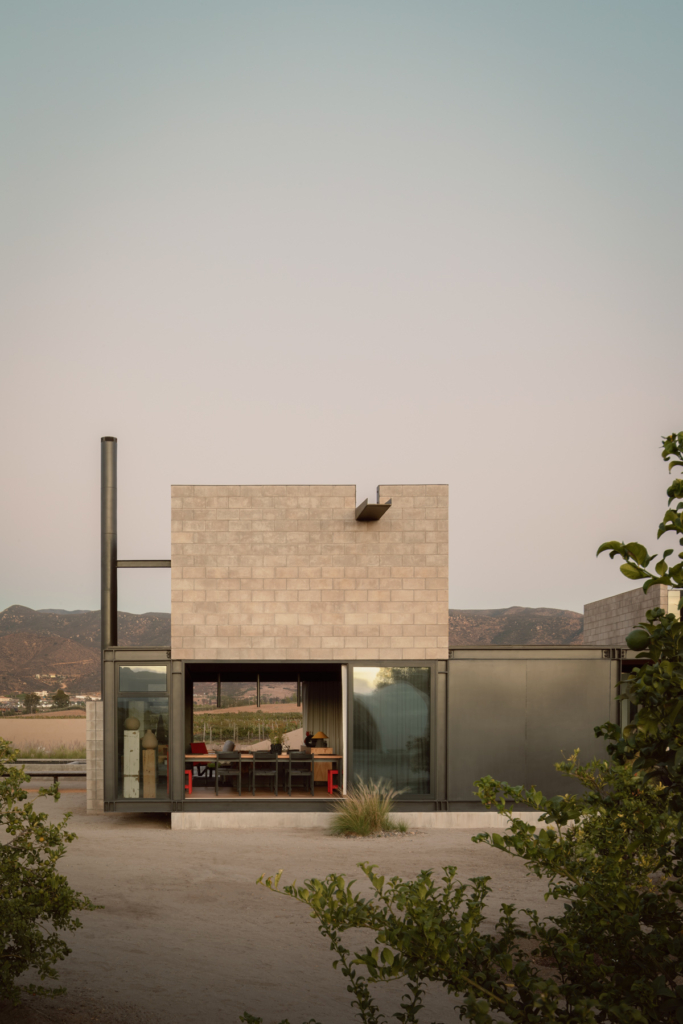
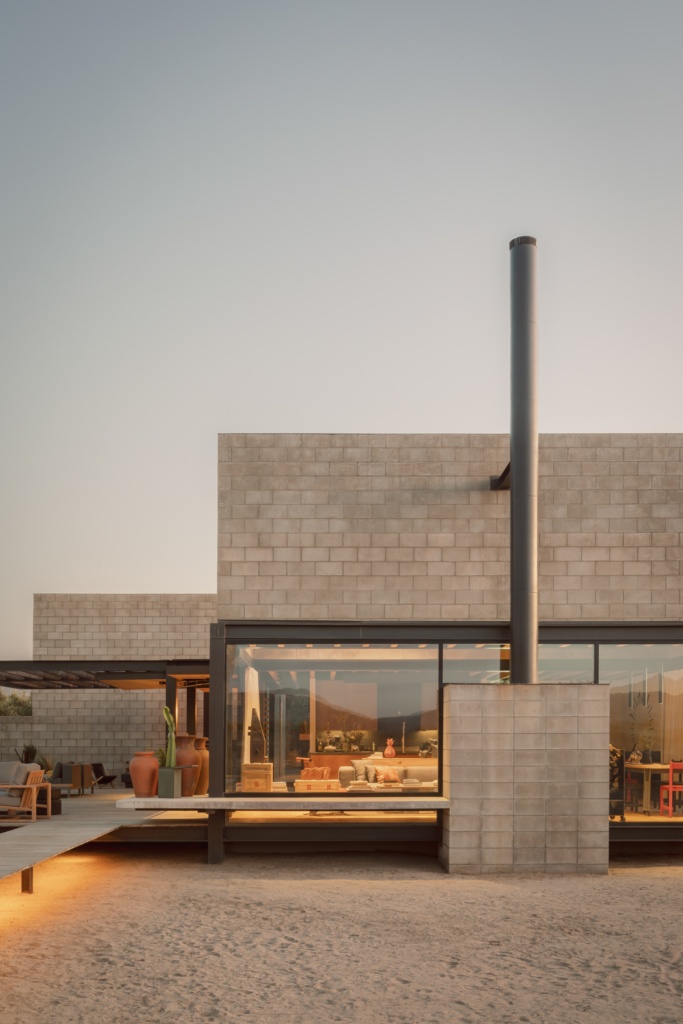
A recurring palette of metal and concrete masonry shapes El Grove’s exterior. The new construction is low maintenance and inherently robust in the spirit of its rural origins. “Commodity materials like masonry units and plywood are paired with custom steel components to form a series of modest buildings that blend into the surrounding olive grove,” explains Kundig. Blockwork hats rest atop glass facades in a careful balance between mass and transparency. A marked sense of simplicity resides in the elemental insertions that adorn the exterior. Folded gutters slice through parapet walls, while a wide flange beam braces an offset chimney flue, reinforced by the expressed frames that trace the margins of these functional follies.
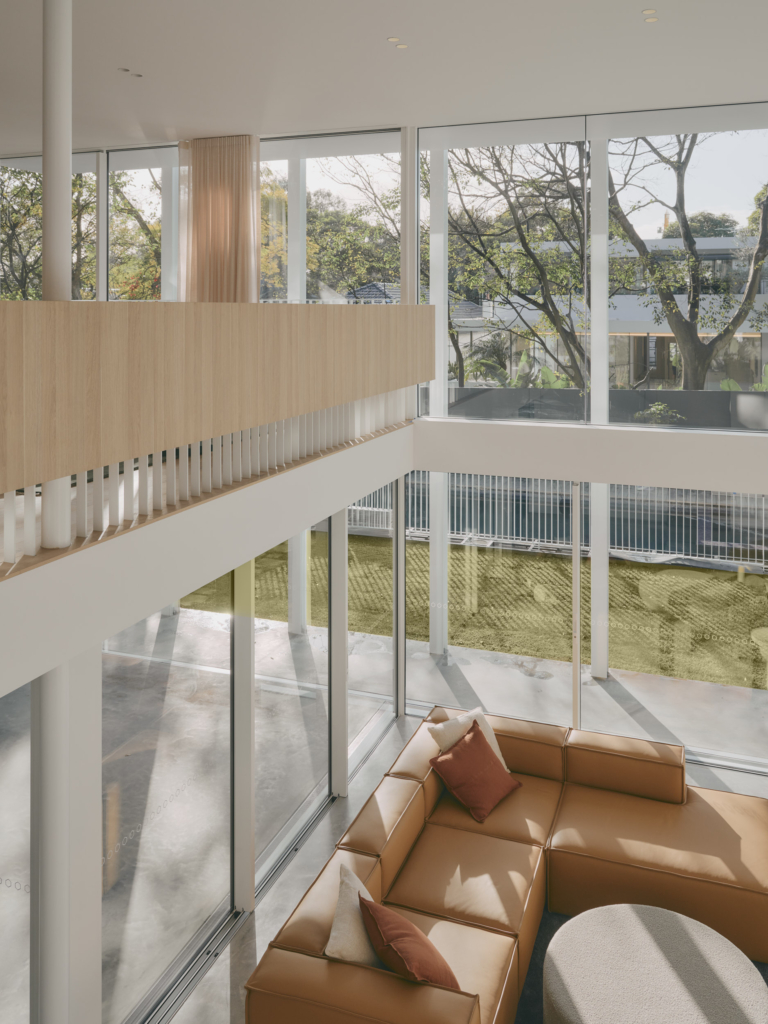
Moving inward, warm timber tones highlight the beauty of this simple assemblage. An effortless rhythm is defined by the constraints of modularity to bestow a tactile human scale upon every surface. Chunky rafters glide from edge to edge against a backdrop of subdued mortar lines in a display of regional finesse. Tall ceilings make for improved airflow, while sliding glass apertures encourage natural ventilation and flexibility through a tactile exchange. A vessel for coming together, the interior provides a canvas for cultural expression where cherished art and sculpture permeate within. “The house becomes a living gallery and a gathering place for artists, fostering connection between the home, its occupants and the broader cultural landscape,” says Kundig of the creative pursuit.
Reinforcing the valley’s agricultural traditions, the immediate surrounds are both curated and soft. Olive trees, native grasses and other drought-tolerant species thrive with minimal intervention, clustered around elevated pathways, terraces and a tranquil pool that reflects the changing sky. “The site’s sandy soils allow excess water to leach naturally back into the ground, replenishing the aquifer and maintaining a balanced hydrologic cycle.” An array of earthen mounds rise to flank the north-east boundary as semi-enclosed outdoor zones – discrete amphitheatres for stargazing amid a protective conical embrace. By resting lightly on this fertile land, historic trails are kept intact for wildlife to roam and the sounds of nature to envelope this disparate abode.
Distinctly of its place and in harmony with provincial tradition, El Grove by Olson Kundig sits quietly in its desert outcrop as a beacon for collegiality. A series of humble shelters spread across this wedge-shaped site in an ode to the farmhouse buildings that pepper the valley floor. This is architecture in tune with its locale – an open invitation for respite and community.