Haiku House
Haiku House is a curated expression of cultural roots and neighbourhood origins. Echoing the nostalgia of a bygone era, this Victorian abode is elevated by Japanese craft and enduring connection.
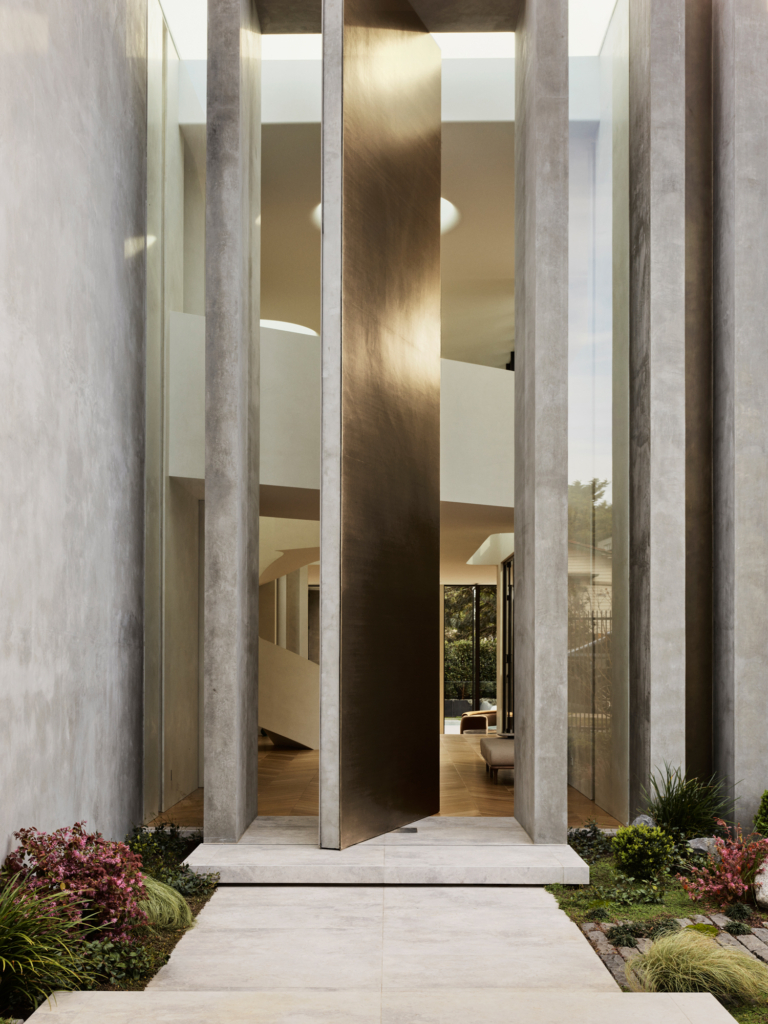
Standing proudly in the bohemian backstreets of Melbourne’s Brunswick East, a narrow site pays homage to the memory of a grand Victorian. Comprising a two-storey brick and cast-iron facade, the home is reconceived through an array of light-filled spaces imbued in the wonder of Japanese craft. Haiku House blends cultural expression with the sanctity of daily ritual in a dialogue between past and present.


Reimagined by Steffen Welsch Architects and Kim Kneipp Studio around the idea of togetherness, the house is a reminder of the beloved spirit of the former abode, while serving the demands of a family of five. “The clients first met in a terrace in their twenties – this is a nostalgic return to that way of living, expanded to hold their three growing children,” explains interior designer Kim Kneipp. “They value both activity and downtime, and sought a place that had room for work, study and play.” Wedged between party walls, the house reaches skyward while pushing out into the garden sphere for a heightened relationship with nature.
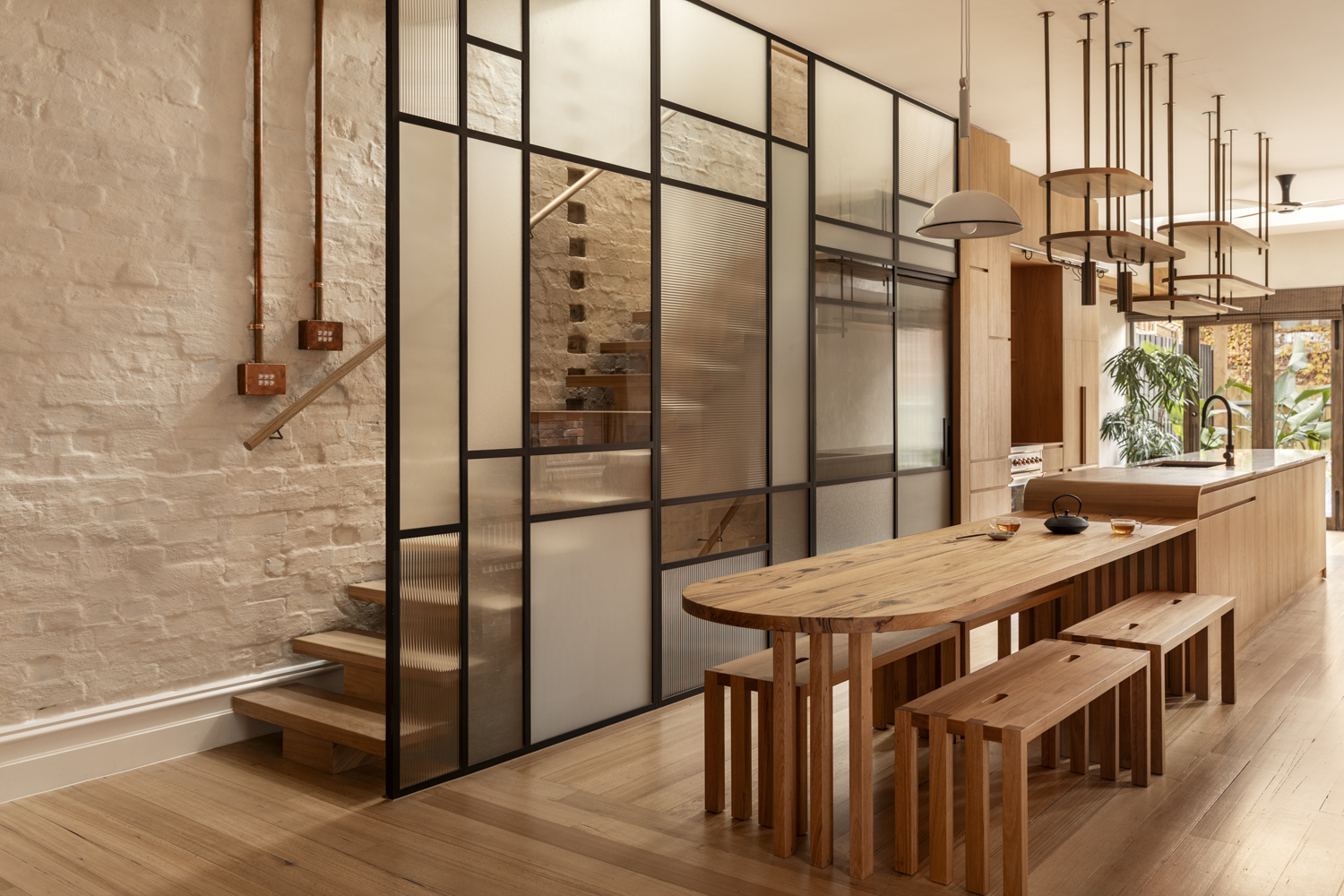
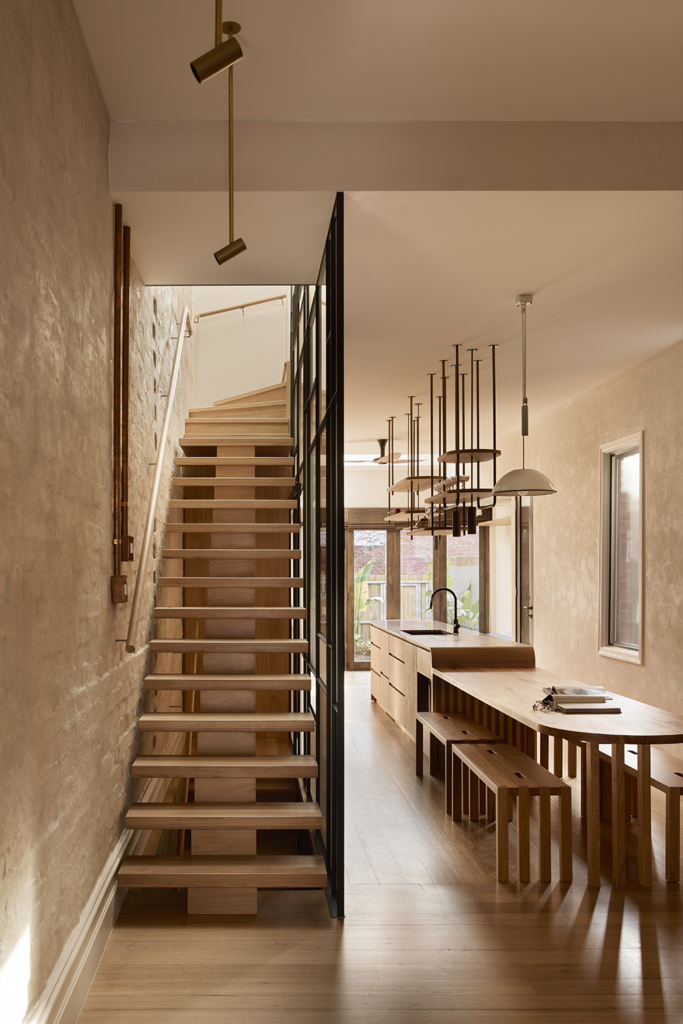
In a poignant move to expand the heart of the home, the original stair finds a new position for an open spatial arrangement. Daylight permeates rooftop apertures and clerestory glazing as a radiant backdrop to a reductive palette. “Our studio intensified this with an open stair profile and a slender shoji-inspired glass balustrade wall for visual continuity between levels,” describes Kneipp. A sense of verticality builds to celebrate the soaring ceilings of the 1890’s architecture, underpinned by delicate Japanese proportion.
Against textural bagged brickwork and square-set ceilings, Blackbutt timber takes centrestage, adorning floors, treads and cabinetry. Every element displays exquisite resolve in an expression of the owner’s values. “Joinery was conceived as a Swiss Army knife of practicality yet is visually calm, demanding meticulous junctions and millimetre-perfect optimisation,” says Kneipp. Tiberio honed marble becomes a focal kitchen surface, paired with glossy handmade tiles in a nod to enduring craft. “A subtle kinship is drawn between Victorian and Japanese traditions: narrow, sequential forms that achieve generosity through rhythm, thresholds and material honesty.”
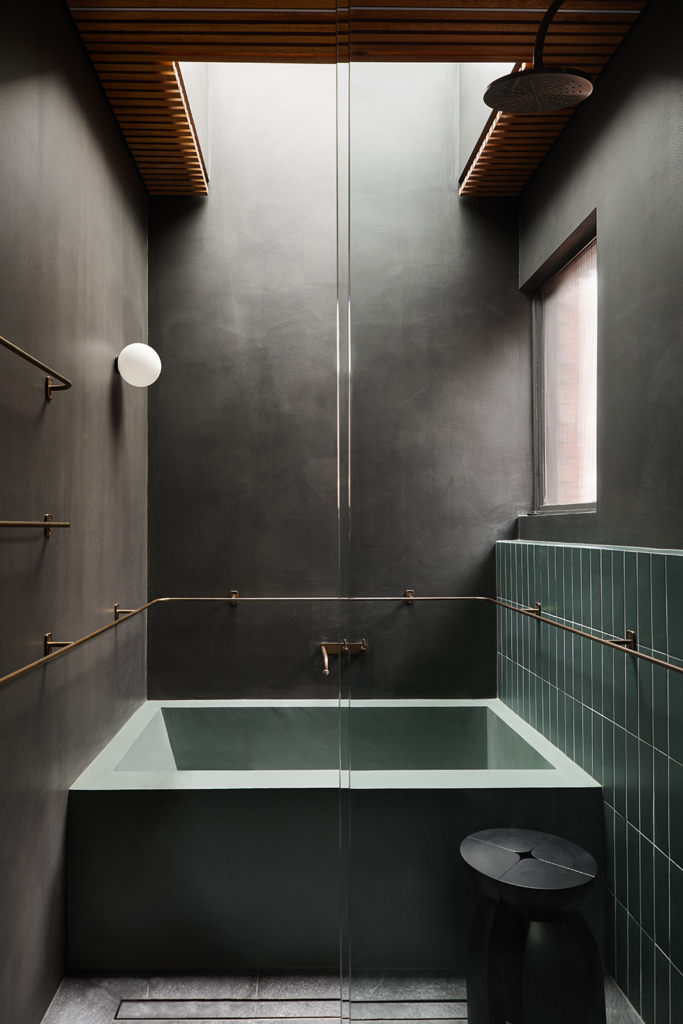
A series of thoughtful gestures serves to echo the neighbourhood’s industrial origins. Oiled brass rails and expressed conduits harken the raw utility of a bygone area, interspersed by understated opulence. Supporting the simple joys of cooking, bathing and relaxation, a basement undercroft holds amenities and a compact kids retreat, while a small carved out roof space offers a quiet hangout with city views. Respect and understanding are evident across this home. “During a long, complex build, Haiku emerged as a way to distil both the design language and our client communications, guiding restraint in materiality, rhythm in proportion and moments of pause,” recalls Kneipp.
Amid edgy inner suburbia, Haiku House is a tranquil response to the histories of a storied neighbourhood. The architecture moves between restoration and reinvention in deep respect for this Victorian home while looking to the craft of Japanese tradition. Formed by care and personable connection, this is an intergenerational dwelling devised to shift with time.
Architecture by Steffen Welsch Architects. Interior design by Kim Kneipp. Build by Transform Homes. Landscape design by Straw Brothers. Joinery by Woodcraft Mobiliar and Callum Matheson. Appliances by Fisher & Paykel. Stone by Artedomus. Tiles by Tiles of Erza. Tapware by Brodware.