Cosentino
Innovative, sustainable and technically advanced, Cosentino’s high-performance surfaces continue to define the evolving language of contemporary architecture and design.
Cosentino’s ongoing commitment to research, material innovation and responsible manufacturing underpins a portfolio that responds to the needs of modern living. That’s evidenced in the company’s latest brand, ĒCLOS, an inlayered mineral product with zero crystalline silica that presents a landmark new category in the global surfaces industry.
Across Australia, a new generation of residential and commercial projects demonstrates how Cosentino’s surfaces – including ĒCLOS, Dekton, Silestone QXeron, Sensa and Scalea – support architects and designers in crafting spaces that are as refined as they are enduring. Through a considered balance of durability, low maintenance and aesthetic clarity, these materials enable a cohesive design language that extends across kitchens, bathrooms and living zones as well as outdoor environments.
This approach is embodied in three recent projects that demonstrate how material consistency and performance are integral to architectural outcomes. Each project reflects a distinct response to site and brief, yet all are unified by a shared emphasis on longevity, restraint and a seamless integration of surface and space.
Through a considered balance of durability, low maintenance and aesthetic clarity, these materials enable a cohesive design language.
Set on Brisbane’s bayside, SOL – Manly Terraces by Darren James offers a highly resolved interpretation of contemporary coastal living. As the first of two architecturally designed terrace homes, the project embodies a holistic design and construct methodology, where architecture, interiors and detailing are conceived as a singular expression. The result is a home defined by clarity: light-filled, composed and quietly sophisticated.
At the centre of SOL is a restrained material palette that prioritises performance and cohesion. Dekton by Cosentino is used extensively throughout, spanning kitchen benchtops, stair treads, internal wall cladding, wet areas and the outdoor kitchen. This continuity reinforces the home’s architectural intent, allowing surfaces to flow seamlessly between spaces while maintaining a consistent visual language.
Dekton by Cosentino is used extensively throughout, spanning kitchen benchtops, stair treads, internal wall cladding, wet areas and the outdoor kitchen.
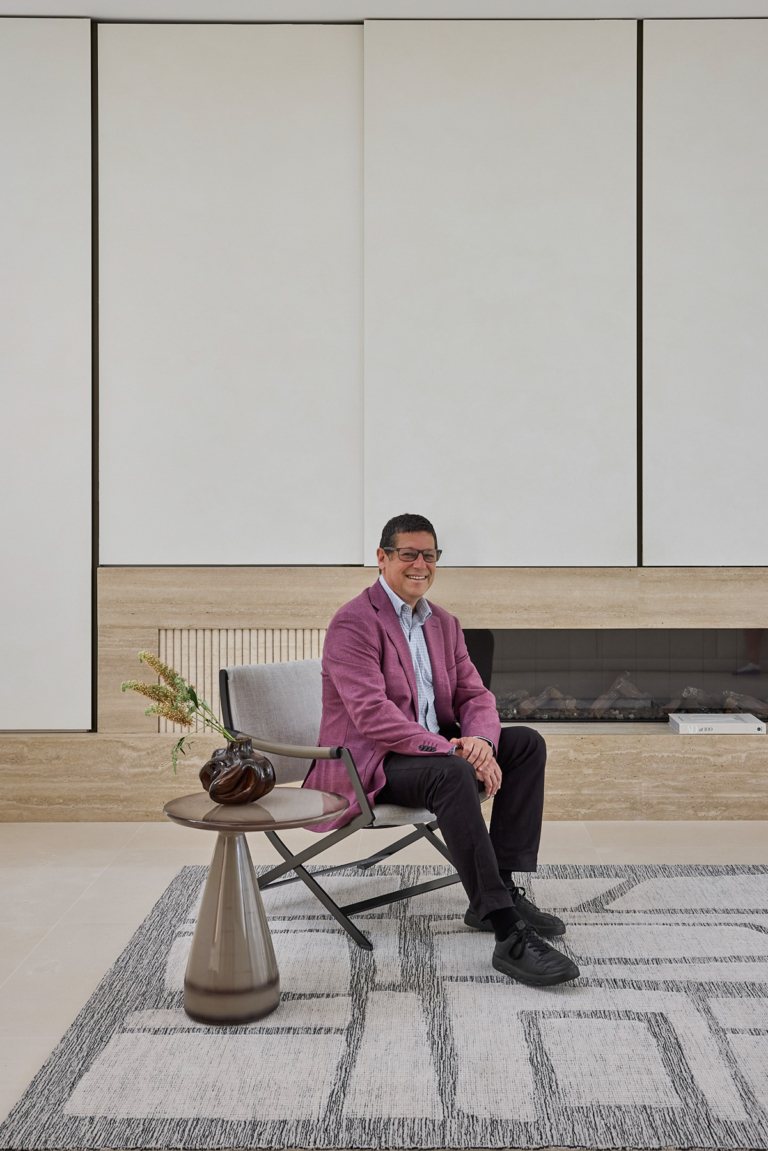
“SOL was designed around a very minimal, architectural approach, so the material palette needed to feel restrained but still perform at a high level,” James says. “We chose Cosentino because it allowed us to maintain that simplicity without compromising on durability, especially given the coastal location.”
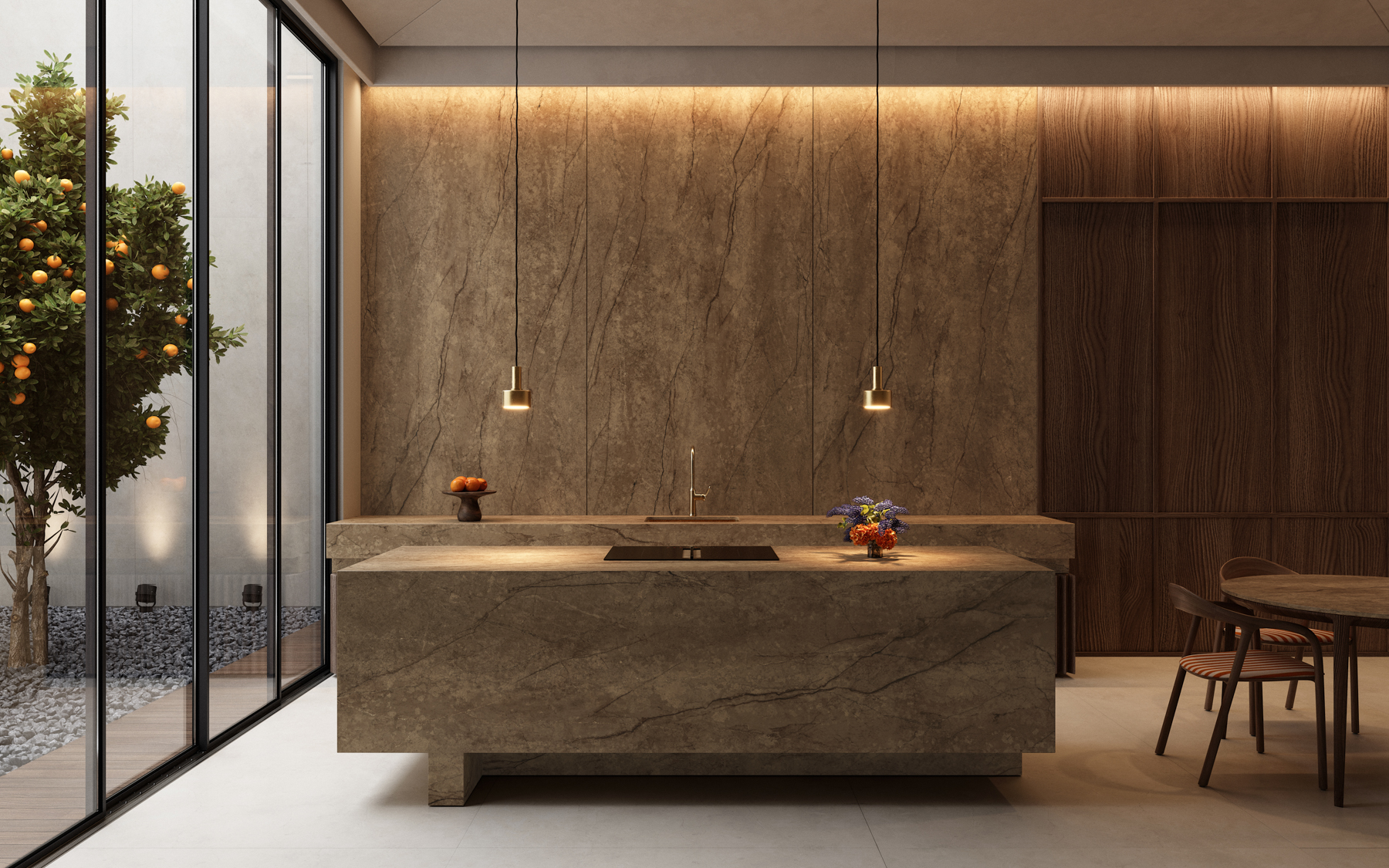
The living area and kitchen bring together warm timber joinery with the refined tactility of Dekton surfaces. In the living room, Dekton Marmorio establishes a calm, textural backdrop, while in the bathrooms, the material is applied to vanities and benches, reinforcing a sense of continuity. Extending outwards, the alfresco zone mirrors the interior palette, with Dekton Marmorio benchtops alongside a built-in barbecue and understated rangehood, creating a fully integrated outdoor kitchen that balances functionality with understated detailing.
“We chose Cosentino because it allowed us to maintain that simplicity without compromising on durability.”
“Dekton played a key role in achieving the overall aesthetic,” James says. “Being able to use the same material across multiple applications reduces visual breaks and keeps the spaces feeling resolved while still being robust enough for everyday living.”
If SOL demonstrates the power of restraint, The Bayview by Belle Casa Interiors explores a more layered expression of contemporary family living. Located in the Gold Coast waterfront suburb of Hollywell, the project responds to both its coastal setting and the evolving expectations of high-end residential design, where practicality and durability are as essential as visual refinement.
“Being able to use the same material across multiple applications reduces visual breaks and keeps the spaces feeling resolved.”
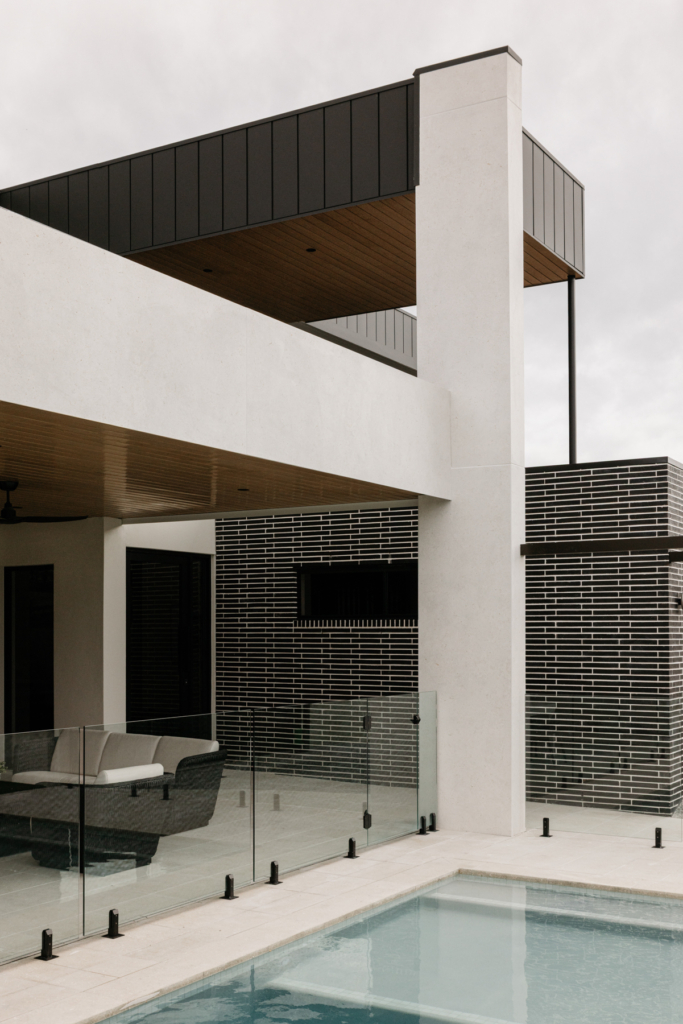
Crafted with a focus on longevity, The Bayview integrates Cosentino’s Dekton across interior and outdoor applications. The exterior is clad in Dekton Polar, a reimagination of Campaspero limestone, featuring a warm beige hue with grey and cream veining.
Using Cosentino surfaces with varying thicknesses enabled a nuanced approach, tailoring to distinct functional requirements while contributing to a unified aesthetic. Thick Dekton Nebu is used in the kitchen, outdoor cooking area and living room feature wall, while thinner Dekton Marmorio adorns a bathroom and the laundry.
Using Cosentino surfaces with varying thicknesses enabled a nuanced approach, tailoring to distinct functional requirements.
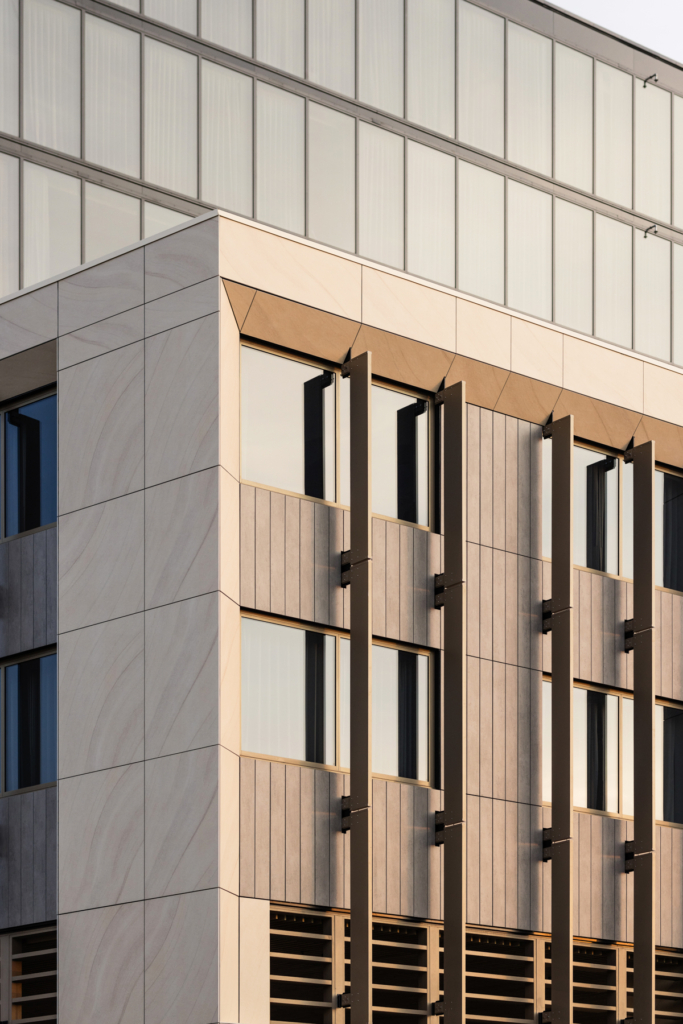
In Tasmania, DoubleTree by Hilton Hobart extends this exploration of durability and refinement into a hospitality context. Designed by Scanlan Architects, the exterior presents a contemporary interpretation of permanence, defined by a restrained palette of neutral tones and robust materials. Cosentino’s Dekton is used extensively here, forming a high-performance facade that responds to environmental conditions and the demands of modern urban architecture. Selected for its resistance to UV exposure, thermal shock and weathering, the material ensures the hotel maintains its appearance over time, even in Tasmania’s variable climate.
After natural sandstone was deemed unsuitable for the facade, the solution for DoubleTree’s key stakeholders was found with Dekton. Four distinct hues – Arenisca AU, Keon, Marmorio and Keranium – allow for subtle tonal variations that create depth and rhythm. Beyond aesthetics, the use of Dekton reflects a broader commitment to longevity and sustainability, simplifying installation, reducing the need for ongoing maintenance and supporting the building’s long-term performance.
Selected for its resistance to UV exposure, thermal shock and weathering, the material ensures the hotel maintains its appearance over time, even in Tasmania’s variable climate.
Together, these three projects illustrate the versatility of Cosentino’s surfaces across a range of applications and scales. From residential interiors to expansive facades, the materials enable architects and designers to work with a consistent palette while unifying contemporary spaces.
Through ongoing innovation and collaboration, Cosentino continues to support the design community in navigating these complexities. Offering materials that are technically advanced and aesthetically refined, the brand plays a pivotal role in shaping environments that are considered in their execution and enduring in their impact.