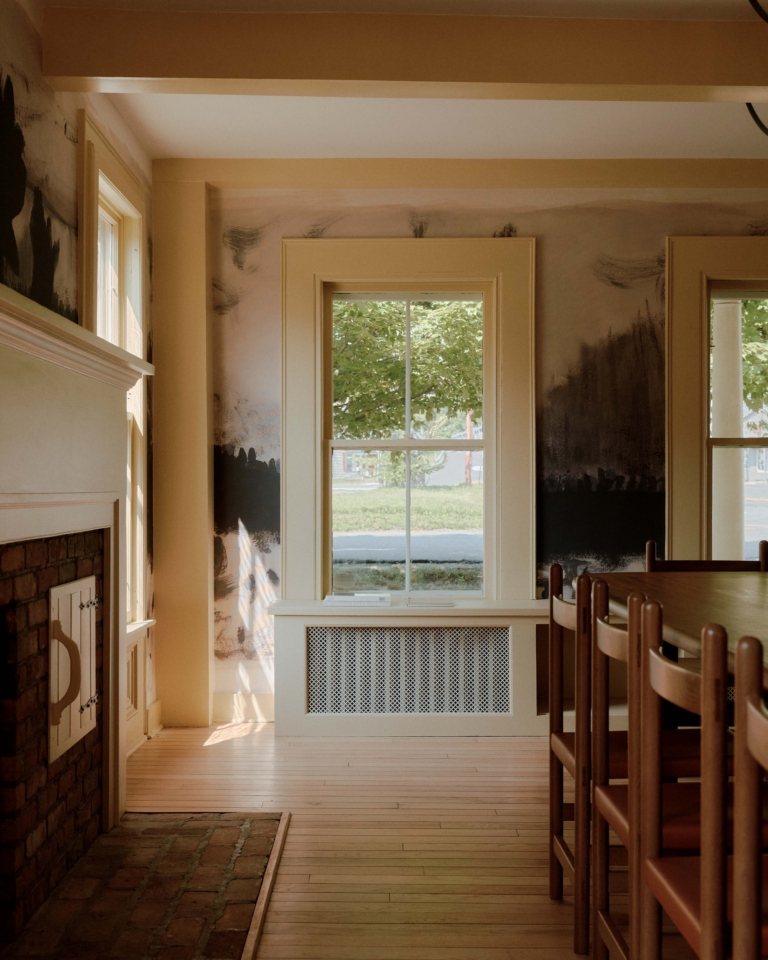
Lane Cove House
Designed with meticulous attention to the area’s industrial and agricultural past, Lane Cove House is a harbour-hugging home that draws its form and logic directly from its site.
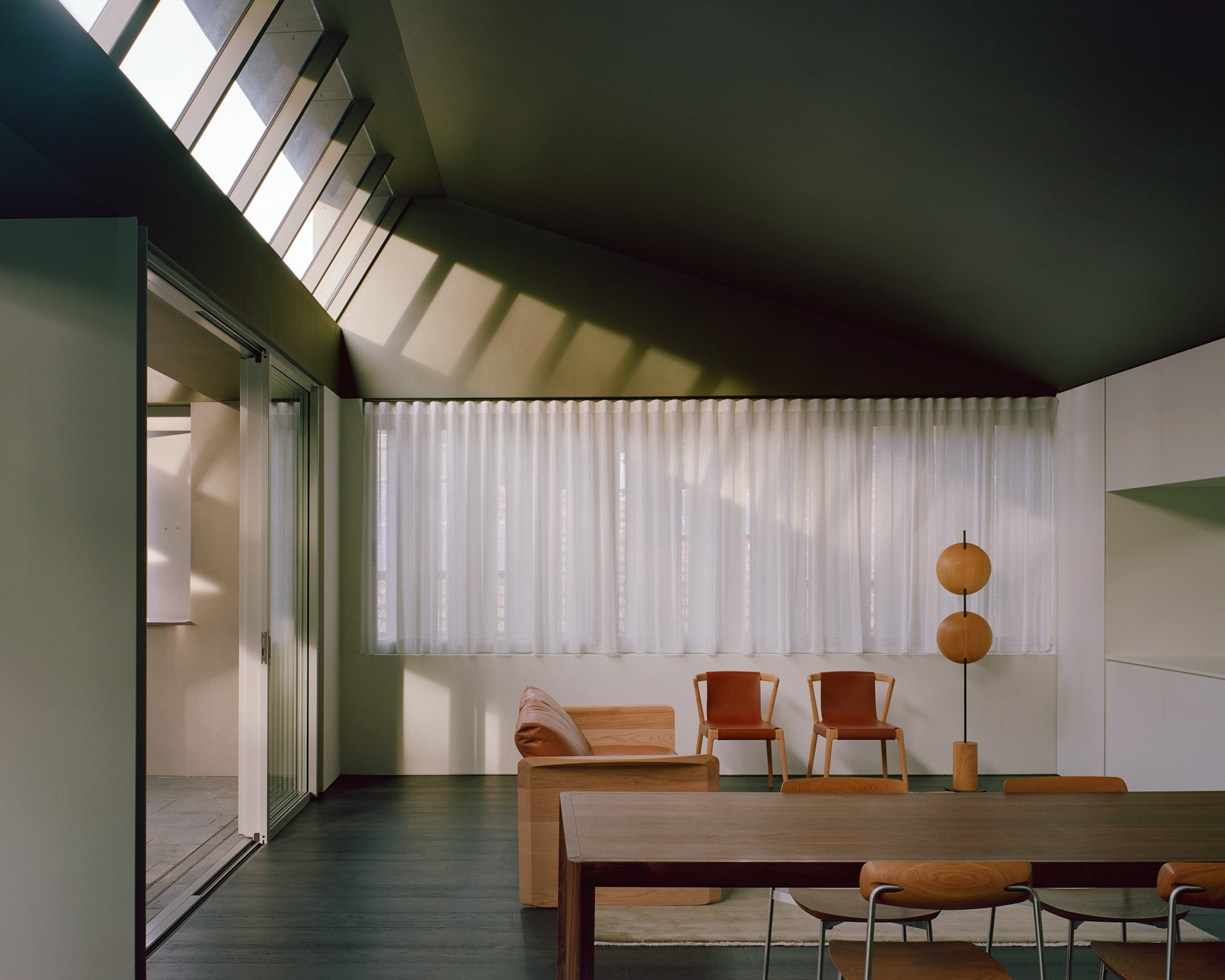
An “awkward patch of land” is how Lane Cove was labelled on a map architect Lachlan Seegers found in a local archive. Following Indigenous occupation, the land shifted from agriculture to industry, shaped by the working harbour and surrounding turpentine forests. As with all of the firm’s projects, research proved pivotal in identifying the build’s central steer. “The most common aspect of our work is distilling an idea to the point where it could be read almost as a logo or a diagram. Here, it is the all-important roof,” he says of the sawtooth form – a trademark feature of factory architecture.

While larger rooms receive broader profiles and smaller rooms steeper ones, the eave details, box gutters and overall spatial logic remain consistent across all seven roofs and their rooms below. Seegers likens the experience to ‘Blue Universe’, an essay by Wolf Prix in which a child wakes in a world where everything is a masterpiece – a concept that has stayed with him since university. “Every room receives the same abundant natural light and dramatic view to the sky, effectively dissolving hierarchy between functions,” he says. “The bathrooms have the same drama as the bedrooms, which have the same drama as the living rooms.” Each space is as equal and as grand as the next.
Arrival is conceived with the same sense of theatre. Rather than choosing between a central or side entry, the sequence becomes a hybrid of Italian and Greek precedents. From street to front door, the journey unfolds through a series of spatial episodes: an open-air forecourt, a terrace overlooking both front and rear gardens, and a landing before entry. “It’s this zig-zag sequence that elongates the sense of arrival,” says Seegers. Inside, an axial circulation spine connects the main living level to the self-contained space below and the garden beyond – a continuous flow from the turpentine tree at the front to the deep shade of another in the rear.
Externally, the building is deliberately robust. Green steel roofing seamlessly sits within the landscape, skirted by privacy screens that line the glazing and extend to the street as fencing. Internally, the green continues to wrap the ceilings of each room, dissolving the boundary between canopy and interior. Walls are restrained, with concealed lighting washing upwards to the ceiling and trees beyond. Marble veining in the kitchen brings the canopy-like patterning inside, while warmth is introduced through furnishings that reference the deciduous trees outside. With pivoting doors and push-to-open joinery throughout, visual noise, if any, remains quiet.
Beneath the grandeur of the glazed sawtooth roof, much of Lane Cove House is defined by the unseen – the calm under the canopy within a structure that is both rigorous and atmospheric.