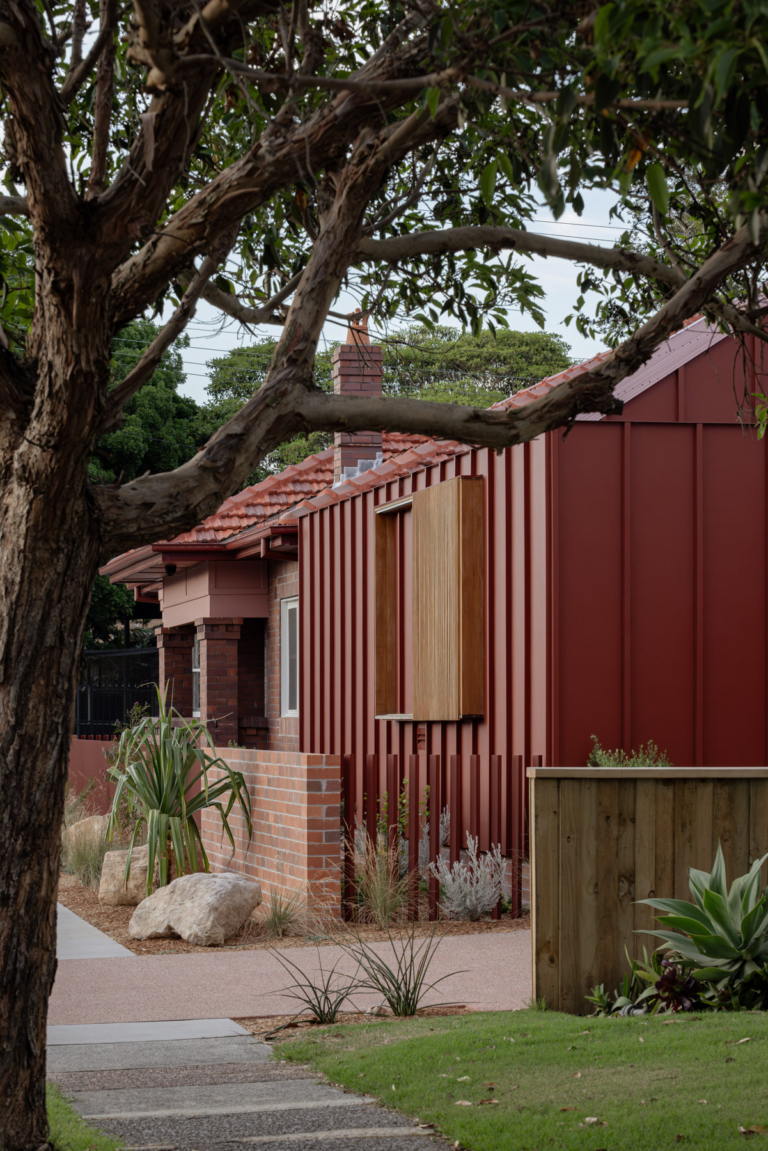
National Park Street
This Newcastle heritage reinvention combines a painstaking restoration of the original period home with a bold and innovative extension, creating an unexpectedly harmonious marriage of opposites.
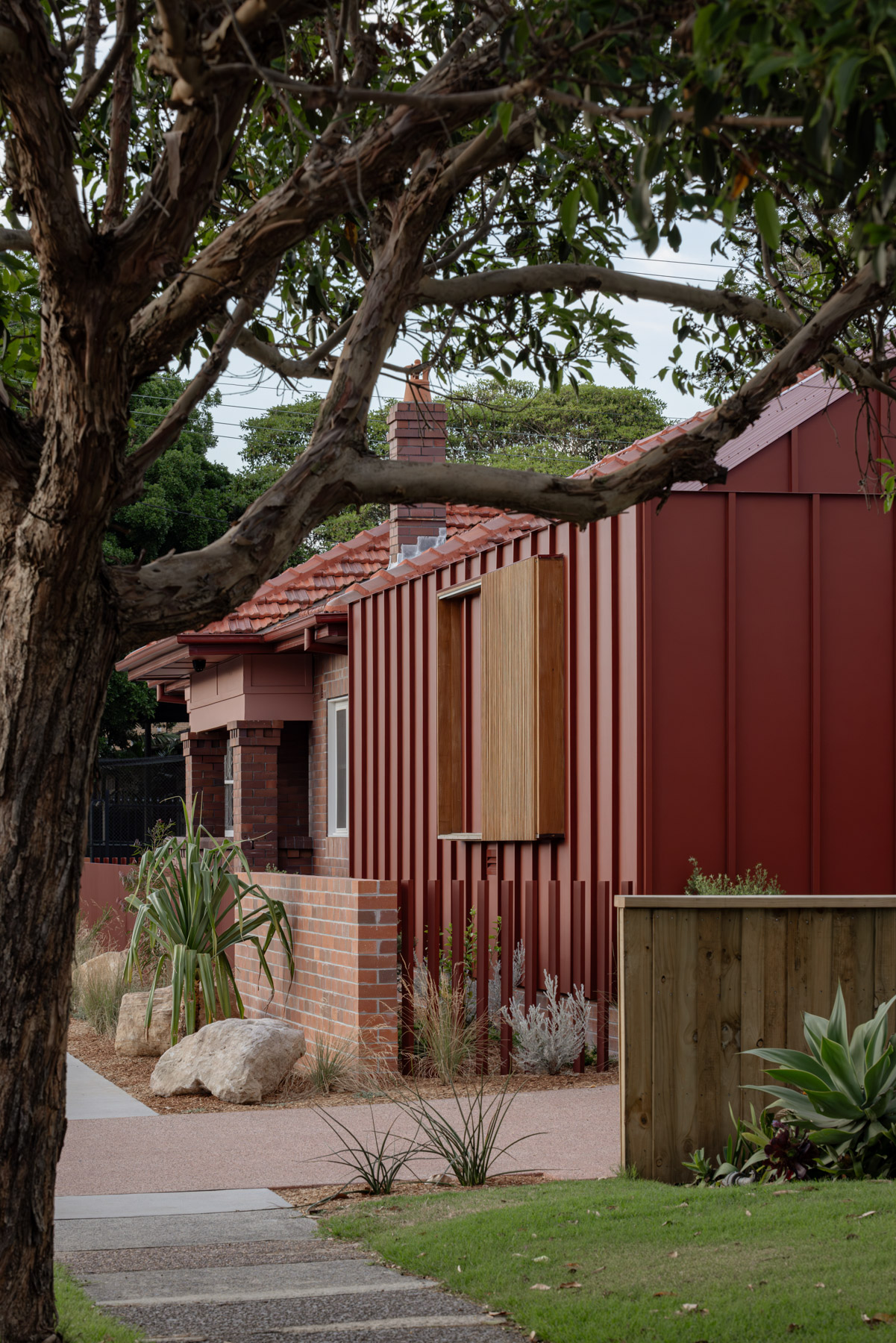
Guy and Madeline Bunder’s wish list for a home for their young family needed to tick multiple boxes – not only the usual suspects (location, space), but also a residence that could balance the best of heritage detailing and contemporary design. “We wanted a brick home with some beautiful heritage features but also one where we could add our own touch and still achieve something architecturally significant,” says Guy Bunder who, as director of architectural construction company MADE Homes, was excited to direct a heritage home into a design-led future.
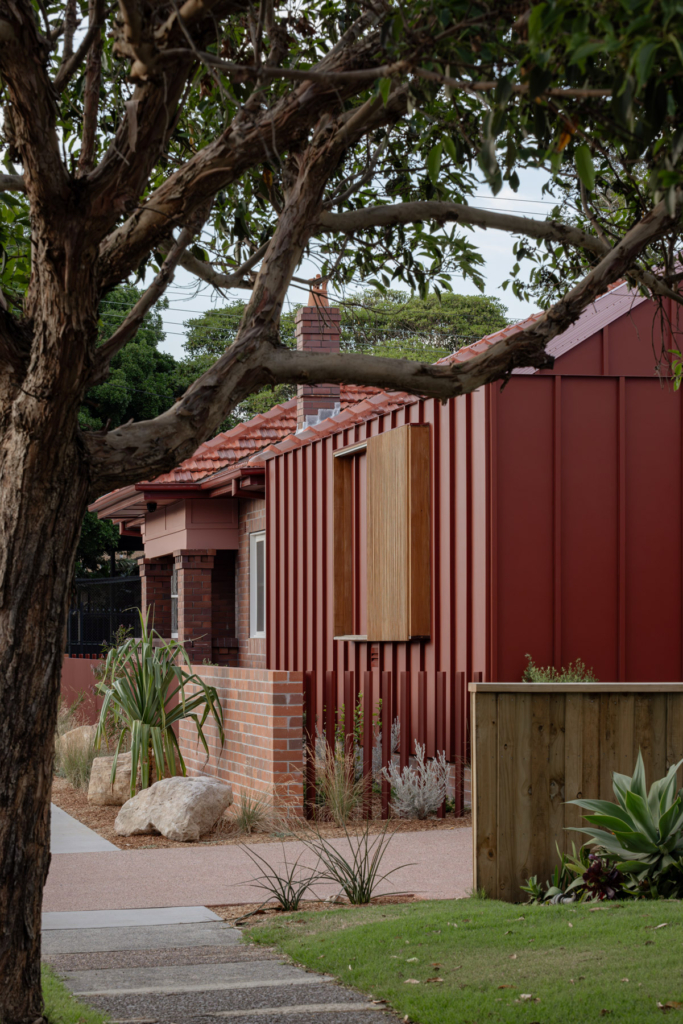
The 90-year-old Merewether dwelling they settled on had plenty of scope for improvement – in fact, it had suffered decades of neglect – but it still had many of its gorgeous heritage features, steeped in history and laboriously crafted character. “The vaulted and ornate ceilings were a huge selling point for us,” Bunder says. “Although the home was extremely dilapidated, we could see the potential impact of these unique features on the finished product.”
How these details would be married with the planned new extension was always going to be a tale of contrast, not replication. “To me, respecting heritage preservation means not trying to imitate historical features,” he says. “Our approach was, rather, to complement the home’s features and the surrounding area with new creative architectural elements.”
Architecture studio Curious Practice was enlisted to design the extension, which it approached from the unique perspective of a grandmother (the existing heritage home) talking to her granddaughter (the new extension). “I thought this idea was clever and we embraced it through the design process,” Bunder explains. The clearest site of this ‘conversation’ is the transition point where the old residence meets the new, which is marked by an explicit distinction. “The original detailed architraves give way to square-set doorways and windows, and the ornate ceilings of the existing home transition to square-set ceilings, though we used the same warm paint colour to maintain a connection throughout the home.”
Old and new spaces are designed around a consistent 2,400-millimetre horizontal plane, a subtle yet significant architectural device that links both parts of the home. Bunder explains that this marks the height of the internal panelling and the pitch point for the vaulted ceilings in the extension, while, on the exterior, it forms a detectable DNA link between the ‘grandmother’ and the ‘granddaughter’.
“Externally, the architect designed a consistent datum parapet wall around the perimeter of the home, which was achieved with a series of complex box gutters and roof structures. This minimalist external form enabled the walls to frame the unique pitched roof of the extension. The roof is an important architectural element, used to pay homage to the roof pitch of not only the existing home but the surrounding heritage conservation streetscapes.”
While respectful of heritage, National Park Street is very clearly designed for contemporary family life, with an emphasis on outdoor living and harmoniously interconnected zones. Bunder describes it as “a courtyard-style home connected around functional external spaces”. The extension envelops the main outdoor living area and pool, enabling the couple to supervise their two young girls from several points throughout the home.
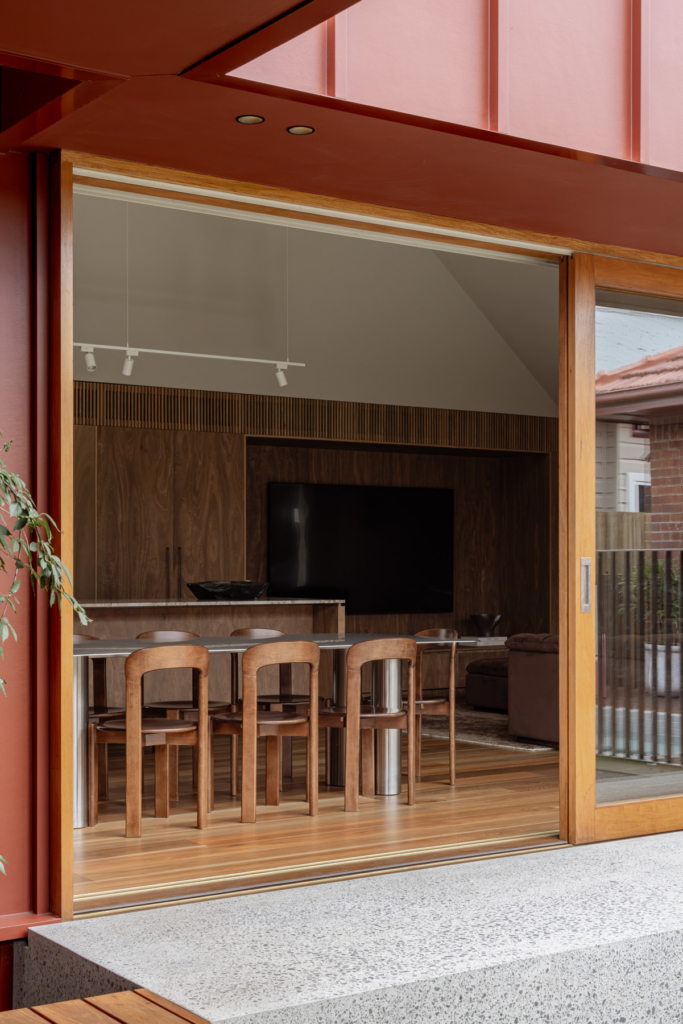
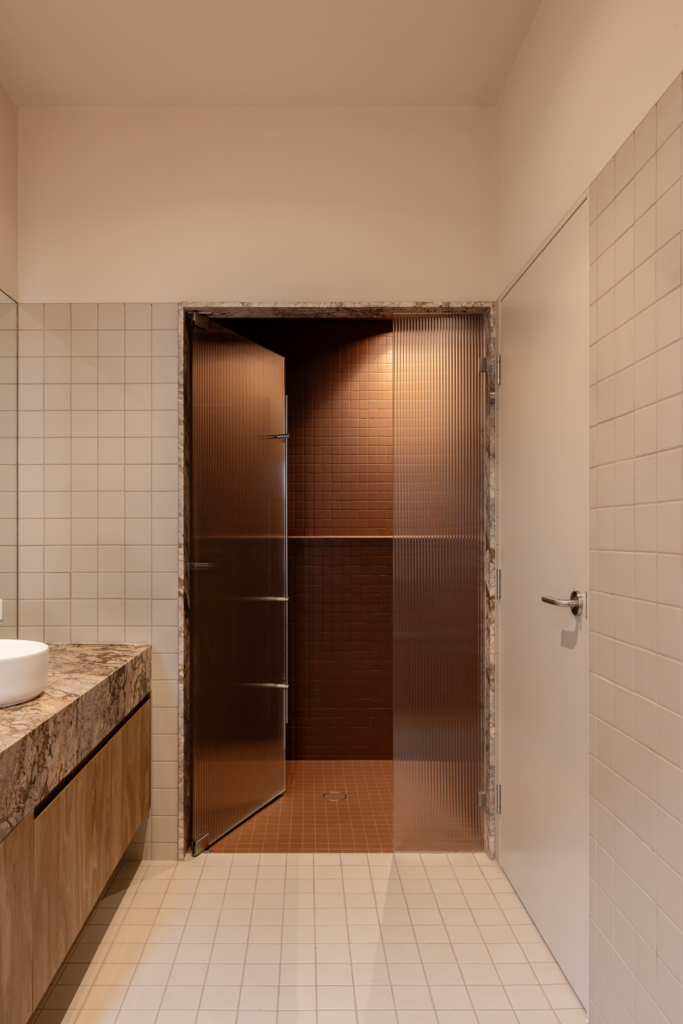
Above all, Bunder says, “The key thing for us was to create a warm home that was architecturally inspired but still felt humble and welcoming.” To capture this ethos, the design leans on a toasty material palette, which takes the dwelling’s original red bricks and terracotta roof tiles and doubles down on the warmth. The extension is boldly clad in COLORBOND Manor Red, which meets the couple’s desire for the external form to be “challenging but architecturally inspired”.
Internally, the palette is minimalist but consistently characterised by rich natural materials: spotted gum, fired earth tiles from Surface Gallery, Crimson Rose marble and hardwood panelling. The front rooms, part of the original home, are more deliberately neutral: still warm, but studiously simple to allow the original ornate features – painstakingly preserved and rebuilt architraves, ceilings and leadlight windows – to shine.


