Outpost
Hidden in the Hollywood Hills, Outpost by interior designer Marco Zamora and the team at Ome Dezin sits on a peaceful outlook floating above Los Angeles, weaving nature into every corner and offering isolation without disconnection.
The 1950s Mediterranean-style residence was not without charm, but it called for careful consideration. “Our approach was less about reinvention and more about holding onto the architectural moments that carried history and intention, while reshaping the parts of the home that needed to evolve,” says Zamora. “Original features like the curved arched windows remained anchors, while elements such as the interior doors were entirely redesigned, allowing old and new to coexist with clarity and ease.”

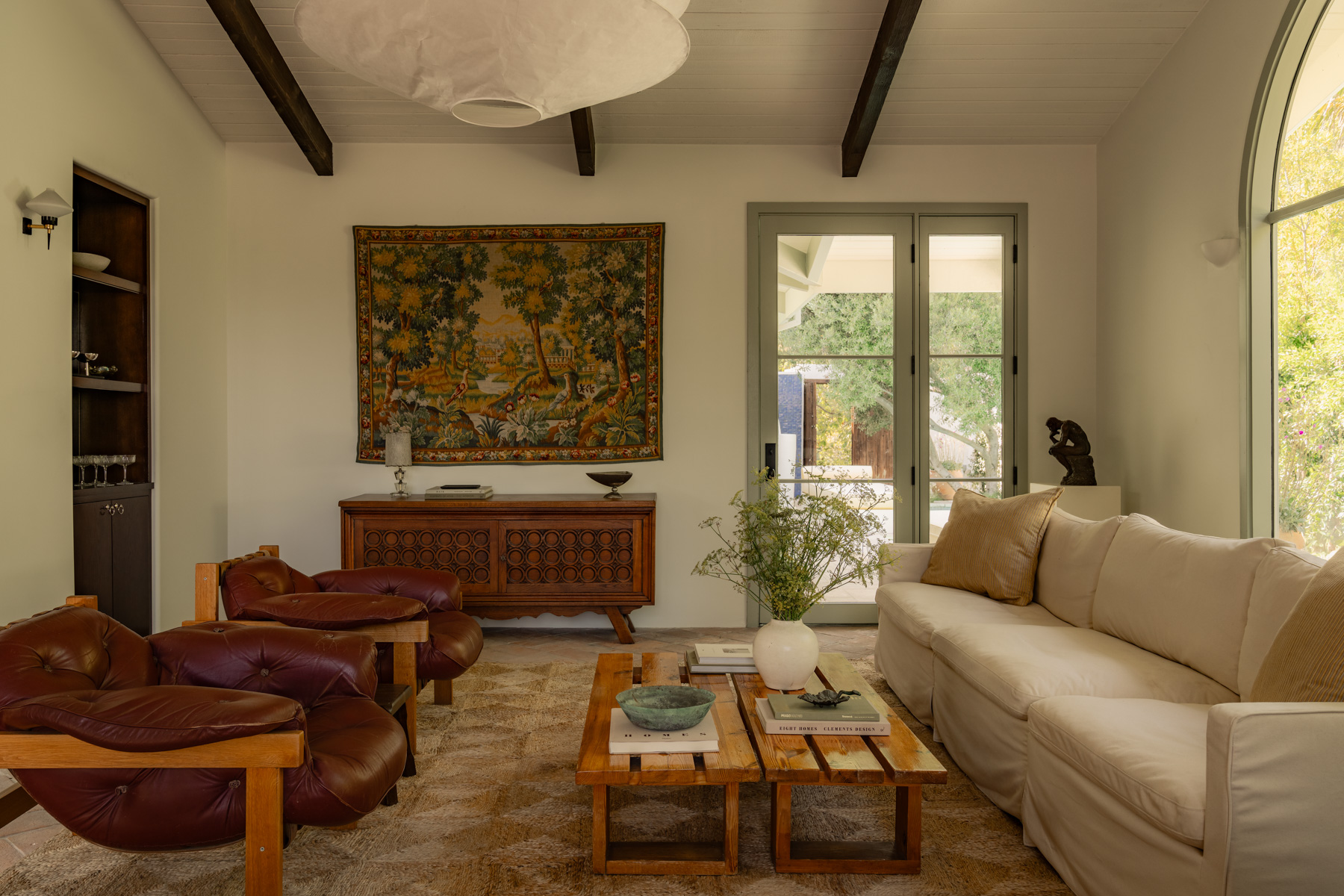
By blending traditional European and Spanish influences with modern materials, the team crafted a home that feels both timeless and refreshingly current. Statement windows in the living room and breakfast nook were kept intact, paired with carefully sourced details like antique rosettes and leaded glass from other historic properties, while elegant archways, a signature red tile roof and azure pool evoke the Mediterranean. “The existing structure had strong fundamentals, and the work focused on refining flow, proportion, and functionality while respecting the home’s original character,” says Claire O’Connor of O’Connor Estates. “The process was less about transformation and more about alignment, ensuring the home felt cohesive, relevant, and ready for its next chapter.”
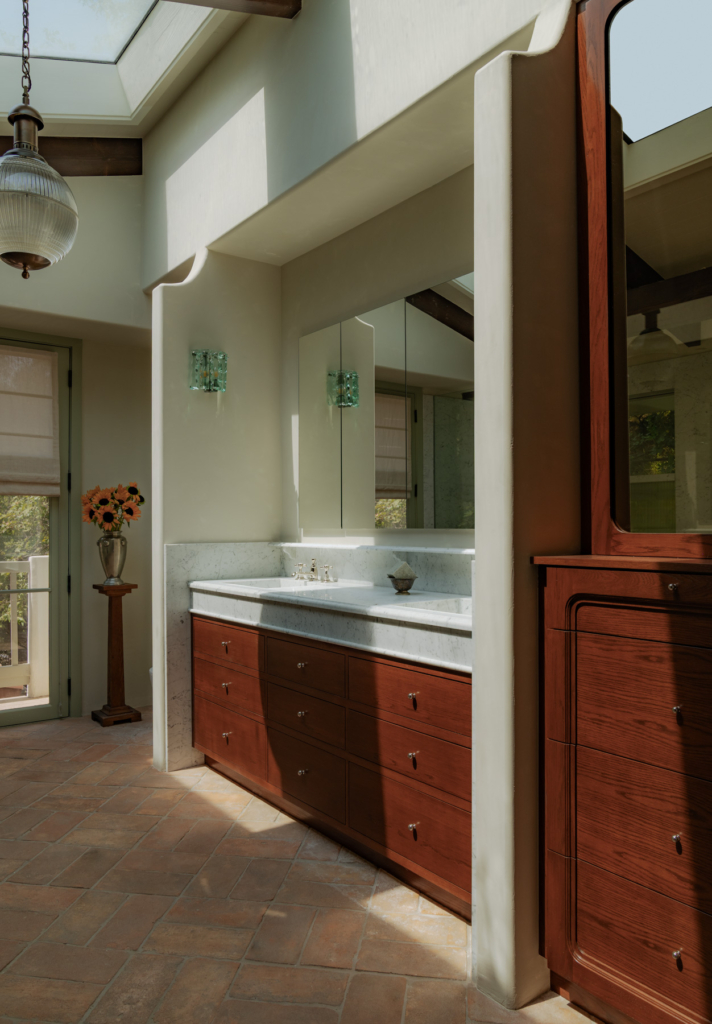
From a development standpoint, the focus was on longevity and livability. The interiors walk a line between softness and contemporary edge – from the primary bedroom’s ceiling-suspended canopy that adds a whimsical elegance, to sharp stainless-steel countertops and shelving, a Lulu and Georgia jute rug that brings earthy warmth to tiled floors, and airy curtains balanced against weightier upholstery that lends history to the space. “Furniture and artwork were approached as integral to the experience of the home, not as decorative afterthoughts. Pieces were selected to reinforce scale, comfort, and rhythm throughout the spaces, allowing moments of quiet and pause to emerge naturally,” says O’Connor.


Furnishings were chosen to fit naturally and feel genuinely lived in. “Rather than relying on a single statement artwork, the most impactful sculptural moments in the home are architectural and functional,” share Ome Dezin co-founders Joelle Kutner and Jesse Rudolph. Many of these come through in the lighting, with each fixture chosen as much for its form as its glow, often reading as sculptural even when unlit. “The Ingo Maurer Floatation pendant is one of our favourite pieces, it adds to the quiet drama of the space.”
The site’s natural topography and the rhythm of the street suggested a design that was always going to reveal itself gradually. Developers Claire and Sam O’Connor of O’Connor Estates helped realise this vision with a residence that feels composed and intuitive, where the relationship between house and landscape appears effortless rather than imposed. “The goal was never to replicate the past, but to carry its spirit forward, layering history into a home that feels both rooted and new,” share Kutner and Rudolph.
Every decision required a balance between preservation and progress. Architectural elements were retained and strengthened rather than replaced, allowing the home’s history to remain present while adapting to a modern lifestyle. The result is a home that feels composed, grounded and genuinely liveable.