Amélie du Chalard
At her eponymous galleries in Paris and New York, the former investment banker is replacing the art world’s austerity with affability and redefining what it means to collect art.
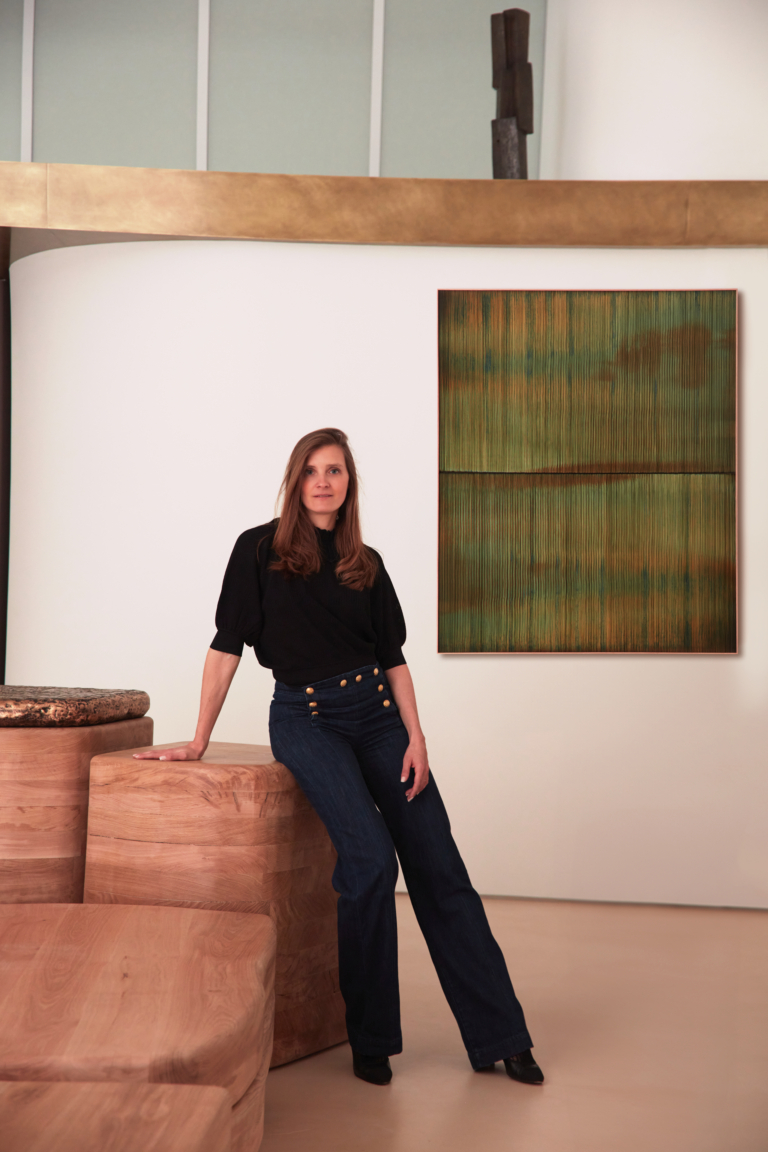
“I grew up surrounded by the mess of art,” Amélie du Chalard says from her gallery near Saint-Germain-des-Prés on a bright morning during Paris Design Week. “My mother is an artist and my father is a lawyer, so I grew up with both types of energies – creative and rigorous.” She ultimately followed her passion for finance into investment banking, a field she worked in for seven years in France.

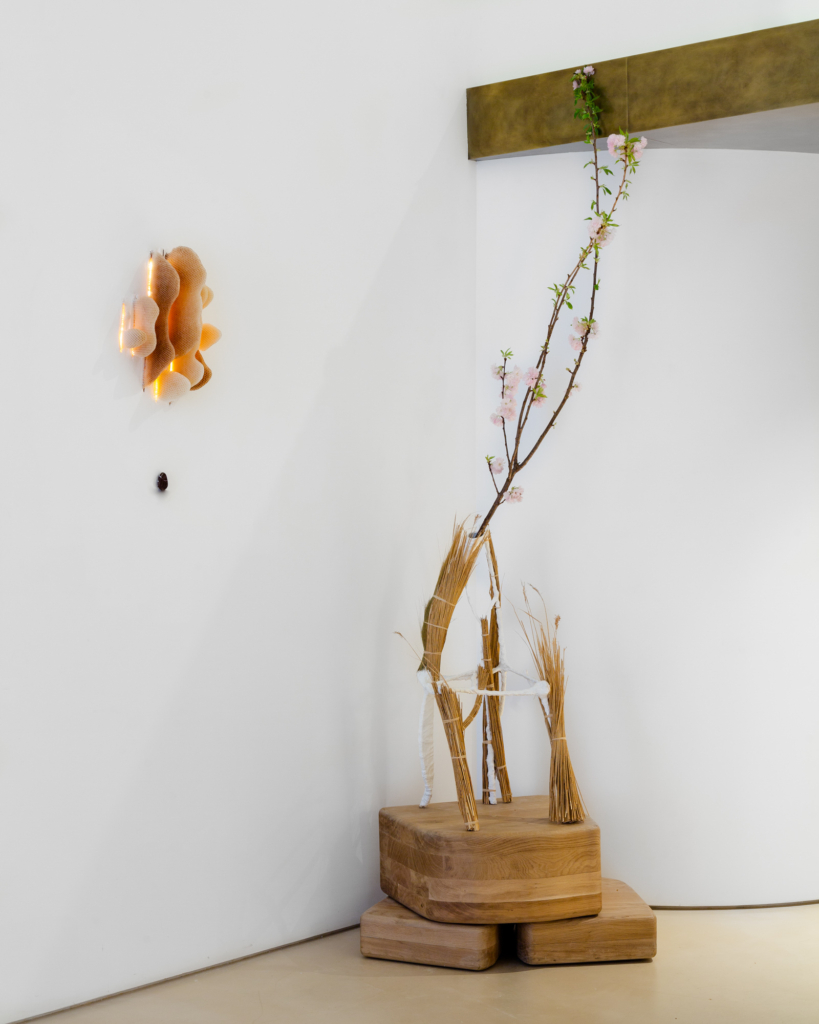

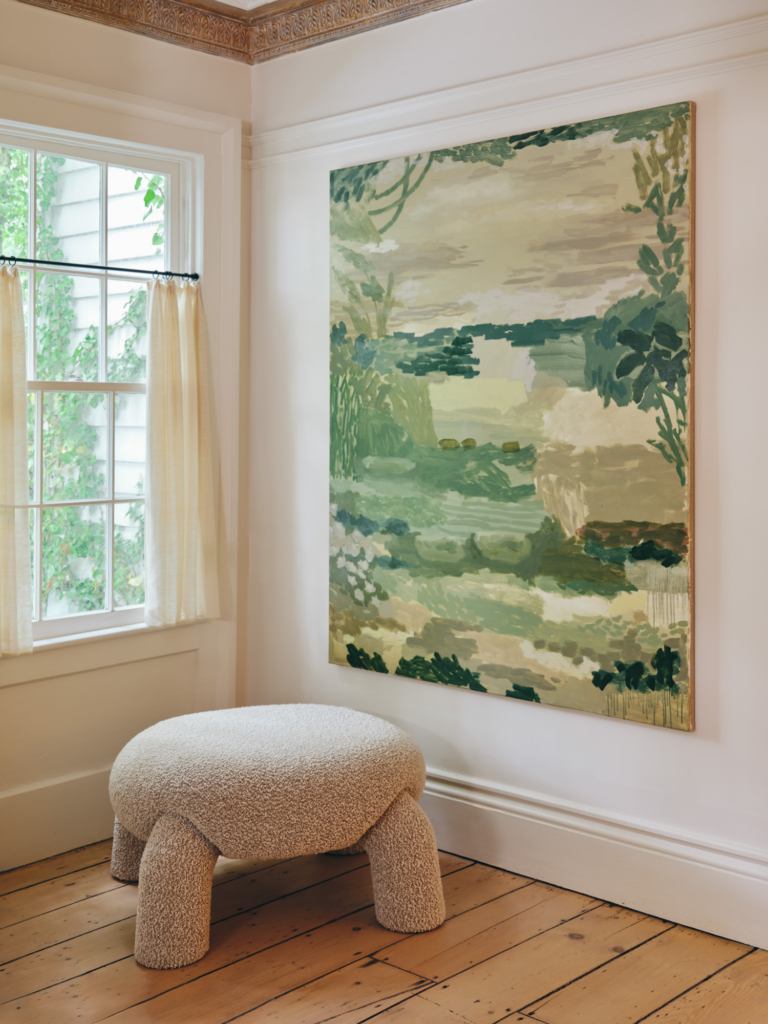

Given this foundation, her entrée into the art world was unexpected. However, the non-traditional model upon which she founded her Paris gallery in 2015 – originally called Amélie, Maison d’Art – was directly inspired by her observations while working in finance within the luxury retail sector, particularly the strong emphasis on the client experience and the emergence of ‘affordable luxury’.
“The companies I worked with were obsessed with the client experience,” she says. “The second thing I observed was that in the retail market, there were formally two worlds – Chanel and Zara, with little in between. Now, we call that space affordable luxury.”
With her galleries, du Chalard has reinterpreted these notions for the art sector, creating spaces with the same integrity as their blue-chip counterparts – minus the austerity and air of unattainability.
At the Paris gallery, which also serves as the company’s headquarters, sunlight fills the lofty rooms and floor-to-ceiling windows face a leafy central courtyard. Du Chalard walks through the current exhibition – a retrospective of the late Edward Baran’s work – speaking passionately about his exploration of texture through paper and thread. This haptic effect is an ongoing interest for du Chalard, and it emerges as a subtle yet notable through-line in the gallery’s growing roster of artists.
The historic building that houses the gallery – said to have once been the home of French philosopher and writer Albert Camus – has the presence and exactitude of a white cube, but it is homely and inviting. Open by appointment, there is the distinct sense that clients are encouraged to meander and linger in the residential-leaning space.
This concept is intentional yet du Chalard admits she wasn’t its pioneer, referencing Peggy Guggenheim, who opened her home in Venice and shared her collection with the public for three decades until her death in 1979. She also cites the French art dealer Paul Rosenberg, whose Paris home served as a gallery and gathering place for the likes of Henri Matisse, Pablo Picasso and their contemporaries.

“The main dealers of the 20th century were welcoming artists and collectors into their homes, so there is precedence for it,” she says. “The idea for my gallery was to make it more welcoming and warmer, but also to try to re-create these types of relationships between the artists and their collectors.”
Du Chalard’s other spaces are an extension of this idea. The original gallery in Paris’s 9th arrondissement now serves as a studio where she hosts artists-in-residence from around the world. She also owns a collection of private homes – two in Paris and a third in the south of France – where she invites collaborators, collectors and friends when they’re in town, often changing the art depending on her guest’s individual tastes.
In 2024, buoyed by a growing international presence and interest from American collectors, du Chalard expanded to the United States. “There is one city where it felt relevant to open and try to offer this experience, and it was New York,” she says. “It’s really the premier market in the world, so to promote artists there is a very good thing, and welcoming people into the gallery is important.”
The decision to open in Soho instead of Chelsea – the city’s pre-eminent art district and home to the likes of Hauser & Wirth and David Zwirner – speaks closely to du Chalard’s intention for a gallery that invites interaction rather than dissuades it. The location alone has helped to position the gallery as a place for not only collectors and those in the know, but also for the art-curious, first-time buyers and passers-by.
This savvy approach has served du Chalard well, as has her impeccable taste and exceptional eye for talent. The gallery represents about 100 emerging and established artists working across various mediums – from sculpture and ceramics to photography and painting. Du Chalard’s interest in texture and material comes strongly to the fore and she describes the growing collection as leaning abstract with some figurative work, culminating in a roster that is surprising and diverse yet stylistically cohesive.
Between Paris and New York, the galleries present a new exhibition every month. Its ongoing ‘Assemblage’ series sees du Chalard collaborate with designers – most recently Kelly Behun – and there are offsite exhibitions, too, including one at The 1818 Collective in Sag Harbour last year.
Du Chalard also offers artistic curation for architects, interior designers, hotels and luxury brands, and has overseen the art program for The Ritz-Carlton in Singapore and La Réserve in Florence. And although France and the United States are her dual bases for now – she lives in Paris with her husband and three children and spends one week a month in New York – she hints at further expansion to the West Coast of the US and into Asia.
Despite the art world’s notoriously strict confines and steep barriers to entry, du Chalard has certainly found her stride, and it’s easy to see why. Her paradigm for the gallery experience – where the proverbial door is open, artistic integrity is high and hospitality plays a defining role – is infinitely appealing.