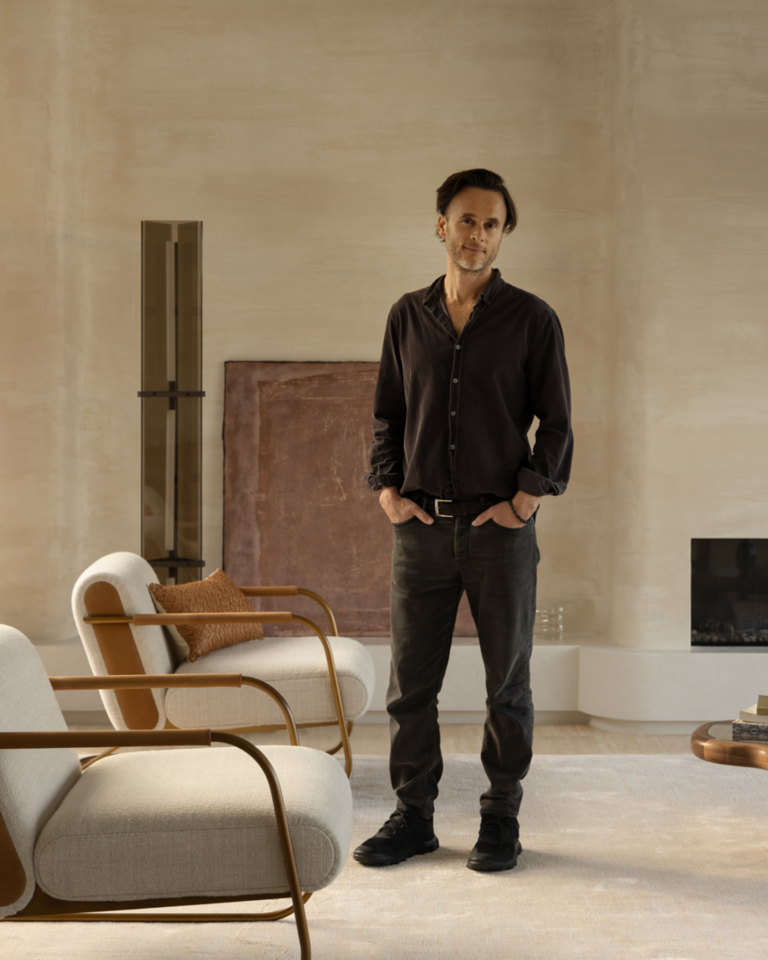
Daniel Boddam
An ethos of simplicity runs the breadth of Daniel Boddam’s architecture and design work, spanning luxury residential builds and sculptural furniture.
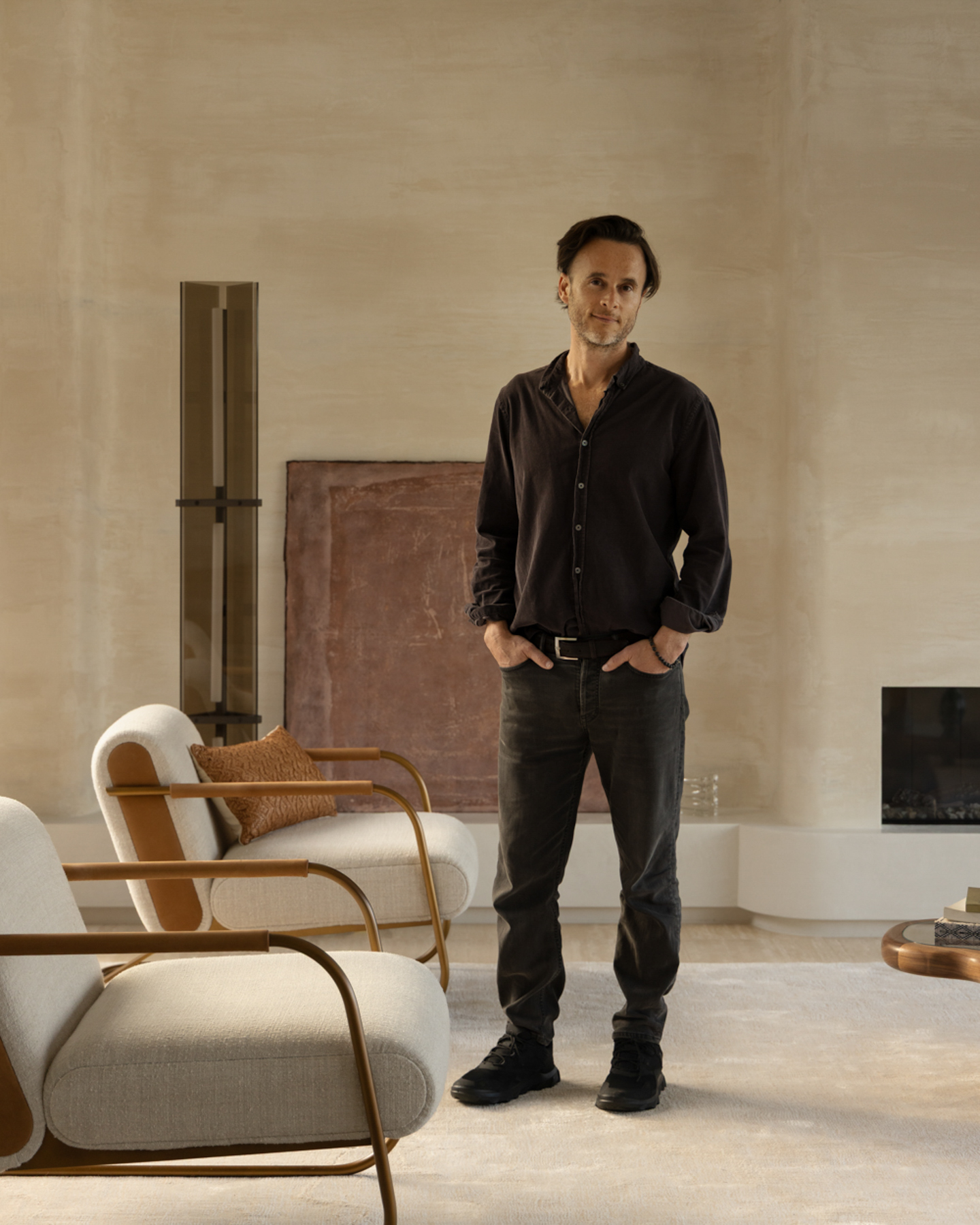
From Le Corbusier to Mies van der Rohe, Josef Hoffmann to Frank Lloyd Wright, modern history is full of architects who translated their skills from large- to small-scale design, from architecturally complex structures to the relative intimacy of furniture. Daniel Boddam is among their number, but for this Sydney- and Byron Bay-based architect and designer, the path to furniture has been more circular than linear.

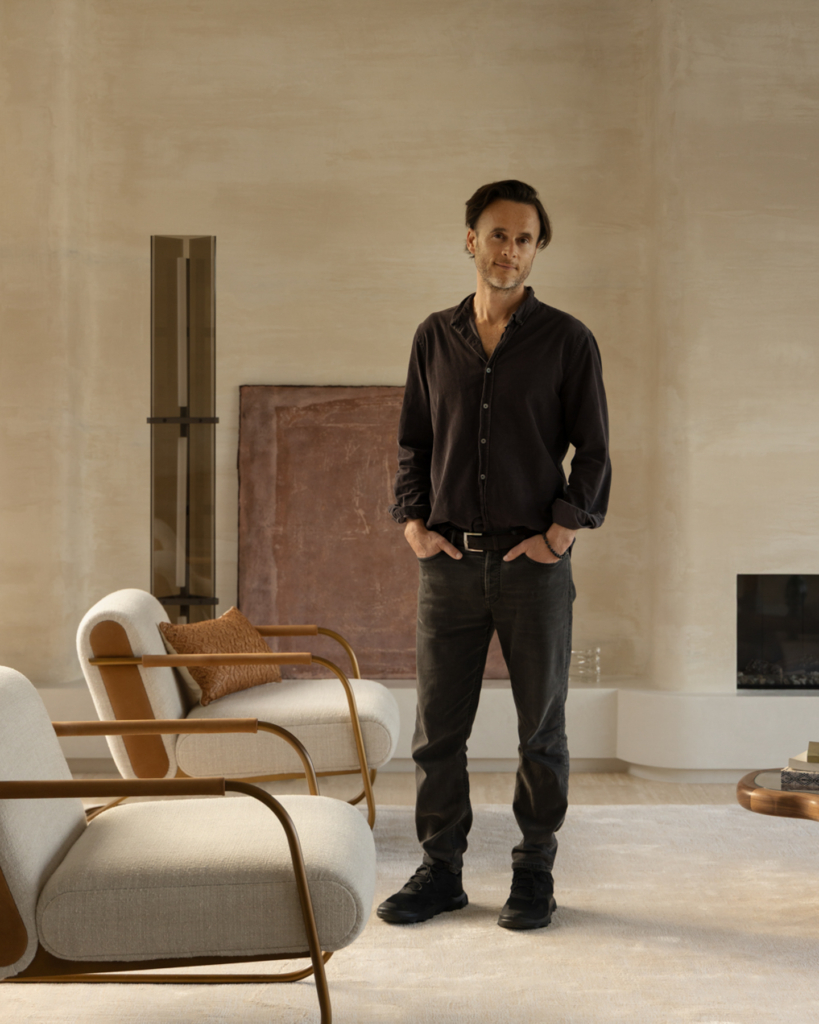
Boddam didn’t always have a clear sense of vocation, but “I was always drawing our family’s furniture pieces in my spare time and I really fell in love with them,” he says. The sculptural furnishings included modernist masterpieces – such as some by the architects referred to above – which drew him towards the career path already trodden by his heroes. Both Boddam’s parents are architects, so it wasn’t a complete step into the unknown, but “I didn’t realise the profession could offer the small scale as well,” he says. “I was very much attracted to the early modernist movement, which led me into architecture, always with the intention of becoming a furniture designer down the track.”
With the dream of furniture design in the back of his mind, Boddam embarked on an architectural career, moving from the family business to working in London (which included a stretch as an artist) and then back to Sydney, where he established his eponymous studio in 2013, with a focus on luxury residential design. As he poured the bulk of his creative energy into architecture, Boddam fine-tuned the skills he would later use across building and furniture projects and, at the same time, developed a reputation for producing carefully considered and strikingly serene architecture.


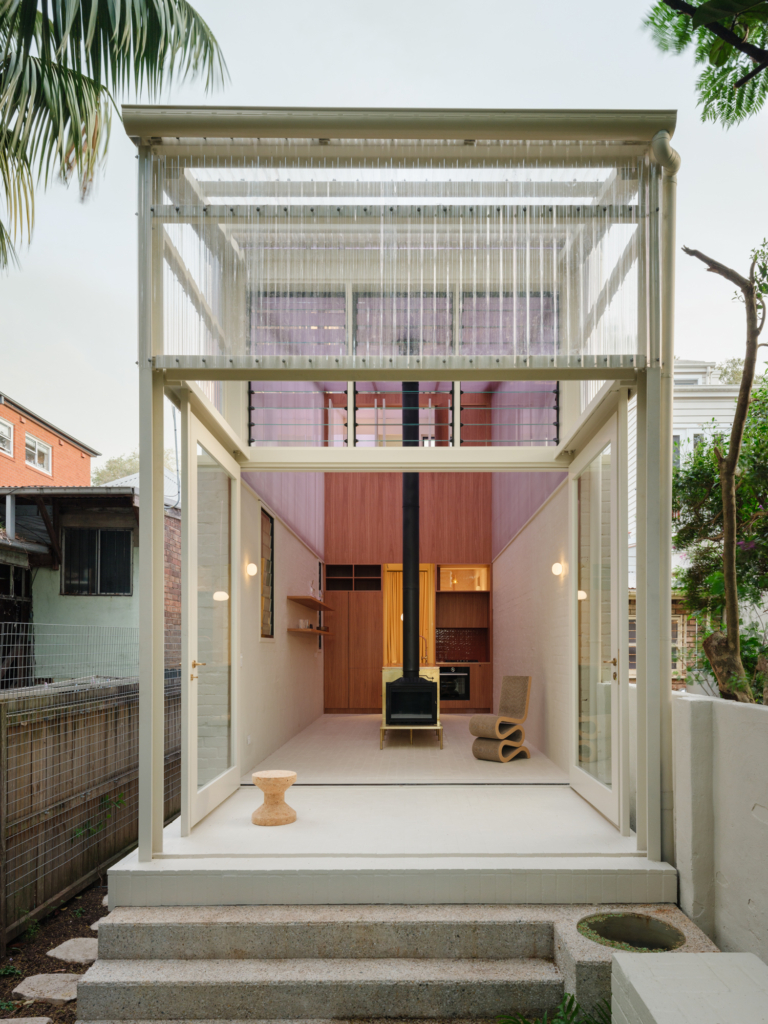
That early passion for modernist design is revisited throughout his work. There are clear references to the behemoths of mid-century architecture – the seamless planes and sculptural curved external staircase of Breeze House nod to Richard Neutra and Oscar Niemeyer’s work, and the geometric repetition throughout Villa Carlo is directly inspired by Venetian architect Carlo Scarpa’s Brion tomb.
As with many examples of modernist architecture, Boddam’s work also worships at the altar of simplicity, favouring clean lines and minimalist forms. “Considered simplicity is really my main drive – simplicity of shape and form, and simplicity of materials,” he explains. “There’s enough noise out there in the world! I see a domestic setting as a calming place to return home to, and that’s what I try to offer my clients.” Though ephemeral in nature, the value of simplicity is a theme that runs through the diversity of Boddam’s work, evident in projects ranging from a breezy coastal weekender to a moody urban monolith.
Boddam says site-specific design is a key device employed to achieve his signature sense of calm. “My approach is always to establish a material palette suited to the area. So for Palm Beach [Breeze House], we looked at a material palette that worked with the coastal environment: sandy tones, fresh whites, timbers. Then we could build up a narrative around that and riff off mid-century designs while still being appropriate to the Australian environment.”
Connection to nature is another essential feature, with courtyards a favoured device in his work. “I first heard about the concept of a courtyard in Latin class and I was completely enchanted by it – imagining how they lived, the security of the courtyard and the beautiful landscaping. I found it really inspiring and I always try to incorporate connection to nature in my work, whether it’s an internal courtyard or a green roof.”


Having laid a foundation as an architect (in terms of both skill and reputation), Boddam expanded into furniture design in 2015. He found the two disciplines to be complementary, with one informing the other. “I see furniture design as architecture in miniature,” he says.
As with his architectural work, Boddam’s furniture derives inspiration from a range of sources, including built forms – “The Monument table, with its pyramid base, was inspired by Chichén Itzá” – but especially from the natural world. “Our house in Byron Bay is surrounded by nature – we’ve got a koala in our backyard and really amazing wildlife. The essence of where I’m working has a relationship to what I’m producing, whether it’s landscape forms or leaves from my backyard, or certain materials that remind me of Australia in some way.”
As an example, Boddam points to the pyramidal base of his Prism table. “The seams have been hollowed out a little bit in the form, which gives it structure but also feels quite natural – when I look at that, I think of seed pods or flowers when they’re about to bloom.” Similarly, the soft furnishings in his Wave and Dune collections are homages to the coastal locales he loves, with their undulating forms both sculptural and embracing; while the Geo collection of tables features rammed concrete infused with natural pigments that echo the unique palette of the Australian landscape.
The Geo collection also demonstrates his innate curiosity and passion for experimenting with materials. While timber is a core element, Boddam’s work on the studio of landscape design practice Wyer & Co inspired him to play with cork, also be seen in his Oscar designs. “I loved the idea of a cabinet with a cork pin board you could use for presentations. But in the end it was too beautiful to pin things to!” The Portuguese cork has been limed, which gives it an extraordinary colour and sense of movement, almost like travertine.




Though diverse in form and material, his oeuvre has a throughline of restraint that allows each piece to sit seamlessly within an almost limitless range of settings. “I’ve spent a lot of time curating a ‘visual vocabulary’ of forms, because I wanted all my pieces to be cohesive enough to work together,” he says, “but, also, to still offer diversity and a sense of timelessness, so you could put a piece in a coastal home or a city home or a farmhouse, and it would still feel good.”
With each piece made to order and customisable, there’s flexibility in the finished product. Boddam expresses delight at seeing how others interpret his furniture, and how his pieces appear in unimagined contexts. “It’s been interesting to see the way other designers specify my pieces. For example, I don’t really work with pattern, but seeing how other people handle pattern and bold use of colour, and how my pieces fit within those different interior environments, is really fun.”

Boddam’s furniture can be viewed within another different context, with the opening of his first Sydney showroom in beachside Bronte earlier this year. “It’s an unusual concept for Australia, where I’m actually living in the showroom as well,” Boddam explains. “It offers something a little more authentic than the traditional transactional retail experience.”
The street front presents as a curated living room vignette, beyond which is Boddam’s own home, a combined showroom and living space where he can display his work in-situ, by appointment. He quips, “It’s just taking my love of residential design and love of working from home and combining it all together.”