Vy Voi
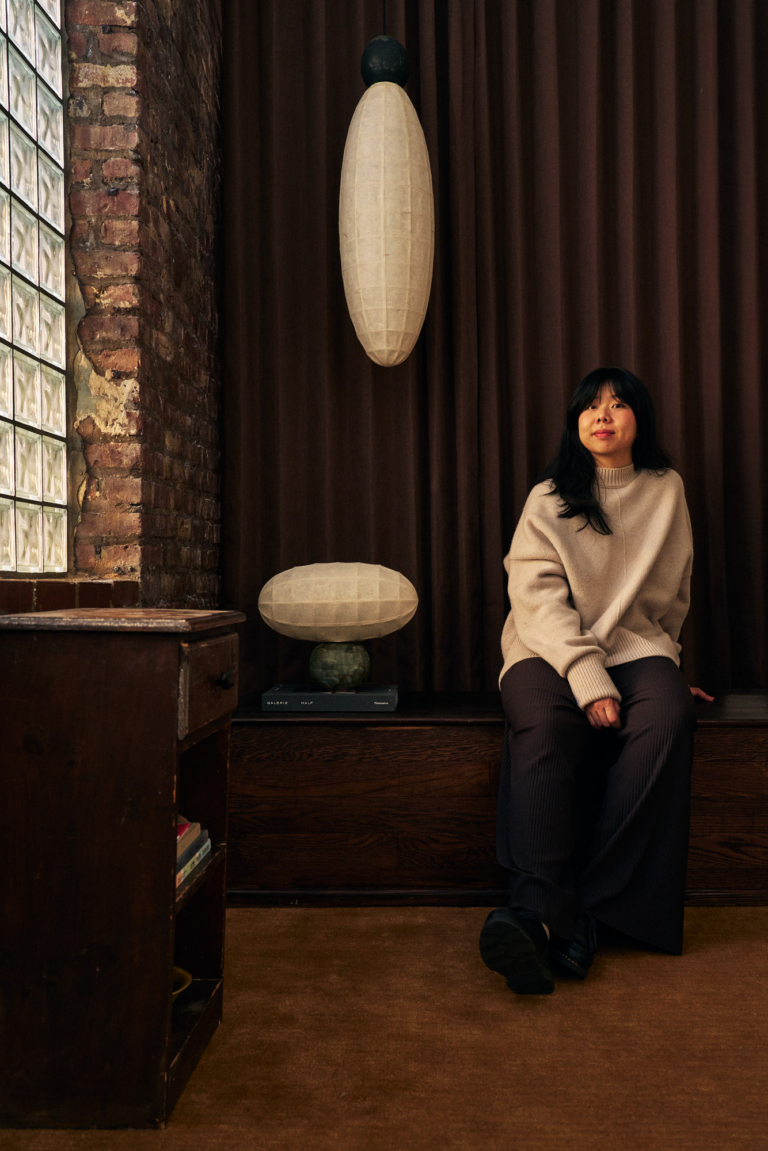
Steffany Tran, founder of New York- and Ho Chi Minh City-based design studio Vy Voi, explores her Vietnamese heritage through handmade lighting, furniture and objects.
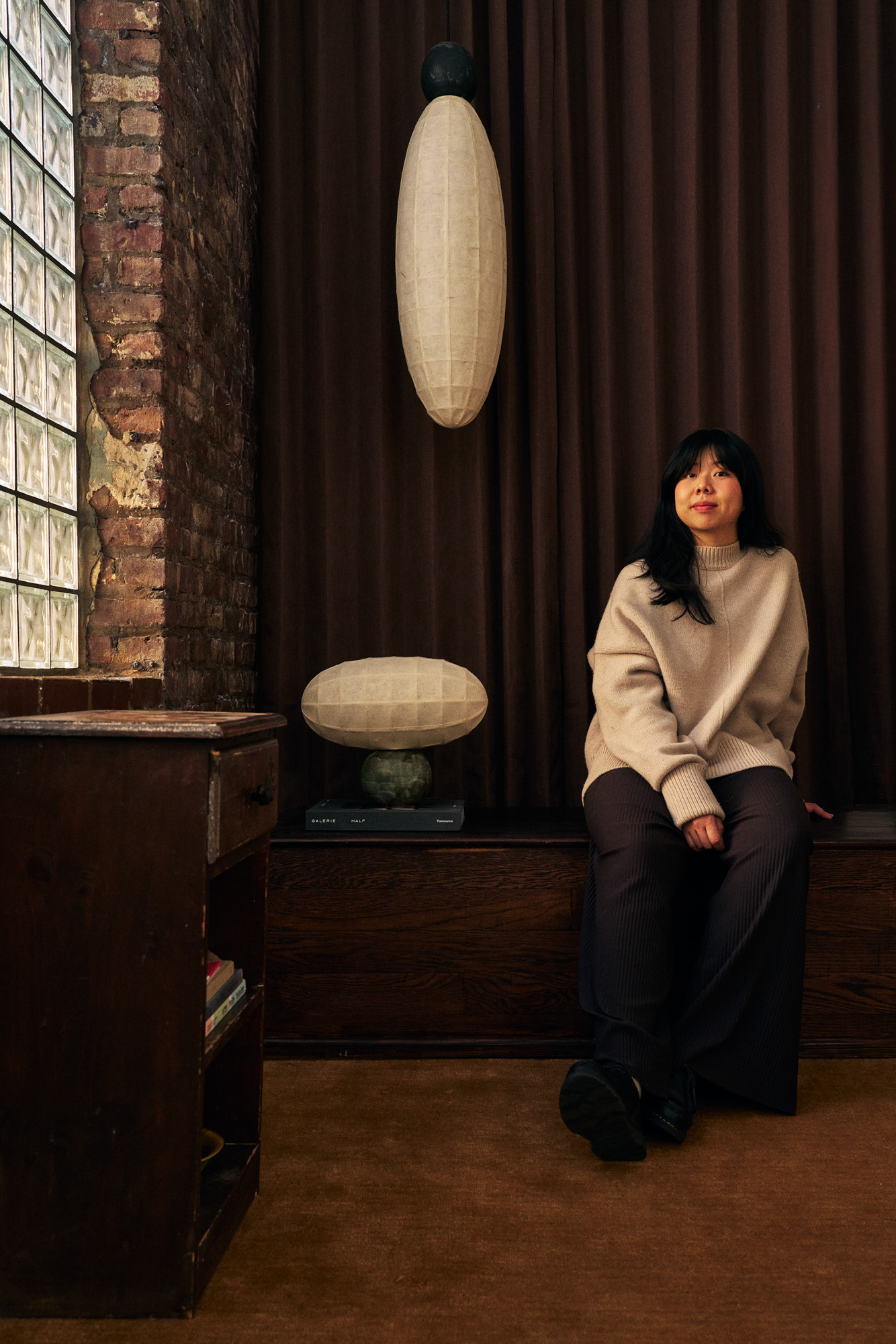
Here, she reflects on the origins of her practice, settling into her first physical space in Manhattan and the exciting things ahead.

TLP What was the starting point for Vy Voi, and how did your background in industrial design influence the studio’s direction?
ST Vy Voi began as an exercise of ‘if I can’t find it, build it’. It was an escape from my career as an industrial designer where I felt stagnant working on mass-produced products that had little meaning to me. I missed thinking, feeling and making with my hands and what I could learn from natural materials. Simultaneously, I wanted to dive deeper into Vietnamese art and design history, but resources in the city were scarce. Thus, I used my childhood nickname as a space to explore materiality and the artefacts of my heritage, coalescing into my practice. What began as an outlet evolved into the studio’s focus: to tell Vietnamese stories through handmade objects, lighting and furniture.
TLP Your Vietnamese heritage is central to your work. How has your upbringing, particularly your grandmother’s influence, shaped the way you see design and the everyday objects around us?
ST I’m grateful to my parents for instilling in me a sense of pride in who I am and where I come from. My first language was Vietnamese despite being born and raised in California, allowing me the gift of communication with my family in Sài Gòn, and I was particularly close with my late grandmother. She taught me to pause, observe and find the extraordinary in the seemingly ordinary. She would point out roots splitting sidewalks, butterflies fluttering through metal gates or beams of sunlight between branches. She always asked, ‘How do you think this works?’ This ingrained curiosity is part of who I am.
TLP Vy Voi aims to bridge Vietnam’s rich art and design history with contemporary living. Why is it important for you to create this connection, and what do you feel is often misunderstood or overlooked about Vietnamese design?
ST There’s a misconception that Vietnam only fabricates, yet skilled artisans have been practicing for centuries: stitching textured linens, growing heritage teas and meticulously inlaying mother-of-pearl into lacquer. Vietnamese design culture deserves to be seen and heard, and I hope to do this by telling stories through pieces I design and make by hand.
TLP Your practice spans objects, lighting and furniture, often made from ceramic, paper and wood. What draws you to these materials?
ST What I find most compelling about these materials is that not only are they derived from our natural world, but both animals and humans use them. I find it fascinating that I can create a lighting fixture made of reed and paper, just as an oriole can weave a nest. It really emphasises the humanity of it all to me; that we are all part of the same ecosystem that seeks to create, be that out of necessity or joy.
TLP How would you describe the core design principles that guide your work?
ST I live and work by the principle of finding tenderness in the everyday. Whether that’s the way a fired ceramic feels in hand or the plush texture of Dó paper, I consider every detail for the warmth it could add to daily life. My design philosophy encourages coexistence with nature and embodying often-fleeting moments through contained comfort, and I tend to balance soft, delicate lines with contrasting forms and materials.
TLP You recently opened a new studio in Manhattan. How does being based in New York influence your ideas and process?
ST I love New York. It’s easy to dismiss the city for its grit and grime, but I’ve found it to be one of the softest places to land when it comes to design. The landscape is constantly moving and changing, and it’s this peculiar, mutable state that drives my energy and determination to make something real. A significant part of living and working here is the proximity to the people and communities that make it what it is. There is an expert for everything – often with decades of experience – ready to help you. I’ve learned from some of the best electricians, woodworkers and carpenters. They ground me in practicality and shape how my concepts cross the finish line.
TLP The new space also functions as a workshop, showroom and library with many varied objects and references. What role do you hope this space will play and how do you hope it contributes to or enriches your creative output?
ST The way I work is somehow never linear and this new space embraces that. I love being able to switch gears at any given second and have the room to do so. Every part of it is designed to nourish my curiosity and creativity. I can make prototypes and see how they coexist with furniture. I can refine new works and contextualise how they converse with historic Vietnamese objects. I can take a break and learn about Hmong indigo by candlelight. I can test, fail and collect in one place.
TLP Looking ahead, what stories or materials are you most excited to explore through Vy Voi, and what can we expect next from the studio?
ST I’m most excited about furthering Vy Voi’s pursuit of centring Vietnamese heritage within a broader global lens. Also, my next collection of lighting is on the horizon. These pieces, which bring together scales and techniques I’ve been developing for over a year, draw from Vietnamese folk instruments dating back to the 17th century.