Rockview House
True to the tenets of West Coast modernism, Rockview House by Architecture Building Culture and Sophie Burke Design serves as an instrument from which to observe the natural environment.
Perched high above the water on the north shore of Vancouver with staggering views over the Burrard Inlet, this extraordinary site held great potential. However, upon a preliminary site visit, architect Mark Ritchie admits he was daunted by the magnitude of natural beauty before him. “I remember standing on the empty site at the beginning of the project and feeling slightly overwhelmed by it,” he says. “The view is almost too big, too expansive.”

Experience and aptitude prevailed, and Ritchie – who designed the clients’ previous home, also in Vancouver – conceived a large family home that embraces its context and aspect while offering its inhabitants ample opportunity for repose.
The plan is organised around a central outdoor courtyard, which simultaneously creates extended sightlines across the property and helps to bring natural light deep into the plan. This condition emerged as a solution to various briefing requirements including cohesive indoor and outdoor spaces, as well as from a need to mediate the site’s sprawling outlook.


“It was about managing the view,” says Ritchie. “That, coupled with their request for a single-storey house meant we had a very large footprint, but we wanted to bring light, activity and energy into the centre of the house and the courtyard enables that.”
Ritchie situated the living areas towards the east and bedrooms towards the west, creating separate pavilions for living and sleeping and delineating the shared from the private. “We did many iterations with different solutions, but it unfolded this way mainly because it was the most natural in terms of the movement through the house.”
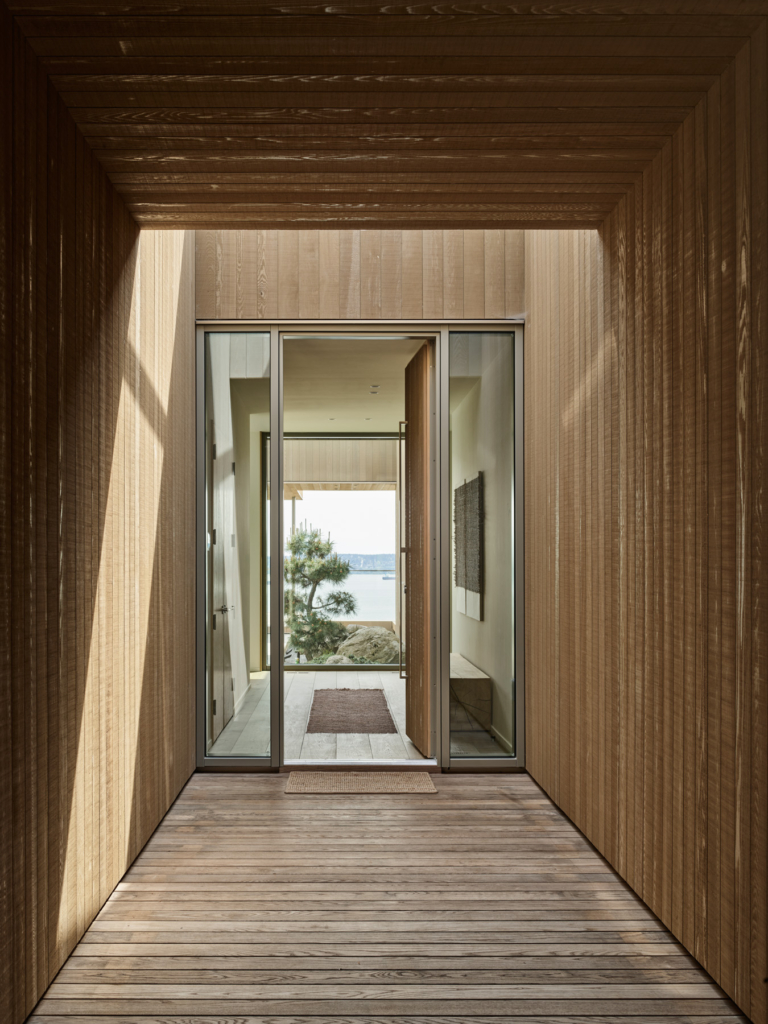
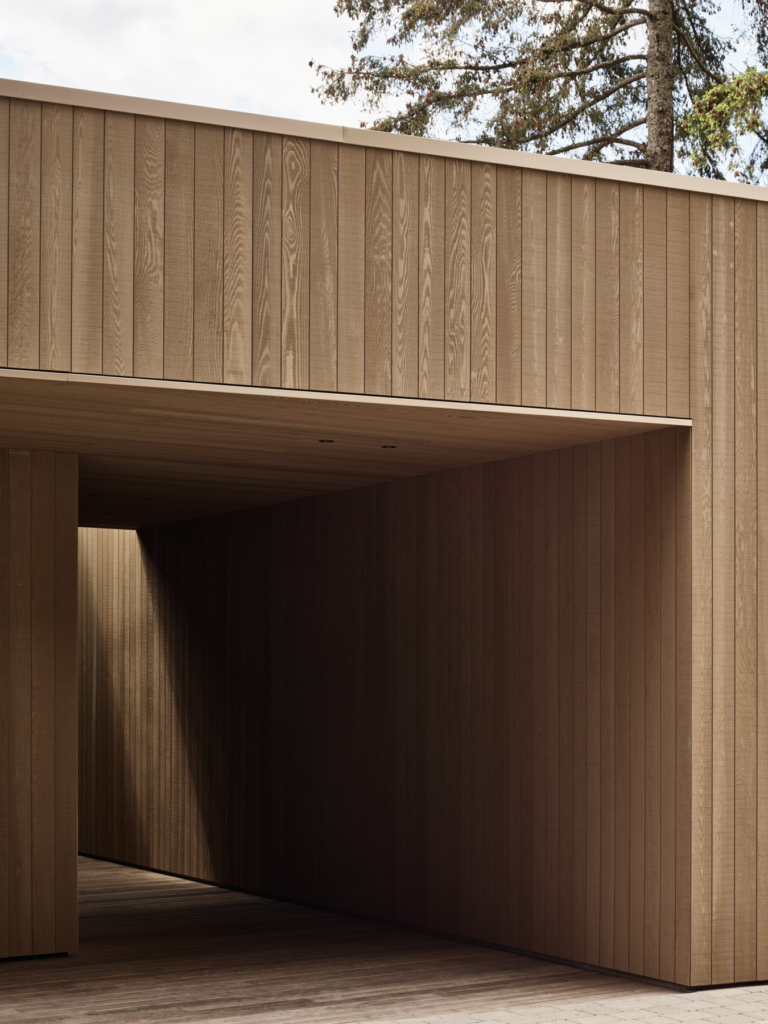
Clad entirely in vertical cedar battens – a nod to the Pacific Northwest’s mid-century architectural vernacular – it is immediately intriguing in its clarity.
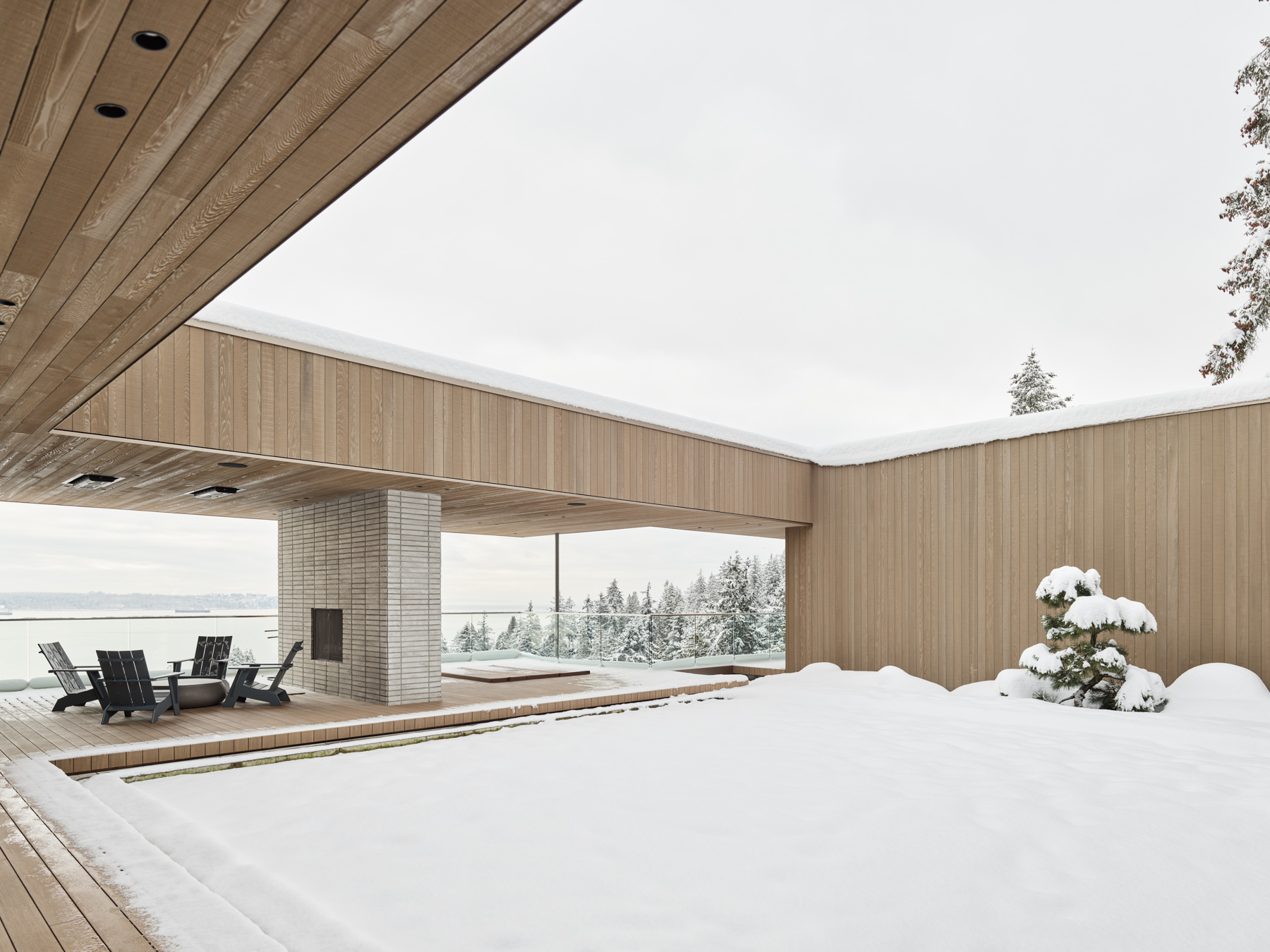
Connecting the east and west volumes at the house’s southernmost edge is an undercover outdoor terrace that functions as an open-air pavilion, protected from yet open to the elements. A small pool and dining table are separated by a fireplace clad in sandy-hued bricks – a necessity for cooler evenings spent outdoors – and the central courtyard, which Ritchie describes as “almost another room” allows activity to spill into the centre of the site.
This pliability in the plan cannot be read initially; from the street, the structure presents as a hermetic pavilion stretching across the site. Highly rationalised and clad entirely in vertical cedar battens – a nod to the Pacific Northwest’s mid-century architectural vernacular and the work of several architects central to the movement including Arthur Erickson and Fred Hollingsworth – it is immediately intriguing in its clarity. The garage doors are elegantly disguised and panes of glass framing the front door offer glimpses through the home to the views beyond.

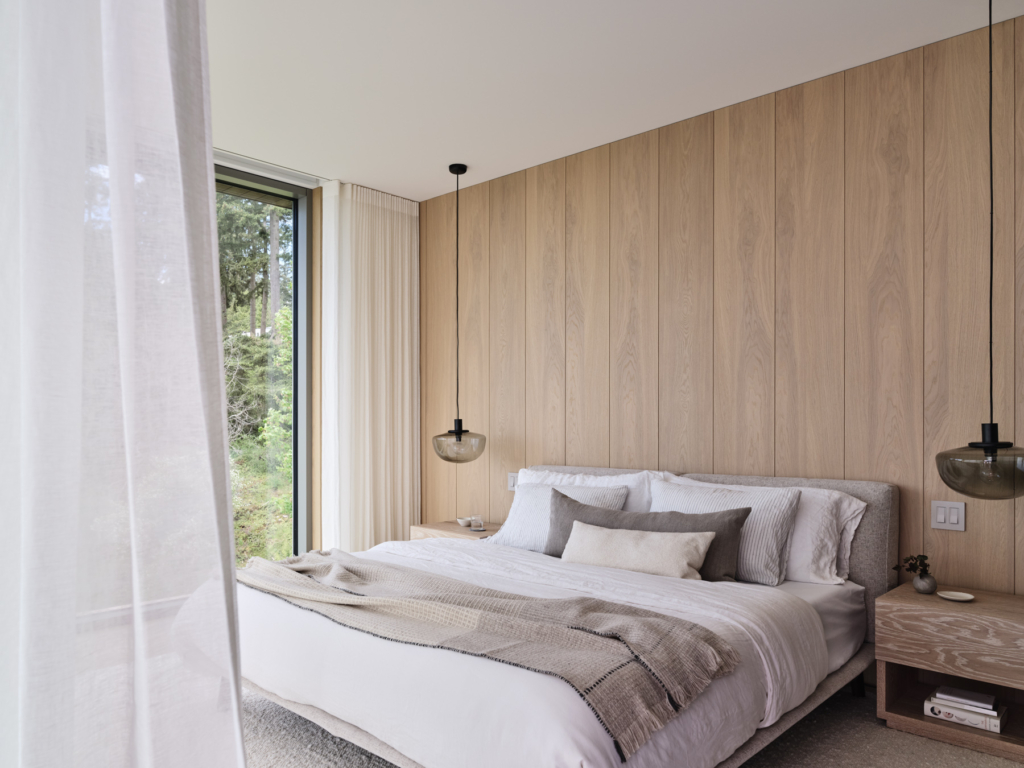
A high level of precision is prevalent across Rockview House – from the client’s discerning input to the refined interiors by Sophie Burke. “Mark’s concept was so strong and there was a strong rationality to the plan, so it was easy to apply that to the interior,” she reflects. As with the exterior, the materials inside are impactful in their simplicity and clarity. Comprising timber, brickwork and natural stone, the mix is, as described by Burke, “a very restrained palette of materials”, and the effect of these minimal yet resolved combinations is supremely calming.
Rockview House’s identity lies mostly in its overt access to natural light and expansive outlook and the clients wanted the atmosphere within to reflect this sentiment, opting for bright yet warm tones throughout that help to prioritise the views. “In the spirit of mid-century houses, Rockview House is really just an instrument from which to look at the natural world,” says Ritchie. Majestic views of the ever-changing natural environment – from vibrant sunsets over the Salish Sea and the lush landscapes of high summer to the snow-covered tree canopy in the depths of winter – unfold against this neutral canvas, placing the natural environment at the forefront of the experience.
Details like textured tiles, plastered walls and joinery with framed profiles, crafted by Bowerman’s Handcrafted Furniture and Cabinetry, help to bring depth to the pared-back interiors, as does the thoughtful curation of artwork including several pieces from Vancouver’s Monte Clark Gallery. “While there are these gorgeous, huge windows with incredible views, the vast scale of the house meant we also had to treat these large white walls, so artwork was extremely important,” says Burke. She adds that they were able to “build a small collection” that has “a big impact on the overall feeling you get when you’re in the space”.
With two children, functionality and practicality were essential to the clients and this thinking informed both Burke and Ritchie’s responses. Fabrics are fuss-free and hardy, the stone is highly durable and the furniture selections throughout are sleek yet not overly precious. Similarly, there is no formal living room for adults only and the external courtyard functions as an extended play area for both young and old. “They wanted the whole space to be very family friendly,” says Burke. “It’s all meant to be used and lived in.”
This continuity in the way the home is organised and experienced is primarily a deft response to the site and the clients’ patterns of use. But it is also a marker of Ritchie and Burke’s seamless partnership, one that has resulted in a residence where the architecture and interiors – though realised at the hand of two different creators – are totally in tune.