Ruby
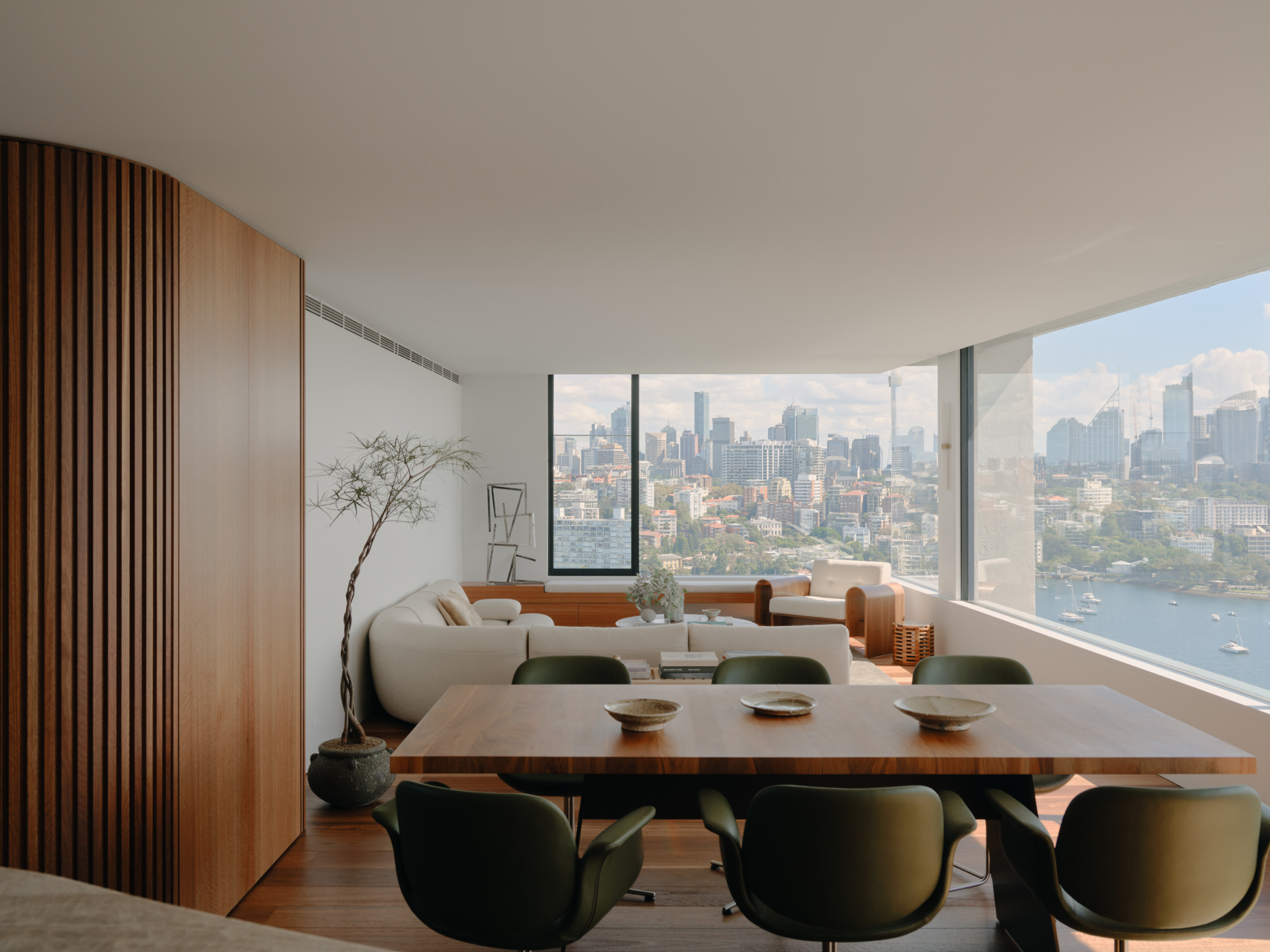
Floating in the clouds above Sydney’s Darling Point, Ruby’s 18th-storey perch is made all the more remarkable by Brad Swartz Architects’ considered use of passive design principles.
In typical 1960s fashion, the former layout of Ruby cut the kitchen off from the living and dining areas, leaving the shared spaces feeling cramped and starved of natural light, while the bedrooms enjoyed the best of it. Spatial planning is critical when working within a tight footprint – a constraint that tends to bring out the best in Brad Swartz Architects’ work.

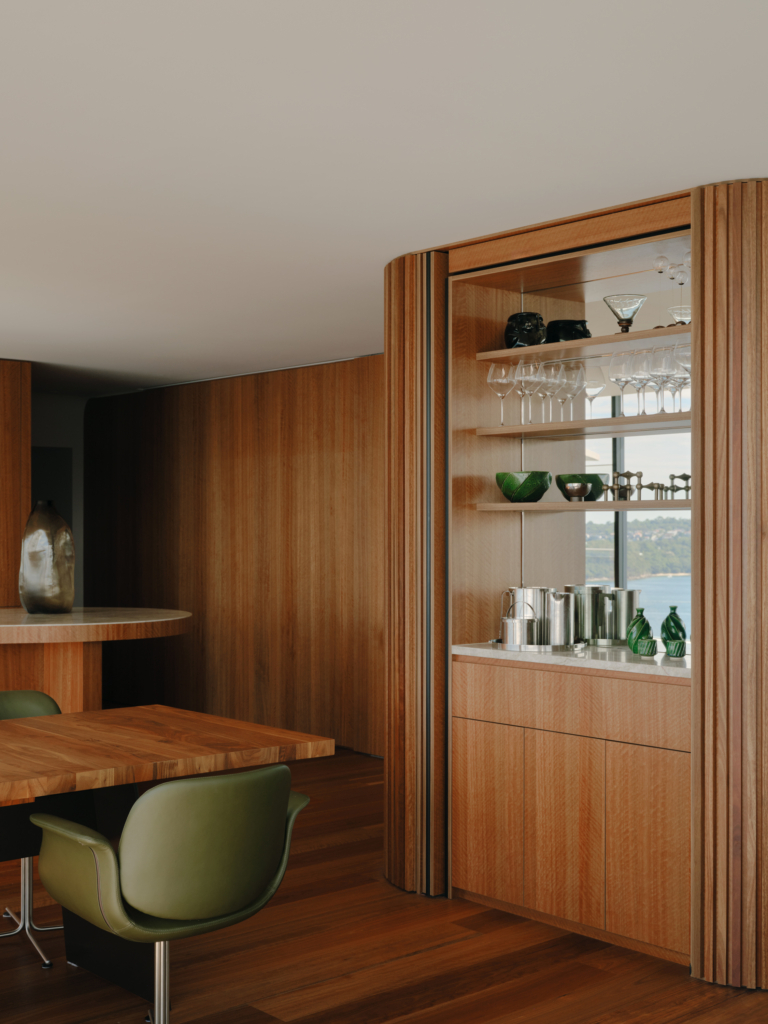
A joinery spine replaces walls to divide and reorganise the space, built with technical hardware and precision detailing that make the most of every millimetre. “I kind of prefer one element that does a lot,” explains practice director Brad Swartz. The apartment shifts between two moods: an intimate one-bedroom retreat, with a bar waiting behind pocket doors for fireworks on the bridge, and a generous family home with enough bedrooms for the grandchildren to sprawl out and stay the weekend.
Losing the hallway to open up the plan runs the risk of exposing doors to the living room’s direct line of sight. Swartz responds with a lesson in blurred thresholds, blending joinery into curved walls that soften circulation and meet recessed sliding panels, all finished in the same timber veneer. The movement of the grain helps dissolve the seams, allowing the elements to read as one continuous surface. Installing the sliding wall panel in one piece was key to maintaining the illusion. Given its scale, however, it couldn’t fit through the internal stairwell. “It came up in one big panel,” Swartz recalls, “so it had to go up externally, by lift, all the way to the 18th floor.”
Rather than “compete with the view”, as Swartz describes it, the architecture works to accentuate it. An organically shaped island bench traces the harbour headlands, while its sand-coloured stone gently tapers from one end to the other, like sand giving way to water at the shoreline. “It doesn’t even allow for half a millimetre of tolerance,” Swartz says of the detail.
As you pivot from bench to backline, mirrored splashbacks ensure the view is never lost over your shoulder. Each detail in Ruby is a marker of intention, making the space feel effortless rather than minimal.